Saturday, March 28, 2026

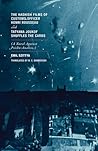
The Hashish Films of Customs Officer Henri Rousseau and Tatyana Joukof Shuffles the Cards


The Hashish Films of Customs Officer Henri Rousseau and Tatyana Joukof Shuffles the Cards: (A Novel against Psicho-Analise)The Hashish Films of Customs Officer Henri Rousseau and Tatyana Joukof Shuffles the Cards: by Emil Szittya
My rating: 3 of 5 stars

I picked up this collection of Emil Szittya's prose poems(?) on a lark while visiting my favorite bookstore in the state of Wisconsin, Within Things. I had gone up there to pick up an album by new-to-me experimental ambient artist Elodie and came away with the album, a copy of Damian Murphy's The Bastion Overwhelmed, a friendship with the owner and his wife, and a copy of The Hashish Films of Customs Officer Henri Rousseau and Tatyana Joukof Shuffles the Cards: (A Novel against Psicho-Analise). A nice little haul on a wonderful summer day up in Door County.

As is usual with Wakewood Press offerings, we start with another great intro by translator W.C. Bamberger. I have been impressed with their opening essays time and time again. I would love to see a collection of Bamberger's short essays, each of which is a gem of information and erudite literary analysis. I could read his essays all day long, they're that good.

With Szittya's work, we begin in the border regions of Surrealism, with Dada on the horizon, but not quite free of the grasp of "traditional" writing. In short, it's getting weird, but not weird enough to be really interesting or compelling.

Out of my sadness I paint garish posters for illuminated dilapidated houses. My train has just steamed off with a spring landscape. It is hateful to be a clown.

"Gabriele's Opinion of My Hashish Hours" is the first section of this book that lives up to the promise of the surreal as a mechanism for breaking through to a more honest world by crashing through the gates of semi-structured nonsense into the ridiculousness of existence. This is over halfway through the volume, so it's a slow start. I'm fine with slow starts, in fact there are places where I prefer them. But for such a short book, the velocity just isn't fast enough for this reader.

"The Bordello," following immediately, is a more coherent prose poem. I had hope that the book might be picking up some speed.

The work gained momentum (and elicited more emotion) as it went along. "A Stroll (for Rita Kirsten)" is particularly moving. The sense of melancholy is not stilted, as in the earlier pieces, by absurdity for the sake of absurdism.

And this highlights my biggest problem with the work. Szittya sometimes wears his heart (or intellect) on his sleeve too much. It's as if he referred to The Dada Manifesto every other paragraph to make sure he was staying "on message," though said manifesto didn't appear in print for another two years. Perhaps he wasn't adhering to the party line so much as inventing it.

Regardless of provenience, the work shows hints of "soul," but often times lacks just that. If you are looking to jar your brain into discovering new ways of thought, by all means, you've found it. I just want a little more flow to my explorations, something with a bit more soul.

View all my reviews

____________________

If you like my writing and want to help my creative endeavors, please ko-fi me at https://ko-fi.com/forrestaguirre. Every little bit is seen and appreciated! Thank you!

Saturday, March 7, 2026

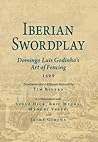
Iberian Swordplay: Domingo Luis Godinho's Art of Fencing


Iberian Swordplay: Domingo Luis Godinho's Art of Fencing (1599)Iberian Swordplay: Domingo Luis Godinho's Art of Fencing by Domingo Luis Godinho
My rating: 3 of 5 stars

I started picking my way through this work a couple of pages at a time, as the archaic language and the author's assumptions about the reader were very difficult to parse. Of course, this is a manual on a certain style of swordsmanship, not a novel or essay or short story, but a textbook. The glossary in the back was somewhat helpful, but as often as not it is self-referential, again, assuming much about the reader's background knowledge and experience.

I've been fencing, off and on, since college - foil, epee, rapier & dagger, and, most recently, messer. I'm not great, but I had good coaching (my first coach was an olympic bronze medalist), and I would feel pretty comfortable if things came down to a real duel with just about anyone (sharp blades make one sharper, as they say). But I admit that learning fencing theory was never my strong suit. So, this one was a bit of a struggle.

At a certain point, after nipping and poking at the work, though, I decided I needed to just plunge in, read, practice some of the techniques, as I understood them. That did seem to accelerate some of my learning, much the same as learning German or Latin or Swahili - immersion is the key.

Part one of the book, on "Sword Alone," was definitely the most tedious, but also the most foundational, as one would expect. A brief introductory chapter by Tim Rivera was definitely helpful, but if I could have any wish about this book, it would be that it was thoroughly annotated and illustrated by Rivera. Swordsmanship is something done in space, and trying to translate the written word into spatial movement in real-time is nearly impossible without some kind of visual representation. This was my biggest complaint about the manual - and it is a HUGE complaint.

Part Two: Sword and Shield, can be summarized: protect your hand, slash at your opponent's legs or stab him in the belly, and whatever you do, do it really, really quickly, like a snapping turtle.

There are other sections on a variety of topics, not all of which I will mention. Some standouts, though, were:

Part Four: Two Swords. Need to know how to clear a street? It's in there. Surrounded by enemies who are threatening your treasure or your lady? There are solutions to that.

I should note here, also, that in both the section on Two Swords and in Part Six: The Two-Handed Sword, there are very clear instructions on how a bodyguard should defend an individual in his charge, and there are a lot of details beyond just the proper footwork and cutting or thrusting techniques that I just would not have thought of. Things like: Where is it best to place your back (or not) at a four-way intersection? What if your back is literally against the wall? How do you defend yourself and another in those circumstances? And so forth.

I always wondered why those beefcake sword and sorcery covers and frontispieces (see: almost every issue of Savage Sword of Conan) had the hero standing and a woman kneeling or sitting at his feet. Turns out this was how people were trained to defend a woman from a crowd (royal bodyguards and such). When surrounded, you have to swing in wide arcs. If she's standing behind or beside you . . . well, it's bad optics, at the very least, to accidentally decapitate the person you're trying to protect.

Part Eight: Self-Defense and Tricks, might just as well have been titled "dirty tricks". Literally dirty, like keeping a pocket full of fine sand to cast into the eyes of an opponent who "has greater advantage" or to use against multiple opponents who justifiably want to kill you because you are a scumbucket. Godinho essentially says the quiet part out loud about how you got yourself into this stupid mess, here's how you get out, but in a more refined way. Screw honor, you've got to defend yourself! By far the most entertaining section of the book!

Will I stop reading fencing/swordsmanship manuals? Heck no. I benefited greatly from reading Cappo Ferro's Gran Simulacro multiple times in the past, and I am very much looking forward to tackling Hans Lecküchner's work on Messer fighting. I am unlikely to return to Godhino's principal work on Sword Alone (though I've taken a couple of small lessons from it), but the sections on Two Swords and Two-Handed Sword are gold - if only they were clearly illustrated.

View all my reviews

____________________

If you like my writing and want to help my creative endeavors, please ko-fi me at https://ko-fi.com/forrestaguirre. Every little bit is seen and appreciated! Thank you!
Sunday, March 1, 2026

Censure forthcoming from Zagava

 I am thrilled beyond measure to announce that Zagava is publishing my short story collection Censure in 2026, first as a very limited slipcased hardbound edition, then as a paperback edition. 15 dark tales, 4 of them previously-unpublished, the rest from a bevy of obscure and difficult-to-find editions (some of them also very limited). The cover art is by one of my favorite artists: Odilon Redon, the Symbolist master. Exact publication date is TBD, but here is a taste of what's coming:


Link to the signed and lettered edition is here!


____________________

If you like my writing and want to help my creative endeavors, please ko-fi me at https://ko-fi.com/forrestaguirre. Every little bit is seen and appreciated! Thank you!