
Monday, May 27, 2019
Last Jigsaw
I don't think I ever posted this here. My last jigsaw puzzle. Only took about a year and a half to complete. My next one is full of scary dolls. I'll be putting that one together in the basement . . . alone . . .

Snail mail RPGing
Back when I was a kid, I remember reading "wanted" ads in Dragon magazine and White Dwarf magazine where people were looking for play-by-mail players for their RPG. Invariably, there was a fee involved, usually rather exorbitant. I didn't play them, because, as a kid, I couldn't afford to. This was back in the '70s and '80s. Lo and behold, the mid-'90s rolled around and with it, the interwebs. This has opened up a plethora of opportunity to game with those who live far away from you, something I take advantage of every week or so, while running and/or playing AD&D 2e with old friends and new. Currently, I am DMing a Dark Sun campaign, as I just wrapped up playing in a Greyhawk campaign. Good fun (until Google hangouts dies, then we have to move to some other technology).
I will admit that during the time from about 1994 until now, I have spent WAY too much time online. It's really gotten under my skin, and this past year, I decided to do some things about it. I am cutting a lot of my time on social media and will dispense altogether with Facebook (except to have my account still there and available for people to contact me, if they wish) once a volunteer commitment for my church is done and over in August of 2020. I'm looking forward to turning my back on FB, honestly - just a breeding ground for family and non-family arguments, by and large. Not only that, but I am trying to fill my time with more analog pursuits: taking time to read more real physical books, getting out and hiking like I did when I was younger, exercising more regularly (i.e., more than every couple of weeks), doing more jigsaw puzzles (which I love and which keeps my brain young), and taking the time to write actual, physical, snail mail letters to people I really dig.
As a part of this, I've invited a few people who I know are excellent roleplayers or who are incredibly interesting persons, to participate in a snail mail campaign with me. We had to coordinate things via email, to begin with, but I think the groundwork is laid. I just prepared the first snail mail letters to send out this week:

The central conceit is very loosely based on the Trail of Cthulhu supplement Bookhounds of London. But this is a horror game without tentacles. We have agreed to a theme of Cosmic Horror, but cosmic horror in the abstract, NOT Cthulhu and friends, which has gotten a bit old. We are also interweaving themes of "The Weird" and "Cults and Conspiracies" throughout. Our main ruleset is DeProfundis, second edition. And for a twist, we are using the rules to the little-known (but rather clever) solo RPG English Eerie to create some randomness on the individual level, which will play into the interaction between the six of us. I will also draw heavily on the Chaosium supplement for Berlin: The Wicked City and the graphic novel (can you call it that?) Night Falls on the Berlin of the Roaring Twenties, for reasons I will outline below.
We settled on a timeframe starting in 1933. The biography for my character, Felix von Wagner, goes a little something like this:
I will admit that during the time from about 1994 until now, I have spent WAY too much time online. It's really gotten under my skin, and this past year, I decided to do some things about it. I am cutting a lot of my time on social media and will dispense altogether with Facebook (except to have my account still there and available for people to contact me, if they wish) once a volunteer commitment for my church is done and over in August of 2020. I'm looking forward to turning my back on FB, honestly - just a breeding ground for family and non-family arguments, by and large. Not only that, but I am trying to fill my time with more analog pursuits: taking time to read more real physical books, getting out and hiking like I did when I was younger, exercising more regularly (i.e., more than every couple of weeks), doing more jigsaw puzzles (which I love and which keeps my brain young), and taking the time to write actual, physical, snail mail letters to people I really dig.
As a part of this, I've invited a few people who I know are excellent roleplayers or who are incredibly interesting persons, to participate in a snail mail campaign with me. We had to coordinate things via email, to begin with, but I think the groundwork is laid. I just prepared the first snail mail letters to send out this week:

The central conceit is very loosely based on the Trail of Cthulhu supplement Bookhounds of London. But this is a horror game without tentacles. We have agreed to a theme of Cosmic Horror, but cosmic horror in the abstract, NOT Cthulhu and friends, which has gotten a bit old. We are also interweaving themes of "The Weird" and "Cults and Conspiracies" throughout. Our main ruleset is DeProfundis, second edition. And for a twist, we are using the rules to the little-known (but rather clever) solo RPG English Eerie to create some randomness on the individual level, which will play into the interaction between the six of us. I will also draw heavily on the Chaosium supplement for Berlin: The Wicked City and the graphic novel (can you call it that?) Night Falls on the Berlin of the Roaring Twenties, for reasons I will outline below.
We settled on a timeframe starting in 1933. The biography for my character, Felix von Wagner, goes a little something like this:
Felix von Wagner – An English-born German raised in the
England by a German father, Alric, and Irish mother, Alaia. His childhood was
spent on the edge of the Cotswolds, just west of Oxford. His father was a
wealthy man, having inherited a stipend via his petty- noble family (hence the
“von” designation}. The elder von Wagner had left Germany to open a pharmacy in
the town of Burford to live with his love, Alaia, whom he had met while on
holiday in Venice in his early ‘20s.
The child, Felix, showed academic promise at a young age. Recognizing this, Felix's father sent the boy to attend Magdalen College School, where he received honors and eventually landed at Oxford to study Medieval History with emphases on Catholic Architecture, Irish Catholicism, and German Folklore. He graduated - barely - spending "far too much time" in the Bodleian Libraries and not enough time concentrating on his core studies. His fascination for the printed word led to indiscretions, thankfully never discovered, which gave him a (stolen) start in the rare book trade. His knowledge in his chosen subject matter has served him well in this trade. Being raised bilingual, with enough knowledge of Latin to get by, has helped in sourcing books, as has a knack for finding books that are desirable to his clientele. A touch of risk-taking has given him opportunities that the squeamish and highly-principled might not enjoy.
Felix currently resides in Berlin, where "anything can be bought," though political unrest has lately made the procurement of desirable tomes more difficult and has led to some close brushes both with the civil authorities and those elements who would subvert them.
I say that the bio is a little something like that because there are several things about Von Wagner that I am not yet ready to share. It might be too much of a temptation for my fellow-players to sneak a peek online and learn too much too soon!
Now, how do we play this? Frankly: I don't know. We write and make stuff up, really. Everyone has a character with a different background, from different places in the world. I think we have two characters in different areas of Canada, one in northern Minnesota, one in Milwaukee, one in NYC, and Felix in Berlin. The thing that binds us together is our search of rare and strange books. But, really, I am relying on these five interesting people, all of whom are great roleplayers, and each of whom has some common interest with my own (and, I am certain, they will discover what interests they share with each other).
As a practical matter, we are willing to accept some limited level of anachronism. For example, some of the events in Berlin in 1933 might be just a titch out of order, else Felix's story veer wildly out of control from day one. Yes, the Nazis are still screwing things up today (don't even get me started). But for the most part, we are sticking to 1933, a very interesting time, given the Great Depression, the repeal of prohibition, and the rise of Fascism. A crazy time, indeed.
I shall provide updates, from time to time, but since I will be handwriting all of my correspondence for this (except for the Raro Libro Quaestores Aerarii or RLQA newsletter), you may have to settle for scans of letters, etc. Others are, so far as I know, going to write by hand or by typewriter, for those who have one. And I am all about the wax seals on my letters! I love the smell of molten sealing wax!
Monday, May 13, 2019
The Satyr & Other Tales
 The Satyr & Other Tales by Stephen J. Clark
My rating: 5 of 5 stars
Try as I might, I have been unable to identify what it is about Stephen J. Clark’s syntax that I find so mesmerizing. It’s clear that there is a pattern - In Delirium's Circle has the same "fingerprint". But I can’t pinpoint, mechanically, where and how his syntax turns to create the great looping shape I feel as I read his writing. There is something of the labyrinth in all of this, and I am so fascinated being lost in it that I can’t focus on the gears that make this machine turn.
Take, for example, the main protagonist (or antagonist?) in the title story. I can't quite tell if Marlene is half-crazy, outright insane, or the wisest person on the crumbling streets of London. Is she really Marlene Dietrich? If not, does she actually think she is? Maybe she's bluffing. Maybe not. In any case, though, I find her fascinating.
The very setting of the story is, itself, a labyrinth – a bombed-out London during World War II. The city blocks are ruined crenellations along the castle of the underground. But by “setting,” I don’t just mean the physical setting, but also the sociological and even mystical setting. Clark has the ability (and a way) to infuse the knockabout underworld of London with a certain mysticism, even a shift from the banal mean streets to a series of transcendental portals. Grit and magic meld together in a way that seems not only natural, but logical.
Clark's ability to clearly describe "dream logic" is awe-inspiring. Such a difficult thing to describe, yet Clark does so in such a way that reading the words on the page invites one into the dream there portrayed. It is a spell, a summoning of the reader into Morpheus' realm.
“The Satyr” is a strange, esoteric thriller, as if David Lynch and Alfred Hitchcock had collaborated on a film script. Yes, it’s as good as you’re imagining it. In fact: it’s better.
Here is a sample of the beautiful, dark, opium-dream prose:
The Lanes I tried to follow pulsed with lightning. At each junction paths multiplied around me. As I staggered on through the furnace of that red-brick maze my fingers trailed cracked walls, unsettling a lacework of shadows in my wake., Alleys wheeled about me as I turned to take another direction, so I reached out from one wall to the next, feeling my way like a blind man, the furrows of the world deepening and multiplying as I went. Pausing to wait for an eternity the intoxication would not pass, yet to remain standing still only left me vulnerable to the widening fissures beneath my feet. If I hesitated the pavements and walls were sure to sprout coarse black hair. All were signs that suggested whoever t was that had hired Bloaters had now sent something far worse after me. So I pushed on even if it meant I had to crawl.
Casting my gaze upward provided no peace or hope of escape. A barrage balloon in the sky overhead throbbed in time with my heartbeat as distorted faces emerged from the enflamed clouds around it. As thunder filled the alleys naked strangers ran criss-crossing from one yard doorway to another. From broken windows ancient faces peered, their translucent skin lit by their bones within. All around me ack-ack fire erupted against the sounds of agonized cries and collapsing walls. And the flies again buzzing; everywhere buzzing.
Then the confines of the backstreets gave way to an overwhelming sweetness of sap, of burnt stripped bark as I found myself straying across an open green surrounded by blasted and still-burning trees. An unearthly silence fell within the square of lifeless facades surrounding me, every pathway a glittering mosaic of glass slivers, until another cataract of incendiaries enveloped the rooftops with streams of dancing blue-white flames. In the debris and embers, in the depths of the white-hot flames fluid forms, shapeless phantoms stirred and rose up, invoked in the fire. From the blackened rafters, from the spaces in between, wings unfurled and limbs were born, reaching out only to vanish again. And what did I hear crying as it was born that night? As all of my childhood haunts were devoured, the blaze of all those memories burned at once; it was the sound of one world dying as another emerged. Through the great veil of broken frames and shattered glass I glimpsed the world’s secret face.
As the dream-labyrinth that is “The Satyr” ends, the question remains: "Who is dreaming and who is the dreamed". Our view from the labyrinth (or from the wartime "trenches," psychogeographic trenches, really) it's never completely clear.
In addition to this most excellent novella, there are several shorter stories. In "The Horned Tongue," a young bookseller finds that his dead wife had had congress with the Devil. Clark does what he does best, weaving an intricate web of intrigue and betrayal, though one must not pity the young bookseller . . . Five luciferian stars for this beautiful weaving of deceipt and desire, with language itself as a supporting character (or is that "characters")?
To give a mental glimpse of the next story, “The Lost Reaches,” imagine Jan Svankmajer, Angela Carter, and David Lynch getting together to do a long story about prisoners fleeing soviet agents and finding themselves in The House of Leaves - but worse . . . on acid. This is a different tone for Clark, to be sure, but not bad-different, just different. A phantasmagoric cabinet of wonders.
“The Feast of the Sphinx” takes place in Nazi-occupied Prague. The dialogue between a prisoner and his possibly-altruistic interrogator, as well as the slippage from within the prisoner from starving artist to “the Countess” is what makes "The Feast of the Sphinx" really hum. A lot of people, a lot of readers, in fact, would say "no one really talks like that"!
You know what? You're right. No one really does talk like that . . .
AND THAT'S WHY I LIKE IT!!!
Banality is not automatically "artistic" or "daring" or "outre". Give me a pile of adjectives, strange syntax, beautiful metaphors. Shove me into that syntactical maze, never to escape. Give me the literary esoteric . . .
Give.
It.
To.
Me!
View all my reviews
__________
If you like my writing and want to help out, ko-fi me at https://ko-fi.com/forrestaguirre. Every little bit is seen and appreciated! Thank you!
Saturday, May 4, 2019
Garycon 2019 Rogues Gallery

Buckingham and Herbert Kornfeld II (Dungeon Crawl Classics: Crawling Under a Broken Moon) - two zero levels that actually survived the mayhem of their funnel. Herbert actually became a formidable opponent once he had a SawBlade Slinger in his hands, much to the chagrin of several of the undead overseers of Chris Zank's adventure "Damn Tasty".
Egebe (Top Secret New World Order) - I played the original Top Secret as a kid "back in the day," as they say. This was my first experience with the new game and I was quite impressed. They use an exploding dice mechanic which makes things very high-octane, as you would expect a spy game to be. My character contributed in a few places, but most importantly in the high-speed chase where he used his (stolen) Bugatti Veyron to run the bad guy's Porsche off the Autobahn, killing said bad guy while providing some critical information for the cadre to complete their mission. I'll have to be careful not to try to replicate this when my wife and I visit Germany this summer!
Kyub (Gamma World 1st Edition) - Not a whole lot to say about Kyub, a Pure Strain Human who learned how to use a bolt action rifle to good effect in a "scout and destroy" mission upriver from a settlement of mutants who had been forced to offer some of their members as slaves to a group of PSH elitists up-river from them. Frankly, the side adventure of exploring an old crashed airplane was more fun than the "actual" adventure, but that's how it goes sometimes.
Arthur K. Bennet (Call of Cthulhu) - A manager of some washed-up mystics who lost their abilities to Harry Houdini. Bennet, along with his group, are invited to the reading of Houdini's last will and testament, a meeting that unlocks some unforeseen doors. "Do Spirits Return?" was an as-always outstanding production (and I mean production - these guys are over the top) by the You Too Can Cthulhu crew. I ALWAYS reserve a slot for a YTCC adventure at cons!
Cotswold (Bunnies and Burrows) - One of two party fighters. I had wanted to play Bunnies and Burrows for many years, having seen ads for the game back in Dragon Magazine a loooong time ago, but this was my first time at the table. I LOVED it! Think Watership Down, the RPG. The system is simple and fun, easy to learn, but rich. The adventure "Warren of the Black Rabbit" was somewhere between Watership Down and The Shadow Over Innsmouth - it was really dark, but fun and exciting that the 7 year old and 10 year old at our table had a great time, while us older players wallowed in the pseudo-eldritch tone of it all. I will definitely play this game again.
Bertram Codwoddel (Dawn Patrol) - Technically not an RPG, Dawn Patrol is another game I've wanted to play for many, many years and was thrilled to be at the table with a bunch of experienced players, as well as a few other noobs. I shot a German plane face on, which is bad etiquette, from my understanding, but it was necessary. It all ended in a draw.
All-in-all a great convention. And I had a blast DMing the games I did. While I have some serious misgivings about the way Garycon does their "featured" events, I'll be back next year, of course. And Gamehole is taking event submissions. Which reminds me - I need to get on that!!!
________________________
If you like my writing and want to help out, ko-fi me at https://ko-fi.com/forrestaguirre. Every little bit is seen and appreciated! Thank you!
The King in the Golden Mask
 The King in the Golden Mask by Marcel Schwob
My rating: 4 of 5 stars
Wakefield Press has been publishing some wonderful translations of works that are under-exposed to readers of English-language books. “Overlooked gems and literary oddities,” as they put it. Their presentation is clean, tight, and, in the examples I’ve read, accompanied by erudite and insightful analyses and introductions.
Normally, I would elucidate each story in a collection, but not this time. There are 21 stories contained in this book, each of them only three or four pages long. If you’re interested in my little notes on all of them, you can find those notes in my status updates. It’s not that there isn’t something wonderful in all of these stories – there absolutely is. But the stories are so short and so concise that to mention even a sentence-worth of insight on some of them is enough to give the whole story away. I found them punchy and immersive, the perfect thing for reading a story on every lunch break at work (which is exactly what I did – one beautiful story a day for 21 working days – the perfect thing to help me through my day).
I live in a rather small home. Three bedrooms, 1200 square feet finished, one and a half bathrooms. We raised four children in this home. Now that they are (mostly) out on their own, it’s the perfect size for us. And that’s how I’d characterize The King in the Golden Mask - the perfect size, with perfectly-sized stories.
But these stories were expansive mentally, emotionally, mythically. Speaking of myth, I have to admit that my initial draw to the book was that title, evocative of Robert W. Chambers “The King in Yellow”. I noticed, as I read, that many of the themes that people often associate with The King in Yellow were present in Schwob’s book, and I wondered if aficionados of the Hastur mythos don’t conflate Chamber’s work with Schwob’s (and, frankly with Poe, as well). The themes of disease, masks, and the upending of existing social order is prominent in all three, but I feel that with the titular story of this collection, Schwob best integrates these themes and allows their mythical symbolic implications to carry the story and add a depth of internal resonance somewhat lacking in both Chamber’s and Poe’s works.
I cannot deny that a confluence of events aided me in enjoying one work in particular, the story “The Terrestrial Fire”. The imagery in this story is absolutely stunning. My reading of the story was nearly simultaneous with the announcement of the Sunn O))) LP, Life Metal. If I were to set this story to music, it would be to this album. Stunning and beautiful and horrifying, all at once. The serendipity of the timing of the album’s release and my reading of the story is Magic.
Imagery is not the sole strength of Schwob’s work, not by a long shot. What is even more compelling is Schwob’s breadth and depth. From the far-post-apocalyptic “The Death of Odjigh” to the weird-pirate story “The Flute” to the pastoral “The Return to the Fold” to the sheer medieval brutality of "The Faulx-Visaiges,” this work runs the gamut of tone, mood, and genre.
Schwob is at his best, though, when he plays the part of the ancestor to the weird tale. If, for example, I used the phrase "Shades of Carcosa," I could not use a more appropriate phrase, full of multi-layered meaning, to describe the story "The Sleeping City". Part Robert E. Howard, part Clark Ashton Smith, part Robert W. Chambers - a beautifully-wrought weird tale that precedes and possibly informs Smith and Howard’s work (Schwob and Chambers were roughly contemporaries, and I’m not sure if they knew or read each other’s works). Again, there is a certain internal resonance that Schwob’s work contains, Smith’s does occasionally, and Howard’s simply does not.
My favorite story of the collection was “The Blue Country”:
In a country town I wouldn’t be able to find anymore, the sloping streets are old and the houses are decked with slate. Rain runs along the sculpted pilotis, and its droplets all fall in the selfsame place, with the selfsame sound. The round little windows have sunken into the walls, as if to keep from being struck. There is nothing brave in these streets, save for the ivy above the doors and the moss atop the walls: the ivy’s dark and shiny leaves bare their teeth, and the moss dares consume all the large stones that sit outside its yellow velvet – but the people here are as fleeting as the shadow of rising smoke.
An uncharacteristically hopeful(?) ending (at least for all those who aren't the narrator) punctuates this sluggishly-whimsical story. I absolutely loved "The Blue Country" and even have a soundtrack recommendation to go with your grey, drizzly-day reading of this fine, dark tale. Alas, you will be done reading this tale long before the soundtrack is over. So, read it again. And again. And again.
In fact, do that with the whole collection. I will. I will. I will!
View all my reviews
________________________
If you like my writing and want to help out, ko-fi me at https://ko-fi.com/forrestaguirre. Every little bit is seen and appreciated! Thank you!
Wednesday, April 17, 2019
Copsford
 Copsford by Walter J.C. Murray
My rating: 5 of 5 stars
As a child, I roamed. I was born to roam, I suppose – an American born in Germany who lived in Germany, Texas, the Philippine Islands, Italy, and Minnesota all before the age of ten. Lived – not visited. I have a difficult time remember all the places we visited as a family during that time. Like most children of that day and age, before over-protectiveness stifled wanderlust, I wandered on my own a fair amount, too. After Minnesota, we moved to Nebraska and, when I was 15, we moved to England, where I wandered far and wide, rarely with family, sometimes with friends, often alone – me, on foot, bike, bus, or train, all across England. This summer, my wife and I are planning to travel back there (tickets are already bought) to spend a week in England, then a week in Central Europe (mostly Austria, where my wife lived for a year and a half in her early twenties). But we are avoiding, as much as possible, the glitz of London, the dance halls of Manchester, and spending the vast majority of our time in the area I learned to love by wandering its hills: The Cotswolds. I am planning on doing myself the favor of shutting off my smart phone, save to take photographs or get directions. I long to unconnect, then reconnect. I am fighting to regain my right to roam untethered, if only for a short time.
What do I mean by reconnecting? I struggle to know if it is the vanity of trying to connect with myself or some idealized connection with the world that I strive for, that I enjoyed so much in carefree hours as a child and that I only get today in snippets. It is manifest in a return to the sense of the smell of the fields, the feeling of sun on my skin, the sight of wind combing long grasses, the various voices of wind through the trees. While the sensations are brought from the far reaches of the world (or possibly even beyond, at least in my romantic imaginings), I am the receptacle of the sensations. So, whether the search is vanity or altruism – I cannot tell.
Copsford came at a fortuitous, unexpected time. I am a steady consumer of Tartarus Press books, but this one is significantly different for them – a naturalist work with no supernatural elements at all, a non-fictional work (if Murray is to be trusted, and I think he is). While it takes place in east Sussex, far away from the Cotswolds, I also recall hiking on the High Weald, very near where the book takes place, so I have an affinity for that area, as well. When I first read the notice that Tartarus was producing this work in hardcover, I jumped on it and ordered it as soon as I could, not arguing with the magical timing of the release vis-à-vis my trip back to a place I have not been in over thirty years.
The truth of the matter is that I was legally banished from the place that I had lived in England at the age of 18. It was the late ‘80s, the war on drugs was in full swing, and I lost a battle. Faced with the possibility of a long prison sentence, I count myself blessed that the judge only banished me from the Air Force Base on which the laws were transgressed. Now, the base has been decommissioned, and I will get to go back without fear of the law, to visit the place I once loved. Of all the places I’ve lived in the world, I miss England the most and most especially, the English countryside.
Keep in mind, also, that the last time I lived with my parents for any appreciable length was when we lived in England. With the passing of my Mother last February and my Father last April, is it a coincidence that life has favored me now with the opportunity to go back, just at the time this book was released? You decide.
Copsford recounts the stay of the author, Walter J.C. Murray, at a derelict cottage on a farm, far to the south of London, where he had resided before then. He only stayed there for a spring, summer, and a winter, but it was obviously a profound event for him. Were I not married, with obligations to children and a grandchild (and another, before we leave on our trip), I might be tempted to take the pauper’s course and do something similar, odd as it may sound. But Murray lived in a time in which he could harvest and sell herbs at a good enough rate to actually survive (with some of his savings, from his employment in London), whereas I would stand a good chance of starvation, should I try the same.
It was characteristic of the place that I heard it before I saw it. As I approached, the blustering wind brought to my ears the forlorn rattle of ill-fitting windows that had not been opened for twenty years. There was, too, the thump-thump of a door that swung heavily but never latched: And then I saw it. Grass grew up to the very door-step. The walls were bare, hideously bare; no ivy, rambler, not a plant or shrub nestled against them, just stark brick from grey slate roof to the ground. It would not have been Copsford had bowers of honeysuckle overhung the port or sweet clematis smiled about the sills. There were four windows and a door, not in the usual childish arrangement, but three on the upper floor, and one on the ground floor to the left of the front door. They were square-cornered and grim, and several broken panes gaped darkly at me. There was an ugly grey chimney-stack at the south end, the cottage face east, and on the north wall was a half-ruined brick-and-slate shed to which the door was gone. There had been a wood fence between what should have been the garden and the field, but only the uprights remained and one or two tumbled cross-bars, crumbling in their slots. The rough grass of the field swept in unhindered, lapped the walls of the cottage, washed round behind it. Like a flood-tide, it swamped everything; the cottage stood, a barren, inhospitable rock in the midst.
This introduction is symbolic of the push and pull between beauty and decay that Murray moved between. It was not all flowers and birdsongs (though there if plenty of these, as well). Writers interested in giving a realist bent to post-apocalyptic fiction should read this chapter about Murray's war against the rats. There is grist for the mill here. Now I see why giant rats were a thing in Dungeons and Dragons.
Much of the heartbeat of Murray’s experience had to do with his keen awareness of his surroundings: The weather ruled all, and I often thought of all those millions in London, and indeed in every town and city, to whom changes in the weather meant no more than carrying or not carrying a gamp to the station, office, or workshop; all those for whom work went on just as ever it had done, no matter whether skies were blue or grey, no matter whether the sparkling dew drenched the awakening countryside, no matter whether the wind set hard and dry in the east or wet and billowy from the west. And I wondered, wondered at the artificiality of their lives, cut off from natural loveliness, variety and life . . . Being a city-dweller now for some years (right on the wild edge of a major city), I do miss that connection, or at least a fullness of it, that one feels when one lives in the landscape. Some of this has to do with not having the time to wander like I did as a child, to feel the land in you.
For a time, in the late ‘90s and early 2000s, I worked at the largest canoe and kayak shop in the US (at that time, anyway). My house is a block from one of the main lakes in Madison (a city built “on” four interconnected lakes) and I was able to canoe to and from work each day, so long as the water wasn’t yet hard. During those commutes, I often felt locked in with nature, that my human body was once again a part of the Earth from which it arose (and to which it will return). One of the primary reasons for this was the connection I felt with the light of day and its energizing effect on me. Murray puts it this way:
. . . during those summer months at Copsford, when I was oppressed by no anxieties or worries, when no evil bore me down, when I lived to the full every carefree hour, when perhaps my eye was single, it was then that light had its strongest hold upon me. Do not we take light too much for granted? Is not light the only chain that links universe to universe at last?
Because Floss (Murray’s dog) and I rose early to greet the sun on those happy summer mornings, it must not be thought that I was one of those unbelievable persons who can always spring on waking, from their beds, fresh and energetic. In those Copsford days, it was natural; it would have been unthinkable, impossible, to lie in bed with the July sun rising high in the heavens . . .
One reason for my distance from nature must have to do with driving. When I lived in England, I did not drive, but bussed, rode my bike, and walked everywhere. I walked a lot. I still take great joy in walking when winter has abated. But time is limited now, and I cannot wander, as I did as a child, for hours on end. I am, sadly, more connected with pavement than with dirt, though I do take opportunity to hike when I can. Because of this, I have a great deal of jealousy for Murry and his summer on foot:
We walked on regardless of time and distance. That upland turf is a carpet which never seems to weary those who tread it. So short it is, so compact, so springy; and the view and the sea and the distance hypnotized us; and the roll of the hills, fold on fold, lured us on. There should be no end to such travellers’ joy.
I could not agree more. I am ready to wander and not be lost. Catch me if you can!
View all my reviews
__________
If you like my writing and want to help out, ko-fi me at https://ko-fi.com/forrestaguirre. Every little bit is seen and appreciated! Thank you!
Tuesday, April 16, 2019
Ghost Stories of an Antiquary
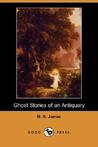 Ghost Stories of an Antiquary by M.R. James
My rating: 5 of 5 stars
Mark Fisher, in his erudite examination of horror, The Weird and the Eerie, notes that eeriness is characterized either by “a failure of absence or a failure of presence”. I would posit that M.R. Jame’s arguable opus, Ghost Stories of an Antiquary, is full of textbook examples of each. It would be spoiling the book to note which stories failure absence or presence, but it must be noted that this book could be taken as a master course in the eerie. It must also be noted that Jame’s (intentional?) elimination of summary explanations in (or about) his stories is part of what gives these tales this nearly-mystical feeling. You won’t find stories here that are neatly tied off, for the most part, with a “big reveal” that provides that opium for the masses of readers: closure. No, you will find that many of these stories are unresolved. They end, simply, as matters of observed facts. You might construct an explanation in your own mind of what happened, who did what and why, and what went horribly wrong. But all of these explanations happen, as they do with all good literature, in your head. You will become a participant in these stories. You, like many of the characters therein, will be haunted by the experience. Let’s draw up our salt-circle (or not) and summon the ghosts:
"Canon Alberic's Scrap-Book" had to inspire many of Lovecraft's stories. Antiquarian book? Check. Occult rituals? Check. Suspicious-seeming natives? Check. Creepy noises in the dark? Check. "Journal entries" (marginalia, really)? Check. Investigation of strangeness with academic undertones? Check. Freaky creature? Check. Just add tentacles and hyperbole. I liked this a lot more than most of the Lovecraft I've read, but I'm a little burned-out on the Mythos, to say the least. I grow tired of Lovecraft and his imitators. Give me four eerie stars, without tentacles, please! In all seriousness, if someone with a mind like Sandy Peterson’s had picked this story to create an investigative roleplaying game, we might not have Call of Cthulhu now, we might have Call of Canon Alberic! Of course, if you're looking for ghostly roleplaying of the Jamesien variety, look no further than English Eerie. I recommend it. And now, we return from our commercial break . . .
"Lost Hearts" is another tale that evokes Lovecr. . . Wait - I see what you did there with the title, James! You sly old dead dog, you. I love this little ghostly/occult tale. I would love to see it rewritten to show what would happen had Mr Abney succeeded . . . that could make another terrifying tale, possibly overshadowing the origi. . . Hmm . . . I've got some paper and a pen. Hmm . . . first let me draw these four stars. I'm never going to get this review done, at this rate.
I've read "The Mezzotint" before, and heard a fantastic audio adaption of it on what has become my favorite podcast, of late, and yet, despite all my familiarity, it still does not fail to make on shiver. One of the best "weird" stories written. This one has staying power, with latent images that only partially fade over time. The imagery is burned on the lens of my mind. And my mind created it, prompted by James' words that I read with my eyes, or rather, my mind transformed the words - it is a strange thing to think about. Where do these creations of the mind come from? What makes words form images in my brain? I will meditate upon these five stars and give it more thought.
Ew, ew, ew, eeeewwwww!! "The Ash-Tree" = #nopenopenope. Just. No. And not the most effective story thus far, but still better than most other strange stories of a similar ilk. But this story gives me the jibblies for fifteen minutes straight. In all seriousness, this pushes too far into gross territory for me. I'm not about gross or gory. Creepy is not the same as gross. Four slightly disgusted stars.
"Number 13" is a great little mystery. Not the strongest story so far, but by no means weak. If you wonder where Mephistopheles took Faust, this might give an indicator. And it's closer than you think. In fact, it might be right next door. The trick is to find the door . . . and avoid it at all costs! Four stars cast the shadow of Danielewski’s House of Leaves.
At first, I thought "Count Magnus" was a novella. We need more novellas in the world. Many, many more. I wish the majority of published works were novellas. But I'm a snob that way. Then, after skimming ahead a second and third time, I discovered that "Count Magnus" is NOT a novella: Whomever did layout on this edition (Good Port) done screwed up! After this story, we have "Oh, Whistle, and I'll Come to You, My Lad," and "The Treasure of Abbot Thomas". The layout is so screwed up, in fact, that these last two don't even appear in the table of contents. So if layout is your thing, best pick a better port than Good Port.
"Count Magnus" is the most evocative story in this collection. By "evocative," I mean that it is . . . well, not subtle, but not "in your face," either. It's more creepy than horrific, and that's the sort of thing that I love. This could easily be a Twilight Zone episode! And, like my favorite TV show (the ORIGINAL Twilight Zone, or OTZ), this story gets five stars.
My first note on the next story: "*Sigh* you had to go and blow the whistle, didn't you, Parkins? This is the part where things go horribly, horribly wrong, I suppose."
And I supposed right.
Important safety tip: If you find something in a grave, don't play with it. Whatever you do , don't touch it to your lips! Yuck!
"Sinister" is the best word, I think, to describe the feeling of the story "Oh, Whistle, and I'll Come to You My Lad". The apparition therein is the scariest of all in this book thus far. I did not sleep well the night I read it, all wrapped up in bed sheets. This story makes innocent bed sheets terrifying. Sleep tight! Five shuddering stars.
"The Treasure of Abbot Thomas" is a textbook mystery marbled through with supernatural elements. The narrator's presentation is a well-played shell game of obfuscation and revelation. I would have liked a more consequential ending, but that trick was for later authors. Five stars, despite the flat-ish ending.
There is no doubt why this collection gets reprinted again and again (sometimes poorly, as you can see from my review). If there ever was one "classic" single-author collection of ghost stories, this is it.
Go.
Read.
Fear.
View all my reviews
________________________
If you like my writing and want to help my creative endeavors, ko-fi me at https://ko-fi.com/forrestaguirre. Every little bit is seen and appreciated! Thank you!
Subscribe to:
Posts (Atom)