Showing posts with label Books. Show all posts

Friday, June 19, 2026

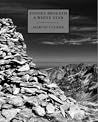
Stones Beneath a White Star


Stones Beneath a White StarStones Beneath a White Star by Martin Locker
My rating: 5 of 5 stars

I was speaking with someone recently about teaching young children complex concepts. This friend is a teacher of very young children (three- to five-year olds) and is tasked with teaching them some advanced concepts. She was concerned that these kids were never going to remember these principles, though they might integrate them subconsciously, the same way that back in our secondary-school grade introduction to trigonometry and pre-calculus, we all said "we're never going to use this stuff". That turned out to be true for most of us, though our brains were permanently rewired, ever so slightly, to form thoughts in a new and different way than we had done before. All of this aside, we agreed that while these young kids probably won't remember a thing about what was said to them, they absolutely will remember the way they felt when they were being taught. I can attest to this. I remember my third-grade teacher, Mrs. Wells, not because of the things I learned, but because of her kindness and patience and her great sense of humor. I remember her reading us the Winnie the Pooh stories and her spot-on voices (with the Disney movies as her template). And I remember her encouraging my reading, even recommending me to what they called the "talented and gifted" readers program for reading and writing. I didn't even fully comprehend what that meant, but I remember the way she made me feel: special, recognized, an individual. I'll never forget her. I can't even name my second or fourth grade teachers, but Mrs. Wells; she was an icon.

I share this because of the way Martin's book Stones Beneath a White Star made me feel. If someone asked me what the book was "about," I would stumble and mumble my way through an answer. Something about friends and loss and mysticism and mountains and reconnecting with the past . . . mumble mumble mumble . . .

It's tough to pin it down. But I know how the book made me feel.

Excuse me while I get a little personal. I'm hardly on social media these days (intentionally), so I don't spill my guts like some people do regularly. So, humor me. I'll try not to be boring. And maybe this indulgence will say a bit about the book. One caveat: I am a pen pal with the author. We write each other, pen and paper, yes, the old-fashioned way, irregularly. As a result I've gotten to know Martin a little. I apologize if you think this shades the review in any way, but hey, it can't be helped now, can it?

What I didn't say about my experience with Mrs. Wells above is that I was living in Italy at the time. My dad was military - I was what is colloquially called a "Military Brat" (hey, if the shoe fits . . .) - so I lived in a lot of different places through my life. I sometimes wonder if Air's song "Universal Traveller" wasn't written for me (did I mention the word "brat"?). I've been around . . .

One problem with having been around is that some of the places I lived, I can never visit again. The Air Force base I was born at in Germany is now a US Army base, the base where we lived in Italy, San Vito, is abandoned and off-limits, the base in England where I spent most of high school is now a British spy base (though I can, and did go on a tour of some of the base a few years back, "my" house is strictly off-limits), and the house I lived in when we were in The Philippines was buried under volcanic ash and the base abandoned by the US military. In essence, a lot of my childhood stomping grounds are either inaccessible to me or just plain don't exist anymore, though I have written a bit about my dream-life in one of those places.

This makes me a little melancholy. While many people can just drive (or even walk) to their childhood home, I just can't. I can get bits and pieces and visit places near some of those places, but time and circumstance have effectively banished me from my own childhood. It's a little more than mere nostalgia. I am haunted by the ghosts of the places of my past.

And here we have a segue into why I feel the way I feel about this book. Stones Beneath a White Star is the most profound work of Psychogeography I have ever read. It is about the spirit of a place, in this case, the Pyrenees Mountains (where, incidentally, my ancestors on my father's side hail from, generally - though they lived in the Basque regions, while this work takes place largely in and around Andorra). The religio-mystical history of the region is dealt with in encyclopedic depth. The book as historical treatise on the area is exhaustive, thick with referents and nuances that I admittedly know little or nothing about. But this didn't affect my reading, outside of wanting to know more about the people, events, and places portrayed.

The real rub of the book is the intimate connection of a few close friends and fellow-believers to the land itself. Their connections to each other (and some of those who have passed on before them) provide the engine for the story (such as it is). These relationships, between people, the land, and the history of the land, is absolutely immersive. I cannot say what the book is "about," nor do I care. This is the kind of book you just live in, for the moment, a meditation on friendship, loss, and retrieval, of the fluctuating bonds of love despite the catastrophes and disappointments of living life on this planet. It is a novel about the resilience of friends finding peace in a broken world.

You can probably see where this is heading . . . I live in a world of broken memories, unretrievable. I'd like to think this isn't just a function of mawkish nostalgia. I literally can't go back. But the memories still haunt me. Needless to say, this book affected me . . . deeply.

Thank goodness that while much of my past is bricked off (or behind barbed wire), one thing persists, despite location, and that is meaningful friendships. I've made and lost many friends throughout the years (as I get older, I lose more and more), but as I retain some ties over the decades and form new friendships with people I've not known before, whether intentionally or through pure happenstance, there is connection. And this connection is something to be nurtured, something sacred.

View all my reviews

____________________

If you like my writing and want to help my creative endeavors, please ko-fi me at https://ko-fi.com/forrestaguirre. Every little bit is seen and appreciated! Thank you!

Saturday, March 28, 2026

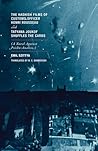
The Hashish Films of Customs Officer Henri Rousseau and Tatyana Joukof Shuffles the Cards


The Hashish Films of Customs Officer Henri Rousseau and Tatyana Joukof Shuffles the Cards: (A Novel against Psicho-Analise)The Hashish Films of Customs Officer Henri Rousseau and Tatyana Joukof Shuffles the Cards: by Emil Szittya
My rating: 3 of 5 stars

I picked up this collection of Emil Szittya's prose poems(?) on a lark while visiting my favorite bookstore in the state of Wisconsin, Within Things. I had gone up there to pick up an album by new-to-me experimental ambient artist Elodie and came away with the album, a copy of Damian Murphy's The Bastion Overwhelmed, a friendship with the owner and his wife, and a copy of The Hashish Films of Customs Officer Henri Rousseau and Tatyana Joukof Shuffles the Cards: (A Novel against Psicho-Analise). A nice little haul on a wonderful summer day up in Door County.

As is usual with Wakewood Press offerings, we start with another great intro by translator W.C. Bamberger. I have been impressed with their opening essays time and time again. I would love to see a collection of Bamberger's short essays, each of which is a gem of information and erudite literary analysis. I could read his essays all day long, they're that good.

With Szittya's work, we begin in the border regions of Surrealism, with Dada on the horizon, but not quite free of the grasp of "traditional" writing. In short, it's getting weird, but not weird enough to be really interesting or compelling.

Out of my sadness I paint garish posters for illuminated dilapidated houses. My train has just steamed off with a spring landscape. It is hateful to be a clown.

"Gabriele's Opinion of My Hashish Hours" is the first section of this book that lives up to the promise of the surreal as a mechanism for breaking through to a more honest world by crashing through the gates of semi-structured nonsense into the ridiculousness of existence. This is over halfway through the volume, so it's a slow start. I'm fine with slow starts, in fact there are places where I prefer them. But for such a short book, the velocity just isn't fast enough for this reader.

"The Bordello," following immediately, is a more coherent prose poem. I had hope that the book might be picking up some speed.

The work gained momentum (and elicited more emotion) as it went along. "A Stroll (for Rita Kirsten)" is particularly moving. The sense of melancholy is not stilted, as in the earlier pieces, by absurdity for the sake of absurdism.

And this highlights my biggest problem with the work. Szittya sometimes wears his heart (or intellect) on his sleeve too much. It's as if he referred to The Dada Manifesto every other paragraph to make sure he was staying "on message," though said manifesto didn't appear in print for another two years. Perhaps he wasn't adhering to the party line so much as inventing it.

Regardless of provenience, the work shows hints of "soul," but often times lacks just that. If you are looking to jar your brain into discovering new ways of thought, by all means, you've found it. I just want a little more flow to my explorations, something with a bit more soul.

View all my reviews

____________________

If you like my writing and want to help my creative endeavors, please ko-fi me at https://ko-fi.com/forrestaguirre. Every little bit is seen and appreciated! Thank you!

Sunday, March 1, 2026

Censure forthcoming from Zagava

 I am thrilled beyond measure to announce that Zagava is publishing my short story collection Censure in 2026, first as a very limited slipcased hardbound edition, then as a paperback edition. 15 dark tales, 4 of them previously-unpublished, the rest from a bevy of obscure and difficult-to-find editions (some of them also very limited). The cover art is by one of my favorite artists: Odilon Redon, the Symbolist master. Exact publication date is TBD, but here is a taste of what's coming:


Link to the signed and lettered edition is here!


____________________

If you like my writing and want to help my creative endeavors, please ko-fi me at https://ko-fi.com/forrestaguirre. Every little bit is seen and appreciated! Thank you!

Saturday, February 28, 2026

The Shub-Niggurath Cycle: Tales of the Black Goat with a Thousand Young


The Shub-Niggurath Cycle: Tales of the Black Goat with a Thousand Young (Call of Cthulhu Fiction)The Shub-Niggurath Cycle: Tales of the Black Goat with a Thousand Young by Robert M. Price
My rating: 4 of 5 stars

I read this years ago, about twenty years ago, in fact, when I was finishing graduate school. I'll be honest, I don't remember if I owned the book and got rid of it or if I got it from the library, but, in any case, I didn't have my own copy for a long, long time. So, when I spotted this at a local antique store for a pittance, I just sprang for it. The question is, would it live up to my now-higher expectations of writing craftsmanship?

Lewis Spence's "The Horn of Vipula" was pulp as they come, with everything that implies: predictability, a not-so-surprise ending, plot "reaches" like miniature deus-ex-machina, and language that strives to be better than it really is. Meh. Not a great start to the anthology.

M.P. Dare tries to channel M.R. James in "The Demoniac Goat". He's largely successful but lacks the full gravitas of the master of the ghost story. Still, a decent enough story about an ostensibly dead priest and his pet goat. Well, who was the pet, really?

Even the editor notes the hackneyed subject matter of J.S. Leatherbarrow's "The Ghostly Goat of Glaramara". I agree with the editor's assessment. Ostensibly, he put it in the anthology for historical reasons. But some history is best forgotten.

I've read and enjoyed Ramsey Campbell's "The Moon-Lens" before, and while many consider it something akin to juvenalia, with a structure that pastiche's Lovecraft's own, I still find something intriguing here. It bridges the gap between folk horror and cosmic horror in a way that highlights the strong points of each. Maybe I just have a soft spot for it, as I would likely rate it more highly than others.

Careful restraint is not the watchword in John Glasby's "The Ring of the Hyades". Lovecraft's greatest folly: naming the un-nameable, describing the indescribable, leaks into Glasby's writing like a Rorschach test of purple prose. The story is alright, but rather predictable for anyone even vaguely familiar with the Mythos. I suppose that makes it a safe read for fans, but it would be jarring for newcomers.

During my years as an editor, I had an unbreakable rule that I would never publish my own work in an anthology I was editing. Price, in his . . . uh, work(?) "A Thousand Young" provides a shining example of why every editor should take this ethical stance. I hated this story. It was a twelve-year old's darkest sexual fantasy. Oh, and trigger warning: R**E. Yeah, no. No stars, not even one. Just . . .don't.

Odd that a story so poor as Price's should be followed by a sandal and sorcery story so nearly perfect as Richard L. Tierney's "The Seed of the Star God". Price can't write them, but he can pick them! Now I'm wondering if there is a full collection of Simon of Gitta's tales. I would read that! Sword, sorcery, and sacrifice in the decadence of the Roman Empire. SPQR!

It's not the story that sang to me. Glen Singer's "Harold's Blues" is an old tale, a very tried and true tale, about selling one's soul for music. You already know the story, from start to finish. But the register in which this was sung . . .well, that's where the magic lies. That old, dark magic that brings songs and storms and screams in the night. Familiar, but unsettling.

Lin Carter may have been a better writer of Lovecraftian tales than Lovecraft himself. "Dreams in the House of Weir," a story steeped in the mythos, but with just a modicum more of restraint than HPL lacked, teases the horror out instead of bashing readers over the head with it. There's a slow pull on the thread of cosmic horror here that unwinds one's sanity. If your dreams become wondrous, you should start to fear.

. . . and Carter further demonstrates his skilled pen by way of the poem "Visions from Yaddith," which is quoted in the previous story. I'm rather curious which came first? The story? Or the poem? Each path carries some interesting implications about the writing process that I need to ponder on a while. I could see each having its benefits, and I've done both, but without much intentionality. I must think on this. It's been a while since I've tried my hand at poetry.

I wavered on M.L. Carter's "Prey of the Goat". It swung from interesting to hackneyed, back to good, then to trite, wallowing in mediocrity. In the end, I'm in the "meh" camp, with a slight twinge of "interesting," but not interesting enough to take me beyond a bland assessment. Could-have-beens and all that rot.

"Sabbath of the Black Goat" carried a not-so-surprising ending. Add to this the hyper-compressed, yet somehow thin info dump by Stephen M. Rainey and you have a rushed, middling story. I suspect there was some word count restriction on the story, but whether the story should have been longer or shorter is difficult to say. It's clear, though, that the pulp suit just doesn’t quite fit right.

Another Price story, but this one co-authored with Peter H. Cannon, "The Curate of Temphill" reads somewhere between M.R. James and Umberto Eco; meaning I quite liked it. I have to attribute this to the co-authorship(?), something I've done myself with good results (with author Brendan Connell, whose work I continue to greatly admire). This tale of Templars and heretical prophecies is an unexpected and welcome find in such an anthology. No Old Ones here, but they are not needed.

David Kaufman's "Grossie" might be the most effective story of this anthology (and also has the worst title, though it fits). It's as subtle as Lovecraft is unsubtle. There is a menace of place here and the faint aroma of ancestral evil, just enough to pique the imagination, just enough for the reader to really feel the underlying horror without facing it directly, an underlying genius loci with inimical intent. Don't be fooled by the puerile title. Another tale where the Old Ones don't make a direct appearance, and they don't have to. In fact, having an "unspeakable" horror show its face would have destroyed this beautiful (but dark) story.

"To Clear the Earth" is a story lost and found to me. I remember, in the mid-90s, reading a mythos story that made a deep impression on me. It was cosmic horror writ-large, on an Earth-ending scale, but in more of a science fiction paradigm than horror. The setting was Antarctica (which makes me wonder why it wasn't in the Antarktos Cycle). And here it is, by Will Murray (also the author of the Doc Savage and Destroyer series). It doesn't resonate as much now. I was surprised by the ending (which I had forgotten), so that wasn't the problem. I think it might be the pulp-adventure tone of the second half of the story, or maybe it was the info-dumping that took place throughout. I guess it was needed back in the day, but nowadays the Mythos lore is so common as to be trite. Or maybe I've just played so much Call of Cthulhu that I recoil at explanatory passages, especially ones about the Necronomicon. In any case, the story, while good, didn't have the same magic (nefarious or otherwise), as it did last century.

So, alas, the me of twenty years ago enjoyed this anthology far more than the me of now does. Age happens. Experience happens. Nostalgia happens. And sometimes, nostalgia is deceptive. Live and learn.

View all my reviews

____________________

If you like my writing and want to help my creative endeavors, please ko-fi me at https://ko-fi.com/forrestaguirre. Every little bit is seen and appreciated! Thank you!
Monday, January 26, 2026

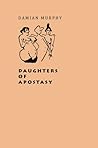
Daughters of Apostasy


Daughters of ApostasyDaughters of Apostasy by Damian Murphy
My rating: 5 of 5 stars

I don't think of myself as a fan of Damian's work, so much as a devotee. There is something of the sublime that frequently speaks to me from the pages penned by him. Reading Damian's work is not so much a "mystical" experience as a "preparatory" experience, a view of an initiation from afar, full of anticipation. I often ask myself when I read his work "when am I going to become a part of the story, or when is the story going to become a part of me".

Revelatory experiences aside, one must (absolutely must) admire the craft of his work. There is an obvious love of the subject matter, setting, characters, and strange circumstances that the characters often find themselves in. One can almost feel the author feeling his own way through the labyrinthine maze hidden carefully away in his citadel of thoughts. But, reader beware, you are walking alongside a trickster and a thief whose sleight of hand can leave you dazzled by illusion or, even worse, your own delusions.

But you need not fear demons (outside of your inner fiends). You are safe, as you read, even as his characters sometimes are not. You have the luxury, particularly in the present volume, of simple elegance to see you through. I'm referring, of course, to the restrained (yet seemingly decadent, especially for such an inexpensive hardcover limited-edition) eloquence of presentation that Snuggly Books seems particularly skilled at. A salmon-colored cover (at least I believe so - I have hue blindness to some extent, so maybe I'm just seeing it as such) with a simple illustration of three women (two nude, one a spectral figure) on the front by none other than Henri de Toulouse-Lautrec seems hauntingly appropriate for the stories in Daughters of Apostasy, whose main protagonists are women. And what a variety of characters!

As usual, Murphy's vision here is a series of inner visions of cosmic consequence. Trespass becomes initiation into an imaginary city hidden in the bones of the physical world in "The Scourge and the Sanctuary". Christopher Wren collides with Huysman's, but Murphy's work is all and none of these. The key is in the story itself:

The fictions we partake of, as with the fictions we create, bear consequences for each of us that lie beyond the understanding and control even of their authors.

An ever-changing labyrinth of a hotel, spurred in its metamorphoses by seekers of gnosis, is both setting and character in "Permutations of the Citadel". It's a lavish tale full of mystery and misdirection, a lair for tricksters, initiates, and those seeking the other side of the mirror. Add a little playful devilishness and you have what Wes Anderson might be if he was to ever take his subject matter seriously.

"The Salamander Angel" is a journey of several pilgrims into and out of regions beyond the veil of this world. There's a kind of Hegelian dialectic of the divine and the blasphemous, a looping together of heaven and hell through the travels, intentional and accidental, of oneironauts, occultists, and tricksters. The (anti?)heroes charge and stumble their way through "above" and "below" in their epic quests. This is an extremely powerful tale. Handle with care.

"The Book of Alabaster" is a somewhat surprisingly-emotive story that starts by pulling the nostalgia strings (at least for this teen of the '80s) before winding its way into an enfolded reality of simulation. What is reality and, as important, when? Most important of all: the mystery of The Programmers remains, or, as one of my favorite obscure songs from the '80s asks "Who are the unwatched men"?

Oftentimes, the "previously unpublished" story in a collection is the weakest. This is clearly not the case here. If you desire to sup at the table of "The Music of Exile," you'll need to pay for entry; make a sacrifice. The price is well worth it, that I can guarantee. But be prepared to discover what is hidden and then to hide what is discovered. This the initiated know.

View all my reviews

____________________

If you like my writing and want to help my creative endeavors, ko-fi me at https://ko-fi.com/forrestaguirre. Every little bit is seen and appreciated! Thank you!
Tuesday, December 23, 2025

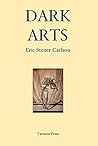
Dark Arts


Dark ArtsDark Arts by Eric Stener Carlson
My rating: 3 of 5 stars

Let me start by saying that I absolutely love Tartarus Press. In fact, I just had Mark Valentine's most recent collection from them show up in my mail this past week. My first Tartarus book was a copy of Meyrink's The Golem, which a good friend of mine gifted me many, many years ago. I think I own about twelve volumes from Tartarus, most of them hardcovers (though I'd have to verify that number). I've never been disappointed by a Tartarus publication. Unfortunately, that streak may have come to an end with the current volume. Carlson's Dark Arts isn't bad, it's just not up to par with the other Tartarus books I've read. I suppose not every volume can be outstanding. I also just encountered what I would consider Wakefield Press's weakest volume that I've read so far. Maybe it's a bad batch. Maybe it's just me, who knows? But I have to call them like I see them. And here is how I see each of the stories in this volume:

Can a story in which not one, but four deaths occur (one being an alleyway murder) be considered . . . comforting? Soft? Even loving? Carlson tells just such a tale in "Golden Book," in which an Ikiryo meets a young girl destined for her first encounter with death. This story is more of a blessing than a curse, as dark as it is.

"Coffee Shop" was ripe with dazzling poetics. Unfortunately, the incredible potential of the plot and language was unrealized. I wanted so much more than what the ending had to offer, but then again, that might have been the point of this story of trapped desperation?

I feel the same way about "Divining Rod" as I did about the last story. So much poetic potential, so little punch. This tale seemed to meander, directionless, like a series of disjunct writing exercises strung together on a frayed, insubstantial plot line. But again, maybe that was the point? I'll never know. Or maybe that is the point and I'm just too shallow of a reader to realize it?

I thought that maybe I would warm up to Carlson with the next tale. "Leopard-Spotted Scarf" is a touching (if tinged by horror) tale of a woman daring to become her childhood self, yet again. It's a bittersweet tale that doesn't telegraph the surprise ending, though one can likely figure out what's happening beforehand from the subtle cues left by the narrator. It's a Twilight-Zone-esque tale, which is one of the highest compliments I can give a story

Alas, the relative highs of "Leopard-Spotted Scarf" weren't reached again over the next few stories. "Corridor" is full of anticipatory horror past and present. Two journalists wait for the terrorists who are about to take them hostage. One has suffered throughout his life from an extreme neurosis about what will happen to him in the future. The other is terrified by the prospect of capture and death. But in this case, one's terrors can atone for the terror of another. A good (not great) tale of strange redemptions.

Somewhere along the way, I lost the thread of "Bradycardia". The heady mixture of dream and waking life, along with what might be psychosis, goaded along by a manipulative lover(?) gets almost too convoluted. There's a fine line between complex and incomprehensible, and I wavered over both sides of that line throughout.

The premise of "Stray," a story told by a dog about his many previous lives, was, to be honest, not to my liking. But Carlson handled that premise with tenderness and an ongoing emotional charge that won me over. I didn't like the idea, but the execution was handled by such a deft hand that I couldn't help but love the story.

Mood and atmosphere dominate "Strasse 60, Berlin". This story has a heightened sense of tension that gives it a higher ceiling of dread and eeriness than other stories thus far in the collection. The press of confusion is palpable. Chronology is shuffled and the narrator is misdirected by the phantoms of his own memories. A disconcerting, very effective story. This was more of what I had hoped for.

"Salt" is an excellent story of gaslighting by an authoritarian regime. It's a twisted narrative of unraveling untruth and an emotional gut punch to a narrator that may or may not be insane, but is absolutely in a lot of trouble.

Despite a baldly-telegraphed "twist" and some pushy histrionics, I rather liked "Monsieur Machine". Delivery aside, this was an excellent tale of love and ambition coming into stark contrast, then resolution of the dialectic. Given its mechanistic themes, there is an evocation of emotion that moves the reader while horrifying at the same time. Here love and loss combine to create awe and the awful.

I liked "I Loved You at Your Darkest," but didn't love it. Pardon the horrid attempt at a pun. Yes, the story twisted in an unexpected way, but resolved too quickly, in my mind, with the narrator able to make logical leaps using clues that shouldn't have evoked his conclusions. Another good, but not great tale, straining my belief a touch too much, which was the kiss of death (another horrible pun, given the plot).

I heard hinted echoes of Dhalgren in "The Atelier," a dystopian post-disaster (and pre-even-bigger-disaster) tale set in a fractured Europe held together by authoritarianism. But Delaney's novel was far superior to this tale, which is only a faint, thin shadow of the former. I found rays of hope in the hopelessness, but, again, this story just wasn't really "for" me.

Again, it's not a bad collection, just not up to my expectations of Tartarus' usual work. Do I regret buying it? No. I don't think I can ever regret buying a Tartarus title - they are, to me, the height of craftsmanship and elegant design. Would I buy it again, knowing what I know now? Also no. Like I said: maybe it's just me. High expectations + more experience over time = jadedness, I suppose. Then again, maybe it's not just me. You'll have to decide for yourself.

View all my reviews

____________________

If you like my writing and want to help my creative endeavors, ko-fi me at https://ko-fi.com/forrestaguirre. Every little bit is seen and appreciated! Thank you!
Sunday, December 21, 2025

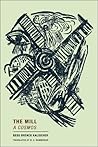
The Mill: A Cosmos


The Mill: A CosmosThe Mill: A Cosmos by Bess Brenck Kalischer
My rating: 3 of 5 stars

I believe this is the lowest rating I've given to a Wakefield Press title yet. It makes me sad, because I love what Wakefield does: bring fantastic obscure works in translation to light in the English-reading world. They've done some fantastic work in the past (including the amazing work of Marcel Schwob, Marcel Bealu, Otto Julius Bierbaum, and, most remarkably, Jean Ray). So, you'll excuse me if my expectations are sky high . . . but they are.

My unrealistic expectations were met with the introduction to this volume. As with every other Wakefield Press book I've read, the translator's introduction, this time by W.C. Bamberg, is worth the ticket price alone. It's an extremely evocative piece about this essentially unknown author: well-researched (with a hint of the historiography involved, even), captivating, sympathetic, and enlightening. This is the fine scholarship I've come to (unfairly?) expect from Wakefield. At times, the writing in the introduction out-paced the writing in the actual story.

It didn't take long after reading the introduction to become somewhat disenchanted. What seemed to start out as a staccato poesis descended into pure Dada. I understand that makes the work "of its time," but that doesn't excuse near-incoherence. Yes, the story is about a woman holed up in a sanitorium, but the experimental form . . . well, the experiment just didn't work for me.

The section "The Island of Destiny, or Encounter with the Caliph" was the first truly coherent narrative of this work. It started on page 25 and sustained through page 32, but I have to admit that making it to this section was a feat in and of itself. I've read plenty of stories with insane (or at least highly neurotic) and unreliable narrators, plowed my way through some notoriously difficult prose (Proust, Joyce, and Beckett, I'm looking at you), and read more than my share of stories about madness. But the first 25 pages of Kalischer's work here had me nearly leming the book, but I decided to press ahead. It is a short work, after all, and I'd bested tougher (though better-written) material.

After that the narrative gets wobbly, teetering on the edge of coherence, threatening to fall into Dada at any moment. It's sometimes difficult to discern between playful intellectual brilliance and an utter collapse of reason. It's almost as if Kalischer weaves in and out of each, with no warning about what direction she is turning; blind curves ahead. Sure, the narrator is struggling with mental illness, but a reader needs some kind of compass, even a weak one. Still, I pressed on.

Lest you think this ship has utterly sunk, that all was lost, that's not true. Later, near the end, I uncovered "On Sirius". It is by far the best section of the book. It's a gentle, smoothly flowing prose poem, not entirely lacking disjuncture, but not as chaotic as some earlier sections of the book. It is a piece that is of a piece, well-put-together, but not stodgy. I can (and have) wrap(ped) myself up in it. It is comfortable, but not so cosy as to be uninteresting. If the entire book was written this way, it would be at least a four-star book for me. Alas, that can't be. The neurotic narrator, like most humans, had a long string of near-coherence which, of course, wouldn't last.

However, I didn't mind the ending being disjointed. In fact, I think it worked quite well, given that we had a comfortable baseline in "On Sirius" from which we could jump off. The tragedy of this last section felt real and poignant. A good ending, given what came immediately before it. But the first part of the story started off in such a stark, jarring manner that I just couldn't make the connection with the narrator until halfway through the book. In fact, I wonder what the book would have read like had it begun with "On Sirius" and the erstwhile early material was tagged on to the back of the story (after the sanitorium episodes)? Possibly a stronger narrative? Unfortunately, Kalischer isn't around to ask for a rewrite.

Still, kudos yet again to Wakefield for presenting a work obscured by history and doing so with all the reverence and academic rigor it deserves. Yes, it fell short for me, but that's not stopping me from continuing to dip in the stream of Wakefield works. In fact, there's another waiting on my shelf right now that I am eager to read. I'm still on the Wakefield train and won't be getting off any time soon!


View all my reviews

____________________

If you like my writing and want to help my creative endeavors, ko-fi me at https://ko-fi.com/forrestaguirre. Every little bit is seen and appreciated! Thank you!

Tuesday, December 2, 2025

Goodreads Sucks More? Again?

 Well, Goodreads has done it again. And by "it" I don't mean anything good. Exhibit A:


I have a long history with Goodreads, and I've got the receipts to prove it. I tried Booklikes, but, well, I didn't like it. Why? I can't even remember, that was so long ago. Suffice it to say that I stuck with Goodreads and for a time considered it my only social media.

Given the message above, that is coming to an end. I did send a "WTF?" message to Goodreads. I don't expect a response, but you never know. They've surprised me before by actually responding to my questions about a previous move they had made. But, I admit, my email back then was much more restrained and well-thought-out than my kneejerk reaction tonight. 

I posted a message there asking anyone who wants to keep contact to message me ASAP and I would exchange emails with them. 

As with other changes, I suspect that this is just the tip of the iceberg. I cannot fathom the reasoning behind this, as it is one of the things that keeps Goodreads members connected. The conspiracy theory side of me wonders if other social media applied pressure to make Goodreads less of a social media and more of a commercial enterprise. Or maybe Goodreads just did that themselves. What? Following the almighty dollar at the expense of actual human interaction? That's never happened before, has it? 

Ugh.

My selfish fear (outside of losing direct contact with many people whose opinions I greatly appreciate) is that Goodreads is up to something even bigger. You'll note that many of my blog entries/reviews use the HTML template that Goodreads provides. So, there is a possibility that I will need to (somehow) transfer essentially all of my book reviews from Goodreads to my blog which, frankly, sounds like the height of tedium. 

I can't shake the feeling that this will lead to me being online even less (and I've already taken many steps out of the virtual world and back into the analog world).

Well, let's see what happens. Will this finally be the death knell for Goodreads as a viable venue for enjoying books with other book lovers in a meaningful, personal way? Maybe. As with all things, time will tell.

____________________

If you like my writing and want to help my creative endeavors, ko-fi me at https://ko-fi.com/forrestaguirre. Every little bit is seen and appreciated! Thank you!

Tuesday, November 18, 2025

The Life and Opinions of Tristram Shandy


The Life and Opinions of Tristram ShandyThe Life and Opinions of Tristram Shandy by Laurence Sterne
My rating: 5 of 5 stars

In my quest to "use what I have," a subset of "minimalism," I'm digging back into books that I have read before, but not yet reviewed. I believe I picked up this (now very beat up) copy of Laurence Sterne's The Life and Opinions of Tristram Shandy as an undergraduate at BYU. I don't exactly remember why I chose this book. I think I just spotted it on a bookshelf in a used bookstore near campus, read the back copy, and decided to give it a try. I was a humanities major as an undergrad, so it behooved me to read "classics," and this was one classic that I had never heard of until that point. I was young and dumb then and didn't have the toolkit to really analyze literature quite yet. I was building that toolkit.

Turns out, for this novel, I didn't need a toolkit.

Because Tristram Shandy defies analysis.

Plot? You've got to be kidding. The main character isn't born until page 170.

Setting? The vast majority of the story takes place on the grounds and house of the Shandy estate, though several pithy journeys wind their way into the narrative. There is a section on France (largely dismissive and with much of the "action" taking place at night, unseen by Tristram himself).

Speaking of which: Action: If you're looking for acts of heroism, you'll hear some referred to, mostly by Corporal Trim, the (extremely lovable and innocent) servant of Tristram's Uncle Toby. These are viewed with a simplistic eye and lack any of the bombast of most modern thrillers. Teh highest levels of excitement are reserved for 1) references to battles in which characters (most notably, Uncle Toby) have been wounded, 2) arguments between servants and, sometimes, their masters, 3) arguments about the birth of the boy and his naming, and 4) philosophical arguments.

Philosophy? The novel is lousy with it, but philosophers are often misquoted (whether intentionally or not is difficult to tell), misidentified, and their words maladjusted to whatever argument is being presented at the time (which is coming from Tristram's father most of the time).

Culture? Here we are hitting something important and, ostensibly analyzable. But who has time to learn all the mannerisms of mid-18th century England? Thankfully, the novel is also lousy with endnotes (and I don't mean "bad" when I say "lousy," I mean "infested, as with lice"). It's a whimsical window to the England of the 1700s. America didn't even know what it was missing.

Structure? Ah, mmm, about that . . . the only structure here is digression. It reminds me of the time as a grad student I had to learn to read French, after having studied German for four years and Swahili for two. French . . . has no structure. Everything is an exception. This drove me absolutely batty. In fact, "French for Reading Knowledge" is the only class I ever failed in college. It doesn't help that the teacher had us construct sentences from scratch for the final, something we were never taught and never instructed to study. We were taught to read, which I could do pretty well. But then the final came and we were supposed to construct a bunch of sentences from nothing in French. I'm still pissed about that one. Anyway, after studying the firm rules of German and Swahili grammar, with a couple of idioms sprinkled here and there (and easily recognizable, for the most part, from context), I was thrust into the spaghetti code of French "grammar", where, I will repeat, everything is an exception, with very few rules that I could fathom.

But as much as I hate(d) French, I love the digressions of Tristram Shandy. And this lack of structure, this worship of the digression, is by design. To quote Sterne:

Digressions, incontestably, are the sunshine; - they are the life, the soul of reading; - - - take them out of this book for instance, - - you might as well take the book along with them; - one cold eternal winter would reign in every page of it; restore them to the writer; - - - - - he steps forth like a bridegroom, - bids All hail; brings in variety, and forbids the appetite to fail.

The heart and soul of the book, then, is The Digression. Not just those used by the author in creating the "story," but also by each individual character in telling tales of yore, quoting philosophers (poorly), and even in the manner in which they read certain treatises and tell certain tales, themselves full of digressions.

And what of the characters? Here is where Sterne hits his highest notes, particularly in the characters of Uncle Toby and Corporal Trim, two grizzled veterans, stout of heart and dedicated wholeheartedly to their "hobby horse" of large-scale reproductions of military campaigns in which they participated. I really fell in love with these two warm-hearted characters and their banter, which, of course, spilled into, yes, even more digressions.

Speaking of the "hobby horse," here Sterne, though a pastor, is far from innocent in his insinuations. This novel is bawdy. Thoroughly so. To the point that I am shocked that Sterne didn't lose his clerical office. As any shrewd Englishman would, however, he hid the bawdiness in euphemism, some of the most clever euphemisms I have ever heard (and I was raised around soldiers who would make you question the physical ability of one to stick one's body parts into the suggested receptacle - the physics are staggering).

So, I say pishposh to all the deep post-modern analysis of the academy. This is a novel that is meant to be read and enjoyed, not dissected and analyzed. It's a morass of facades, innuendo, and false leads, baroque in its segues and sidestreets, and all the more beautiful for its chaotic complexity.

View all my reviews

____________________

If you like my writing and want to help my creative endeavors, ko-fi me at https://ko-fi.com/forrestaguirre. Every little bit is seen and appreciated! Thank you!

Wednesday, September 24, 2025

The Wander Society


The Wander SocietyThe Wander Society by Keri Smith
My rating: 4 of 5 stars

Pretentious? Yes. But I like pretentiousness. But I actually LIKE pretentiousness in writing. Sure, it's a little "twee" at times, but so what? Keri Smith is living her best life. Get over yourself.

What he have here is non-fiction disguised as fiction. It's a handbook, really, an eclectic mix of false story that entices one into the Wander Society. There is a touch of armchair philosophy and a lot of practical types on how to be impractical, which is a wonderful undertaking. Whimsy is the heartbeat of everything you'll find in this work. If you take yourself really seriously, you are going to be seriously disappointed.

My favorite sections were "The Wander Society's Tactical Guide" and, most importantly, "Assignments/Research/Field Work". These are were the rubber (of your soles) hits the road (or the dirt or mud or gravel). This is what I was looking for when I first heard about this strange little book. Before reading the book, I had already implemented my own brand of "Leave Behind," as Smith names it, a calling card, if you will, and a tribute to life, death, and the struggle between the two. It's been exactly a year since I started the practice of beautifying death on the trail, and, in fact, I laid a garland on a critter this afternoon. Poor little guy! If I don't memorialize his little life, who will?

This book has also helped me as I do my best to go analog and ditch the smart phone. Walking, especially wandering (there is a difference) is a great way to immerse oneself in analog, as long as one is willing to turn their phone off or leave it at home while on the trail. It's a beautiful, horrifying, lovely world. Look up from your screen for a while and take it all in. The Wander Society can be used as a tool to help you learn how.

Remember "Solvitur Ambulando" and "non omnes qui errant perditi sunt"!

View all my reviews

____________________

If you like my writing and want to help my creative endeavors, ko-fi me at https://ko-fi.com/forrestaguirre. Every little bit is seen and appreciated! Thank you!

Monday, September 1, 2025

Now It's Dark


Now It's DarkNow It's Dark by Lynda E. Rucker
My rating: 5 of 5 stars

I first encountered Lynda E. Rucker's work in such magazines (remember those?) as The Third Alternative , Shadows and Tall Trees , and Nightmare Magazine . I've always admired her work, but I've read it intermittently, in sparse doses. The wonder about short story collections is that a reader can encounter stories by the same author, one after another. Sometimes this is disconcerting - quality is varied, voices change so dramatically as to be jarring, the same themes are done to death - but the best collections show just enough of the author's range of voices and themes, all at high quality, to introduce the reader not just to a new world, but to new worlds.

The worlds that Rucker takes us to in Now It's Dark are, well, dark. Not gory, not reliant on jump-scares, but more than just weird. At times, her work is creepy, emotionally gut-wrenching, or shocking, and sometimes (as in the last story of this volume) all three at once. Let's explore each story, in turn.

"The Dying Season" is composed (with a deft authorial hand) of a series of mis-steps by a fragile, emotionally-shaky woman who is on a supposed vacation in an off-season resort. This is not a fairytale but a tale of dark fairy that leaves one befuddled and even less sure of one's place in the world, like a psychogeographic black blot on the map, where being found is being lost. An unsettling tale.

"The Seance" was first published in Uncertainties, volume 1 and I can . . . certainly . . . see why. It's the vagaries peeking around corners, not the jump scare or obvious gore, where the real terror lies. Or does it? Just when you think you know something or, worse yet, someone, another angle reveals a hint of things you really don't want to see clearly. But you're the curious type, aren't you? Careful! You don't want to peek! But Rucker forces the issue and you are helpless and wide-eyed.

Rucker captures liminality in a bottle in "The Other Side". It's not a horrific tale, far from it, though the weird element might be considered horrific by some. Dark? Yes. But this was a somber contemplative piece drenched in sadness. Reflective and vaguely hopeful at the same time. Not only is liminality the subject of the story, but Rucker has captured the feel and mood of the liminal. Outstanding!

Egaeus Press's anthology A Soliloquy for Pan recently went through it's second printing and, once again, I missed my chance to get a copy. If Rucker's "The Secret Woods" is representative of the quality of the other stories in that volume, I have lost out on a treasure. It evoked in me both a deep emotional response and intellectual resonance. It's a gem in Rucker's crown.

I needed to sit with "Knots" for a while. It's a story about control and abuse, but there's a supernatural thread passing throughout that takes it firmly into the territory of the weird. It's heartbreaking, though, to think of those in abusive relationships that can't or won't get out. What are the knots that tie them to the situation? Mental illness? Emotional immaturity? Or something much more sinister than that? If you like to feel helpless, this is the story for you. And therein lies the horror: the horror of co-dependence.

Another story in the register of Aickman, "The Vestige" tracks a hapless traveler who has lost his passport, phone, and money. A traveling worst nightmare scenario. I've been in a similar situation when I last travelled to the UK and, on my way back, was detained in Heathrow Airport and had to give up my passport to authorities for reasons that were not clear to me then, but are now. I'll spare you the details of what is a very long story, but suffice it to say that I (and several others) were on Homeland Security's list for extra vetting and the first thing they did was confiscate our passports. Of course, that is a terrifying thing, but it's not the terror of the loss or fear of being a stranger in a strange land that affect the reader. These are sharp elements in the story, but it's the mystery of a past that might not have been and a present that also might not be that create the most emotional dissonance in this tale.

The next story was written for the anthology Gothic Lovecraft . There's just enough Lovecraft in "The Unknown Chambers" to call the story Lovecraftian. "Deep Ones" are mentioned once, as is Lovecraft himself. If you're familiar with the mythos, you'll figure out what's happening or going to happen early on. If not, then this might be a good introduction to Lovecraftiana not from the man himself. Disconcerting and stultifying, it's a good mythos tale, but not spectacular.

I suspected the final conceit of "So Much Wine" about three-quarters of the way through. The obtuse narrative could only lead to one conclusion, in the end. I was right. But I still love this story, not because of the way it concludes, but because the writing throughout devoured my attention, pulling it away from the fact that I already knew what was coming. The journey is more important than the destination.

"An Element of Blank" presents a coming-of-age story of three girls, now women, who experienced something - though it's never quite clear how fully - which may have been a demonic possession, those many years ago. Now, the possessor is back and the girls are wiser and braver than . . . what, exactly? Memory is a fickle mistress and cannot be trusted. And, yet, it must. But trauma, while it cannot erase the past, can redact it.

"The Seventh Wave" finishes this volume with, dare I say it? A splash. At turns, deeply sad, empathetic, and desperate, this story ends on a high note of pure terror. Possibly the most effective story in the volume, the voice of the narrator is strong, not in intensity, but in its depth. And the story will push and pull at your heartstrings until they're about to break until the inevitable, yet shocking end. I cannot recommend this story strongly enough.

And I cannot recommend this collection strongly enough. The physical object, as with all Swan River titles, is crisp and engaging. It might sound silly, but I love their size, the way they feel in the hand. The cover art for this volume is a painting by the amazing

View all my reviews

____________________

If you like my writing and want to help my creative endeavors, ko-fi me at https://ko-fi.com/forrestaguirre. Every little bit is seen and appreciated! Thank you!

Monday, May 26, 2025

The Creative Act: A Way of Being


The Creative Act: A Way of BeingThe Creative Act: A Way of Being by Rick Rubin
My rating: 5 of 5 stars

I studiously avoided reading reviews of this book until I was done because I (correctly) predicted there would be those who praised it as a new book of holy scripture and those who would utterly trash the work as thin and inconsequential. Neither of those two camps is right. And while I do not condone tossing a book before you've given it a fair chance (though I have utterly given up on a book or two, opinions will differ on what a fair chance is. I can see the naysayers who feel that the book is a bunch of twitter quotes strung together, and I can even see why people who went into it not expecting a philosophically-oriented book would be turned off to it (though why you would think that a book about creativity would NOT have a philosophical orientation is beyond me). That said, I lean towards the cult of those who sing this books praises. I'm not all-in drinking the Kool-Aid, but I am at the edge of the clearing watching everyone line up, considering.

If one reads the book to the end, one finds the admission:

You are you.
The work is the work.
Each person in the audience is themselves. Uniquely so.
none of it can truly be understood, let alone distilled to simple equations or common language.


And herein lies the heart of the matter. Creativity is very difficult to pin down. There are exceptions and contradictions. What works one time doesn't work the next. That's the whole point of creativity. If you're looking for an end-all-be-all truth, study Accounting. Paint-by-numbers is not creativity, and it never was. It's good practice, and one can learn principles from it, but the true teachers in creative acts are experience, intuition, and failure.

Rubin does, however, share practical ways of thinking/being for those who might be struggling through the creative process. He also shares ways to ensure that you are creating good art when you think you've got a finished product. Any writer who's been writing for a while will tell you that the most difficult part of writing is editing. And if they don't, you can bet that their work shows it. I can categorically state that my early work, even those for which I was paid good money, could stand another edit. Or two. Or ten. Here Rubin doesn't spare the rod, but reminds us of our responsibility to create the best work we can, while giving us some tools to work with.

Now many of these tools come in the last third of the book, but if one doesn't buy into the foundational principles (remember that old concept of "willing suspension of disbelief"?), then the latter parts of the book are going to be far less impactful. No, you don't have to drink all the Kool-Aid, but you have to be willing to read and observe with an open mind. If you can't at least accept, theoretically, that "art is our portal to the unseen world," then this book is not for you. But if you'll give that thought a serious chance, the rest of the book will make sense to you. Again, if you want paint-by-numbers-so-you-can-monetize-everything-with-high-productivity, you need to look elsewhere.

If you're onboard with exercising a little faith, you'll be able to grok the book. The practicum really starts with the chapter on "Seeds," about a third of the way in. From here to the end, I've marked so many passages and taken so many notes that I won't take the time to put them all (if any) into this review. I've begun marking it up (in pencil - yes, I write in my books) with marginal notes, much like the ancient rabbinical scholars used to litter a verse of scripture with their annotations. As a result, this book has become highly personal to me and will continue to do so as I revisit it. It serves as a mirror to my own creative process, revealing all of its beauty and flaws. I will gaze into this book many times in the future both for inspiration and for practical solutions when I'm stuck (and there are many methods given for how to become un-stuck in the last third of the book).

I have a handful of reference books that I keep "hot at hand" in my writing area. An old Roget's Thesaurus, Tim D. White's Human Osteology, Francis D.K. Ching's A Visual Dictionary of Architecture, and now: Rick Rubin's The Creative Act: A Way of Being.

View all my reviews

____________________

If you like my writing and want to help my creative endeavors, ko-fi me at https://ko-fi.com/forrestaguirre. Every little bit is seen and appreciated! Thank you!

Friday, April 18, 2025

Ossuary of Dreams: Twenty-Five Tales of German Horror and Weird Fiction


Ossuary of Dreams: Twenty-Five Tales of German Horror and Weird FictionOssuary of Dreams: Twenty-Five Tales of German Horror and Weird Fiction by Robert Grains
My rating: 2 of 5 stars

My kids are great. They're all adults now, so to call them "kids" feels a little disingenuous. But my kids are great (and my wife and grandkids, too, I must add).

"So why," you are likely asking yourself "are you leading off a review of a collection of weird horror fiction with 'My kids are great'."? Well, here's the deal. At around Christmas time, I do a bunch of massaging to my Amazon wishlist. Before you go ballistic, I try to order my books direct from publishers or, even better, directly from authors, so get off your high-horse for a second. I keep that Amazon wishlist to help my kids with Christmas shopping for dear old dad. One of the biggest issues with this is a recency-bias. If I see something new and shiny and it's getting near Christmas, I add it to my wishlist.

Such was the case with Ossuary of Dreams. I don't remember why I added it to my list last minute, but I did. Maybe it was the cool title or the even cooler font on the cover (no seriously, I live that font), or maybe I read a review about it that impressed me . . . I don't know. But, added it, I did.

So, this might be a sort of apologia to my daughter, who bought me the book. Kiddo, I really do appreciate the gift. It means a lot to me . . .

But I gotta give this one two stars.

The collection had its high points.

I found "A Walk in the Morning" to be a highly effective story.

There are echoes of Dhalgren in Grains hurtling-toward-the-collapse story "Our City at Night," but with a strong injection of occult forces. Here, I found that I prefer Grains at longer word counts. It gives his voice needed breathing space and makes the flourishes more emphatic and impactful.

I rather liked the unfolding-apocalypse (with a dream-time glimpse into the pyrrhic acknowledgment of respect to the lone survivor, imparted by the new God of this world) portrayed in "The Golden Age". I, for one, embrace the arrival of our robot overlords. This was an effective story, paced perfectly, with an air of reverent restraint that fit the tale to a tee. Well-played, not-quite-terminator.

"The Portraits of the Baron," the second-longest work in this collection, was, admittedly, very enjoyable. I loved the deep dives of esotericism here and the ending, while predictable, was satisfactory and held an ironic twist. This is the strongest work in the book.

"Metamorphosis" is an apocalyptic horror story somewhere between Clark Ashton Smith and China Mieville, wherein the narrator embraces the inevitability of change on the cosmic level, accepting fate with a philosophically stoic attitude that masks the shock of an undeserved fate of extreme horror.

So, there was something to like the collection. But, as Stepan Chapman used to say, there's also "something for everyone to hate".

I didn't hate most of the other stories. They ranged from "meh" to "I want to lem this book," but few of them went to the extreme of me wanting to do physical harm to the actual object. I reserve most of that hatred for one book in particular, which I'd like to see burned off the face of literary history. So, I didn't hate any of them that much. But there were some in there that I just kind of wanted to punch in the mouth.

I think that there are two fundamental problems, for me, with the work. First, the absolute fascination, nay, worship of overwrought and just plain faulty description drove me batty.

For example:

. . . a rumbling like from a squadron of unleashed poltergeists in the entablature.

This phrase has so many problems, I can't even begin to enumerate them. Well, maybe I can, but I really don't want to. Suffice it to say that I have more questions than answers about what is happening here.

Unfortunately, this was not an isolated incident.

Secondly, the overuse and downright abuse of adverbs had my inner editor clawing at my innards the whole way through. I honestly wanted to scream at times. Instead, I sighed heavily (I wince at having used an adverb here - is there no escape?!?) so I wouldn't wake up my wife. the "ly" ending now makes me twitch whenever I see it, like an abused puppy. It's going to take a while before I can see it without twitching.

Finally, I think that while the translation is mostly very good, you can also tell, in places, that it is a translation. I speak conversational German, and I know how convoluted German sentences can get. I don't envy anyone translating such a work of purple prose from German to English. The effort was good, but it is inevitable that there are some hiccups, and given the often awkward phraseology, they really show.

Had this been my first weird fiction rodeo, and had I read this, say, thirty years ago, I might have felt differently. But I can't, in good conscience, say anything beyond "it was ok," hence the two stars.

As always, your mileage may vary.

View all my reviews

____________________

If you like my writing and want to help my creative endeavors, ko-fi me at https://ko-fi.com/forrestaguirre. Every little bit is seen and appreciated! Thank you!

Saturday, March 8, 2025

The Jade Cabinet

The Jade CabinetThe Jade Cabinet by Rikki Ducornet
My rating: 5 of 5 stars

In the interest of full disclosure, I know Rikki. I've helped publish her work a couple of times and have an irregular correspondence with her. Just sent her a letter (handwritten, of course) a few weeks ago, in fact.

Knowing Rikki and reading The Jade Cabinet again after having been away from it for so many years, I am struck, most of all, by the sheer restraint she shows in presenting this devastating, yet beautiful novel. It's a clear case of the power of editing and craftsmanship at work. Her pen is under strict control here, concentrating the power of whimsey and, indeed, some degree of madness into a self-restrained, almost ethereal (pardon the pun - one of the main characters is named "Etheria") critical examination of male dominance, the Victorian social paradigm, and the favoritism of technic over magic.

This is a character-driven novel, first and foremost. What I love about Rikki's work here is that none of the characters are presented as "either/or". Radulph Tubbs, a notably brutal man with few redeeming qualities, almost none, in fact, becomes, in his older years, a bit sympathetic. But not too sympathetic. More just plain pathetic. But the narrator (who, in a surprising twist, ultimately . . . well, I don't want to give away the surprise) feels a pity that borders on admiration for Tubbs' inner world, even though his actions in the physical world are violently misogynistic and crassly materialistic. Baconfield, the architect, who is hired by Tubbs, is a staunch industrialist, bent on bringing sterile order to everything, but later, through a series of misfortunes, becomes a mad mystic. Angus Sphery, father to both Memory (the narrator) and her sister Etheria, is a loving, whimsical father and a friend of Charles Dodgson (yes, that Charles Dodgson) who also abandoned his first daughter and ultimately ended up in Bedlam asylum. Sphery's wife, Margaret, likewise, lost her sanity, but for altogether different reasons.

Yes, it's that sort of novel. Full of frivolity, madness, and (mostly) tragedy.

And at the center of it all is Etheria, the mute daughter of Angus Sphery, who is essentially sold off to Radulph Tubbs for the price of The Jade Cabinet, a Wunderkammer, of sorts, filled exclusively with figurines carved from jade. One of these figures, which I will not reveal here, becomes the pivotal tool (I use that word reluctantly, but it works on several levels), the wrench in the works, as they say, that leads to the vanishment of the lovely, innocent Etheria and the subsequent emergence of the one true monster of the novel, the Hungerkünstler. No, not that Hungerkünstler, but one of the same mien.

Unlike many character-driven novels, however, The Jade Cabinet is fully-engaging throughout, with something for everyone (or "something for everyone to hate" as my friend Stepan Chapman used to say). The magic realism borders, at times, on that ill-defined subgenre known as "The Weird". The writing itself has a strong focus on not only the language itself, but the role of language as it affects the inner worlds of each character. Ultimately, I suppose, the work is about language and memory, though it never beats the reader over the head with a philosophical stick. It is subtle. And this is really the greatest compliment I can give to it: it breathes softly, with occasional rushes of wind, but it's underpinnings are mere whispers that overwhelm, if one is paying attention. It demands such attention, but not in a bombastic way; rather, it engages like a soft mountain breeze through the trees, simultaneously caressing the ears and overwhelming them. It is an elemental force: the force of the air.

View all my reviews


____________________

If you like my writing and want to help my creative endeavors, ko-fi me at https://ko-fi.com/forrestaguirre. Every little bit is seen and appreciated! Thank you!

Wednesday, January 1, 2025

SPQR: A History of Ancient Rome

SPQR: A History of Ancient RomeSPQR: A History of Ancient Rome by Mary Beard
My rating: 5 of 5 stars

I am, by academic training, at least, a historian (MA African History, University of Wisconsin-Madison, '99, if you must know). So, I am rather persnickety about my history books. Note that I am not a student of Classic Roman history - I've been trying to fill that gap in my knowledge base the last couple of years through the History of Rome podcast and a little reading, including this book and some specious fiction in the form of I, Claudius. I've also been studying Latin because that's something I promised myself I would do from my childhood (thank you, Asterix & Obelix), so I recently read Ad Infinitum: A Biography of Latin and have just begun Lingua Latina per se Illustrata, which I'm enjoying thus far (it doesn't hurt that the first city mentioned in this Latin primer is Brundisium, or, modern Brindisi, where I lived as a child for a few years).

But what of Beard's SPQR? I have to admit that I was a bit taken aback by Doctor Beard's starting point. Did I mention my pickiness when it comes to history books? The book starts in an unlikely place, the political clash between Cicero and Catiline. Even with my rudimentary knowledge of Roman history and chronology, I can think of many other starting points that might be a better "spring" into the subject. As I read, though, my skepticism melted away. What Beard has done here is set a trap for the reader, a clever ruse to begin, not with history, but with historiography disguised as history. This is a genius move, as it sets the stage for the evidence that is presented in such a way that the reader, also, becomes a critically trained (at least heuristically) historian. Thus, SPQR is not only a history book, it's a history training ground.

The emphasis here, unlike other Roman histories I've sampled, is not primarily on military campaigns and military leaders. They aren't ignored, by any means (an impossibility if one is being honest about Roman history), but Beard does her level best to provide a broad vision of Roman society, inasmuch as the available evidence allows. You'll learn about all the big emperors, of course, but you'll also learn about slaves and freed-slaves and merchants, the more common people and the mass of humanity that kept the Roman machine oiled and working. This is a refreshing change from the prominent pseudo-idol worship of the emperors that makes its way into many high-level histories. Beard is, of course, restricted by the evidence, but her work in archaeology, as well as history, allows her a more "in the trenches" view of Rome and Romans, something I was hoping to find.

All-in-all, this is fantastic recounting of the first millenium of Roman history. I find it interesting that Beard ends the book at the moment when Caracalla, for enigmatic reasons, granted Roman citizenship to all people in the empire, ironically, and effectively ending the empire itself, or at least changing the structure of the empire to such an extent that earlier Romans would hardly recognize it. Maybe elitism has something going for it? You decide, but be sure to read this account before making that decision. You may be surprised at the parallels to modern life. The Romans still have something to say to us.

If you're interested in more Latin language and history books, try I, Claudius or Ad Infinitum: A Biography of Latin

View all my reviews

________________________

If you like my writing and want to help my creative endeavors, ko-fi me at https://ko-fi.com/forrestaguirre. Every little bit is seen and appreciated! Thank you!

Sunday, December 29, 2024

2024 on Goodreads


2024 on Goodreads2024 on Goodreads by Various
My rating: 4 of 5 stars

I kept my reading goal to 11 books this year because I had plans to read some BIG ones. Fact is, I got in a couple of BIG ones, but not nearly the amount I had anticipated. As always, some books came fluttering along out of thin air and grabbed me by the shirt collar (at least the idea of reading them did). Yes, Finnegans Wake is still sitting on my shelf, squatting and staring at me. And there are others I had intentions on that will have to wait for 2025. Sorry, not sorry. I read what the voices in my head tell me to read.

As far as superlatives go this far, here you go:

Book that will stick in my brain and never depart, living rent-free in my head till I die (I might call this "a classic"): Dhalgren

Book with the most surprises in the form of authors whom I've never read, but will read more of: Appendix N: The Eldritch Roots of Dungeons and Dragons

Book that will actually affect my day-to-day life in a most useful way: The Bullet Journal Method

Most stunning presentation, and the contents matched the beauty of the artifact: Cathode Love

Most elegant and profound (also living rent-free in my head): The Explosion of a Chandelier

Most intellectually challenging (and rewarding): On Poetic Imagination and Reverie

And if I took the time, I'm sure I could find or invent categories of all the other books I read this year. It was a good year of reading.

Next year, I am keeping my challenge low. I haven't decided on a number of books I plan on reading yet. I'd like to think I could read through all 22 on my TBR shelf (I have physical copies of all of them) plus the three I'm currently reading, but I am planning on doing a few re-reads this year, which will slow my consumption of new books. This is by design, as I have dubbed 2025 The Year of Simplification, and I plan on sticking with that. If you must know, some of the books I will be re-reading are: Malpertuis, The Jade Cabinet (I recently got back in contact with Rikki and am writing a handwritten letter to her now), and I will be actually doing Thousand Year Old Vampire (take that as you will, Lestat). So, I have a busy reading year ahead of me.

As for writing, look for a short story collection to come out from Underland Press this year, sooner rather than later. I'm pretty excited about this. This will collect many of the short stories that have been published by boutique publishers in South America and Eastern Europe, which are very difficult to find and incredibly expensive, once found. I am currently working on two short stories, one just about to be finished up, and another in the early stages. We shall see what else I can write this year, but I'm planning on a year of good output.

Part of the reason for my optimism on writing output is that after grousing a lot about social media and all of its issues, I am essentially withdrawing from Twitter (this actually happened years ago, though I still have an account open), Bluesky, Facebook, and Instagram. My social media of choice will be Goodreads, my blog, and handwritten letters to a select few individuals - the original social media. If you'd like to be one of the select few, message me here and get me your address. No promises, as I have a handful of "must write to" people, but I will do what I can. Since I won't be polluting my life with social media of the most banal kind (see above), I will have a bit more time to write to friends, and some of you here I do consider friends, so don't be shy, message me. And I don't expect a handwritten reply in return. I'll do me, you do you.

On to 2025!

View all my reviews

________________________

If you like my writing and want to help my creative endeavors, ko-fi me at https://ko-fi.com/forrestaguirre. Every little bit is seen and appreciated! Thank you!