Friday, March 1, 2013

Keeping it Honest on Goodreads, part iii

Previously, (twice, actually) I raved about my favorite social networking site (loosely defined), Goodreads. My opinion remains unchanged, I absolutely love Goodreads. I can gush on and on about it -and, fair warning, I probably will continue to do so. The reason is that before I was ever a writer, I was a reader. I love reading. I love books. I love libraries. I know some very cool librarians. In another life, I might have gone on to a Master's in Library Science with an emphasis on archives and preservation. Alas, I don't have another life to live. But Goodreads puts me in touch with people who both love reading and love books, people after my own heart.

That said, I have a confession to make that pains me: I have, from time to time, "unfriended" people on Goodreads. In fact, I've been doing more of that lately. At one point I had over 1,000 friends on Goodreads, due to my over-enthusiasm. After a while, though, I got to thinking about the wonderful interactions, discussions, and even debates I'd participated in with a select few (by this, I mean probably somewhere around 200-300 people) and how much I enjoyed interfacing with these Goodreads friends. Then I thought about the many hundreds of people who, while sharing some of the same "likes" and taste in books, I had never really interacted with in any meaningful way. Beyond that was a tier of people, mostly self-published authors, who had friended me with, I think, the notion that it would help them market their books to me.

As an author myself, I have to walk a fine line at Goodreads. Yes, I write. And, yes, I market my books. I'll tweet about them occasionally, though not with the obnoxious frequency of many self-published authors. I prefer a more subtle approach, and maybe that's to the detriment of my writing career. Of course, writing is not my full-time job, so reaching every reader in the world is not my primary concern. Mostly, I just love writing.

At Goodreads, I am careful about how and where I mention my own work. Do I mention it? Of course. Do I direct people to it? Yes, by providing "easter egg" links in my postings. I did that in the fourth sentence of this blog post. I hope it doesn't seem to self-referential and weird that I mention it "down" here, but I wanted to make the point that many of you likely missed the link, and that's fine. I'm not about being "all in your face" about my work. If you like it, great. If not, great. No hard feelings.

 Again, I was a reader before I was a writer. And I love reading and sharing my opinions about books with others, as well as enjoying others' insight into whatever books they happen to have read. When I'm at Goodreads, I am first and foremost, by a long way, a reader, not a writer.

So when I get friend requests from authors at Goodreads, I've learned to go through a vetting process. Before I outline that, let me say that I am not a fan of Goodreads users who use an arbitrary rule for screening friends. The most common one I see is: "If you have more friends than books, don't bother friending me". I understand the sentiment behind the statement. Life can be cluttered enough as it is, and this "rule" provides an easy way to keep the clutter down. But it's lazy, disingenuous, and just plain un-friendly. If I had made and enforced such a rule, I would have missed out on several outstanding Goodreads friendships that have developed with some people who have many more friends than books rated. If everyone were to enforce such a rule, then some others, because of their need to feel accepted, would falsely rate books they haven't even read in order to meet the books/friends ratio criterion. Not that I don't think that goes on anyway (I voiced my suspicion of this in my first entry about Goodreads), but the incidence of such behavior would likely skyrocket under those conditions. Furthermore, many people would miss out on many wonderful friendships if such a rule were to become the norm.

No, the books/friends ration rule is not the answer. If you're serious about fully participating in Goodreads, managing your friends requires real work, real attention, and genuineness (yes, that's a word. I just looked it up). Of course, you might prefer facebook, twitter, or Google+, and that's fine. But if your goal is to really talk books in a meaningful way with people who share your interest, without wasting your valuable time on those who don't participate in the way you'd like, you've got some decisions to make regarding those requesting your friendship or those you are considering friending.

First, have you used the book comparison tool that Goodreads provides for matching your tastes with another reader? That's the first thing I do if I suspect I'd like to friend someone or if I receive a friend request. This is almost never enough to make a decision either way, but it does provide a good starting point. If I don't share at least some measure of commonality in my tastes with the other person, how do I know whether or not to trust their opinions on books I have not read? That's not to say that our tastes need to match exactly - that's almost statistically impossible. And there are times where I've read erudite, insightful reviews of books I hate by Goodreads friends who loved the same book (and vice-versa). But overall, has the person read some of the same books that I've read, and if so, do they rate them, on the whole, similarly to me?

Of course, star ratings can seem rather arbitrary. My 3-star might not be the equivalent of yours. So it's necessary for me to go and check out the potential friend's reviews. This can be done by going to the person's profile page and looking immediately below their profile picture. Underneath that picture will be something that says "X reviews," with X being the number of books that person has reviewed. If there are 0 reviews, I really have nothing to go by. I often ask myself if those with 0 reviews really spend any time on Goodreads. Sometimes, they are new to Goodreads, so they won't have any or many reviews. Do take into consideration how long a person has been on Goodreads. For most people, you can find this information in their profile under "member since" or alongside "activity" there should be a notation showing when the person joined and when they were last active on the site. This is modifiable by the user, so sometimes this information isn't there, but that's rare.

You'll also need to determine what kind of insight you're looking for regarding listed books. Is a one-liner good enough? Or do you require more? Do you want a plot summary, or are you looking for deeper analysis? Finally, do you like the reviewer's style? I've seen some really incredible reviews, some insightful, some blazingly sarcastic, some done in the style of the book in question, and some just plain funny. I, for one, enjoy a great review like I enjoy dark chocolate, savoring it, soaking it up, and letting it carry me away - hopefully to the "my books" section where I can add the book to my "to read" pile.

Finally, there are a lot of intangibles that could go into your decision to friend or not to friend. Is the reviewer active in groups that I'm interested in? This can be ascertained by scrolling down on the reviewer's profile page to see the list of groups of which she or he is a part. Who are the reviewer's other friends, and are they people you'd like to get to know, or people you already know, on Goodreads? How often does the person do updates? Are they active? Check the quotes section on their profile page - any potential political or religious arguments in the making, based on their "liked" author quotes? And, based on their comments, whether about others' reviews, in reading/book groups, or on their status updates, is this a person you can get along with?

That's a lot to digest. It's a lot like real work. But if you're careful, you might save yourself the embarrassment of having to unfriend someone down the road. That brings up another point - you may want to make your decisions over time. I've friended some people who have just joined Goodreads and done due diligence making contact with them, liking reviews of theirs that I genuinely liked, commenting on their status updates when appropriate, etc. Then, months later, I've noticed no further activity on the part of that person. In that case, I'm likely to "ping" them again somehow in an attempt to see if they're really interested in participating. And if they're not, I might just unfriend them. I don't ever threaten people with this, nor do I let them know, I just quietly slip out the door and let them sleep, as it were. If they wake up at some point and decide to participate later on, they can find me. Or I might just peek in every once in a while to see how they're doing.

Last thing: back to authors. The danger of authors friending other authors en masse is that it can lead to what Paula Guran called "tribalism," something she noticed among small-press horror writers in a long-dead forum thread that I can no longer locate online. She pointed out the hyperbolic praise on the part of these authors for one anothers' work polluting the air waves with unwarranted online congratulatory pats on the back. The community, she said, had become self-absorbed and lacking in good, critical analysis, largely because these authors were not very well-read - they didn't know the roots from which they had grown and frequently repeated tropes and plots that had been done over many times in the past, usually with much more skill than the current bevy of copy-cats. But because these authors had not read widely or well, they thought that what their companions were presenting (some of it bordering on plagiarism) was new, original, and cool. This resulted in good, critical analysis of contemporary work being buried under the tyranny of the majority, which would be turned on those doing the analysis, those who were keeping it honest. The defensiveness of some authors and the way their friends "ganged up" on those with legitimate arguments about the quality of work at the time sometimes turned downright acidic. In the outside world, we call this "bullying" and it's not okay.

That's not to say that I see much of that going on at Goodreads, but it's there, and the potential for things going sideways is going to remain. I have confidence that Goodreads will remain good, though, so long as we remain civil, know how to pick good friends, and avoid bullying.

Sounds a lot like the lessons Mom taught me as a kid. Thanks, Mom!

________________________

If you like my writing and want to help out, ko-fi me at https://ko-fi.com/forrestaguirre. Every little bit is seen and appreciated! Thank you!

Friday, February 22, 2013

How to Write a Sentence: And How to Read One

How to Write a Sentence: And How to Read OneHow to Write a Sentence: And How to Read One by Stanley Fish
My rating: 4 of 5 stars

I don't really read many books on writing. Some who have read my work might say it shows. Touche. I've just found very few books on writing that are actually engaging and interesting. Frankly, they bore me. Besides that, they actually keep me from writing.

So why did I pick this one up, you might ask. Well, like many good things in life, I picked this one up after hearing about it on NPR in this interview with the author, Stanley Fish. I've always appreciated a good sentence, but after listening to the interview, I felt compelled to pay closer attention to sentences, trying to find the sparkling gems amidst the long veins of narrative coal out there. But it was a long time before How to Write a Sentence percolated to the top of my "to read" pile because, well, I was busy writing sentences. To quote Buck Murdock from Airplane II, "Irony can be pretty ironic sometimes".

The work itself is divided up into ten chapters, some more instructive than others. It is a good book, theoretically speaking, but pedagogy is lacking. I would have expected more instructions but, as any good (or lazy) teacher is wont to do, Fish leaves it up to us to learn how to apply the theory herein. The author does an excellent job of taking a few representative sentences and breaking them down into what makes them so good. Yes, there are a few intellectual liberties taken, as one must expect with a work that leans more toward the academic than the popular. But, for the most part, Fish clearly identifies what makes these representative sentences tick.

My biggest complaint was that chapter ten, on "Sentences That Are About Themselves (Aren't They All?)," should have begun on page 145 with the section on Joseph Conrad, rather than on page 133, which I felt was an indulgent exercise in intellectualympics. That, and Fish's annoying proclivity for setting forth a theory, contradicting the theory, then telling the reader that he has contradicted himself . . . with no further explanation or closure. This one aspect gave me a strong dose of the rage I felt in graduate school when a teacher or another student would start off on an argumentative thread without ever finishing the argument. I suppose that this is meant to show off the speaker's/writer's intelligence and academic prowess. I am not impressed.

Nevertheless, this was a good book about writing, but not a great one. Definitely more worth your time than the vast majority of books on writing (many of which I've begun and tossed across the room). But wouldn't your time be better spent actually writing? Get to it!

View all my reviews

Saturday, February 16, 2013

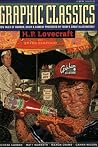
Graphic Classics: H.P. Lovecraft


Graphic Classics, Volume 4: H.P. LovecraftGraphic Classics, Volume 4: H.P. Lovecraft by Tom Pomplun
My rating: 3 of 5 stars

This book is a sort of confluence for me. It was originally published in Mount Horeb, Wisconsin, about 25 miles from home-base in the beautiful driftless area, where I often go hiking. So, yes, I approach this work with a bit of parochialism.

One danger in revisiting work in a different medium (and yes, I do count the Graphic Novel as a different medium than straight prose) is that each medium allows some certain freedom of mind to fill in gaps left by the medium itself. That's the primary reason why so many readers hate movies based on their favorite books. Their own mental/emotional/intellectual space is smothered by the director's/producer's/actors' interpretation of the original work. In this case, my familiarity with Lovecraft's work did not diminish my enjoyment of the stories presented.

That's not to say I liked every one of the pieces. There were some that I was under-impressed with. Others were impressive, but my feelings on the matter are not altogether uncluttered by my past. For me, Richard Corben's section on Herbert West: Reanimator and Matt Howarth's interpretation of The Shadow Out of Time stand out. This may have to do with my childhood fascination with Corben's work in Heavy Metal magazine and Matt Howarth's work on Konny and Czu (which is among my favorite comics of all time). Truth be told, Herbert West is one of my least favorite Lovecraft stories, so this speaks to Corben's impressive treatment of the story. On the other hand,The Shadow Out of Time is one of my favorite Lovecraft stories, so Howarth's artwork, wedded with Lovecraft's writing, is doubly good.

Of course, in such an anthology, there is bound to be some loving pastiche. Howarth does so by using the trite word balloons "gasp" and "choke" and plowing ahead into "(incoherent shriek)," "(mindless panic)," and "gibber". These comical interludes express something that falls between poking fun at Lovecraft (and the artist and the reader) and a quirky homage. Thankfully, it stopped short of the silliness of the "Cthulhu's Dreams" vignette, which I found inane. Other stories and poems were neither outstanding or terrible, but adequate to the task. On balance, however, the beauty of some of the illustrations and the dexterous interpretation of Lovecraft's work are weighted more toward excellence than mediocrity. Still, I felt that this could have been so much more. Maybe I'm just too demanding, an homage snob.

Speaking of homage, the volume ends nicely on Chris Pelletiere's original piece "Reflections from R'lyeh," an effective piece of surreal noir involving Lovecraft and his Deep Ones. It's a perfect conclusion to the volume, looping back in on itself and causing the reader to become lost, for a moment, in that strange interstitial space between metafiction, supernatural fiction, and biographical nonfiction. Ending the book with a beginning is a nice way to unleash the reader's freedom to fill in the gaps left by the medium, allowing the imagination, again, to take over. And if anyone can attribute auctorial intent to Lovecraft, one must thank him for the gift of breaking our minds open with terror and sending them soaring into new, dark worlds never seen by fleshy eyes.

View all my reviews


____________________

If you like my writing and want to help my creative endeavors, please ko-fi me at https://ko-fi.com/forrestaguirre. Every little bit is seen and appreciated! Thank you!

Wednesday, February 13, 2013

The Colo(u)r of Magic

The Color of Magic (Discworld, #1)The Color of Magic by Terry Pratchett
My rating: 3 of 5 stars

I read this book way back in high school, when I lived in England. Having forgotten everything except for the fact that there was a trunk that liked to eat people, I bought the book (again) to see how it stood up these many years later. As I've read I've received goodreads messages and been spoken to by several people who have warned me that Pratchett was just warming up with this one, that he hadn't reached his highest form yet. I still have to read more of his work (I'm planning on Mort and Guards! Guards!), so I have no benchmark to measure against other than what I thought in high school versus what I think now. And while the book is funny, it's not as hilarious as I remember it. I've probably become a little jaded since those days, which is more a reflection of me and my experiences than it is of Pratchett and his writing.

That's not to say that the book was bad, it wasn't. In fact, it's got some moments of pure brilliance and was, in some ways, much more well-written than I had expected. The exchange between the Arch Astronomer of Krull and Goldeneyes Dactylos smacks strongly of the sort of humor one would expect in a Jeeves and Wooster story. And that is the highest compliment I think I can give to a piece of humorous writing. The section on the Wyrmberg sniffed in Michael Moorcock's direction. And at least a couple of the characters were spoofs of two of my favorites: Fafhrd and Grey Mouser.

I must admit that I also liked Rincewind, the bungling wizard. Some have labelled him a coward. I'd call him . . . normal. Someone like you or me: allergic to pain, justifiably afraid of being dropped from great heights, fearful of fear itself, and yet he commits himself to get done what needs to get done when it really matters . . . most of the time. Unlike, say, Gandalf, Rincewind is full of foible and, as a result, a really loveable character. At least he was for me. I feel for the guy. Sometimes what I'm feeling is embarrassment, but I feel for him.

Poor Rincewind. I do hope to see him again.

Twoflower, the other main character, I liked at the beginning, but by the end of the book he seems to have become rather withdrawn and almost a touch (just a touch) sullen. I couldn't figure out why he changed so much through the book, so I'm left to speculate.

Maybe he became jaded after high school, just like me.

View all my reviews

________________________

If you like my writing and want to help my creative endeavors, ko-fi me at https://ko-fi.com/forrestaguirre. Every little bit is seen and appreciated! Thank you!

Saturday, February 9, 2013

The Best of Woodsmoke: A Manual of Primitive Outdoor Skills

The Best Of Woodsmoke: A Manual Of Primitive Outdoor SkillsThe Best Of Woodsmoke: A Manual Of Primitive Outdoor Skills by Richard L. Jamison
My rating: 4 of 5 stars

I was a Boy Scout. My sons have all been Boy Scouts (sorry, no Eagle Scouts, though my oldest did make it to Life). We love the outdoors. Now, take your most hardcore wilderness survival exercise in Boy Scouts and multiply it by about five degrees of hardcore-ness. That's what you'll find in The Best of Woodsmoke. This book is not for the faint of heart, it's for the survivalist in you. From how to build a seep hole to surviving a blizzard with only a blanket to creating a stone axe and all the way to using everything a deer carcass can give you (yes, EVERYTHING), this is the apocalyptic extreme survival manual. If it will keep you warm, alive, fed, and mentally composed in an emergency, and you didn't learn it in Boy Scouts (sorry, I suppose Girl Scouts do much the same thing), you can find it in here. I was glad to see a re-issue of this book, not because the skills are outdated (they go back thousands of years, a couple of the skills tens of thousands of years), but because these are good things to have in your quiver of knowledge. No, you probably won't use them all (unless something truly catastrophic happens to the world), but my kids and I have used some of these skills while out camping. My oldest is a bit of a pyromaniac (not the Def Leppard kind, thank goodness), so he loves the section on the use of pitch. Son #2 is fond of the wilderness cordage section. I am fond of the stone axe section. And, yes, I have made a stone axe head or two in my day. Still have to use it to completely clear out a deer carcass, though. Mmmm . . . on second thought, maybe I won't be implementing the deer section. Yeah, probably not. But maybe you're into that sort of thing. Just be ready. Using all of a deer is not for the squeamish. OK, I definitely won't be implementing that section. At least not the part about the eyes. Yuck. Just yuck.

View all my reviews

________________________

If you like my writing and want to help my creative endeavors, ko-fi me at https://ko-fi.com/forrestaguirre. Every little bit is seen and appreciated! Thank you!

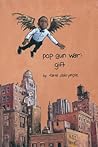
Pop Gun War

Pop Gun WarPop Gun War by Farel Dalrymple
My rating: 4 of 5 stars

I've been really lucky lately. I seem to have had a long string of excellent graphic novels in my "to read" pile. Pop Gun War is no exception. Farel Dalrymple's art is complex and expressive, not only in this work, but in others, as well. It's hard to pin down the plotline of Pop Gun War, as it is more mythical than prosaic, more concerned with philosophy than structure. At times, it can get just a touch pedantic, but by and large the thematic thread of being controlled by both our inner passions and by outside influences is satisfactory and gives the reader pause when considering his or her own actions, as well as the actions of others. Dalrymple does an outstanding job of causing the reader to question intent, rather than simply casting characters as good or evil. The "good guys" are allowed their weaknesses, and the "bad guys" might not be bad simply because of their own choices - they may simply be the victims of their outer circumstances, controlled by others, like puppets on a string. It's clear that many of the characters who find themselves in unpleasant circumstances are trapped by lies fed to them by others. The real beauty of this work is that the "good" people in it maintain their innocence without falling into naivete. Judging the characters on a binary good/evil criterion is foolish in this case. Perhaps Dalrymple is asking us, in our non-fictional lives, to consider carefully that everyone is capable of good or evil and each of us has a bit of both within. This is quite heady stuff for a graphic novel, and Dalrymple mostly succeeds in giving readers reasons to carefully consider where they fall on the spectrum. Again, it's not a perfect mythology, and can be heavy handed, at times. But overall, the author has created here a gritty, yet beautiful contemplation of human nature and the ascendance of beauty and innocence above the tough streets of the urban center.

View all my reviews


____________________

If you like my writing and want to help my creative endeavors, please ko-fi me at https://ko-fi.com/forrestaguirre. Every little bit is seen and appreciated! Thank you!


Friday, February 8, 2013

The Great Gatsby

The Great GatsbyThe Great Gatsby by F. Scott Fitzgerald
My rating: 5 of 5 stars

A crushingly poignant work. Now, I "get it", whereas when I read this as a teenager, I didn't. As a child, I was so bent on loving the anti-heroes that I missed the tragedy, the squandered possibilities, not within Gatsby, but within everyone else. As I read it, Gatsby isn't really the hero or the anti-hero at all. He is a hub around which the real stories churn. He is a soft, vulnerable, naive, ambitious machine. And while everything and everyone revolves around him, he is, in the end, abandoned, though not forgotten, by all but a few. But the real question remains, just who have they abandoned? And in remembering him, are Jordan, Tom, Daisy, Wolfsheim and others creating a man that was never really there? Gatsby is like a raw onion at the dinner table. The center of attention both because of his ability to flavor any dish and because of his stink. But to focus on the raw onion in the middle of the table is to miss the delectable dishes that compose the rest of the meal.

Fitzgerald knows how to pull at the heartstrings. I thought back to friends and girlfriends of long ago, situations, not the same, but similar to those of many of the characters that I've seen either in my own life or in the lives of those close to me. This book has a way of causing you to delve down behind the bookshelves of your mind and pull out those long-mangled scraps of paper, some of which you have been looking for for a long time, some of which you'd rather just forget.

The writing herein is beautiful. I'll leave with one admittedly (and indulgently) long quote, which speaks to the beauty of the work, as well as the feeling that Fitzgerald gives the reader of continuously being placed on the edge of an emotional precipice overlooking a drop to the ocean, hundreds of feet below. It's exhilarating, thrilling really, and quite, quite dangerous.

About half way between West Egg and New York the motor-road hastily
joins the railroad and runs beside it for a quarter of a mile, so as to
shrink away from a certain desolate area of land. This is a valley of
ashes--a fantastic farm where ashes grow like wheat into ridges and
hills and grotesque gardens where ashes take the forms of houses and
chimneys and rising smoke and finally, with a transcendent effort, of
men who move dimly and already crumbling through the powdery air.
Occasionally a line of grey cars crawls along an invisible track, gives
out a ghastly creak and comes to rest, and immediately the ash-grey
men swarm up with leaden spades and stir up an impenetrable cloud
which screens their obscure operations from your sight.


But above the grey land and the spasms of bleak dust which drift
endlessly over it, you perceive, after a moment, the eyes of Doctor T.
J. Eckleburg. The eyes of Doctor T. J. Eckleburg are blue and
gigantic--their retinas are one yard high. They look out of no face but, instead, from a pair of enormous yellow spectacles which pass over a nonexistent nose. Evidently some wild wag of an oculist set them there to fatten his practice in the borough of Queens, and then sank down himself into eternal blindness or forgot them and moved away. But his eyes, dimmed a little by many paintless days under sun and rain, brood on over the solemn dumping ground.


The valley of ashes is bounded on one side by a small foul river, and when the drawbridge is up to let barges through, the passengers on
waiting trains can stare at the dismal scene for as long as half an
hour. There is always a halt there of at least a minute and it was
because of this that I first met Tom Buchanan's mistress.


View all my reviews

________________________

If you like my writing and want to help my creative endeavors, ko-fi me at https://ko-fi.com/forrestaguirre. Every little bit is seen and appreciated! Thank you!