Showing posts with label Graphic Novel. Show all posts

Thursday, August 13, 2026

The Silver Surfer: Parable


The Silver Surfer #1 "Parable" Part 1 of 2 by Stan Lee and Moebius by Stan Lee
My rating: 4 of 5 stars

[This review is for both volumes of the mini-series combined]

I've been a Silver Surfer stan (pun intended) since the early '70s when I first encountered the character on the news-stan(d) - okay, I'll stop.

I had spotted "Parable" when it was first published, but I was out of high school and trying to be "cool" by ignoring comics at the time. What an idiot I was. A few years later, I realized the error of my ways and got back into comics but had lost track of this mini-series until a few years ago. I'm not quite sure how that happened. Moebius is one of my favorite artists and The Silver Surfer is one of my favorite Marvel characters.

In this treatment, the art, as one would expect, is absolutely amazing. Moebius' Galactus, sans-crackle, would still warm Jack Kirby's heart, I would think. I wonder if anyone interviewed him about this miniseries before he passed away? One is quite curious what his thoughts would be. And Moebius' style lends itself to the sleek action sequences one would expect in such a tale.

But the action only catches the eye. It's the philosophy and psychology underneath it all that holds the reader's attention. The writing is not perfect, by any means - at times it sounds like it's trying too hard to be "wise" and "insightful," which lends a sort of hokeyness to some of the dialogue, sometimes to the point where it is downright painful. But if one can look beyond the treacle, there are some solid pearls of wisdom and insights into human psychology that would explain the current socio-political mess we are in. This miniseries was so prescient it could have been written today, this very hour, without skipping a beat. And I fear that it will always be applicable, no matter what happens in the political landscape. It is a parable that sees beyond its years, a sort of cosmic-action scripture, if you will. It is so accurate that it's scary. I'm afraid that Norrin Radd's near-nihilism is very, very close to a bigger truth, and we can't handle that truth.

View all my reviews


____________________

If you like my writing and want to help my creative endeavors, please ko-fi me at https://ko-fi.com/forrestaguirre. Every little bit is seen and appreciated! Thank you!

Wednesday, July 15, 2026

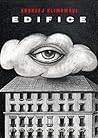
Edifice: A Graphic Novel


Edifice: A Graphic NovelEdifice: A Graphic Novel by Andrzej Klimowski
My rating: 3 of 5 stars

I was drawn in by a blurb written by the Quay Brothers. While they are my favorite movie directors of all time, they . . . might not be the greatest of graphic novel aficionados. Yes, I'm well aware of their background in graphic design, and I am rather fond of their Black Drawings. But with this blurb on Klimowski's book, I think they might have jumped on the hyperbole train.

I liked Edifice but did not love it. I appreciate the attempts to impart meaning or to deconstruct meaning through a series of darkly surreal, if fairly plain, charcoal sketches interspersed with some limited dialogue. Perhaps if I took phenobarbitol and listened to Penderecki and Ligeti while I read, I might have been in a more receptive mindset. But without sensory enhancement (or suppression), I see mostly a neat little graphic novel with rather ordinary (I'm talking execution here, not subject matter) charcoal drawings and the occasional clever twist of perspective and/or chronology. In other words, it's no Cinema Panopticon, Quay praise aside.

View all my reviews

____________________

If you like my writing and want to help my creative endeavors, please ko-fi me at https://ko-fi.com/forrestaguirre. Every little bit is seen and appreciated! Thank you!

Saturday, February 7, 2026

The Slithering Shadow

 Pardon my indulgence while I wax autobiographical. But I think I've puzzled out something about myself that was hidden under the skin for many, many decades. In childhood, one tries to figure out who they are. Later in life, middle age, to be specific, one starts to ask: Well, how did I get here? And since I'm re-analoging my life, I have more time and headspace to think about such things. 

As I've stated many times before, I lived a part of my childhood in Brindisi, Italy. I lived there from 1976 to 1979. It was there that my passion for fantasy and science fiction was born. My father read a lot of science fiction and introduced me to many authors whose work I learned to love. But as far as fantasy, that was mostly something I discovered myself . . . on the magazine shelf of the Stars and Stripes Bookstore at San Vito AFB. 

It will strike the canny reader that it is extremely odd that a child of my age at that time was exposed to something as salacious as The Savage Sword of Conan. Those who are familiar with military life, though, will not be surprised when I say that I first discovered the magazine in a pile of comics at the base childcare facility one night when my parents left me there so they could go on a date to see Superman. 

As a child, I was an avid comic book reader. From Thor to Metal Men to Archie and Richie Rich, but Savage Sword of Conan was a shock to the system, a revelation. I won't go over what that magazine did to stir my young soul, but in hindsight, with many decades between then and now, I think I've finally discovered exactly why this horrifying, over-eroticized, violent "comic" resonated with me to the point that it set me on a wholly-new intellectual track that led to a lifelong obsession with roleplaying games, fantasy fiction, writing, visual art, and heavy metal, among other things. These obsessions are the reason this blog exists, after all.


The area I lived in while living in Italy is known for its aridity. It's basically an extension of the north African clime, separated from Algeria, Libya, et al, by a mere 87 miles at their closest points (Southern Sicily to Tunisia). Here the days are hot and dry and prickly pear cactus can easily be found along roads both in and out of the city. Near the apartments where we lived, a fig tree spontaneously grew in a ditch, and olive trees were everywhere. The area is known for its olive oil, in fact. There are also artichoke fields like corn fields in the US, spreading through vast expanses. I recall wandering through these fields and stumbling on small, stunted remains of Roman pillars - the artichoke farmers simply worked around them, the fields conforming to the contours of imperial architecture, an unavoidable echo from the time when Cesars ruled the land. 

When I opened the pages of The Slithering Shadow, I was immediately struck by the visuals of the desert. Conan and a buxom woman (they were always buxom, though I had no idea what that word meant at the time) are stranded in the desert and have just run out of water. They set out across the desert looking for water and stumble upon a seemingly-abandoned city.


One of the more commendable cultural norms in Italy is the siesta. Everyone, and I mean almost everyone, sits down and takes a nap in the afternoon. I learned this the hard way when I went across the street to buy candy (a cadbury chocolate egg with a metal soldier inside the egg) one hot afternoon. I approached the shop and saw the proprietor, an ancient lich of a lady, sitting in a wooden chair, back to the wall of the establishement, just to the left of the door. She was sound asleep. So, being young and reckless, I started to walk in, but then her arm shot out like a bolt of lightning, blocking the way. I was stunned, paralyzed, really. I looked at her and she opened one bloodshot eye to look at me and said, simply, but very firmly "NO!". What could I do but back down? I was defeated, and retreated. When I returned, about an hour later, she was quite nice and pleased to sell me a couple of those eggs. But I learned that Italians take their siestas very seriously! If you ever want to rob a bank in Italy, just do it during the siesta, and no one will stop you, I swear.

Given this history, when I progressed through The Slithering Shadow, what did I encounter, but an entire ancient city full of sleepers? 


I will forego spoiling the plot for you from that point. I outlined the plot in more detail in my review of the collected Savage Sword of Conan Volume 2, if you're interested. But I would suggest just getting yourself a copy and reading it yourself. 

These elements alone gave me very personal reasons to be drawn into the story. Again, I didn't realize the causal connections until very recently. I can link the reading of this magazine to the subsequent buying of more Savage Swords, to my later fascination with Dungeons and Dragons, Heavy Metal Magazine (along with the movie and the music), and Epic Illustrated. 

Also, with hindsight, I look back on that more-or-less innocent child and am grateful for who he was, as well as who he became. Like Conan in the story, I've come up battered and bruised by life, but I've replaced that innocence with stubbornness in hope. 


As Conan states: "You can't fight a devil out of hell . . . and come off with a whole skin . . .!"

But you keep on keeping on. Thanks, Conan!

____________________

If you like my writing and want to help my creative endeavors, ko-fi me at https://ko-fi.com/forrestaguirre. Every little bit is seen and appreciated! Thank you!

Saturday, July 19, 2025

Metal Hurlant


Metal Hurlant: Old Dreams, Young Visions (1)Metal Hurlant: Old Dreams, Young Visions by Brian Michael Bendis
My rating: 5 of 5 stars

If any one piece of media informed my teenage years, it was the movie Heavy Metal . Now, 43 years after I first watched that movie on HBO late night as a early teen (the perfect target for the movie at that particular time), I can honestly say that it still carries a heavy influence on my tastes in art, music, and just plain attitude. It was a significant blip on my cultural radar, but it was, in all honesty, just a blip. I watched it twice on HBO and then . . . the movie just disappeared. Vanished. I looked for news of a videotape release everywhere: magazines (remember, there was no internet back in 1982 - at least none that the military was sharing) such as Starlog or Fangoria , at obscure corners of videotape stores , libraries - wherever. I asked about it a lot. And whenever I asked, I either got a blank stare, or the person's face lit up, then quickly sagged with "Man, I wish. No one can find that." It wasn't until the very late '90s that the movie was released on DVD. There was some kind of legal kerfuffle about the use of the music, if I remember correctly, which prevented its release after the movie was shown on HBO.

But, though the times were dark, they weren't empty. I could always turn to the pages of Heavy Metal magazine, a number of which I usually shoplifted, and sometimes bought, from the gas station down the road from my house. Marvel comics also published a competitor in the form of Epic Illustrated , their first adult-themed publication. I could also rely on my old copy of Mechanismo (which I bought in the 1979, before I even knew about Heavy Metal) for a fix of cutting-edge scifi art. While in those "lean years" I also heard of a magazine titled "Metal Hurlant". It took some asking and researching (again: no internet) to figure out that this was the French version of the English "Heavy Metal". But it wasn't until 1985, when I moved to England, that I saw a copy of Metal Hurlant in the (paper) flesh. Sadly, the magazine ceased publication in 1987. A TV series, "Metal Hurlant Chronicles" emerged in 2012, but to be honest, it had little of the flair of either the original Heavy Metal movie or the magazine Metal Hurlant.

The English variant, Heavy Metal, had a series of misfortunes, mostly caused by abysmal customer service and poor money management, in the last couple of years. A kickstarter was done to re-release the magazine, which I've seen on bookstore (remember those?) shelves, though I hear there were also hiccups involved in getting copies to kickstarter backers.

At the same time, Metal Hurlant was kickstarted by a completely separate entity from Heavy Metal magazine. I did not back the kickstarter, as we were saving for a trip to Europe at the time, among other things. But I book-marked it as something I would look into. Lo and behold, my oldest son bought me a copy of Metal Hurlant for Father's Day. I raised that boy right!

With that long history lesson behind us, let's turn briefly to the book itself. And it is a book, at 267 pages of content. It's a mixture of old, classic pieces that debuted in the pages of the original Metal Hurlant back in the '70s, and newer material that explores contemporary approaches to science fiction illustration. Interspersed are several excellent essays that cover the history of Metal Hurlant, introductions to the newer artists in the volume, and sometimes delve into the punk attitude that informs the art, stories, and even the publication itself of what might be considered a counter-cultural manifesto, as well as an expanded artistic view of possibilities.

Of course, my own attitudes toward art have changed since I was a young teenager. Back then, I was clearly focused on the violence, crazy vistas, and . . . other biologically-driven interests. While those things are still of interest, I've upped my reasoning and critique since those testosterone-fueled halcyon days of yore. It's not enough to be "gonzo," and frankly, I am oftentimes put off by "gonzo for gonzo's sake" in my media consumption. Yes, I'm currently listening to the Heavy Metal soundtrack as I'm writing this review (duh), but my "favorite" songs on this wildly-eclectic album have shifted over time. I like some songs better than I used to and others have grown moldy (though there is one exception that has always been on steady footing for 43 years now - though I prefer the live version to the album version).

The wonder of the current incarnation of Metal Hurlant is that it has chosen "classic" reprints of the highest quality. There are no "dumb" stories in this volume (unlike, for instance, the "snow time" vignette in the Heavy Metal movie - ugh), except for the one overly-indulgent story about Arzach's mount pooping out copies of Metal Hurlant - that was admittedly pretty dumb.

The new stories also create a sometimes subtle sense of wonder at small things and gentle turns of story, among the awe-inspiring and more visceral emphasis of others. "Catching the Wave" and "You Will Remember Me" are downright poignant. Dare I say that I have found a new level of sophistication in the pages of this historically irreverent, "punk" magazine. Yes, yes I dare. I am eager to see what the next volume brings (subscriptions are available). All-in-all, I am rather ecstatic of what we've got here in the "new" (but also old) Metal Hurlant, and I am optimistic about its future, which will contain many futures that we can't even yet imagine.

View all my reviews

____________________

If you like my writing and want to help my creative endeavors, ko-fi me at https://ko-fi.com/forrestaguirre. Every little bit is seen and appreciated! Thank you!

Saturday, November 12, 2022

Asterix und die Goten


Asterix und die Goten (Asterix, #7)Asterix und die Goten by René Goscinny
My rating: 5 of 5 stars

As a kid, I grew up with Asterix, having discovered him when we moved to Italy in 1975. Asterix and the Goths was one of my absolute favorites. They're all great, but there was something about all the factional infighting among the various tribes of Goths that I found hilarious.

Fast forward to 2019, when my wife and I take a long-anticipated trip to Europe. A large part of that time was spent in Austria, with a couple of days in Germany (Frankfurt and Munich). We stopped in multiple bookstores, including a comic book store in Vienna and a used bookstore in Munich. I was specifically looking for this Asterix book auf Deutsch, but I could not for the life of me find it. Several stores had ALL of the Asterix books in German, except this one. Then I remembered that one of the speech bubbles had a Goth chieftain, who had just been thumped on the head with a club, swearing up a long string of explicatives (I thought of my German-swearing grandmother when I saw this). The swear words were represented by lots of different symbols, including (gasp) a swastika.

Then it dawned on me: the book had been banned because it has a Nazi symbol in it.

Germany, Austria, I love you, but . . . seriously? I'm all about punching nazis, but really?

Anyway, I eventually found a copy . . . on Ebay. I bought it right up because who knows how many of these will survive?

It's kind of strange how things turn. Banning books, in particular . . .

View all my reviews

If you like my writing and want to help out, ko-fi me at https://ko-fi.com/forrestaguirre. Every little bit is seen and appreciated! Thank you!

Sunday, January 23, 2022

Four Color Fear: Forgotten Horror Comics of the 1950s


Four Color Fear: Forgotten Horror Comics of the 1950sFour Color Fear: Forgotten Horror Comics of the 1950s by Greg Sadowski
My rating: 4 of 5 stars

Last summer, while on a trip to see family out west, we stopped in Denver and my wife humored me by letting me spend some time at Mile High Comics. That was a lifelong dream, truth be told. I had known about Mile High since seeing their advertisements in old Marvel comics when I was a kid. I have to say: it did not disappoint. I was able to flesh out a good deal of my Grimjack collection, I picked up one issue of Savage Sword of Conan, the issue that probably corrupted me into who I am today, and pick up a couple of other goodies along the way. Most of all, I think I realized how many thousands of dollars worth of comics that my mom gave to the thrift store when we moved from Italy to Minnesota. It had to happen, and at 9 years old, I couldn't really fight it, but . . . ugh.

One of my favorite comics as a kid was Weird War . It was the closest thing to a horror comic that my mom would let me buy. Of course, those issues of Savage Sword of Conan (which my mom did let me buy, for some unknowable reason) sat on the magazine rack right alongside Eerie and Creepy in the old Stars and Stripes Bookstore. But mom would have none of those in the house.

Well, I've got my own house now. And mom is probably turning over in her grave as I'm typing this. Sorry, Mom.

Sorry/not sorry.

To make up for lost childhood time, I bought Four Color Fear. While visiting Mile High, I realized how bloody expensive, how . . . terrifyingly expensive old horror comics can be. Honestly, I was stunned. Apparently these are extremely rare. I'm guessing the 1954 Comics Code has something to do with this. Look it up - I'll spare you the details - but suffice it to say that Mom wasn't the only person opposed to horrific comics. Now, however, we live in a more tolerant age, thankfully. So something like Four Color Fear can be obtained without fear of censorship by the Comics Code Authority . . . or Mom.

The book presents several stories from a wide variety of comic's publishers not named "EC". You'll find some surprising names in here: Harry Harrison, for instance. Or Frank Frazetta. Yes, that Frank Frazetta (as if there could be any other). Quality varies wildly. Most of the stories are schlock horror with highly-predictable "plots," the proverbial stupid people doing stupid things and being killed, eaten, etc., and horrible (and yet not horrifying) dialogue.

But there are several exceptions, some real gems.

"Nightmare" might be one of the best. A weird fiction writer is out of ideas for his horror stories, which are not gruesome enough, according to his editor. So fate provides ideas, with a couple of unexpected twists. This was great!

What's the comic book equivalent to good cinematography? Is it called good "storyboarding". Whatever it is, it's excellent in "Dust to Dust". A (very) mildly surprise ending helps this one along. Still missing that certain something that would make it a truly great story, but it's good.

"Green Horror" is one of the stupidest, wackiest . . . and BEST stories in this collection! This story of a jealous cactus (yes, you read that correctly) doesn't flinch - it takes its campiness with deadly seriousness. This is one of those tales told in a treehouse by 10 year olds (Sandlot-style) with flashlights under the chin. It's so utterly ridiculous and over the top that it works!

"Colorama" is just the sort of weird horror I came looking for in this volume. I wish most of the stories were this strange. The comic medium is used to great effect here, leveraging the inherent power of images on a page to drive home the horror in a way that only a comic book can. It's polychromatic meta-horror . . . until it's not! And when it's not, well, that's when you need to start to worry.

"The Man Who Outdistanced Death" is an original story of mythic proportions that I really liked. Rod Serling would have been proud to have written this tale about distance running and longevity. If all the stories were of this quality, this would be a five star book, no question. Unfortunately . . . the other stories can't quite keep up.

(see what I did there?)

I wouldn't call "Art for Death's Sake" super-original, but it stands out from most of the other stories here for its subject matter and twisted ending. Some of the panels are beautiful and almost expressionistic, which fits, thematically, with the story.

"Here Today" is a unique, capital "W" Weird story. The plot is simple, but so bizarre that this tale seems ahead of its time. Another Twilight Zone-esque offering. One wonders how much Rod Serling read these comics as a kid! Or as an adult, for that matter.

"The Wall of Flesh" was predictable, to say the least, but the unique premise and use of a flesh wall absorbing its victim, superimposed over the image of a clock was absolute brilliance. Time is running out, indeed. If only 1950s plots weren't so dumb and predictable, this would have been something rather masterful. Still, it sets a high aesthetic standard for horror comics.

"Reefer Madness" meets a hybrid between a flying squirrel and The Creature from the Black Lagoon in "Nightmare World". The only thing terrifying about this story is its predictability. But the art is distinct, I have to give it that.

If Thomas Ligotti, Robert Crumb, and, I dunno, Philip K. Dick, maybe? If these three got together and wrote a horror comic, it might be "What Happens at 8:30 PM". This one is very different than the rest and shows the breadth of horror comics in the 1950's. Not all of them were cookie cutter. I'd like more oddballs like this in Four Color Fear.

In the center of the book is a series of glossy comic covers from an incredible variety of comics that I'll never be able to afford. And after all the gore is done, the editor, Greg Sadowski, includes an admirable, well-researched essay with commentary on every one of the comic stories included in the book. The commentary centers mostly on the creative process and the comings and goings of various artists and writers - there appeared to be a LOT of fluidity from company to company - giving a sort of historiography of the horror comic creative scene before the code became law. The glossy covers and commentary make the book a "whole" artifact, very similar to a museum catalog. You might say that Sadowski's editorials really . . . flesh things out?

View all my reviews

__________

If you like my writing and want to help out, ko-fi me at https://ko-fi.com/forrestaguirre. Every little bit is seen and appreciated! Thank you!

Saturday, March 20, 2021

Malevolent Visions: The Art of Der Orchideengarten - 1920 - Issues 9-15


Malevolent Visions: The Art of Der Orchideengarten • 1920 • Issues 9 - 16Malevolent Visions: The Art of Der Orchideengarten • 1920 • Issues 9 - 16 by Thomas Negovan
My rating: 4 of 5 stars

I supported the kickstarter for this volume, the fifth in the series, mostly because I could get the book and a set of postcards featuring art from Der Orchideengarten for about the same price as just buying the book later. I'm using the postcards as postcards for a snail-mail roleplaying game that I am participating in, which is set in the year 1921. What better way to add authenticity than by using postcards showing macabre art from the year 1920 in a snail-mail RPG set in 1921? I've sent one thus far, and it seems to have done the trick of giving the player to whom it was sent a visual to go with the (handwritten) words of my character to his. Verisimilitude helps.

And what of the book itself? I'll admit that, because I was so focused on the use of the postcards, I didn't read or didn't absorb the fine print in the kickstarter. I had expected (ignorantly) that the book would include facsimiles of all the issues of Der Orchideengarten for the stretch of issues indicated. I was mistaken. While there is some interesting commentary about the stories and their authors, there is little directly quoted from them. There are decent summations of many of the stories, but they are merely summations. The information about the artists lends a bit of depth to the book, especially as it relates to how the artist's political sympathies were manifested, in time (you can imagine why), but the real focus of the book is the art itself.

At this, it succeeds wonderfully. Certain artists predominate, most notably (the notorious) Karl Ritter, who did the majority of the covers for the issues examined in this volume, but there is a variety of styles shown throughout. Wilhelm Heise's "Nocturnal Garden" is akin to a black-and-white illustration in the style of Der Blaue Reiter; Paul Neu's illustrations for the story "The Elevator" and Carl Rabus' illustrations for "Giulio Balbi's Disappearance" are heavily-influenced by cubism, but with an art-deco flair, and Ritter's work is composed of grotesque, but fine line work with a sort of Aubrey Beardsley depth, albeit far darker in both its subject matter and its artistic tone. There are also several illustrations that are purely anonymous, which somehow seems appropriate for a periodical focused so much on the grim and macabre arising out of Germany's interwar years art scene.

The book is, as you might imagine, lavishly illustrated with plates showing full-color covers and even one maquette of Karl Ritter's shown opposite the final cover for issue eleven of Der Orchideengarten, an intriguing pseudo-diptych of the expressionist work-in-progress alongside the finished product. One wonders why various changes were made by the artist, what led to the alterations? It also shows that this cover, at least, wasn't just a fever-dreamed off-the-cuff outpouring of artwork, but something more methodical and thought-through. Many critics of "modern art" don't understand (or don't believe) the crafting that goes into many modern (and "post-modern") works. Such dismissiveness is, I believe, to be dismissed. Here and elsewhere, Malevolent Visions shows both the art and artifice needed to generate these enduring (if somewhat forgotten) works of strange art.

View all my reviews

__________

If you like my writing and want to help out, ko-fi me at https://ko-fi.com/forrestaguirre. Every little bit is seen and appreciated! Thank you!


Monday, January 11, 2021

STGM: The Conclusion of the World and What Rose After

STGM: The Conclusion of the World, and What Rose AfterSTGM: The Conclusion of the World, and What Rose After by Valin Mattheis
My rating: 5 of 5 stars

I am a big fan of Valin Mattheis' art. I have two prints of his up in my writing area and one of his paintings adorns my own book, The Varvaros Ascensions. So, when I heard that he was producing a book from sketches he made during Inktober 2020, I dropped everything and bought a copy. I really do believe in buying books 1) directly from the author whenever possible, 2) directly from the publisher when that's not possible, 3) from a local bookstore when I can't buy it direct from the author or publisher, 4) from Ziesings.com (my favorite online bookstore - they also have a paper catalog - remember those?), 5) from Ebay or Abebooks, then, finally, 6) from the good sponsors/owners/whatever of Goodreads. In this case, I was able to go with choice #1, and that brings me a great deal of satisfaction.

The book is divided into four chapters: i: The Great Sorrow, ii: Black Earth Revival, iii: Harold Rose Up, and iv: The Three Pilgrims. The story is mythic in scale, and each chapter follows from the other, although from different perspectives. The whole is made cohesive by the strand of destruction, change, and maybe, possibly, hope among the darkness. A grim hope, but hope, nonetheless.

The art is saturated with color, even while the water-color backgrounds and spectres give a ghostly quality to the whole. It is a beautiful book and the emphasis is squarely on the art. There are, as you might guess, lots of skeletons and a morbid sense of humor running throughout, but the book is never so silly as to throw one out of the grim mindset. The "slim" story, again in a mythic mode, helps to maintain a mood of solemnity, even a touch of reverence.

As an added treat, there is a detailed commentary in the back explaining some of the more obfuscated iconography. This added a great deal of depth to the story, but I hope that, in future volumes, not too much is given away. This was just enough to be helpful, but not enough to strip away the mystery. And I hope that some mystery remains. Some things are best left unexplained.

There are also a few pages of sketches, art that was unused in their nascent form, at least (and some of it not used at all) in the main body of the book. This gives a little peek into Mattheis' creative process, a window into window through which the artist was constructing his representation of the view in his mind. I'm excited to continue exploring these vistas. As the afterword states "This is the conclusion of the world, and what rises after."

I am excited to see what rises after the after . . .

View all my reviews

Promethea

Promethea (Promethea, #1)Promethea by Alan Moore
My rating: 4 of 5 stars

Confession time: I'm not a huge fan of superheroes. Yes, I grew up reading comics and even collected some titles (Metal Men, Defenders, Thor, Star Wars, ROM, Silver Surfer, Doctor Strange, Conan ), but when I discovered Dungeons & Dragons at age 10, I sort of went sour on the whole superhero thing. Not completely. but mostly. I even tried to get back into things by playing some superhero RPGs with friends, but it just wasn't my thing any more. That's not to say I completely abhor them - I like the Marvel movies just fine. DC, not so much. I never was much of a DC fan. I did pick up Grimjack (possibly the best comic of all time, at least for me) in the '90s, and still have those, as well as Albedo Anthropomorphics.

But notice something about my comic book taste: It's mostly scifi and fantasy (or an admixture of the two). I'm just not that big on straight-up superheroes. Call me jaded.

But I am big on magic. Interpret that however you like. I like magic. I believe in magic, though I might call it any number of things besides "magic".

And here, with Promethea, we have something that tries to tow the line between the two. If I had to pick a comic precursor, Doctor Strange is the obvious choice. But Promethea is smarter than the good doctor and far more "hip". I'm not talking about the characters themselves, I mean the comic as an idea and an act of art and writing. I'm sure Stan Lee was a smart guy, but could he even compare to Alan Moore in terms of sheer genius. Nope. 'nuff said.

And while I do love Jack Kirby's artwork and am very fond of John Buscema's Conan (et al.), J.H. Williams III has some serious drawing and, even more so, design chops. The layout itself, in all its variation, is stunning, framing the story perfectly almost the entire way through, threading together what can be a meandering narrative, holding it all together with pictures and a flow that is . . . magical.

I really like the main character, Sophie, as she grows in knowledge both about who she is and about who Promethea is (and was). There is a lot here to learn, and seeing her go through her "Chapel Perilous" endears her to the reader.

My only problem here is that there is so much for her to learn that reading about it can be tedious. This is a magic for beginners book. If you have any knowledge of esoterica, the tarot, chakras, the hermetic tradition, etc., you'll find a lot of lessons here you already know. It can feel a little pedantic, at times.

However, I have to concede: Moore's intent here was to teach. At least that's how it seems. At first, I was disappointed. But then, I thought, this book wasn't just written for me. It was written for a lot of people. So, if you don't have a whole lot of knowledge about the subjects I've mentioned, this will be a great education for you. And if you happen to like superheroes, I suppose this thing might be your bag, too. I can see this series going much deeper from here, or I can see it getting more shallow (and more stock-superhero-story-ish), possibly. But I don't think Moore will go there. We'll see. So far, so good.

View all my reviews

Saturday, October 5, 2019

E(xtinction)/E

E(xtinction)/E(xtinção)E(xtinction)/E by Alcebiades Diniz
My rating: 4 of 5 stars

I am reminded of the more psychedelic instances of Decadence Comics, but less psychedelic and much, much more mystical. This is an introspective graphic novel. Now, you don't have to have read Lanterns of the Old Night to fully enjoy this wordless wonder, but one's insight is accentuated, having read it.

(Limited edition, 40 of 45)

View all my reviews

Thursday, September 19, 2019

Gyo

GyoGyo by Junji Ito
My rating: 3 of 5 stars

I like weird. I truly do. But I'm not a big fan of trying-so-hard-to-be-scary-that-it's-silly. Nor am I a big fan of stretching credulity to the complete breaking point. The number of far-fetched "coincidences" in Junji Ito's Gyo- that the main character's uncle is so tied in with this worldwide threat, that the "stench" follows the female second (Kaori) across islands and it's only her, at first, and no one else, who can detect the coming disaster. I didn't buy it. The art was incredible, the story too long and drawn out and just plain dumb. I enjoyed the weird flourishes, especially the circus, which came out of nowhere, had almost nothing to do with the rest of the story, and still seemed like the strongest section of the entire book.

At the end of this are two shorts. The second, "The Enigma of Amigara Fault," was outstanding: a creepy, existentialism-soaked story of inevitability and cosmic dread that really got me thinking and really did cause me fear, unlike the rest of the book. Had all the main body been as startlingly good as "The Enigma of Amigara Fault," I would be giving this book my highest rating.

Alas . . .

View all my reviews

Wednesday, September 11, 2019

Night falls on the Berlin of the Roaring Twenties

Night falls on the Berlin of the Roaring TwentiesNight falls on the Berlin of the Roaring Twenties by Various
My rating: 5 of 5 stars

My initial desire to read this comes out of a snail-mail roleplaying game project that I am currently undertaking (using the De Profundis RPG rules, among others). The idea is to immerse myself into the Berlin of 1933, triangulating this book with Chaosium's Call of Cthulhu supplement, Berlin: The Wicked City (speaking of which, I need to buy myself a hard copy of that one!) and the Trail of Cthulhu supplement Bookhounds of London. I am just starting the actual play of the game, so we shall see how it goes. Getting people on the same page (so to speak) for a snail mail RPG is like herding cats, especially when you have several talented people with wide ranging interests and responsibilities. But I want to game with interesting people, so I sometimes have to deal with the "stop and start" a bit.

Whether you RPG or not (and if not, why not?), Night Falls on the Berlin of the Roaring Twenties is well worth your time and hard-earned cash. It is a Taschen book, which already qualifies it as "good," and it's one of the better Taschen books I've read, which is saying a lot. It is part graphic novel, part educational text, like the old Dorling Kindersley books, but for adults. And it IS only for adults! Nothing is held back in this expose of the roaring '20s. Nothing. So, please, don't let your kids go thumbing through this unless you want them asking "Mom, what's BDSM?" or "Dad, why are they all naked?"

On the other hand, with nothing held back, there's a lot to like here. There are several one page (or sometimes longer) biographies of notable people of Berlin from Marlene Dietrich to Max Ernst to Bertolt Brecht to Albert Einstein and a slew of others you've never heard of, from the police to the underworld, composers to criminals, politicians to prostitutes, it's all here. There are sections on the movies, hotels, traffic, airport, festivals, and brothels of Berlin, noting their features and, oftentimes, events that unfolded at each.

But this is not just a history book, it is a book of cultural unfolding, decadence, and collapse. Its scale is epic, for a work about one city in one decade. This focus provides an immersive experience for the reader. The inclusion of a CD with several recordings of songs from the period help in the immersion, an unholy baptism into the wicked city. You may come to this volume an agnostic, but you'll leave a believer!

View all my reviews

Monday, May 29, 2017

Weird Detective

Weird DetectiveWeird Detective by Fred Van Lente
My rating: 5 of 5 stars

I sincerely hope that this is not the first and last of this excellent comic. The premise is intriguing: Detective Sebastian Greene is not Detective Sebastian Greene, though he . . . it . . . is housed in Detective Sebastian Greene's mortal coil, so to speak. As the blurb says "It takes a monster to catch a monster". Greene's not-being-Greene is portrayed quite well here, as he . . . it . . . whatever . . . learns how to move in human society and, in particular, through the maze of NYPD corruption headed by mastermind J. Randall Carter. The story just touches the possibilities of complexity available, given the setting and characters. There is much more here that is available to explore. Still, Van Lente does an outstanding job of plumbing his characters' depth, tapping into their emotions, fears, domestic issues, and hopes with a likable sense of humor throughout. The running joke about Canadians is, well, funny if you're not a Canadian. Or maybe even if you are. I wouldn't know.

So just how "Lovecraftian" is it? Very much so! The mythos elements are critical to the heart of the story, not just because of Greene's actual identity, but also because a couple of key Lovecraftian mythos entities are critical to the engine of the story. They are not mere cameos or pastiches. They are keys (and locks and doors) to the plot. That said, this is, primarily, a detective story, and should be enjoyable even to those who know nothing of the mythos, though Lovecraft fans will find much to enjoy here that might be hidden from those unfamiliar with the eldritch master's work.

I've read some fantastic comic interpretations of Lovecraft's work, some very good original work loosely based on his work, and some not so great (but not horrid) homages, as well. This is definitely among the best!

That's not to say it's perfect. I'm finding, in my dotage, that a great story, competently drawn and colored, still leaves me a little flat. Don't get me wrong - this is a five star book, but it could have been much more. Each section, for instance, is led by a monochrome plate in a strange green tone showing one of the frames from the story after it. I understand that this is meant to provide some contrast with the work following, but why stop there? Why not do an entire graphic novel in this beautiful monochrome? Do it in this strange green and let the artist's lines be the center of the visual narrative! Dump the full color, and you put the viewer in an unfamiliar visual milieu, snapping the reader's mind out of their preconceived notions of what a graphic novel "should" be. This visual "alienation" could be leveraged to add a strangeness to the whole that would greatly enhance the overall presentation. Besides, Guiu Vilanova's artwork is adequate in and of itself, in fact, I think it is enhanced by the monochrome, allowing it to breathe, rather than to be drowned out by traditional coloring techniques. Or, take the amazing pinup artwork by Rafer Roberts in the back of the book and use that pulpy, aged style instead of your standard line work. My brain is on fire with the possibilities of what this could have been. Still, this doesn't take anything away from the work as it is, which is a must-own for fans of Lovecraftian fiction with an eye for graphic novels.

View all my reviews

________________________

If you like my writing and want to help my creative endeavors, ko-fi me at https://ko-fi.com/forrestaguirre. Every little bit is seen and appreciated! Thank you!

Friday, December 2, 2016

Kill 6 Billion Demons, Book 1

Kill 6 Billion Demons, Book 1Kill 6 Billion Demons, Book 1 by Tom Parkinson-Morgan
My rating: 4 of 5 stars

This is going to come as a shock to some of you, but, in the instance of the excellent Kill 6 Billion Demons I actually prefer the webcomic to the physical object. Yes, I am normally quite adamant in my preference for physical artifact over photons, but when I spotted this at my friendly local book store last night and picked it up off the shelf, I realized something . . . about myself . . . and my age . . . and my eyes.

I've been following Tom Parkinson-Morgan's outstanding Kill 6 Billion Demons for quite some time now. I was thrilled to hear that he was publishing the work as a physical book. "Sweet," thought I, "the ultimate edition of this awesome comic". Yes, I already knew that the art was simply amazeballs and the plot had enough twists and turns to wrest it from the often flat and uninteresting landscape of comic book storytelling. I had grown to find some degree of depth in the characters that inhabit the strange heavens/hells of Throne, including the newcomer, Allison, a mortal human pulled into a world beyond her understanding. The setting, I knew, was a hallucinatory swirl of gods (alive, dead, and dying), angels, demiurges, and devils (including Allison's reluctant guide, Cio), colored so richly that one wonders if the very ink was infused with LSD. Parkinson-Morgan's art is finely-detailed, and his sense of scope is, at times, breathtaking, especially when one sees the sweeping vistas he uses to provide a birds-eye "map" view of the environs of throne. I was thrilled to be able to hold the book in my greedy little hands and exchange debit-photons for it.

And this is where the problem of the little book comes in.

Little . . .

It's too little. And my eyes, strained by decades of reading, are not getting any better.

Simply put, though I love the idea of the physical book, I much prefer the webcomic.

I never thought I'd say that. But it must be said.

Should you go buy the book? By all means, feel free. But I didn't. For me, too many intricacies are lost without a large image on a monitor, in this case. This is a world to be explored down to the smallest details, and I can't stand the thought of missing something that I know is there merely because of dogmatic devotion to the physical page. Instead of buying the book, I am supporting the artist by donating at the website. With photon-money that the artist can spend online or transform into real paper money at his leisure.

For once, technology wins.

View all my reviews

________________________

If you like my writing and want to help out, ko-fi me at https://ko-fi.com/forrestaguirre. Every little bit is seen and appreciated! Thank you!

Monday, November 7, 2016

The Sandman: Overture

The Sandman: OvertureThe Sandman: Overture by Neil Gaiman
My rating: 5 of 5 stars

I have two confessions to make: 1) I don't like Neil Gaiman's fiction. I . . . just . . . can't. So kill me. 2) My single experience with Neil Gaiman in person left me feeling a little snubbed. Long story, but I met him at the World Fantasy Convention, where I approached him and tried talking to him, but I found him rather cold and uninterested, constantly looking for important people to talk to. I don't want to go on and on (I could) about the whole experience, but that is the summation of my feelings. I frankly didn't like him much. In fact, I think he was kind of a jerk.

So why did I want to talk to him at all, you ask? Well, in the comics desert wasteland that was the 1990s, his comic The Sandman was a bright spot in a rather dull universe. It was one of my favorite comics of that decade.

The opening story of the '90s Sandman series begins with the main character, Dream, being captured via an occult ritual. The iconic image of a black-cloaked figure wearing a gas mask lying in a fetal position, surrounded by magic sigils immediately caught my attention when I first saw it, as it caught the attention of tens of thousands of other readers. Like Morpheus, I was smitten.

The Sandman: Overture is an accounting of events in the world of the Sandman mythos that led up to this imprisonment. I hate to use the term "prequel," as that term is tainted by a couple of really bad examples of retroactive storytelling wherein the original (which occurs later, chronologically) is demeaned by the "prequel". Two movies should clearly demonstrate this: Phantom Menace, and The Hobbit. But I digress.

As I said earlier, I don't care much for Gaiman's long-form fiction. I tried Anansi Boys and just couldn't. I've dipped my toe in a couple of others, as well, but have found myself growing bored quickly and have had to move on to something else. I hear American Gods is good, and maybe I should read that someday, since part of it takes place in a setting that is a forty-five minute drive from my house.

That said, here Gaiman hits his stride. As you would expect, it's a strange story, full of subtleties and deception. Political intrigue abounds, and there is some moving pathos there, especially when the character Hope enters the picture, then exits, then reenters . . . changed, yet much the same.

But let's not kid ourselves. While you may forget all the intricacies of the story, one thing you will not forget is the art. At this point, this is the most beautiful graphic novel I have ever laid eyes on.

EVER!!!

J.H. Williams' art is absolutely stunning. At times, the illustrations will make your head spin - quite literally, if you're not willing to turn the book around a few times to follow some of the more serpentine configurations. A few fold outs invite the reader into the book - as immersive an experience as you are likely to have reading a graphic work. And Dave Stewart's colors are a roiling phantasmagorical dream in vivid color. The difference between this work and so many other graphic novels is that the illustrations and color here were designed. Not just drawn and inked, but designed, carefully. There is a craft happening here that is a ritualistic invocation of the imagination. It is a solemn, nearly worshipful thing to read this work, and utterly immersive.

It is obvious, from reading the book, that Gaiman is a much deeper person than I give him credit for. Maybe he was having an off day and needed some more familiar faces or he was sick of fans or whatever, I don't know. At the least, I can't hate him, after reading this. I might pity him, as I do Morpheus, but I can't hate him. I love this work too much.

View all my reviews

________________________

If you like my writing and want to help my creative endeavors, ko-fi me at https://ko-fi.com/forrestaguirre. Every little bit is seen and appreciated! Thank you!

Monday, September 12, 2016

Station 16

Station 16Station 16 by Yves Huppen
My rating: 4 of 5 stars

As you might have guessed, I am not a big DC comics fan. I've always been partial to Marvel and, even much more so, independent comics. But my favorite DC title is, really, one of my favorite titles ever: Weird War Tales. Death is the host, and he presents bizarre tales of warfare redolent of the Twilight Zone which, I am fairly certain, inspired it. In fact, the iconic television show ended in 1964, while Weird War Tales started in 1971. 1983 saw the last issue of Weird War Tales - the same year that Twilight Zone: The Movie came out. Twilight Zone Magazine had also been available since 1981, and one wonders if the audience for Weird War Tales had not moved on from the comic form to the (excellent) fiction contained in the magazine.

All this is to say that Station 16 would have been right at home among the Weird War Tales series, except that it's a touch longer than those tales and much better!

The mostly gray tones in the book, as well as the bleak setting, create an ethereal tone that extends well beyond the abandon soviet military base in which most of the action takes place. A sort of temporal fugue state has settled on the area with results that are startling, if a bit predictable, and 100% in the zone - you know which one!

View all my reviews

Monday, July 25, 2016

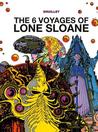
The 6 Voyages of Lone Sloane

The 6 Voyages of Lone SloaneThe 6 Voyages of Lone Sloane by Philippe Druillet
My rating: 3 of 5 stars

Like Hawkwind, circa the same time these were originally published, but without Lemmy.

The absolutely stunning artwork in this volume more than makes up for flat characterization and the presence of more gods in the machines (I mean this literally!) than ancient Greece could have conceived. Druillet was no storyteller, but, wow, what an artist! The line between organic and mechanical is effectively erased, while the immense scale of the structures, space, and spaceships through which and with which Sloane travels overwhelms the viewer, further adding to the sense of awe that sweeps out from the pages.

Not my favorite graphic novel in recent memory, but well worth a gander. I'll be very curious to read the further volumes to see if the storytelling improves or if it retains it's too-short and under-impressive plott(dd)ing. In any case, I shall absolutely be back for more brain-cracking artwork.

View all my reviews

Monday, May 30, 2016

Marvel Masterworks: Doctor Strange, Vol. 1

Marvel Masterworks: Doctor Strange, Vol. 1Marvel Masterworks: Doctor Strange, Vol. 1 by Stan Lee
My rating: 3 of 5 stars

As a child back in the '70s, I couldn't get enough Doctor Strange. Steve Ditko's psychedelic dimensions, along with the restrained majesty of the doctor himself, enwrapped me in imaginary worlds that my child-mind had never even considered before. My life since then has been a series of attempts, through various means, to kick my perception of reality into other, more interesting realms, whether through writing, roleplaying, or (earlier in life) psychoactive substances. I gave up the drugs and alcohol a long, long time ago, but I admit to hanging upside down to get a different view of a place, or spinning around in circles until I'm dizzy, then watching the sky as my senses try to catch up again, to real-time. Yes, even now.

So I was hoping for the same thing, the same sense-reeling sweet confusion that had so effectively introduced me to meta-realities as a youth. But I forgot that when I entered the fray of understanding, in the early to mid-70s, Doctor Strange had been around for ten years already. The story, the character, and the comic had already evolved for ten years from the earliest works.

And those early stories really, really sucked.

It's only about halfway through this volume that Stan Lee does anything of substance, and even then it's a hackneyed, derivative work based on pulp sorcery fantasies of earlier decades, but without the nuance and panache of, say, Clark Ashton Smith or Jack Vance. That said, though the story is awful, the visuals, while restrained, at first, by the very nature of their setting, become something spectacular once we are introduced to the bizarre dimensions of Strange's enemies: Nightmare, Tiboro and The Dread Dormammu. Then we see what I remember: Alternate realities that have little to do with our own, which became a hallmark of subsequent appearances of Doctor Strange.

Now I think I need to read the later volumes and leave the origin story to the movies. I sincerely hope they can do a better job in that medium. I have high hopes!

View all my reviews

____________________

If you like my writing and want to help my creative endeavors, ko-fi me at https://ko-fi.com/forrestaguirre. Every little bit is seen and appreciated! Thank you!

Saturday, May 21, 2016

Unflattening

UnflatteningUnflattening by Nick Sousanis
My rating: 4 of 5 stars

Sousanis' syncretic work, while not as paradigm-shifting as he likely hopes it will be, is still a fantastic example of what can be done with the comic/graphic form, which is sort of the whole point of the book: to point out the potential of the comic as philosophical map. It is a meta-example of itself, and it is very, very well done.

Here, text and image flows and flows intentionally, with both words and pictures pointing the way for readers - and see-ers - through a sometimes (and again, sometimes intentionally) meandering argument for the primacy of comics over mere texts. While much of the information is, or should be, covered in a college general education curriculum, Sousanis has a gentle, yet insistent way of directing one's eyes and thoughts along his pedagogical paths. I would love to see more involved texts constructed in this way, allowing the student to absorb the entirety of ideas through pictorial forms, then "crunching" the details through text. The two can work together, even in separate volumes.

This is not the most profound philosophical treatise I've read. Not by a long shot. But the arguments presented are "good enough". What's truly eye-opening here is the use of the graphic form as a sort of thought map. I can't think of another graphic novel that has done it better than this. When I read this book, I am inspired and want to leverage this carto-graphic technique, despite my meager skills as an artist. Well, that's what collaboration is for.

Anybody want to collaborate? I've got ideas; lots and lots of ideas. And I can draw on a napkin as well as the next guy. But don't ask me to draw on anything more permanent. I'm just not up for it.

View all my reviews

Thursday, April 14, 2016

Baby Bjornstrand

Baby BjornstrandBaby Bjornstrand by Renée French
My rating: 4 of 5 stars

Want to make your goth girlfriend swoon? Give her this for her birthday. Equal parts dark, ethereal, surreal, cute, optimistic, and existential - the most important descriptor for this work is "evocative," used in it's most banal definition of "that which evokes". There are very few words in Baby Bjornstrand, and the words that do appear are only signposts to a road of hidden dialogue and churning thoughts that are invisible to the reader, but absolutely there; not in the same way as Matthew Forsythe's (outstanding) Ojingogo, as French's work lacks the same innocence of Forsythe's tale, but in a somewhat sinister, yet undeniably adorable manner. The art is simple, but has a graininess that lends it character, giving the book a noir-ish feel, again implying hidden movement in the shadows and spaces between, but with a playful tinge, almost like French is making light (pun intended) of her own darkness.

View all my reviews