Showing posts with label Forrest Aguirre. Show all posts

Friday, June 19, 2026

Stones Beneath a White Star


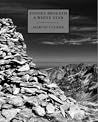
Stones Beneath a White StarStones Beneath a White Star by Martin Locker
My rating: 5 of 5 stars

I was speaking with someone recently about teaching young children complex concepts. This friend is a teacher of very young children (three- to five-year olds) and is tasked with teaching them some advanced concepts. She was concerned that these kids were never going to remember these principles, though they might integrate them subconsciously, the same way that back in our secondary-school grade introduction to trigonometry and pre-calculus, we all said "we're never going to use this stuff". That turned out to be true for most of us, though our brains were permanently rewired, ever so slightly, to form thoughts in a new and different way than we had done before. All of this aside, we agreed that while these young kids probably won't remember a thing about what was said to them, they absolutely will remember the way they felt when they were being taught. I can attest to this. I remember my third-grade teacher, Mrs. Wells, not because of the things I learned, but because of her kindness and patience and her great sense of humor. I remember her reading us the Winnie the Pooh stories and her spot-on voices (with the Disney movies as her template). And I remember her encouraging my reading, even recommending me to what they called the "talented and gifted" readers program for reading and writing. I didn't even fully comprehend what that meant, but I remember the way she made me feel: special, recognized, an individual. I'll never forget her. I can't even name my second or fourth grade teachers, but Mrs. Wells; she was an icon.

I share this because of the way Martin's book Stones Beneath a White Star made me feel. If someone asked me what the book was "about," I would stumble and mumble my way through an answer. Something about friends and loss and mysticism and mountains and reconnecting with the past . . . mumble mumble mumble . . .

It's tough to pin it down. But I know how the book made me feel.

Excuse me while I get a little personal. I'm hardly on social media these days (intentionally), so I don't spill my guts like some people do regularly. So, humor me. I'll try not to be boring. And maybe this indulgence will say a bit about the book. One caveat: I am a pen pal with the author. We write each other, pen and paper, yes, the old-fashioned way, irregularly. As a result I've gotten to know Martin a little. I apologize if you think this shades the review in any way, but hey, it can't be helped now, can it?

What I didn't say about my experience with Mrs. Wells above is that I was living in Italy at the time. My dad was military - I was what is colloquially called a "Military Brat" (hey, if the shoe fits . . .) - so I lived in a lot of different places through my life. I sometimes wonder if Air's song "Universal Traveller" wasn't written for me (did I mention the word "brat"?). I've been around . . .

One problem with having been around is that some of the places I lived, I can never visit again. The Air Force base I was born at in Germany is now a US Army base, the base where we lived in Italy, San Vito, is abandoned and off-limits, the base in England where I spent most of high school is now a British spy base (though I can, and did go on a tour of some of the base a few years back, "my" house is strictly off-limits), and the house I lived in when we were in The Philippines was buried under volcanic ash and the base abandoned by the US military. In essence, a lot of my childhood stomping grounds are either inaccessible to me or just plain don't exist anymore, though I have written a bit about my dream-life in one of those places.

This makes me a little melancholy. While many people can just drive (or even walk) to their childhood home, I just can't. I can get bits and pieces and visit places near some of those places, but time and circumstance have effectively banished me from my own childhood. It's a little more than mere nostalgia. I am haunted by the ghosts of the places of my past.

And here we have a segue into why I feel the way I feel about this book. Stones Beneath a White Star is the most profound work of Psychogeography I have ever read. It is about the spirit of a place, in this case, the Pyrenees Mountains (where, incidentally, my ancestors on my father's side hail from, generally - though they lived in the Basque regions, while this work takes place largely in and around Andorra). The religio-mystical history of the region is dealt with in encyclopedic depth. The book as historical treatise on the area is exhaustive, thick with referents and nuances that I admittedly know little or nothing about. But this didn't affect my reading, outside of wanting to know more about the people, events, and places portrayed.

The real rub of the book is the intimate connection of a few close friends and fellow-believers to the land itself. Their connections to each other (and some of those who have passed on before them) provide the engine for the story (such as it is). These relationships, between people, the land, and the history of the land, is absolutely immersive. I cannot say what the book is "about," nor do I care. This is the kind of book you just live in, for the moment, a meditation on friendship, loss, and retrieval, of the fluctuating bonds of love despite the catastrophes and disappointments of living life on this planet. It is a novel about the resilience of friends finding peace in a broken world.

You can probably see where this is heading . . . I live in a world of broken memories, unretrievable. I'd like to think this isn't just a function of mawkish nostalgia. I literally can't go back. But the memories still haunt me. Needless to say, this book affected me . . . deeply.

Thank goodness that while much of my past is bricked off (or behind barbed wire), one thing persists, despite location, and that is meaningful friendships. I've made and lost many friends throughout the years (as I get older, I lose more and more), but as I retain some ties over the decades and form new friendships with people I've not known before, whether intentionally or through pure happenstance, there is connection. And this connection is something to be nurtured, something sacred.

View all my reviews

____________________

If you like my writing and want to help my creative endeavors, please ko-fi me at https://ko-fi.com/forrestaguirre. Every little bit is seen and appreciated! Thank you!

Sunday, March 1, 2026

Censure forthcoming from Zagava

 I am thrilled beyond measure to announce that Zagava is publishing my short story collection Censure in 2026, first as a very limited slipcased hardbound edition, then as a paperback edition. 15 dark tales, 4 of them previously-unpublished, the rest from a bevy of obscure and difficult-to-find editions (some of them also very limited). The cover art is by one of my favorite artists: Odilon Redon, the Symbolist master. Exact publication date is TBD, but here is a taste of what's coming:


Link to the signed and lettered edition is here!


____________________

If you like my writing and want to help my creative endeavors, please ko-fi me at https://ko-fi.com/forrestaguirre. Every little bit is seen and appreciated! Thank you!

Saturday, February 14, 2026

I Foresee the Wild Ahead

 I'm not much of a homeowner. I often ask myself why I even own a home. The neighbors probably do, too. I'm not that guy who manicures his lawn with nail-clippers (those are the people across the street). I wouldn't survive a week in an HOA. Besides, I have no desire to deal with the politics of an HOA. Sounds like my idea of hell. 

I'm lucky enough to have a pretty "cute" home. Kind of a gingerbread bungalow. It needs work, and now that I've finally (after eight years - thank you California legal system) got my deceased parents house off of my hands (and out of the $800/month rent I had to pay to keep it on the trailer park's land), I can focus a little more on the house. Yeah, I know, I'm very, very lucky and privileged to own my own home; I get it. I look at my kids and wonder how they will ever be able to afford a home with the billionaire's cards stacked against them (and the other 98%). But, like I inferred, I am a horrible house manager.

And I really, really, REALLY hate mowing the yard. I mean HATE with a visceral passion. Might have something to do with my upbringing, where military housing is meticulously watched and people are ticketed for the slightest infractions - hey, I just discovered why I hate the idea of an HOA! Cool! Anyway, I hate mowing the yard. It has all kinds of bad associations for me. The only good association I can think of is when I was 12 and I got a walkman and a copy of Black Sabbath's Mob Rules album and listened to that full blast for the first time while mowing my yard. That . . . was cool. 


But back to my hatred: I might have found a solution. I've posted on here a few times about my (nearly daily, on weekdays, at least) wanderings on The Ice Age Trail here in Janesville. The particular stretch that I haunt the most is a restored prairie, replete with native prairie grasses and wildflowers, an incredibly diverse range of birds, one mink, and at least 11 deer, as of my last count (a week and a half ago). All of this in the city

So, I figured, hey, I hate mowing the yard, and I can do with it what I want because: no HOA! I've also seen others do what I'm about to do: plant native Midwest wildflowers and tall grasses. So long as I don't kill them the first year, they're perennials, so they should seed and grow themselves, more or less. No muss, no fuss. Not quite sure what I'm going to do in the fall, though, because I can't burn them down like they do on other prairies. Might burn the house down, which is a neighborly-limiting maneuver. I'll have to figure that one out.


We're going to start small. You can see the little wedge we're targeting in the photo above. We'll be expanding that and creating a sort of triangular lot alongside our house to start with. We've tried and failed a couple of different experiments there (mostly due to critters getting in and eating our squash - too bad I can't fire my .357 within city limits, or there would be a bunch of hollow rabbit and squirrel skins littering my yard), so let's see what we can do here. If it works well, then we'll expand next year. Who knows, there may come a time when I am surrounded by nothing but wildflowers and knee-high native grasses? That can't be all bad. 

____________________

If you like my writing and want to help my creative endeavors, please ko-fi me at https://ko-fi.com/forrestaguirre. Every little bit is seen and appreciated! Thank you!


Monday, February 9, 2026

A Natural History of Empty Lots


A Natural History of Empty Lots: Field Notes from Urban Edgelands, Back Alleys, and Other Wild PlacesA Natural History of Empty Lots: Field Notes from Urban Edgelands, Back Alleys, and Other Wild Places by Christopher Brown
My rating: 3 of 5 stars

I have a soft spot for books about psychogeography. Having been lucky enough to have been born a world traveler (thanks, Dad), I have a strong sense of place, particularly for places I've "discovered" and wandered through. A lot of those places were (and are) off the beaten path. As a result, I was particularly vulnerable (that's the popular word all the kids are using these days, isn't it?), which, of course, exposes one, makes one maybe a little touchy, when assessing a work like Christopher Brown's A History of Empty Lots: Field Notes from Urban Edgeland, Back Alleys, and Other Wild Places. I saved up for this book, and was ready to really cherish it, give it the benefit of the doubt, you know, be vulnerable.

I'd be lying if I didn't say that things got off to a rough start. I'll be frank, the beginning was downright boring. I even thought about lemming the book. But I love the subject matter enough that I gave it a chance. It felt choppy and poorly written. Only about 80 pages in did I feel like it had gained momentum and a bit of eloquence. I'm not sure where the editing really kicked in - was the first part poorly edited, or later parts well-edited, or did the editors start with an iron fist and let off as the book ran its course? I'll never know. But at some point it felt like two different books. Even 133 pages in, my notes read:

Is this book good, or just nice? I toggle back and forth between opinions on this one. I can't decide if it's "big" or "small," and I frankly only have an ill-conceived hint of a notion about what I even mean by that. It has its moments, but, then again, it has its moments, whatever that means in my intellectually lazy assessment. Maybe this book isn't for me, or I'm not for it?

This didn't bode well.

Thing is, I liked Brown's approach: Not alarmist, but not letting us off the hook for our environmental sins so easily, either. There's a touch of sadness and a touch of hope in those interstitial spaces where wilderness and domesticated spaces meet. I find a particularly wry, grim humor at work when Brown points out that roadkill might be one of the best indicators that wildness persists even in our most urbanized areas.

Really, I think the issue might be a problem with scope. A Natural History of Empty Lots feels most effective when focused on smaller scopes. The lone-standing "Holy Tree" (I'll call it), the lot on which the author carved out his own ecological/familial niche, etc. This reading might be the result of my own experiences exploring, particularly as a child, my own little niches: the Priory at Chicksands, dirty mechanical access tunnels to underground parking at the high-rise apartments where we lived in Brindisi, Italy (I still have nightmares where a hag suddenly appears in front of me in those tunnels, sending a chill up my spine and paralyzing me), the vast water-drainage system I entered (and almost got stuck in) at the bottom of the hill where I lived in Capehart Base Housing in Nebraska, the abandoned (and supposedly haunted) owl-infested Albion school in Idaho where we had a family reunion years ago.


The macro-scale of the book is interesting, to some degree, on a philosophical level, while the micro-scale foci are very interesting at an experiential level. I suppose there's something to be said for having one's own (now internal) experiences evoked by an external source. Maybe that's the trick.

For instance, the subsection "Foraging for Meaning," a list of found and created objects, does more to paint the narrative of the liminal space between civilization and the wild than any narrative. It is merely a list, but to me it seemed something much, much more poignant, showing, rather than telling, revealing meaning without speaking of meaning at all. Just a list of found and curated junk, for the most part. And yet, it seemed profound. Apotheosis in the trash stratum.

View all my reviews

____________________

If you like my writing and want to help my creative endeavors, please ko-fi me at https://ko-fi.com/forrestaguirre. Every little bit is seen and appreciated! Thank you!

Saturday, February 7, 2026

The Slithering Shadow

 Pardon my indulgence while I wax autobiographical. But I think I've puzzled out something about myself that was hidden under the skin for many, many decades. In childhood, one tries to figure out who they are. Later in life, middle age, to be specific, one starts to ask: Well, how did I get here? And since I'm re-analoging my life, I have more time and headspace to think about such things. 

As I've stated many times before, I lived a part of my childhood in Brindisi, Italy. I lived there from 1976 to 1979. It was there that my passion for fantasy and science fiction was born. My father read a lot of science fiction and introduced me to many authors whose work I learned to love. But as far as fantasy, that was mostly something I discovered myself . . . on the magazine shelf of the Stars and Stripes Bookstore at San Vito AFB. 

It will strike the canny reader that it is extremely odd that a child of my age at that time was exposed to something as salacious as The Savage Sword of Conan. Those who are familiar with military life, though, will not be surprised when I say that I first discovered the magazine in a pile of comics at the base childcare facility one night when my parents left me there so they could go on a date to see Superman

As a child, I was an avid comic book reader. From Thor to Metal Men to Archie and Richie Rich, but Savage Sword of Conan was a shock to the system, a revelation. I won't go over what that magazine did to stir my young soul, but in hindsight, with many decades between then and now, I think I've finally discovered exactly why this horrifying, over-eroticized, violent "comic" resonated with me to the point that it set me on a wholly-new intellectual track that led to a lifelong obsession with roleplaying games, fantasy fiction, writing, visual art, and heavy metal, among other things. These obsessions are the reason this blog exists, after all.


The area I lived in while living in Italy is known for its aridity. It's basically an extension of the north African clime, separated from Algeria, Libya, et al, by a mere 87 miles at their closest points (Southern Sicily to Tunisia). Here the days are hot and dry and prickly pear cactus can easily be found along roads both in and out of the city. Near the apartments where we lived, a fig tree spontaneously grew in a ditch, and olive trees were everywhere. The area is known for its olive oil, in fact. There are also artichoke fields like corn fields in the US, spreading through vast expanses. I recall wandering through these fields and stumbling on small, stunted remains of Roman pillars - the artichoke farmers simply worked around them, the fields conforming to the contours of imperial architecture, an unavoidable echo from the time when Cesars ruled the land. 

When I opened the pages of The Slithering Shadow, I was immediately struck by the visuals of the desert. Conan and a buxom woman (they were always buxom, though I had no idea what that word meant at the time) are stranded in the desert and have just run out of water. They set out across the desert looking for water and stumble upon a seemingly-abandoned city.


One of the more commendable cultural norms in Italy is the siesta. Everyone, and I mean almost everyone, sits down and takes a nap in the afternoon. I learned this the hard way when I went across the street to buy candy (a cadbury chocolate egg with a metal soldier inside the egg) one hot afternoon. I approached the shop and saw the proprietor, an ancient lich of a lady, sitting in a wooden chair, back to the wall of the establishement, just to the left of the door. She was sound asleep. So, being young and reckless, I started to walk in, but then her arm shot out like a bolt of lightning, blocking the way. I was stunned, paralyzed, really. I looked at her and she opened one bloodshot eye to look at me and said, simply, but very firmly "NO!". What could I do but back down? I was defeated, and retreated. When I returned, about an hour later, she was quite nice and pleased to sell me a couple of those eggs. But I learned that Italians take their siestas very seriously! If you ever want to rob a bank in Italy, just do it during the siesta, and no one will stop you, I swear.

Given this history, when I progressed through The Slithering Shadow, what did I encounter, but an entire ancient city full of sleepers? 


I will forego spoiling the plot for you from that point. I outlined the plot in more detail in my review of the collected Savage Sword of Conan Volume 2, if you're interested. But I would suggest just getting yourself a copy and reading it yourself. 

These elements alone gave me very personal reasons to be drawn into the story. Again, I didn't realize the causal connections until very recently. I can link the reading of this magazine to the subsequent buying of more Savage Swords, to my later fascination with Dungeons and Dragons, Heavy Metal Magazine (along with the movie and the music), and Epic Illustrated

Also, with hindsight, I look back on that more-or-less innocent child and am grateful for who he was, as well as who he became. Like Conan in the story, I've come up battered and bruised by life, but I've replaced that innocence with stubbornness in hope. 


As Conan states: "You can't fight a devil out of hell . . . and come off with a whole skin . . .!"

But you keep on keeping on. Thanks, Conan!

____________________

If you like my writing and want to help my creative endeavors, ko-fi me at https://ko-fi.com/forrestaguirre. Every little bit is seen and appreciated! Thank you!

Tuesday, December 2, 2025

Goodreads Sucks More? Again?

 Well, Goodreads has done it again. And by "it" I don't mean anything good. Exhibit A:


I have a long history with Goodreads, and I've got the receipts to prove it. I tried Booklikes, but, well, I didn't like it. Why? I can't even remember, that was so long ago. Suffice it to say that I stuck with Goodreads and for a time considered it my only social media.

Given the message above, that is coming to an end. I did send a "WTF?" message to Goodreads. I don't expect a response, but you never know. They've surprised me before by actually responding to my questions about a previous move they had made. But, I admit, my email back then was much more restrained and well-thought-out than my kneejerk reaction tonight. 

I posted a message there asking anyone who wants to keep contact to message me ASAP and I would exchange emails with them. 

As with other changes, I suspect that this is just the tip of the iceberg. I cannot fathom the reasoning behind this, as it is one of the things that keeps Goodreads members connected. The conspiracy theory side of me wonders if other social media applied pressure to make Goodreads less of a social media and more of a commercial enterprise. Or maybe Goodreads just did that themselves. What? Following the almighty dollar at the expense of actual human interaction? That's never happened before, has it? 

Ugh.

My selfish fear (outside of losing direct contact with many people whose opinions I greatly appreciate) is that Goodreads is up to something even bigger. You'll note that many of my blog entries/reviews use the HTML template that Goodreads provides. So, there is a possibility that I will need to (somehow) transfer essentially all of my book reviews from Goodreads to my blog which, frankly, sounds like the height of tedium. 

I can't shake the feeling that this will lead to me being online even less (and I've already taken many steps out of the virtual world and back into the analog world).

Well, let's see what happens. Will this finally be the death knell for Goodreads as a viable venue for enjoying books with other book lovers in a meaningful, personal way? Maybe. As with all things, time will tell.

____________________

If you like my writing and want to help my creative endeavors, ko-fi me at https://ko-fi.com/forrestaguirre. Every little bit is seen and appreciated! Thank you!

Saturday, September 6, 2025

Des Lewis' Brainwright and My Writing

 Here, a very brief post, a mere link, really, to Des Lewis' Forrest Aguirre and the Brainwright for my old age. As some of you know, Des is a master of reviewing works of fiction in such a way as to re-present the work to new audiences by offering a detailed analysis that is less explanatory and more exploratory, not ingesting and regurgitating the material, but painting a picture of a painting with other eyes. His reviews are a kaleidoscope, zooming in and out, lensing, coloring, sometimes distorting to catch images out of the corner of the intellectual eye that one would otherwise miss. As I said, they re-present the work in fully self-sufficient strokes.

Now Des has examined his reviews through the lens of what I will call a Deep-Observational Engine, which takes the whole of his output (which has a vast and riddling complexity) and twists the kaleidoscope on the reviews themselves. For my own work, this is fascinating to me. I have no argument with the conclusions, but note that many of the threads presented here were not anything intentional on my part. Some were, of course, but some are just organic threads that emerge through my writing process from somewhere deep inside. When I read the review, it gives me reason to reflect not only on my work, but on myself. I think back to "where I was" in life at the time I wrote each of those stories, and I can see windows back into my own experience (the experience of living, not writing) two steps removed from my own biased analysis of myself. It's a refreshing view and lends perspective that I otherwise wouldn't have.

As always, Des: fantastic. You are a modern Wizard.

____________________

If you like my writing and want to help my creative endeavors, ko-fi me at https://ko-fi.com/forrestaguirre. Every little bit is seen and appreciated! Thank you!

Tuesday, August 12, 2025

Minori Leather bag and Mudita Kompakt phone

 I'm not usually one for product reviews, but every once in a while I find something that's just such high quality that I have to let people know (no, I'm not being paid or sponsored to say this or anything else in this review, for the record, but if you find this mildly entertaining or even useful and you'd like to contribute, see my kofi link below). I just bought two such items (well, I bought one of them months ago, but it's one of those "time will tell" things that I had to let play out): 1) the Boulder Leather Crossbody bag by Minori Leather, and 2) the Mudita Kompakt phone, both of which are pictured here:


Let's start with the bag, as that will be quickest. I absolutely LOVE this bag. It's perfect for travel, and I'll be using it on my Alaska cruise next week! Great size: fits my Boox Go 10.3, a composition book, and my Leuchtturm 411 writing book, as well as my passport and Mudita Kompakt phone (shown in the photo for reference size). This arrived QUICK (buying locally helps, folks). I love the weathered look and this looks to be bomb-proof. Solid construction, tight stitching, zippers are smooth. I'll probably have to leave it in my will for my kids. Strongly recommended. "It's just a bag," you say? Yeah, kiddo, wait until the apocalypse and we'll see who's begging for something to comfortably carry.

As for the Mudita Kompakt: I made the decision a long time ago to try to simplify my life and move toward a more analog existence. If you've read my blog, you've seen windows into that journey. And for my next trick, I'm (gasp!) ditching my smart phone. Well, at least I am after my Alaska trip because I need it for the boarding pass and such. But my everyday carry does NOT include my smartphone anymore. I could go on for days about the many ways that we are being manipulated by the builders of smartphones and those who create apps for them, and how we need to simplify our lives more and spend less time on social media and online in general, and being offline more lets us focus on things we love more (like, for me, writing and playing RPGs), but I really don't need to. Many, many people have done this before, mostly on youtube (ironically, if you watch youtube on your phone): here, here, here, here, here, here, here, here, here, here, here, here, here, here, and here. I'm sorry, you're welcome, and welcome to my rabbit hole.

So, the Mudita Kompakt does not run any google-fied apps. It can't. And I'm happy about that. It is a simple phone, with an e-ink screen (which minimizes that blue light that burns into your retinas at night from watching cat videos on your smart phone for too long - you know who you are) that is easy on the eyes and aesthetically pleasing. There are apps, but you can't access the App Store, which is fine by me. There's an alarm, calculator, calendar, camera (awkward to use and black and white through the viewfinder, though the pictures are taken in color), chess, E-reader, Maps, Meditation (really a glorified timer, if I'm being honest), Music (which needs some work. A lot of work, in fact), Notes (which also needs work - too few characters, to be sure), a recorder, and a weather app (fairly accurate). It's got some "warts" - music is just playable alphabetically or on shuffle, not by artist or album, but I'm confident they'll fix that in an update; maps has some latency issues because it's e-ink, but then the whole intent of the phone is to slow you down and make you think more intentionally, so it does that; the notes app definitely needs to allow more characters, and the screen is ultra sensitive, so I often find myself putting the phone into "Offline+" mode, which shuts off the phone, camera, microphones, and all wireless communications at the flick of a switch (psst: this is the phone privacy advocates have been looking for all along) and locking it. I had a lot of problems with pocket-dialing until I figured out I need to flip into Offline+ mode and lock my screen if I didn't want to inadvertently call someone. Like I said, it's ULTRA-sensitive and needs work, which I'm told they are doing.

Which brings me to another point: Mudita actually listens to their users. The proof is in the pudding. I've spent a fair amount of time on the Mudita forums and seen the complaints of users (myself included), and they have responded not just with patience and tact, but with updates that make sense. Yes, there is more work to do - I bought the phone on its kickstarter, so I knew there would be bugs - but I'm confident in Mudita's ability and willingness to address any shortcomings. However . . . if you think you're going to get a black and white smartphone, think again. That's not what this is about. This is about mental freedom from the grip of a smartphone. It's intended to keep you OFF the phone, to DISconnect and, thus, reconnect with yourself, your thoughts, your time, your surroundings, your hobbies, and your loved ones. Pretty revolutionary stuff.

My experience has been . . . good. At times, very difficult. I don't think I understood how strongly I was addicted to my smart phone (and still am until this trip is done) until I took the plunge. I have an addictive personality, so smartphones are built like a hook for suckers like me. So, if you can put down the smartphone and social media "anytime I want to" - this phone isn't really for you. But if you are looking to get more calm into your life, to avoid the jittery anxiety of the online world, and reclaim yourself and your time, give it a try. If you have any questions about the phone or my journey, I'd be glad to answer them.

And speaking of journeys, I'm about to take one! You'll probably see photos (taken by my Kompakt) in the not-too-distant future. Alrigh, packing my new bag for Alaska!

____________________

If you like my writing and want to help my creative endeavors, ko-fi me at https://ko-fi.com/forrestaguirre. Every little bit is seen and appreciated! Thank you!

Monday, May 26, 2025

The Creative Act: A Way of Being


The Creative Act: A Way of BeingThe Creative Act: A Way of Being by Rick Rubin
My rating: 5 of 5 stars

I studiously avoided reading reviews of this book until I was done because I (correctly) predicted there would be those who praised it as a new book of holy scripture and those who would utterly trash the work as thin and inconsequential. Neither of those two camps is right. And while I do not condone tossing a book before you've given it a fair chance (though I have utterly given up on a book or two, opinions will differ on what a fair chance is. I can see the naysayers who feel that the book is a bunch of twitter quotes strung together, and I can even see why people who went into it not expecting a philosophically-oriented book would be turned off to it (though why you would think that a book about creativity would NOT have a philosophical orientation is beyond me). That said, I lean towards the cult of those who sing this books praises. I'm not all-in drinking the Kool-Aid, but I am at the edge of the clearing watching everyone line up, considering.

If one reads the book to the end, one finds the admission:

You are you.
The work is the work.
Each person in the audience is themselves. Uniquely so.
none of it can truly be understood, let alone distilled to simple equations or common language.


And herein lies the heart of the matter. Creativity is very difficult to pin down. There are exceptions and contradictions. What works one time doesn't work the next. That's the whole point of creativity. If you're looking for an end-all-be-all truth, study Accounting. Paint-by-numbers is not creativity, and it never was. It's good practice, and one can learn principles from it, but the true teachers in creative acts are experience, intuition, and failure.

Rubin does, however, share practical ways of thinking/being for those who might be struggling through the creative process. He also shares ways to ensure that you are creating good art when you think you've got a finished product. Any writer who's been writing for a while will tell you that the most difficult part of writing is editing. And if they don't, you can bet that their work shows it. I can categorically state that my early work, even those for which I was paid good money, could stand another edit. Or two. Or ten. Here Rubin doesn't spare the rod, but reminds us of our responsibility to create the best work we can, while giving us some tools to work with.

Now many of these tools come in the last third of the book, but if one doesn't buy into the foundational principles (remember that old concept of "willing suspension of disbelief"?), then the latter parts of the book are going to be far less impactful. No, you don't have to drink all the Kool-Aid, but you have to be willing to read and observe with an open mind. If you can't at least accept, theoretically, that "art is our portal to the unseen world," then this book is not for you. But if you'll give that thought a serious chance, the rest of the book will make sense to you. Again, if you want paint-by-numbers-so-you-can-monetize-everything-with-high-productivity, you need to look elsewhere.

If you're onboard with exercising a little faith, you'll be able to grok the book. The practicum really starts with the chapter on "Seeds," about a third of the way in. From here to the end, I've marked so many passages and taken so many notes that I won't take the time to put them all (if any) into this review. I've begun marking it up (in pencil - yes, I write in my books) with marginal notes, much like the ancient rabbinical scholars used to litter a verse of scripture with their annotations. As a result, this book has become highly personal to me and will continue to do so as I revisit it. It serves as a mirror to my own creative process, revealing all of its beauty and flaws. I will gaze into this book many times in the future both for inspiration and for practical solutions when I'm stuck (and there are many methods given for how to become un-stuck in the last third of the book).

I have a handful of reference books that I keep "hot at hand" in my writing area. An old Roget's Thesaurus, Tim D. White's Human Osteology, Francis D.K. Ching's A Visual Dictionary of Architecture, and now: Rick Rubin's The Creative Act: A Way of Being.

View all my reviews

____________________

If you like my writing and want to help my creative endeavors, ko-fi me at https://ko-fi.com/forrestaguirre. Every little bit is seen and appreciated! Thank you!

Sunday, May 25, 2025

Common/Uncommon Book

 More on this later, but I just returned from a trip to Europe and bought some writerly goodies while I was over there: The Leuchtturm 411 notebook and a Retro 51 Tornado Woodworks Bourbon Rollerball Pen. I am in love.

I've been wanting to do a "Commonplace Book" for a while, and had the rudimentary beginnings of one in my bullet journal, but have migrated those notes out. However, I wanted to also use this notebook to capture writing ideas. So, if you flip the notebook upside down, to the back, you'll find my "Common Book" with great quotes, sentences, phrases, and just plain cool words that serve as inspiration for my writing, including some transcriptions from notable passages (I have one from Rikki Ducornet's The Jade Cabinet, for example, regarding the Hungerkunstler). 

At the front of the journal is my "Uncommon Book" where I capture ideas according to the following key, inspired by some of the schools of magic in D&D:


And here are the new tools I get to use: 


I went on vacation seeking inspiration, as usual. I came back with several pages worth of inspirational ideas, as well as a container for them! 

____________________

If you like my writing and want to help my creative endeavors, ko-fi me at https://ko-fi.com/forrestaguirre. Every little bit is seen and appreciated! Thank you!

Monday, January 6, 2025

Prisms of the Oneiroi


Prisms of the OneiroiPrisms of the Oneiroi by Martin Locker
My rating: 5 of 5 stars

While I've read bits and bobs of Martin Locker's work before, this is my first full-length foray into his work and I feel like I've struck gold in the Pyrenees. I paid for it (including shipping from Andorra), but this is worth ten times what I spent! There's a wonderful variety to the stories in this collection, all girded by Locker's own voice, or, more properly, voices, as his characters are distinctly-identifiable from one another. Each tale is a different facet of the same gem.

Ligotti has nothing on Locker when it comes to existential dread on a cosmic scale. This was the sort of suffocating fear of the universe that Lovecraft strove for, but Locker has found. "The Dreaming Plateau" is horror of a different order of magnitude, made all the more impactful by the elision of the most purple prose. The poetic heart is intact, but without un-necessary frills, with terrifying clarity. And for some reason, my mind kept flashing images from the Tibetan scenes in The Imaginarium of Doctor Parnassus throughout, which is not a bad thing. I was waiting for Tom Waits to burst through a door at any moment.

"Corfdrager" examines one of my favorite enigmatic pieces of art, Bruegel's "The Beekeepers and the Birdnester" (and the art used on one of my favorite albums from one of my favorite bands, Sunn's White 2) as a catalyst for the narrator's encounter with his family's past and his own inheritance via a seemingly academic investigation. One wonders, by the end, if the academics aren't the most horrific aspect of the story. If you went to graduate school, you know what I'm talking about here. The dive into apiary lore is more sinister and more irresistible than one might imagine.

While reading Prisms of the Oneiroi, I am using a Winterthur Poison Book Project bookmark (you can get one, like I did, for free here). The irony of reading "The Temple Consumes the Rose," which features a green book by Sar Peladan, is not lost on me. I might also be tempted to consume such a book, if I was to be rewarded the visions of Latoure, even if it cost me my life. Such is the price of true art. A moving occult tale.

"The Secrets of Saxon Stone" was a delight to read, and I am not being facetious. Daimons abound, the psychogeography of the region portrayed is reflective of the spirits that not only dwell there, but are interwoven into its very fabric. This is like Dunsany, but without the pedantics that sometimes overween his work. This is mythical and approachable, lending familiarity to the representation of the divine.

Locker displays his acumen for ethnography and mythic studies in "Sea Salt and Asphodel," a story of dreams, prophecy, and the cycle of life and death. The depth of immersion here just has to be experienced - I can't describe it. Suffice it to say that this tale is told in such a way that one feels at one with the others presented in the story. You don't read this story, you live in it. The reader feels a part of the tale, such is the attention to detail.

"In Search of the Wild Staircase" is an epistolary story in the vein of Harper's magazine travelogues from the late-19th- and early-20th-centuries, albeit with a folk horror twist. That twist is set on its head, though, as it is implied, at least, that The Church itself is the source of the frisson. The story ended a bit too hurried for me, but it's still a very solid work. I'll never look at the little country of Liechtenstein the same again.

Locker, you clever, clever man. "The Jasmine Tear" is a story worthy of a Twilight Zone episode, which is one of the highest compliments I can give to a short story. The koummya, the djinn, the deal with a demon, and the treasures of the Maghreb - this is worthy of Musiqa al-Ala; a masterstroke of storytelling that will stick in my mind until the Last Day (or fifty years, whichever comes first)!

I found "A Dialogue of Innocence with the Hidden Parish" deeply moving. First, it created a deep psychogeography of a particular house seeping with sadness, longing for company. I thought of my parent's home and the sorrow I associate with it, but more of that at a later time. I also thought of my own childhood and the deep impressions of place I felt as a young world traveller. Moving every two or three years (Dad was in the military) forces one to latch on to the feeling of a place rather quickly, so I might be a little hypersensitive that way. Combine that with the death of my parents a few years back, and maybe I was destined to fall in love with this story.

Ever contemplated choosing homelessness? I have (when it's warm out). In fact, I was very strongly tempted at my last job to just give a try at homelessness, but fate, thankfully, intervened. In "What the Vagabond Sees or The Parish Coda," an entire society and cosmology is outlined for English Vagabonds, whose motto is "No Parish But Albion". If you know, you know. I immediately connected with this tale, due in part to a trip I took in 2019 that allowed a fair bit of rambling around the Cotswolds. I recalled the many carefree hikes that friends and I took in the English countryside, from Brighton and Eastbourne to the Midlands to the Cotswolds, when I lived in the UK as a teenager. As I understand it, after The Great War, many veterans, disillusioned from the horrors they saw during the war, became homeless wanderers in the 1920s. I think that the song "The Tin Man" by Grasscut is inspired by that phenomenon or, if it's not, I'm going to interpret it that way anyway. I've often dreamt of what it would be, in my dotage, to hike around England until I just drop dead. I know I'm going to sound borderline insane, but it's a very tempting prospect, in all seriousness. This story just unlocks that morbid longing in my heart all over again. Maybe. Someday. Maybe. But only if I'm alone. And it's warm. But I can't imagine a better way to go.


View all my reviews

________________________

If you like my writing and want to help my creative endeavors, ko-fi me at https://ko-fi.com/forrestaguirre. Every little bit is seen and appreciated! Thank you!

Saturday, July 20, 2024

Asterix Omnibus


(Asterix Omnibus: Asterix and the Actress, Asterix and the Class Act, Asterix and the Falling Sky) By Goscinny (Author) Paperback on (Jan , 2012)(Asterix Omnibus: Asterix and the Actress, Asterix and the Class Act, Asterix and the Falling Sky) By Goscinny (Author) Paperback on by unknown author
My rating: 4 of 5 stars

Asterix (& Obelix!) formed much of my sense of humor since I first discovered the series back in 1975. I can trace my first desires to learn Latin back to the series, as well. Only now, when the clever Latin puns start flying, I understand (many of) them.

While this is not my favorite Asterix title (that honor is reserved for Asterix and the Goths), this is a very interesting collection. The three full-length adventures, "Asterix and the Actress," "Asterix and the Class Act," and "Asterix and the Falling Sky" are all fine, funny stories. But what really sets this omnibus apart are the number of short pieces between the longer stories. My favorite of these is entitled "Asterix as you have never seen him before . . .". And how! Here Goscinny and Uderzo show their artistic versatility, drawing (and writing) five vignettes in wildly different styles, each in response to a letter from fans and critics.

My favorite of these is a one-panel piece drawn in a style that looks like a cross between Mad Magazine and Crumb comics, written in response to the letter "Why don't you, like, you know, have the druid inventing modern gadgets? The characters don't talk, like, natural. And even worse, the drawing's just for kids, like Mickey Mouse stuff. Signed, a pal". The panel is a bizarre scene with Asterix (who looks like he belongs at a doom metal concert, stoned out of his gourd) on the phone with Getafix ("Getty"), while, in the background, Obelix smashes a group of Roman Soldiers with a browning machine gun he wields as a club.

You get the point. Yes, this book might be for "completists," but if you love Asterix like me, it's worth picking up, even if it's just for the smattering of short, very clever pieces throughout.

View all my reviews

________________________

If you like my writing and want to help my creative endeavors, ko-fi me at https://ko-fi.com/forrestaguirre. Every little bit is seen and appreciated! Thank you!

Thursday, July 11, 2024

The Bullet Journal Method


The Bullet Journal Method: Track the Past, Order the Present, Design the FutureThe Bullet Journal Method: Track the Past, Order the Present, Design the Future by Ryder Carroll
My rating: 5 of 5 stars

I stumbled into bullet journaling back in mid-2015. My usage was sporadic and thin, and my bullet journal remains thin to this day. I have a month calendar on one side, and bulleted/iconified lists on the other of things to do, things to study, and things to buy. Looking back, I missed many, many months, and I absolutely did not use the bullet journal up to its full potential. Now that I am making a conscious effort to be more intentional in bringing my life out of so much social media (don't worry, I'll stick around for Goodreads, my blog, discord, and substack) and making the ongoing effort of re-establishing myself in the analog world, I find that the bullet journaling I've been doing has been slipshod, lackluster, inadequate. I need more.

So, I started following the founder and author of The Bullet Journal Method, Ryder Carroll, on Youtube (a pseudo-social media that I am not giving up), which just whetted my appetite even more. I didn't want to spend an exorbitant amount of money to attend Bullet Journal U (at least not yet), I did order the book the second I saw it.

Well, the book has met and exceeded my expectations. And while much of the information is available "out there," I suspect that some of it is not. Besides, I like having the reference handy in a good old hardcopy book, because that's how I roll. This allows me to peruse things at my leisure wherever the heck I like. It also facilitates me memorizing parts that are important to me, as I have great difficulty memorizing things on a computer screen. I am a visual and kinesthetic learner, so having the book in my hands while I study is important to me. Having the physical book makes referencing things, quite literally, handy.

I won't go into much detail on the guts of the book. It is both a workbook for crafting your own "bujo," and a meditative piece on the art of intentionality. And while the book is divided into five sections (1. The Preparation, 2. The System, 3. The Practice, 4. The Art, and 5. The End), the philosophy of bujo and the nuts and bolts of the actual journaling are threaded together throughout. I find this to be a reinforcing feature, not a division-inducing bug. If you want to find sections focusing more on one than the other, that's easy enough to do. But The System and The Practice are integrated in a sort of familial yin-yang back-and-forth that is unavoidable in writing this sort of guide.

Would I recommend jumping right in and absorbing it all at once? Maybe, maybe not. In my case, that would not have worked. I had to spend nine years on the "thin end of the wedge" before I was ready for the thick end. If I had dived into the deep end, knowing myself, I would have faltered even more than before in those early days. Now that I have a well-established habit of doing the most very basic practice of bullet-journaling (which served me well for many years) and I feel the need, I'm ready to deepen my immersion. Perhaps you're one of those obsessive people who has to do it all at once - go for it! Or, if you're like me, get the book and start slow. As you notice and appreciate the difference it makes over the long haul, you will likely want to do more.

Again, part of the reason for me wanting to do more is to deepen my analog immersion and have reason to avoid the time-wasting of social media; to live with intention. I'm excited to have this tool in my box for that excursion. If my prior experience is any indicator, this will help immensely!

View all my reviews

________________________

If you like my writing and want to help my creative endeavors, ko-fi me at https://ko-fi.com/forrestaguirre. Every little bit is seen and appreciated! Thank you!

Monday, May 27, 2024

The Trickster Goddess of Family Cervidae

[Trigger Warning: Dead animal mention and photo]

 I'm going to get a little personal here. Don't like it? Go somewhere else. Take me as I am, as they say. Here I am:

Back in 2019, the company I worked for was bought out. Now, one of the companies I had worked for previous to that job went through three different buy-outs in five years. Yeah, not a great track record. I left that company before it sank, and oh, did it sink. It's gone. Dead to the business world. A has-been. Even the IP has been flushed down the toilet. I watched as the investors made mistake after mistake, had the heartbreaking task of handing out nearly 40 pink slips to people, some of them good friends, because the investors made some really poor business decisions, and when the third buyout happened and I saw the company culture that was being imposed there, I took off. On my last day, when I walked out (and I literally walked home the five or so miles, because I knew I'd need that long walk to clear my head), I felt like I was sitting on a cliffside overlooking the ocean, and seeing a cruise ship, on fire, slowly sinking beneath the waves. I was right. That's about how it went down. So fast-forward a few years, and I find I'm in the middle of yet another buy-out. Only with this one, I was assured that my job was not in any danger, that while there were now two buyers, where there had been one previously, that my position was safe as houses, as they say. 

They lied.

I found myself, at fifty years old, unemployed for the first time in my life. I diligently looked for, and found, a good job doing purchasing for a major player in the food industry (why not? I had just been "let go" by the water industry). This was in late 2019. Covid happened, and I found myself working from home, which was a good thing, because unlike many of my friends who were out of work, I found myself waking up at around 7, rolling out of bed to get started at 7:30, working through to 5:00 or so (I may or may not have taken a 15 minute lunch during that time - some days I did so, most I didn't), eating dinner, then getting back on for another 2-4 hours, depending on how crazy the day was. This went on for many months. Every day, I checked in with my boss for a call, maybe 20 minutes or so, to report on what I was doing. This was fine, as we needed to communicate regularly, given how absolutely insane the food industry was during Covid. People discovered they could actually cook burgers at home, and our customer base (the meat industry) went stark raving mad with production. One of our customers, also the world's single largest producer of beef, was running at 400% capacity. So anything that required preventative maintenance, like motors, for example, which I bought, was wearing out four times more quickly than usual. And I'm here to tell you that the meat industry doesn't like the idea of buying spares until their machines are down and they are suddenly losing $10K an hour - then, and only then, they'd think "we should have bought a spare". Duh. 

Covid came and went. But the stressors didn't. Long story short, I found myself, last winter, burned out and extremely sensitive to criticism. I was putting in "all the hours". I was pushing to get everything done that needed to get done. I made some mistakes, as one does when one is over-worked and burned out, but nothing critical. In fact, in the last year, I saved my company upwards of three times my yearly salary in one year of purchasing negotiations. I paid for myself and then a lot more. The numbers were clear as day. I received praise from the plant manager and international director of sourcing for my work. And yet, the pressure never let up. 

It was in the midst of this pressure cooker that I was driving home from work one night on a stretch of country road, and I saw a deer jump out onto the county highway. I was going at about the speed limit when I slammed the brakes and the deer jumped off the road, but I thought - and I was right - there's got to be other deer nearby.

Then, there she was. She bounded out and in a split second, I knew I was going to hit here. I knew also, that when hitting a deer, it's a bad idea to have your brakes clamped down, as the deer is then more likely to go under your car and tear up everything on the underside. So, I let off the brake and hit her at about 40 MPH.

As I saw her body fly up over my hood and fill my windshield, I thought "this is it, I'm going to die". Then, miraculously (for me, at least), she kept going up. I think my car met her rump just as she was bounding upward, as deer do, and she simply flew over the top of my car - completely over the top - and landed in a ditch behind me. 

I didn't have the wherewithal to do anything but glance back. I didn't see her. I had no idea if she had survived or not. My car was crumpled and I was shaking like a leaf. My airbags did not go off, for which I am very grateful, and any whiplash I suffered was minimal. After a panicked call to my wife ("I just hit a deer. I have no idea what to do. I've never hit a deer before.") and my wife's calming response that I should call the insurance company, I did that. Then I called 911. The Walworth County Sheriff's department arrived, and the deputies were awesome. They checked on how I was doing, asked what happened, of course asked if I had my seat belt on at the time of the accident ("I was raised in the military. You ALWAYS have your seatbelt on when you're raised in the military!" - they laughed at that), then checked my car. It was munched on the front, but drivable, and there weren't any fluids leaking. 


The police gave me a card with a case number and told me "if you get pulled over for only having one headlight, just give them this card and you'll be fine". Then they got in their SUV and backed up behind me, maybe fifty feet or so, shone their spotlight into the field to check for the deer, I presume, then drove off. I made it home, of course, took the car in and eventually it was totalled.

To say this was a stressor I didn't need is an understatement. But I kept coming back, in my mind, to that moment that deer rose up and filled my windshield. I was strangely calm when I thought "I'm going to die". I wasn't panicked at all. Endorphines are wonderful gifts! But I kept coming back to that thought. "I'm going to die."

Of course, I've thought that before. My deepest philosophical explorations (if they can be called "deep" at all) have been my delves into Existentialism. I've faced the possibility of death a couple of times before (once having narrowly avoided being in a fatal airplane accident - the plane taxiing behind me ended up being hit by a microburst on the tail of the plane on takeoff, flipping upside down, and killing all 16 people on board, I learned upon landing at my destination - and I've been shot at at close range once, as well). But this one was weird. I was so calm. Almost like I was just receiving a message: "I'm going to die".

Needless to say, this got me thinking a LOT (and driving much more slowly and cautiously at night in the country - yeah, I've become "that guy" at night. So, go around me if you're in such a hurry) about my then-current situation with work. I was not happy. In fact, I was much more unhappy and not mentally-well than I could have admitted to myself before the accident. And I had been putting up with a lot of stress and what in a later conversation I figured out was extreme micro-managing, and I had had enough. So I started sending out job applications. I had been approached by head-hunters before, but had told them I wasn't interested at that time. Now I was interested. I needed a change and I needed it bad. After sending out eight applications, I had two offers. in comparison, when I was "let go" at the job previous to my last, I sent out 65 applications and ended up with two offers.

Since I left my job and took the current job I am in, I've spoken with a few employees at the place I left and have discovered that others felt the same way about their experience there. I won't go into details, but the culture there is . . . languishing, shall we say? Two nights ago, I was sitting on the couch just staring at the closet door, feeling at peace. My wife asked what I was thinking about, and I said "I'm thinking about how I'm not panicked about going back to work after this long weekend. And how I didn't have to work on my days off, like the last job." I realized that, for the first time in a long time, I was at peace. No, this job isn't perfect - no job is. But it's much better than my last place, MUCH less stressful, and, frankly, just as rewarding. A side note - this job is a ten minute drive from my house. We're now a one-car family, which, while it requires some juggling, actually makes life feel a lot simpler, in some ways. And I'm close enough that I've been able to walk home a couple of times, when my wife needed the car. It's actually helping me be more fit. Four mile walks will do that for you. 

And the weird thing is, I have this dead deer to thank for these, dare I say it? Blessings. This might sound morbid and perhaps a touch cruel, but I feel like she sacrificed herself for me, in some ways. Yes, I feel badly about hitting her and killing her. I'm not mad at her, though. In fact, I'm extremely grateful, truly, honestly thankful. I think of the old myths of trickster gods that would sometimes lead people to the edge of danger, where they then found some sort of reward for their endangerment, narrowly escaping the potential for that Final failure. I've seen the pit of doom, and picked up a gold coin on its edge.

The next day, after the accident, I drove my wife's vehicle in to work. On my way home, I made sure I drove home that SAME way I drove when I hit the deer. I considered it a sort of banishing ritual, undoing what had been done the night before, closing the circle. Besides, I needed to get some confidence back about driving at night! In fact, I drove past there many times, as I drove home to tune up my resume, get applications in, and do phone interviews. 

I looked for the deer each time, but didn't see her carcass. We had had some nasty snowstorms, and if the deer was indeed killed, it was in a steep-ish ditch off the side of the road, covered in snow. 

Strange that late on February 18th, I submitted my application to the place I eventually ended up working for. On February 21st I was called by them and had my first phone interview. On February 22nd, the snow had temporarily melted, and on my way home I saw something I had been looking for since January 4th, the night of the accident. I took the following picture:


Coincidence? I don't think so. The older I get, the less I think there is such a thing as coincidence. Meaning is where it's at. And maybe it's all we've got.

________________________

If you like my writing and want to help my creative endeavors, ko-fi me at https://ko-fi.com/forrestaguirre. Every little bit is seen and appreciated! Thank you!


Saturday, March 16, 2024

Dhalgren


DhalgrenDhalgren by Samuel R. Delany
My rating: 4 of 5 stars

The older I grow, the more I realize that my childhood might have been exceptional. Not exceptionally good, mind you, just an exception to what the "normal" American child experiences. I was raised as an Air Force brat. Born in Germany, lived in The Philippines, Italy, England, and all over the US (Texas, Minnesota, Nebraska, Wyoming). Since the commencement of "adulting," I've lived in Pennsylvania, California, Utah, and Wisconsin. This shiftiness, especially in the first eighteen years of life, led to forming and cutting friendships and love in rapid order. I have no idea what it's like to have a "hometown". That just doesn't exist for me. I keep contact with a select few people I knew as a child. And even though I've lived in Wisconsin for nearly thirty years now, I still feel like a wanderer on this planet.

In all these journeyings, I've come to appreciate places for their unique mood, style, atmosphere, amusements, and shortcomings. When I visit a new place, I like to soak up the ambience and get to know the place. Cities, in particular, have personalities, I've found. My favorites are Oxford (UK), Vienna (Austria), and Madison, Wisconsin (US).

I've also met some strange characters in my life's wanderings. When I was young, I had more time and freedom to get to know individuals who lived out of the mainstream of society. Freaks, geeks, punks, goths, metalheads, gangsters, ex-soldiers, mystics, chronic alcoholics and drug abusers, the chronically mentaly ill, the homeless, other wanderers. The list can go on and on. I find humans endlessly fascinating and endlessly frustrating. I have a love/hate relationship with the human race. For the record: mostly, I love 'em!

I find that my experiences have everything to do with Dhalgren. Everything.

I'll be honest, I was shocked at how much I related to many of the characters in this book. Because I knew them. Some I still know. I won't name names, but the carnival of personalities in this work are almost all people I've met. It's an ugly bunch, with a lot of deviance from social norms. These are "my people".

But the real main character in this story is not the protagonist, who has forgotten his name and is simply called Kid throughout. The main charachter in this story is the city, Bellona.

Like any city, this work of psychogeographical semi-apocalyptic fiction is not particularly "linear". In fact, the last section's typeset is intentionally non-linear, with "asides" that contrast sharply with the other text in its immediate vicinity, a choppy fluidity between space and time-lines, and an aggressively experimental layout. Much like a city. In fact, I'd say this is one of the greatest works of psychogeography I've read to date.

And why "semi-apocalyptic"? Before I answer, let me point out that my Dad, an avid and voracious reader of science fiction (I owe that addiction to him), had this book on his bedside shelf for many months. I don't know if he ever finished it, but it eventually disappeared some time in the early '80s. So when I began the book, I was expecting all the regular tropes of science fiction, but something of a higher intellectual train than the pulps. Well, I was altogether wrong. Dhalgren is a semi-apocalyptic work, a story set in a city that has become a sort of pocket dimension, it's own entity, while still existing in a decidedly non-apocalyptic America. It's a place that time and space didn't forget, really, but a place that time and space set aside for its own little apocalypse. Something like "The Zone" in Roadside Picnic, or like what happened to the planet of Tekumel in the Empire of the Petal Throne universe.

In Bellona, things have become . . . disordered. Imagine that the late '60s and early '70s never ended, but that law and order were simply absent. It's not utter chaos - people still gather in groups, some in communes, some in gangs, some in ultra-luxurious compounds, some in . . . utter denial of the situation they are in (they try to maintain a "normal" lifestyle, despite the crumbling city and social order). Yes, there is violence, but there is also love and loyalty. As Depeche Mode used to say "People are People". And so it is in Bellona.

But Bellona is a jealous city. It doesn't let go so easily that one just walks away. Something undefined and strange compels many people to stay, though some do "escape" . . . if they avoid the forces that have been put in place to contain the decay of the city from escaping into the rest of the world. Well, it's not so mystical as it sounds, but as in many cities, people find it difficult, sometimes impossible (because of ideology, economics, or relationships) to leave.

Is the city alive? Maybe, maybe not.

Are the people who enter it under some kind of geas that doesn't allow them to leave? Possibly.

Will everyon who reads this work enjoy it? I doubt it.

Is Dhalgren a great work of experimental science fiction? Absolutely.

I'm glad I journeyed there. Though it was rough going, at times. Very rough going. I myself was, for a time, trapped against my will. But, as with many of the places I've seen in my life, I would return, if only for a visit.

View all my reviews

________________________

If you like my writing and want to help out, ko-fi me at https://ko-fi.com/forrestaguirre. Every little bit is seen and appreciated! Thank you!

Thursday, January 18, 2024

Beloved Chaos That Comes By Night


Make no mistake about it, one of my favorite Mount Abraxas authors is Jonathan Wood, whom I have never met, but whom I have made a mental picture of, without one shred of evidence. 

When I lived in England, I knew a man whose name I don't recall. He was a US Marine Vietnam Vet who had retired in England, not far from RAF Chicksands, where I lived at the time. He's got to be dead now, or if he is alive, his liver should be studied for the furtherment of medical science once he finally does give up the ghost. Yes, he did a drink a bit. I know, because I joined him on a few benders. Note: Kids, don't drink. I gave up drinking 35 years ago and it's one of the best things I've ever done. Anyway, this un-named alcoholic vet was slightly portly, dressed in nothing but sweats, and lived in a very dark little cottage "in the country". He was a jovial man, but he definitely had his demons. I don't know anything about his education, but he was eloquent, with a wide-ranging vocabulary, and he told the most sordid and morbid stories (did I mention he was a Vietnam Vet?) about his days in the military with such poesis that I could sit enwraptured, listening to him for hours (being lubricated by Southern Comfort probably helped). As I said, he was a joker, but he had a grim side to him born out of the horrors he had seen. 

This is how I picture Jonathan Wood. I'm certain that my assessment of the man falls well outside the realms of reality, just like the visions we make in our head of someone we've spoken to on the phone several times, but never met in person. But until I meet Mr. Wood, this is the image I will have.

That vision is a result of reading his writings. They are eloquently grim in the best of ways: poetic and hopeless, like being buried in diamonds that sparkle so beautifully, but they cut, oh, they cut.

Some of Wood's works err on the side of poetic brilliance, while others wallow in the mire. But there is a certain cognitively-dissonant hegelian synthesis that arises out of the seeming chaos.

Beloved Chaos That Comes by Night starts on the brilliant side, but devolves into, well, chaos, in the end. At the beginning one is buoyed up by the prospects of a young playwright who is honing his craft and, in the end, we see a hopelessly desparate man that has been bullied, used, and abused by others (and, one must add, as a result of his own desires) to the point of barely thinking of himself as human as all. This is a story of the potential for great gain diseased by the tragedy of great loss. It is about the warping of dreams into nightmare, a true horror story devoid of ghosts, but full of monsters of one's own (ignorant) making.


 ________________________

If you like my writing and want to help out, ko-fi me at https://ko-fi.com/forrestaguirre. Every little bit is seen and appreciated! Thank you!