
Showing posts with label Magic. Show all posts

Thursday, August 6, 2026

Protection & Property: Apotropaic Markings on Rural Andorran Buildings


Protection & Property: Apotropaic Markings on Rural Andorran BuildingsProtection & Property: Apotropaic Markings on Rural Andorran Buildings by Martin Locker
My rating: 4 of 5 stars

Why, you might ask, would I read this book; a dry, academic monograph about carved markings on doors in rural Andorra? Well, because, reasons:

1. I love Martin Locker's fiction and I admire his brain, so I thought, why not?
2. My adopted ancestry (my father was adopted by a Basque immigrant married to a Swedish immigrant) is from the Pyrenees Mountains, straight west of Andorra.
3. I minored in historical archaeology as an undergrad, so I have some intellectual interest in the field. I *almost* went to graduate school for historical archaeology, but instead opted for African history.
4. I love supporting small presses.
5. Martin is a penpal of mine. So, forget about objectivity - alright, I'll try my best.

As one would expect with an archaeological monograph, this is not edge-of-the-seat reading. However, as a writer, it did spur some ideas that I've noted and will likely use or integrate into my fiction, as occasion arises. But outside of its utility, it's the principal of the thing that drives me.

I just recently celebrated a birthday. I am no longer young, though I don't really feel all that old, either. I suppose over five and a half decades treading on this planet qualifies one for "middle" age, maybe a shade over that. I am, however, "old skool". Yes, I can do technology - I use it all the time in my work, even including using AI to do some of the dirty work for me (crunching numbers, creating graphs, and collating results, for example - I'm a procurement manager for the North American division of a very large German company, if you must know). But in my personal life, on my own time, I have made a concerted effort to digitally minimize, simplify, and go analog whenever possible.

Part of that is nostalgia, I admit. I was a child of the '80s, so the internet and smart phones came about when I was an adult. Now, pardon me for sounding like an old man when I say I miss the simplicity of those days. "Things" were slower and less complex (whatever you think about the Large Hadron Collider shutdown. Less convenient, for sure, but us Gen-Xr's kind of pride ourselves on having done hard things and suffering some character-building cuts and bruises along the way.

What does this have to do with Locker's book? One thing: This book is a record of the last gasps of a dying life, that of rural peoples living in the mountains carving pentagrams and crosses, stars and flowers, into their doors and nailing Izard feet and eagle skulls to their entrances in order to avoid curses, witches, and otherwordly entities. Call it folk magic or superstition or what have you, there's something totally metal about having a pentagram carved in your door with an eagle skull nailed underneath it, I don't care how old you are!

So, after a long cataloging of some frankly boring stuff, the concluding chapter lays it all out: this is a record of a world that will quickly be lost as people replace old doors (some possibly dating back centuries) with new, modern doors. It's a snapshot of cultural time. And the older I get, the more valuable I find these things.

Indulge me and let me share an example. Back in the '80s, of course we had video game arcades. Yes, some of us had an Atari 2600 at home (who can forget Pitfall?), but for most, going to the arcade was the place to not only play a wide variety of games, but to meet friends and . . . deal drugs?

Yep. A lot of them. Dime bag for a roll of quarters, and everyone knew about it. You could tell who had something to sell because they were walking around with pockets absolutely full of rolls of quarters, I kid you not. There was an entire underground economy. Yeah, that dude doing edibles while playing on his Switch - his grandfather was doing that a loooong time ago. And when I tell people who didn't live in the 80s about that, they are, to a man (or woman), surprised. Those of us who hung out at the arcades and were a part of that economy? We know how it worked. And it worked. There was a brisk trade that kept both video arcades and dope dealers working. A closed-loop economy right under everyone's noses. I wish someone would do their PhD thesis in sociology and economics on the subject. Fascinating stuff and I saw it with my own two eyes. Heck, I was a participant. I do find it funny that the beginning of the War on Drugs (thanks, Nancy Reagan) and the end of the video arcade (deferring to home consoles) coincided so strongly. Correlation isn't causation, I get that, but what a strange tangling of timelines.

Fifty years from now, no one is going to know this fact, this thing that was such a part of many teenager's lives in the early- to mid-80s. Worth knowing? Maybe not. But that piece of cultural history will be lost in obscurity, overshadowed by the Cold War, Reaganomics, New Wave Music, Cabbage Patch Kids, and Princess Di.

At least Locker gives us something worthy of deeper study. This is the handbook for this historic-archaeological micro-niche. And that's something worth preserving.

View all my reviews

____________________

If you like my writing and want to help my creative endeavors, please ko-fi me at https://ko-fi.com/forrestaguirre. Every little bit is seen and appreciated! Thank you!

Saturday, February 14, 2026

The Eigengrau Oracle Deck

 Eigengrau n. The dark grey color seen by the eyes in perfect darkness as a result of signals from the optic nerves.

I just received my most recent spontaneous did-not-plan-on-buying-anything-at-all purchase, the Eigengrau Oracle Deck. Whether for Art or for Working, you can't go wrong. This is a beautiful artifact.


You can pick up a copy here. Recommended.

____________________

If you like my writing and want to help my creative endeavors, please ko-fi me at https://ko-fi.com/forrestaguirre. Every little bit is seen and appreciated! Thank you!

Monday, January 26, 2026

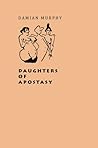
Daughters of Apostasy


Daughters of ApostasyDaughters of Apostasy by Damian Murphy
My rating: 5 of 5 stars

I don't think of myself as a fan of Damian's work, so much as a devotee. There is something of the sublime that frequently speaks to me from the pages penned by him. Reading Damian's work is not so much a "mystical" experience as a "preparatory" experience, a view of an initiation from afar, full of anticipation. I often ask myself when I read his work "when am I going to become a part of the story, or when is the story going to become a part of me".

Revelatory experiences aside, one must (absolutely must) admire the craft of his work. There is an obvious love of the subject matter, setting, characters, and strange circumstances that the characters often find themselves in. One can almost feel the author feeling his own way through the labyrinthine maze hidden carefully away in his citadel of thoughts. But, reader beware, you are walking alongside a trickster and a thief whose sleight of hand can leave you dazzled by illusion or, even worse, your own delusions.

But you need not fear demons (outside of your inner fiends). You are safe, as you read, even as his characters sometimes are not. You have the luxury, particularly in the present volume, of simple elegance to see you through. I'm referring, of course, to the restrained (yet seemingly decadent, especially for such an inexpensive hardcover limited-edition) eloquence of presentation that Snuggly Books seems particularly skilled at. A salmon-colored cover (at least I believe so - I have hue blindness to some extent, so maybe I'm just seeing it as such) with a simple illustration of three women (two nude, one a spectral figure) on the front by none other than Henri de Toulouse-Lautrec seems hauntingly appropriate for the stories in Daughters of Apostasy, whose main protagonists are women. And what a variety of characters!

As usual, Murphy's vision here is a series of inner visions of cosmic consequence. Trespass becomes initiation into an imaginary city hidden in the bones of the physical world in "The Scourge and the Sanctuary". Christopher Wren collides with Huysman's, but Murphy's work is all and none of these. The key is in the story itself:

The fictions we partake of, as with the fictions we create, bear consequences for each of us that lie beyond the understanding and control even of their authors.

An ever-changing labyrinth of a hotel, spurred in its metamorphoses by seekers of gnosis, is both setting and character in "Permutations of the Citadel". It's a lavish tale full of mystery and misdirection, a lair for tricksters, initiates, and those seeking the other side of the mirror. Add a little playful devilishness and you have what Wes Anderson might be if he was to ever take his subject matter seriously.

"The Salamander Angel" is a journey of several pilgrims into and out of regions beyond the veil of this world. There's a kind of Hegelian dialectic of the divine and the blasphemous, a looping together of heaven and hell through the travels, intentional and accidental, of oneironauts, occultists, and tricksters. The (anti?)heroes charge and stumble their way through "above" and "below" in their epic quests. This is an extremely powerful tale. Handle with care.

"The Book of Alabaster" is a somewhat surprisingly-emotive story that starts by pulling the nostalgia strings (at least for this teen of the '80s) before winding its way into an enfolded reality of simulation. What is reality and, as important, when? Most important of all: the mystery of The Programmers remains, or, as one of my favorite obscure songs from the '80s asks "Who are the unwatched men"?

Oftentimes, the "previously unpublished" story in a collection is the weakest. This is clearly not the case here. If you desire to sup at the table of "The Music of Exile," you'll need to pay for entry; make a sacrifice. The price is well worth it, that I can guarantee. But be prepared to discover what is hidden and then to hide what is discovered. This the initiated know.

View all my reviews

____________________

If you like my writing and want to help my creative endeavors, ko-fi me at https://ko-fi.com/forrestaguirre. Every little bit is seen and appreciated! Thank you!

Saturday, September 6, 2025

Urx Quonox


Urx QuonoxUrx Quonox by Adam S. Cantwell
My rating: 5 of 5 stars

I'm reading the Occult Press version, gifted to me and signed by Adam, 37/120 limited edition. Thanks, Adam!

I'm a big sword and sorcery fan, have been since the mid-70s, reading Savage Sword of Conan and the old Howard paperbacks. Here, with Grasm the Barbarian, Cantwell has taken S&S to a higher literary level, the inevitable evolution out of pulp and into thinking-man's writing, and I'm here for it.

If Robert E. Howard had cast aside all prudery and collaborated with William Burroughs, this might start to approximate the style of "The Monarch in Disarray," but this tale is much more transgressive, visceral, and psychedelic than that. It's a decadent sword & sorcery tale, pushed to carnal extremes with an emphasis on the sorcery and its deeper effects on the psyche. Grasm > Conan, maybe. The writing is head and shoulders above Howard's.

Another story of Grasm the Barbarian, "Scream of the Bluejay," is a barnacle-encrusted sea-salt soaked rope of a tale about revenental vengeance. While the center of attention in the story isn't the barbarian, it says much about him and twists in such a way as to wring out more of his past. It's a clever tale of sword and sorcery, of regret, betrayal, and murder; a hideously glorious, horrifically beautiful tale.

The final entry in the Grasm trilogy, "Cities Below the Strand," again puts an emphasis on sorcery over swords. No swords are drawn in this tale, but there is a deep cut of nihilism here, particularly as regards both the past and the future of Grasm himself. This is a small window into what could be a large, inglorious panorama both for the barbarian himself and for his world as a whole. Hearts die, nations collapse, the world keeps spinning.

Three tales about the same person, but exploring different aspects of his past, present, and future. Grasm learns about Grasm even as we do. I want to continue this journey!

View all my reviews

____________________

If you like my writing and want to help my creative endeavors, ko-fi me at https://ko-fi.com/forrestaguirre. Every little bit is seen and appreciated! Thank you!

Sunday, May 25, 2025

Common/Uncommon Book

 More on this later, but I just returned from a trip to Europe and bought some writerly goodies while I was over there: The Leuchtturm 411 notebook and a Retro 51 Tornado Woodworks Bourbon Rollerball Pen. I am in love.

I've been wanting to do a "Commonplace Book" for a while, and had the rudimentary beginnings of one in my bullet journal, but have migrated those notes out. However, I wanted to also use this notebook to capture writing ideas. So, if you flip the notebook upside down, to the back, you'll find my "Common Book" with great quotes, sentences, phrases, and just plain cool words that serve as inspiration for my writing, including some transcriptions from notable passages (I have one from Rikki Ducornet's The Jade Cabinet, for example, regarding the Hungerkunstler). 

At the front of the journal is my "Uncommon Book" where I capture ideas according to the following key, inspired by some of the schools of magic in D&D:


And here are the new tools I get to use: 


I went on vacation seeking inspiration, as usual. I came back with several pages worth of inspirational ideas, as well as a container for them! 

____________________

If you like my writing and want to help my creative endeavors, ko-fi me at https://ko-fi.com/forrestaguirre. Every little bit is seen and appreciated! Thank you!

Saturday, March 8, 2025

The Jade Cabinet

The Jade CabinetThe Jade Cabinet by Rikki Ducornet
My rating: 5 of 5 stars

In the interest of full disclosure, I know Rikki. I've helped publish her work a couple of times and have an irregular correspondence with her. Just sent her a letter (handwritten, of course) a few weeks ago, in fact.

Knowing Rikki and reading The Jade Cabinet again after having been away from it for so many years, I am struck, most of all, by the sheer restraint she shows in presenting this devastating, yet beautiful novel. It's a clear case of the power of editing and craftsmanship at work. Her pen is under strict control here, concentrating the power of whimsey and, indeed, some degree of madness into a self-restrained, almost ethereal (pardon the pun - one of the main characters is named "Etheria") critical examination of male dominance, the Victorian social paradigm, and the favoritism of technic over magic.

This is a character-driven novel, first and foremost. What I love about Rikki's work here is that none of the characters are presented as "either/or". Radulph Tubbs, a notably brutal man with few redeeming qualities, almost none, in fact, becomes, in his older years, a bit sympathetic. But not too sympathetic. More just plain pathetic. But the narrator (who, in a surprising twist, ultimately . . . well, I don't want to give away the surprise) feels a pity that borders on admiration for Tubbs' inner world, even though his actions in the physical world are violently misogynistic and crassly materialistic. Baconfield, the architect, who is hired by Tubbs, is a staunch industrialist, bent on bringing sterile order to everything, but later, through a series of misfortunes, becomes a mad mystic. Angus Sphery, father to both Memory (the narrator) and her sister Etheria, is a loving, whimsical father and a friend of Charles Dodgson (yes, that Charles Dodgson) who also abandoned his first daughter and ultimately ended up in Bedlam asylum. Sphery's wife, Margaret, likewise, lost her sanity, but for altogether different reasons.

Yes, it's that sort of novel. Full of frivolity, madness, and (mostly) tragedy.

And at the center of it all is Etheria, the mute daughter of Angus Sphery, who is essentially sold off to Radulph Tubbs for the price of The Jade Cabinet, a Wunderkammer, of sorts, filled exclusively with figurines carved from jade. One of these figures, which I will not reveal here, becomes the pivotal tool (I use that word reluctantly, but it works on several levels), the wrench in the works, as they say, that leads to the vanishment of the lovely, innocent Etheria and the subsequent emergence of the one true monster of the novel, the Hungerkünstler. No, not that Hungerkünstler, but one of the same mien.

Unlike many character-driven novels, however, The Jade Cabinet is fully-engaging throughout, with something for everyone (or "something for everyone to hate" as my friend Stepan Chapman used to say). The magic realism borders, at times, on that ill-defined subgenre known as "The Weird". The writing itself has a strong focus on not only the language itself, but the role of language as it affects the inner worlds of each character. Ultimately, I suppose, the work is about language and memory, though it never beats the reader over the head with a philosophical stick. It is subtle. And this is really the greatest compliment I can give to it: it breathes softly, with occasional rushes of wind, but it's underpinnings are mere whispers that overwhelm, if one is paying attention. It demands such attention, but not in a bombastic way; rather, it engages like a soft mountain breeze through the trees, simultaneously caressing the ears and overwhelming them. It is an elemental force: the force of the air.

View all my reviews


____________________

If you like my writing and want to help my creative endeavors, ko-fi me at https://ko-fi.com/forrestaguirre. Every little bit is seen and appreciated! Thank you!

Saturday, July 27, 2024

A Token Derangement of the Senses


A Token Derangement of the SensesA Token Derangement of the Senses by Damian Murphy
My rating: 5 of 5 stars

I never ceased to be amazed by the way I feel when I read Damian Murphy's writings. The settings change, the circumstances of exploration and discovery (always a theme) change, the characters change, yet there is always a specific feeling to a Damian Murphy story. That feeling is indescribable, incommunicable, if you will. And even if I could communicate it, I don't think I'd want to. It's a resonance that must be, by its nature, within me and no one else. But I hope that other readers can feel their own resonance with his work. I sense that many do.

A Token Derangement of the Senses, unlike just about everything I've read by Murphy, takes place in the midst of war, and is told by one of the soldiers. Yes, soldiers, or at least those who appear to have served in the military at one point or another, can be found in other works. But this is the first I've read that takes place on the field of battle . . . but it's a strange battle, one you would not expect, where the enemies are not so obvious (though they are caught in the throes of The Great War), and the front line is less a line and more of a liminal zone between ordered civilization and the chaos of destruction. It is a place of secrets and subliminal communications, where some spaces are permanently sealed off from the rest of the world and one is unable to enter by mundane means. Much is, in a word, Mystery. And it's weaving between these hidden places, these occulted structures, that I find that feeling described earlier. You must journey there yourself to find your feeling, your resonance.

This volume also contains "Wittgenstein," a short piece, also set in a time of war, penned by Alcebiades Diniz Miguel, the man and motor behind Raphus Press. It is of a more philosophical than magical bent, contrasting the high-mindedness of intellectual knowledge against the blood-and-mud reality of combat experience and its aftermath.

The book itself is, as with many Raphus Press books, dignified, with a whiff of fine art; solid, refined; correct to its contents, but elevated out of the trenches, despite its subject matter.

View all my reviews

________________________

If you like my writing and want to help my creative endeavors, ko-fi me at https://ko-fi.com/forrestaguirre. Every little bit is seen and appreciated! Thank you!

Sunday, July 21, 2024

Cathode Love


Cathode LoveCathode Love by Matthew Brendan Clark
My rating: 5 of 5 stars

Matthew Brendan Clark is an alchemist of decadence, mixing a strong literary and analytical brew to create something more powerful than the sum of its parts. Lead to gold? No. More like silver to gold, but the mix and presentation add significant value to each piece, giving a cumulative effect from beginning to end. One is reminded of the boundaried eclecticism of Strange Attractor and the wonderful Sacrum Regnum I and Sacrum Regnum II.

After an excellent introduction, the post-introduction introduction, "Now Departing . . . Reality," is a careful examination of the impossibility of communicating, something I've addressed myself at length. But Clark does so in a more careful way, I think, exploring to the very dusty corners the limitations we have as humans.

But in doing so, he opens doors, much like a Oulipo philosopher, showing that acknowledging the severe limitations of human ability to share perception actually cracks open the wall to one's own imagination. In our vain attempts to communicate, we give each other seeds that take root in our minds and our imaginations are opened to new vistas that are ours alone.

The first piece of writing not penned by Clark is Michel Leiris' "The Heiroglyphic Monad". It's is a brief philosophical treatise, told by a surrealist, outlining some of the ideas found in the writings of John Dee. A heady mixture in and of itself, which gives hints to the overall thematic content of Cathode Love.

I'm not sure if Marina Warner's essay "The Writing of Stones" constitutes an apologia for metaphor or science, both or neither. In the end, Warner finds a Hegelian dialectic moment in the stones collected by Roger Caillois, erstwhile surrealist. Here "material mysticism" and "convulsive beauty" are brought into contentious focus with one another over the subject of of, of all things, Mexican jumping beans. There is a lot to digest here, and it's a topic I've thought about extensively, so much so that I twirl around, infinitely, like an astronaut orbiting a black hole. The divergent threads might never merge in my mind, at least not as smoothly as Warner presents, so I have to be content to be on the edge, forever circling, until something breaks in my mind one way or the other. Perhaps this is why I like writing so much - the Apollonian side of me is gratified by the order of grammar and syntax, while the Dionysian side of me enjoys wrestling that same syntax into disorder (sometimes slight, sometimes more radical) in order to wedge open cracks in the armor of logic.

I was very glad to see Remy de Gourmont's "Introduction to the First Book of Masks," the symbolism manifesto, in many ways, contained in Cathode Love. This piece actually inspired me to compile and edit Text:Ur, The New Book of Masks many years ago, so, for me, it's seminal. I'm sure it was for many others, as well. The symbolism movement, while still a little obscured by time, spawned much of the early modernist movement. And I have to admit here that the Symbolist art movement (which featured two of my favorite artists: Gustave Moreau and Odilon Redon) is, by far, my favorite artistic era. So between the visual art and the written word, I enjoy a sort of artistic-synesthesia, if you will.

In his essay "Prison Food," Clark muses on poetry's ability to blossom from the depths of suffering. Or, in his words, we can benefit our lives by "assuming that poetry operates as an escape from hell". Though I don't think that poetry, whether we are writing it or reading it, can fully alleviate our internal suffering, it can provide some reprieve from the pangs of sorrow.

Antonin Artaud pushes for a mystification of what was becoming, in his day, utilitarian theater, in his essay "Metaphysics and the Mise En Scene". He creates a sort of artistic synesthesia (do you sense a theme here?) in his rolling commentary on visual art (featuring Van Leyden's painting The Daughters of Lot), poetry, and, most of all, theater, pointing out the metaphysical nature of Leyden's piece and Balinese shadow puppetry.

Artaud's "The Theater of Cruelty" is a Dionysian manifesto for the stage, criteria for a ritual more than a play, or the reuniting of the play with ritual. I see now exactly where Hermann Nitsch drew his inspiration for "The Fall of Jerusalem". Here, Artaud is as concerned with occult matters as dramatic matters. His focus on hieroglyphs and holy places betrays a neo-platonic reach to connect with the beyond.

I am not fond of werewolf stories or their ilk, as I find them hackneyed and largely predictable. But Count Stenbock's "The Other Side," of which I've heard rumors for years, has such a beautiful poetic resonance, that it's impossible for me not to love it, just like it was impossible for Gabriel not to love the woman with piercing blue eyes and golden hair, even though he condemned her (and himself) in the process.

Here's a bit of healing for your soul I discovered while perusing the next section of the book: Reading Baudelaire on the back porch on a cool summer evening with Dave Brubeck playing in the background. A sip from the balm of Gilead. A little moment of bliss. You're welcome. Now back to the book . . .

David Tibet's essay "Why I Looked to the Southside of the Door" is, as one would expect with his writing, elliptical, peeking around the corner, just out of sight, and absolutely enveloping in its charisma. From Coptic grammar to more nicknames than I can keep track of to, of course, Current 93 (don't all roads lead to Current 93 after all?), we journey with Tibet through vast halls of intellect, getting a glimpse of how the man sees the world.

In "A Dream Through Death," Matthew Brendan Clark gives a short, if thorough, retrospective on the films of French director Jean Rollin outlining his works, biography, and distinctive ouvre. Am I a huge fan of Rollin's films? No. Will I examine them in a different light and with a more careful eye, especially those films I have not yet seen? Absolutely, and directly as a result of this essay.

After a short eulogy to Roger Gilbert-Lecomte, eight of the drug-addled poet's works are presented in the original French and in translation. I've not read much of the former-surrealist's works, but after this introduction I will be reading much, much more. "Wind out of a space steeper than the edge of eternity" indeed!

"Clarimonde" is not my first encounter with Theophile Gautier, but it might be my most profound. This is the epitome of the gothic romance story, vampirism, and all. It's a crushingly beautiful work, giving full feeling to the experience shared by all humans of being violently-pulled between two natures, two entire beings, Manichean dualism of the heart (and in this case, the body and soul, as well). A profound work.

"An Interview with Catherine Ribeiro" is my introduction to the music of Catherine Ribeiro + Alpes, a genre-melding psychedelic band redolent of early Pink Floyd, but unique. Since I make it a habit to listen to the Floyd's "Live at Pompeii" from time to time, this is a welcome introduction.

Jess Franco's "Lorna . . . The Exorcist" sounds like the sort of movie that would disgust even the 19th-century decadents. Not my cup of tea. I enjoyed the essay, which was informative and insightful, but I won't be watching the movie.

The inclusion of Remy de Gourmont's "Hell" seems appropriate in a book that flies to the heights and descends to the depths. But these are the heights of tortured bodies and the lows of forlorn hopes. Gourmont embraces them all!

"The Lock of Faith" is, by the author's own admission, a fragmentation recounting of a sexually-charged, yet terrifying dream. Unedited, it shows a raw, shattered reality that many will recognize from their own dreamtime forays. Edited, this could be a compelling tale, dark, sensual, and surprising. The germ is there, waiting to grow. Perhaps it's a bit indulgent for Clark to have included this in his own anthology, but it doesn't lessen the impact of the whole.

The short prose-poem "Chlorotic Ballad" by Joris-Karl Huysmans is an exquisite sliver of his larger works, concentrated beauty and grim dreadfulness all wrapped up in velvet and rubies. Each sentence seemed like a little explosion through which one could see the author's longer works, like the heretofore-unseen backdrop to a sky torn asunder, revealing the stunning reality beyond.

Saint-Pol-Roux takes the reader (and the "Yokels" of the story) from banal lust to an apotheosis of the sublime in "The Perceptible Soul". This vibrant account of an esoteric transformation, not only of the stage performer's persona, but of the very hearts and minds of the Yokels, is a wonder to read, a high point of aesthetic beauty and profound reverence, which ends on a suitably surreal note.

A mystical strain of Catholicism (or a catholic strain of mysticism) permeates Saint-Pol-Roux' next piece, "The Immemorial Calvary". At what point does the quest for hope destroy the vessel of hope, only to integrate into one's very soul? Saint-Pol-Roux explores that very question, and finds a bittersweet, if positive answer.

Clark's final essay, "For the Saints of Failure . . ." is a work of beauty and genius, a manifesto, if not for artists, then for those who appreciate art, especially in its strangest, most outre forms. It is a beautiful benediction to the works that appear before it in this volume, and to the volume itself. Finis opus coronat!

All-in-all, I strongly recommend buying a copy direct from the editor/author. It's an absolutely beautiful artifact, inside and out. It's obvious that Clark poured a lot of love and creative juices into this volume. I honestly wish there were more books like this in the world, where someone has taken great care to curate and present a cohesive group of fiction and non-fiction to form a sort of "world view" artifact. The anthologies I mentioned at the beginning of this review are exactly the sort of anthologies I mean. Anthologies, especially those that combine fiction and non-fiction, are becoming a rare sight these days. Clark, I think, recognizes this and has presented Cathode Love as a rare treasure, indeed.


View all my reviews

________________________

If you like my writing and want to help my creative endeavors, ko-fi me at https://ko-fi.com/forrestaguirre. Every little bit is seen and appreciated! Thank you!

Monday, May 27, 2024

The Trickster Goddess of Family Cervidae

[Trigger Warning: Dead animal mention and photo]

 I'm going to get a little personal here. Don't like it? Go somewhere else. Take me as I am, as they say. Here I am:

Back in 2019, the company I worked for was bought out. Now, one of the companies I had worked for previous to that job went through three different buy-outs in five years. Yeah, not a great track record. I left that company before it sank, and oh, did it sink. It's gone. Dead to the business world. A has-been. Even the IP has been flushed down the toilet. I watched as the investors made mistake after mistake, had the heartbreaking task of handing out nearly 40 pink slips to people, some of them good friends, because the investors made some really poor business decisions, and when the third buyout happened and I saw the company culture that was being imposed there, I took off. On my last day, when I walked out (and I literally walked home the five or so miles, because I knew I'd need that long walk to clear my head), I felt like I was sitting on a cliffside overlooking the ocean, and seeing a cruise ship, on fire, slowly sinking beneath the waves. I was right. That's about how it went down. So fast-forward a few years, and I find I'm in the middle of yet another buy-out. Only with this one, I was assured that my job was not in any danger, that while there were now two buyers, where there had been one previously, that my position was safe as houses, as they say. 

They lied.

I found myself, at fifty years old, unemployed for the first time in my life. I diligently looked for, and found, a good job doing purchasing for a major player in the food industry (why not? I had just been "let go" by the water industry). This was in late 2019. Covid happened, and I found myself working from home, which was a good thing, because unlike many of my friends who were out of work, I found myself waking up at around 7, rolling out of bed to get started at 7:30, working through to 5:00 or so (I may or may not have taken a 15 minute lunch during that time - some days I did so, most I didn't), eating dinner, then getting back on for another 2-4 hours, depending on how crazy the day was. This went on for many months. Every day, I checked in with my boss for a call, maybe 20 minutes or so, to report on what I was doing. This was fine, as we needed to communicate regularly, given how absolutely insane the food industry was during Covid. People discovered they could actually cook burgers at home, and our customer base (the meat industry) went stark raving mad with production. One of our customers, also the world's single largest producer of beef, was running at 400% capacity. So anything that required preventative maintenance, like motors, for example, which I bought, was wearing out four times more quickly than usual. And I'm here to tell you that the meat industry doesn't like the idea of buying spares until their machines are down and they are suddenly losing $10K an hour - then, and only then, they'd think "we should have bought a spare". Duh. 

Covid came and went. But the stressors didn't. Long story short, I found myself, last winter, burned out and extremely sensitive to criticism. I was putting in "all the hours". I was pushing to get everything done that needed to get done. I made some mistakes, as one does when one is over-worked and burned out, but nothing critical. In fact, in the last year, I saved my company upwards of three times my yearly salary in one year of purchasing negotiations. I paid for myself and then a lot more. The numbers were clear as day. I received praise from the plant manager and international director of sourcing for my work. And yet, the pressure never let up. 

It was in the midst of this pressure cooker that I was driving home from work one night on a stretch of country road, and I saw a deer jump out onto the county highway. I was going at about the speed limit when I slammed the brakes and the deer jumped off the road, but I thought - and I was right - there's got to be other deer nearby.

Then, there she was. She bounded out and in a split second, I knew I was going to hit here. I knew also, that when hitting a deer, it's a bad idea to have your brakes clamped down, as the deer is then more likely to go under your car and tear up everything on the underside. So, I let off the brake and hit her at about 40 MPH.

As I saw her body fly up over my hood and fill my windshield, I thought "this is it, I'm going to die". Then, miraculously (for me, at least), she kept going up. I think my car met her rump just as she was bounding upward, as deer do, and she simply flew over the top of my car - completely over the top - and landed in a ditch behind me. 

I didn't have the wherewithal to do anything but glance back. I didn't see her. I had no idea if she had survived or not. My car was crumpled and I was shaking like a leaf. My airbags did not go off, for which I am very grateful, and any whiplash I suffered was minimal. After a panicked call to my wife ("I just hit a deer. I have no idea what to do. I've never hit a deer before.") and my wife's calming response that I should call the insurance company, I did that. Then I called 911. The Walworth County Sheriff's department arrived, and the deputies were awesome. They checked on how I was doing, asked what happened, of course asked if I had my seat belt on at the time of the accident ("I was raised in the military. You ALWAYS have your seatbelt on when you're raised in the military!" - they laughed at that), then checked my car. It was munched on the front, but drivable, and there weren't any fluids leaking. 


The police gave me a card with a case number and told me "if you get pulled over for only having one headlight, just give them this card and you'll be fine". Then they got in their SUV and backed up behind me, maybe fifty feet or so, shone their spotlight into the field to check for the deer, I presume, then drove off. I made it home, of course, took the car in and eventually it was totalled.

To say this was a stressor I didn't need is an understatement. But I kept coming back, in my mind, to that moment that deer rose up and filled my windshield. I was strangely calm when I thought "I'm going to die". I wasn't panicked at all. Endorphines are wonderful gifts! But I kept coming back to that thought. "I'm going to die."

Of course, I've thought that before. My deepest philosophical explorations (if they can be called "deep" at all) have been my delves into Existentialism. I've faced the possibility of death a couple of times before (once having narrowly avoided being in a fatal airplane accident - the plane taxiing behind me ended up being hit by a microburst on the tail of the plane on takeoff, flipping upside down, and killing all 16 people on board, I learned upon landing at my destination - and I've been shot at at close range once, as well). But this one was weird. I was so calm. Almost like I was just receiving a message: "I'm going to die".

Needless to say, this got me thinking a LOT (and driving much more slowly and cautiously at night in the country - yeah, I've become "that guy" at night. So, go around me if you're in such a hurry) about my then-current situation with work. I was not happy. In fact, I was much more unhappy and not mentally-well than I could have admitted to myself before the accident. And I had been putting up with a lot of stress and what in a later conversation I figured out was extreme micro-managing, and I had had enough. So I started sending out job applications. I had been approached by head-hunters before, but had told them I wasn't interested at that time. Now I was interested. I needed a change and I needed it bad. After sending out eight applications, I had two offers. in comparison, when I was "let go" at the job previous to my last, I sent out 65 applications and ended up with two offers.

Since I left my job and took the current job I am in, I've spoken with a few employees at the place I left and have discovered that others felt the same way about their experience there. I won't go into details, but the culture there is . . . languishing, shall we say? Two nights ago, I was sitting on the couch just staring at the closet door, feeling at peace. My wife asked what I was thinking about, and I said "I'm thinking about how I'm not panicked about going back to work after this long weekend. And how I didn't have to work on my days off, like the last job." I realized that, for the first time in a long time, I was at peace. No, this job isn't perfect - no job is. But it's much better than my last place, MUCH less stressful, and, frankly, just as rewarding. A side note - this job is a ten minute drive from my house. We're now a one-car family, which, while it requires some juggling, actually makes life feel a lot simpler, in some ways. And I'm close enough that I've been able to walk home a couple of times, when my wife needed the car. It's actually helping me be more fit. Four mile walks will do that for you. 

And the weird thing is, I have this dead deer to thank for these, dare I say it? Blessings. This might sound morbid and perhaps a touch cruel, but I feel like she sacrificed herself for me, in some ways. Yes, I feel badly about hitting her and killing her. I'm not mad at her, though. In fact, I'm extremely grateful, truly, honestly thankful. I think of the old myths of trickster gods that would sometimes lead people to the edge of danger, where they then found some sort of reward for their endangerment, narrowly escaping the potential for that Final failure. I've seen the pit of doom, and picked up a gold coin on its edge.

The next day, after the accident, I drove my wife's vehicle in to work. On my way home, I made sure I drove home that SAME way I drove when I hit the deer. I considered it a sort of banishing ritual, undoing what had been done the night before, closing the circle. Besides, I needed to get some confidence back about driving at night! In fact, I drove past there many times, as I drove home to tune up my resume, get applications in, and do phone interviews. 

I looked for the deer each time, but didn't see her carcass. We had had some nasty snowstorms, and if the deer was indeed killed, it was in a steep-ish ditch off the side of the road, covered in snow. 

Strange that late on February 18th, I submitted my application to the place I eventually ended up working for. On February 21st I was called by them and had my first phone interview. On February 22nd, the snow had temporarily melted, and on my way home I saw something I had been looking for since January 4th, the night of the accident. I took the following picture:


Coincidence? I don't think so. The older I get, the less I think there is such a thing as coincidence. Meaning is where it's at. And maybe it's all we've got.

________________________

If you like my writing and want to help my creative endeavors, ko-fi me at https://ko-fi.com/forrestaguirre. Every little bit is seen and appreciated! Thank you!


Tuesday, May 14, 2024

Blood and Pomagranates

 I have the privilege, once again, of having been published by the unstoppable Mount Abraxas Press. This time, I present toyou Blood and Pomegranates, a novella of the fantastic, wrapped up in luxury, as is usual from Mount Abraxas. Like all MA books, this is a limited edition, and I'm not sure how many are left, but you can find out by emailing the publisher direct at exoccidente@gmail.com. Usually, Ziesing's Books carries copies, but I don't see any there at the moment, unfortunately. 

Blood and Pomegranates is the tale of conjoined twins who carry the brunt of a family curse levied generations ago. After a journey into the bowels of the Earth beneath Renaissance Brindisi, Italy and an audience with The Five-Headed Emperor and his angelic eremitic herald, the twins, one a beautiful imbecile, the other a deformed genius, become enmeshed in matters criminal and arcane.

Here are some photos of the artifact itself:


And with that little bit done, it's high time I returned quill to paper! More to come, I'm sure!

________________________

If you like my writing and want to help my creative endeavors, ko-fi me at https://ko-fi.com/forrestaguirre. Every little bit is seen and appreciated! Thank you!


Sunday, May 5, 2024

Heilung Ritual at Riverside Theater, Milwaukee, WI 20 April 2024

 I love music. Particularly live music. I'm not rich, so I have to be choosy about what shows I go to see. I do, however, have some bands on my "must see a live show before I die" list. These are, currently:

Sunn O)))

Om

Heilung

Bohren und der Club of Gore

Nick Cave and the Bad Seeds

Well, now I can scratch one off that bucket list. On April 20th, I drove to Milwaukee, all on my lonesome, to see Heilung live. As soon as I saw that they were going to be playing Milwaukee, I assessed my finances and sprang for tickets. 

Let me start by saying that Heilung does not perform concerts. They hold rituals. You'll see this clearly in the video below (which I did not record - my point of view would have been about ten rows back from the stage - which I thought was a great spot to be able to see the whole show from, honestly). It all began as a classic "opening the circle" ritual, but with a strong emphasis on man's interface with nature (listen to the prayer): 


I did get this snapshot of the opening of the ritual, but I was too enmeshed in the ritual to take videos. This was an immersive event. Some of the howling and yelling you hear are me! 


As you might imagine, this "show" was trance-inducing and more participatory than any other show I've been to. And that isn't because the band was trying to get people to participate ("Scream for me, Cleveland!"). On the contrary, Heilung doesn't have to elicit anything from fans. We were all participants. Here are dome of the photos I took:


A couple "closer up" pictures of two of the main leaders of the ritual, Kai Uwe Faust and Maria Franz.


More shots of the ritual. You'll note that this show was not for children (and I didn't see any younglings at the show). Though the spear-women were, um, painted, they did not have tops on. Given that this was to reflect a bronze-age viking/germanic ethos, this makes total sense. But, fair warning, don't bring your younger children to a Heilung ritual! And if you're offended by such, stay away.


I am singling this picture out because it epitomizes just how beautiful a Heilung ritual can be. I passed up dozens of opportunities for beautiful shots like this because, as I have already said, I was "all in" on the ritual and the music and only allowed myself to snap a photo when something shocked me into a need to capture the moment. This was one of those moments.


These are the last two pictures I took, the second one being that of Kai drumming on a shield with a lit torch. This ushered in the closing of the ritual, which was a dionysian free-for-all with a din of screamingand howling, fire lighting up the night, bursting through the darkness, and body-surfing spearmen carried aloft by the crowd like heroes! 

On a personal note, when I bought the tickets, I did not know that two days after the ritual, I would be giving my two weeks notice at my then-current job. Given the circumstances that pushed me to leave that job for another, which I will explain elsewhere (but involve, at it's heart, a deer), this is a stunning convergence to me. In many ways, this event was a ritual that was, in part, for me, and gave me courage going into that uncomfortable conversation wherein I gave my notice. Am I finding meaning where it's not there? You decide for yourself. I know what I know and I feel what I feel. This was the closing to a chapter of my life that I am glad to leave behind. Thank you, Heilung, for providing the bridge between two worlds.

________________________

If you like my writing and want to help out, ko-fi me at https://ko-fi.com/forrestaguirre. Every little bit is seen and appreciated! Thank you!

Tuesday, April 16, 2024

The Explosion of a Chandelier


The Explosion of a ChandelierThe Explosion of a Chandelier by Damian Murphy
My rating: 5 of 5 stars

Like any good sleight-of-hand, even the publisher name, "Occult Books," is a deception, at least in the popular conception of what "Occult" means. Here, I think it's wise to refer to the original meaning of the word: hidden from view. You won't find wild sabbats, goat sacrifice (virgin or otherwise), or sulfur and brimstone here. No, this occultation of of a more refined sort. Something far more interesting (and sinister in the trickiest of ways).

What we have here is an exploration of the imagination and the manifestation of the imagination into the "real" world. This world is filled with subterfuge and the already-mentioned slight-of-hand. It is labyrinth whose walls shift. A game where the rules change in unexpected, winsome ways. But it's a make-believe which breaches the wall to that-which-is-hidden. These games and labyrinths create thin cracks in the zones that contain realities.

You'll recall this from your childhood, the imaginative playfulness and discovery of places undiscovered by most of society, the unveiling of the "truth" behind individual identities, the understanding of the true mechanism of seemingly ordinary objects that are much more than they seem on the surface.

Some of us are lucky enough to have survived into adulthood with those same revelatory faculties intact. But we have to work at it. It's a gift, to be sure, but a gift that has to be wrested, nay, stolen from the universe.

The Explosion of a Chandelier is a carefully-encrypted guidebook on how one might access such gifts, if one is bold enough to sieze them! But, like Damian's other works of a similar ilk (The Exalted and the Abased, The Academy Outside of Ingolstadt, and Abyssinia all jump to mind), those who are not accustomed to seeking for hidden things, who have forgotten the very real power of imagination, or who lack the courage to sieze the scepter that cracks the barriers between realities . . . well, they simply do not, cannot, and will not Know. On the surface, they will read a story about young men living in Spain during the age of anarchic revolution, a story about hotels and keys and bombs and chandeliers.

But, trust me, there's much more in there, SO much more! Hidden between the words, behind the pages, and most importantly, inside. Look inside! Don't let your reading eyes deceive you. Or, actually, please do!

View all my reviews

________________________

If you like my writing and want to help out, ko-fi me at https://ko-fi.com/forrestaguirre. Every little bit is seen and appreciated! Thank you!

Friday, December 1, 2023

The Hellebore Guide to Occult Britain


The Hellebore Guide to Occult BritainThe Hellebore Guide to Occult Britain by Maria J. Pérez Cuervo
My rating: 4 of 5 stars

Next time I'm in the UK, this book is coming with. The unstoppable crew at Hellebore have created a mostly (though not completely) comprehensive guide to magical places in teh British Isles. Sections are divided geographically, so you can pull this Baedeker of the bizzare wherever the ley lines have taken you and have a Virgil to your Dante.

The book itself is a handy size and seems well-constructed, which you'll want if you're taking it with you. Most of the place entries have a postal code listed, so if you can interpret that (or ask a local postmaster), you'll be good to go. Entries range from megalithic tombs to occult bookstores to locales tied to famous practitioners of magic (though one should take any location related to Aleister Crowley as questionable because, you know, Crowley).

Now, I have two slight complaints. First, and this one is small . . . too small . . . the print is too small! This is the case especially in some longer, colored text blocks. Pardon the old guy with eyes that are going bad who are interested in this subject matter. There are thousands of us, I'm sure. Might want to consider bumping those fonts up a point and doing a slightly longer book.

Earlier, I said that this book was mostly comprehensive. Of course, not everything can be covered in an almanac such as this, but I noted two glaring ommissions of which I am personally very aware. I won't go over details in this review, but if you read my blog post on The Priory at RAF Chicksands and The Devils Quoits, you'll see exactly what I mean. The weird thing is that Clophill Church, which I mention in my blog post, and which is DIRECTLY tied to the Chicksands Priory (albeit by an undergroudn tunnel - I kid you not; I've been in that tunnel myself) is mentioned, while the priory is not. I don't get it. The very reason that people went to Clophill Church to put up satanic graffitti and sacrifice animals was because the church was physically tied to the alegedly haunted priory. So why no Chicksands Priory? It's not about accessibility. You can arrange a tour of the Priory with the non-profit that cares for it. I don't get the ommission.

I won't spend much time on the other one, The Devil's Quoits, in Oxfordshire. Sure, it's hard to find (my wife and I got lost looking for it at first), but it's a beautiful megalithic structure that has been researched rather well. maybe it's because the archaeological dig that revealed the full scale of the Quoits was only done in 1945, so it doesn't have the old magical associations that, say, the Rollright Stones do? Again, I don't fully understand.

Perhaps one can slip index cards in with one's own entries where the Hellebore guide is missing them?

Still, it is enough. Not complete, but enough. If you are lucky enough to live in the UK, you really should buy a copy. And if you're visiting and looking for the magic of the isles, you definitely need to take this with you to read on the plane flight over. It's a long flight, trust me. Be prepared.


View all my reviews

________________________

If you like my writing and want to help out, ko-fi me at https://ko-fi.com/forrestaguirre. Every little bit is seen and appreciated! Thank you!

Wednesday, November 22, 2023

The Tome of Ravass Bhavatan


Once again, Mount Abraxas press churns out an amazing set of booklets, this time in the series The Old Ways Remain. These are a similar format to The Doomed House of Abraxas series, one of which I penned myself. These are short, very-limited editions of weird/dark/doom-laden stories by various authors, printed on heavy cardstock and illustrated with some of the best dark artwork out there. This one is illustrated by Vhan.

The Tome of Ravass Bhavatan is an existentialist occult work by Christian Riley. Riley's work is new to me, and a pleasant surprise. I find his prose . . . let's call it "Indigo". It's not quite purple, but it's on the far end of the spectrum from bland. There's a reverent, telestial quality to the writing which takes a second to shift into, but once you're in, you're in. In tone, it's highly redolent of the French decadents

The story itself focuses on the discovery (and repeated rediscovery) of the titular Tome. It's a dark academic's dream, the find of a lifetime, and one that promises previously obfuscated secrets that have been hidden for centuries. The strange and twisted history of the book is presented when Harold, the protagonist, discovers a copy of the exceedingly rare work in a place he never expected to find it. As the story goes on, one wonders if he found the book, or the book found him? We see his immersion in the work and its workings in a clever literary trick that results in . . . well, a trick. The sort of trick that a god of mischief and chaos might play. It's a wonderful ending that subverts previous dominant narratives, leaving the reader a bit of a sting, but a sting worth taking.


________________________

If you like my writing and want to help out, ko-fi me at https://ko-fi.com/forrestaguirre. Every little bit is seen and appreciated! Thank you!

Tuesday, September 12, 2023

The Ring of Truth

 Fiddler's Green Peculiar Parish Magazine has been producing a wonderfully elegant, downright enchanting series of zines, of which The Ring of Truth is the most recent. 


Yes, this "zine" is not your common photostatted punk zine. Far from it, in fact. This really is a piece of art - and it is beautifully illustrated by Alice Cao's fine linework. 

The text itself is composed of a wistful literary reminiscence, extremely well-written, about Marsh's first childhood brush with the magic world and his later (succesful) attempt to invoke a window to that world by means of a magic circle. Following this is a practical guide to creating a sacred space AKA a magic circle (which really need not be a physical space at all). A "Further Reading" section provides a brief, but focused bibliography on the subject matter at hand.

Saying much more than this would spoil your enjoyment of the book and some of the little discoveries to be made therein. The magic is there, but you need to find it yourself. I suggest drinking some Ginger Beer out of one of Trevor Foster's wonderful skull mugs as the perfect, almost magical, complement.


____________

If you like my writing and want to help out, ko-fi me at https://ko-fi.com/forrestaguirre. Every little bit is seen and appreciated! Thank you!

Saturday, August 26, 2023

The Book of Antitheses


The Book of AntithesesThe Book of Antitheses by Jobe Bittman
My rating: 4 of 5 stars

Massive trigger warning: If the practice of magic, extreme violence, and/or strong sexual themes offend you, skip this review and never, ever read this book. Now that that's out of the way . . .

Lamentations of the Flame Princess again presents one of the more obscene and transgressive roleplaying game works out there. Say what you will about LotFP, they have a brand identity, and they unapologitically stick with it. This is not a book for children or the easily offended - not. at. all. If you're looking Saturday morning cartoon Dungeons and Dragons, this ain't it. Now, I'm guessing that if you read this far, you are not easily offended. But you might be a child. After all, I started playing D&D when I was 9 years old . . . a long time ago. As a preteen and early teen, I was enamored of the game. And, yes, it did introduce me to some . . . alternative ways of thinking/viewing/believing. And, yes, the bare-chested illustrations of the harpy, sphinx, and others were *ahem* attractive to this young man and, I'm guessing, just about every other young man out there.

So, while the Satanic Panic was overblown, there were some elements of truth to it. The original D&D game was filled with Devils and Demons (sanitized into "Tanar'ri" and "Baatezu" in some later editions) and there were, occasionally, straight-up occult elements in the game (c.f. the booklet of monsters and magic items module S4: The Lost Caverns of Tsojcanth - which is, incidentally, my favorite module of all time).

In The Book of Antitheses, Jobe (yes, I know him - more on that later) fully embraces something that I've realized in my later years - the ritual nature of roleplaying games. Whether you believe in magic or not, you must admit that playing RPGs is highly ritualized. Gaming groups typically meet at a set time and place (even if said place is virtual), surround a table (again, sometimes virtual) and delve into a realm of imagination, fate, and, (dare I say it?) faith. We create alternate personas, much like an initiate into magic arts, we oftentimes concentrate to a state of near-meditation, we use dice as divinatory or soothsaying tools and bind our characters (a piece of ourselves?) to the results. Often, we laugh and joke, which seems to contradict my argument until one notes that magical practice, by and large, is ended by "banishing" the ritual space so that the things summoned there don't creep into everyday life. Magicians engage with the demons, get what they want (or not), and banish the entities at the end of the ritual.

A few years back, these commonalities struck me quite profoundly. If I recall correctly, this thundering revelation took place in 2019. I was so struck by the thought that I immediately contacted several people who were gamers and who had a deep understanding of magic and the occult and set up an improptu online meeting. Two of the people who came into the discussion (I think there were seven of us total?) were Jobe Bittman and the person who would later write the profoundly-insightful foreword to this book, JF Martel (who is the co-host of my favorite podcast, Weird Studies). In fact, I like to think that I facilitated Jobe getting in contact with JF and having him write the foreword. Then again, maybe I am deceived by some whimsical spirit.

I also sat at the gaming table with Jobe at Garycon one year and played through a game he ran. Well, partially, I had to leave about halfway through, unfortunately. He began the session by letting those at the table know that they would be participating in a ritual exercise and that any who wished to not participate should leave. He then rang a clarion, a singing bowl, and effectively invoked and opening to the session. We then played an RPG with Jobe randomly determining how encounters would go, not by rolling dice and consulting tables (the "normal" way one would), but by casting a number of small objects ("charms," if you will) and "reading" the results to determine what would happen during the encounter we were involved with by examining the relation of the objects (each of which represented different persons or elements) to (or against!) each other. These seemingly strange methodologies really helped immerse us into the game and the imaginal plane (though he would argue that this "imaginal" plane was an actual real place, though it is only visible in our minds). We felt that we were a part of something, much as one normally does while playing an RPG, but more intensely, in this case. We had more "buy in," all-in-all.

And this is one of the techniques that is outlined in The Book of Antitheses, a step-by-step guide to gaming-as-ritual. Jobe claims that the book is a real book in a real place as real as the book you hold in your hand. In fact, one of the adventure threads involves characters seeking and finding The Book of Antitheses, which is, in reality . . . well, The Book of Antitheses!

Several other techniques are outlined here, as well. The thrust of all of these is this: When running a roleplaying game, don't use pre-existing structure as a crutch. Toss aside those adventures that have a numbered encounter that shows exactly what is "in the room". Let fate decide for you! You'll never have to prep again, so long as you have a good grasp of setting, non-player character personalities and motivations, and "resonances".

This last piece is important. A resonance can be anything from a rumor to an event. The gamemaster should have several one- or two-sentence descriptions of possible or even probable encounters for a given area. This doesn't mean the old "wandering monster chart," though monsters can be a part of the lists. It is important that these lists are NOT numbered, like the wandering monster charts of yore. The gamemaster needs to decide which element presents itself to the party based on intuition and, potentially, casting the charms as outlined above. The presentation is much less proscriptive than say, rolling a "4" on the chart which gives "1d6 ogres," which sometimes gets ridiculous, even when such charts are tailored to the environment in which the encounter takes place. Resonances are much more loose and free than this, allowing the gamemaster to divine which of the potential events, rumors, interactions, etc., will happen at any given time. it's a much more nuanced approach than the old tables.

The last half of the book is composed of an "adventure," though I hesitate to use that term. There are several locations, several non-player characters with strong motivations, a cultural milieu with conflict brewing just under the surface (waiting to explode at any moment), and a couple of potential "problems" that the party of adventurers can try to resolve. There are multiple possibilities here that can only be explored at the table. No need to worry if your players have read the adventure ahead of time - it won't help. There are just too many variables and the stochasticity of throwing and interpreting the charms ensure that you will never run the same adventure twice, even if nothing has changed with the book itself.

There is also a section on monsters that give more insights into their motivations and ambitions, along with, yes, a stat block (LotFP stats).

I'll end on a side note. In my Dungeon Crawl Classics game this morning, one of the players' characters spun some crazy yarn (this happens every time we play) and one of the other players (but not his character, this was an "out of character" comment) said "I think you're just making crap up". To which the response was:

"Dude, it's ALL made up!"

et sic est


View all my reviews

____________

If you like my writing and want to help out, ko-fi me at https://ko-fi.com/forrestaguirre. Every little bit is seen and appreciated! Thank you!