Showing posts with label German. Show all posts

Saturday, March 7, 2026

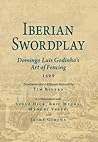
Iberian Swordplay: Domingo Luis Godinho's Art of Fencing


Iberian Swordplay: Domingo Luis Godinho's Art of Fencing (1599)Iberian Swordplay: Domingo Luis Godinho's Art of Fencing by Domingo Luis Godinho
My rating: 3 of 5 stars

I started picking my way through this work a couple of pages at a time, as the archaic language and the author's assumptions about the reader were very difficult to parse. Of course, this is a manual on a certain style of swordsmanship, not a novel or essay or short story, but a textbook. The glossary in the back was somewhat helpful, but as often as not it is self-referential, again, assuming much about the reader's background knowledge and experience.

I've been fencing, off and on, since college - foil, epee, rapier & dagger, and, most recently, messer. I'm not great, but I had good coaching (my first coach was an olympic bronze medalist), and I would feel pretty comfortable if things came down to a real duel with just about anyone (sharp blades make one sharper, as they say). But I admit that learning fencing theory was never my strong suit. So, this one was a bit of a struggle.

At a certain point, after nipping and poking at the work, though, I decided I needed to just plunge in, read, practice some of the techniques, as I understood them. That did seem to accelerate some of my learning, much the same as learning German or Latin or Swahili - immersion is the key.

Part one of the book, on "Sword Alone," was definitely the most tedious, but also the most foundational, as one would expect. A brief introductory chapter by Tim Rivera was definitely helpful, but if I could have any wish about this book, it would be that it was thoroughly annotated and illustrated by Rivera. Swordsmanship is something done in space, and trying to translate the written word into spatial movement in real-time is nearly impossible without some kind of visual representation. This was my biggest complaint about the manual - and it is a HUGE complaint.

Part Two: Sword and Shield, can be summarized: protect your hand, slash at your opponent's legs or stab him in the belly, and whatever you do, do it really, really quickly, like a snapping turtle.

There are other sections on a variety of topics, not all of which I will mention. Some standouts, though, were:

Part Four: Two Swords. Need to know how to clear a street? It's in there. Surrounded by enemies who are threatening your treasure or your lady? There are solutions to that.

I should note here, also, that in both the section on Two Swords and in Part Six: The Two-Handed Sword, there are very clear instructions on how a bodyguard should defend an individual in his charge, and there are a lot of details beyond just the proper footwork and cutting or thrusting techniques that I just would not have thought of. Things like: Where is it best to place your back (or not) at a four-way intersection? What if your back is literally against the wall? How do you defend yourself and another in those circumstances? And so forth.

I always wondered why those beefcake sword and sorcery covers and frontispieces (see: almost every issue of Savage Sword of Conan) had the hero standing and a woman kneeling or sitting at his feet. Turns out this was how people were trained to defend a woman from a crowd (royal bodyguards and such). When surrounded, you have to swing in wide arcs. If she's standing behind or beside you . . . well, it's bad optics, at the very least, to accidentally decapitate the person you're trying to protect.

Part Eight: Self-Defense and Tricks, might just as well have been titled "dirty tricks". Literally dirty, like keeping a pocket full of fine sand to cast into the eyes of an opponent who "has greater advantage" or to use against multiple opponents who justifiably want to kill you because you are a scumbucket. Godinho essentially says the quiet part out loud about how you got yourself into this stupid mess, here's how you get out, but in a more refined way. Screw honor, you've got to defend yourself! By far the most entertaining section of the book!

Will I stop reading fencing/swordsmanship manuals? Heck no. I benefited greatly from reading Cappo Ferro's Gran Simulacro multiple times in the past, and I am very much looking forward to tackling Hans Lecküchner's work on Messer fighting. I am unlikely to return to Godhino's principal work on Sword Alone (though I've taken a couple of small lessons from it), but the sections on Two Swords and Two-Handed Sword are gold - if only they were clearly illustrated.

View all my reviews

____________________

If you like my writing and want to help my creative endeavors, please ko-fi me at https://ko-fi.com/forrestaguirre. Every little bit is seen and appreciated! Thank you!

Sunday, December 21, 2025

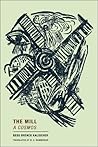
The Mill: A Cosmos


The Mill: A CosmosThe Mill: A Cosmos by Bess Brenck Kalischer
My rating: 3 of 5 stars

I believe this is the lowest rating I've given to a Wakefield Press title yet. It makes me sad, because I love what Wakefield does: bring fantastic obscure works in translation to light in the English-reading world. They've done some fantastic work in the past (including the amazing work of Marcel Schwob, Marcel Bealu, Otto Julius Bierbaum, and, most remarkably, Jean Ray). So, you'll excuse me if my expectations are sky high . . . but they are.

My unrealistic expectations were met with the introduction to this volume. As with every other Wakefield Press book I've read, the translator's introduction, this time by W.C. Bamberg, is worth the ticket price alone. It's an extremely evocative piece about this essentially unknown author: well-researched (with a hint of the historiography involved, even), captivating, sympathetic, and enlightening. This is the fine scholarship I've come to (unfairly?) expect from Wakefield. At times, the writing in the introduction out-paced the writing in the actual story.

It didn't take long after reading the introduction to become somewhat disenchanted. What seemed to start out as a staccato poesis descended into pure Dada. I understand that makes the work "of its time," but that doesn't excuse near-incoherence. Yes, the story is about a woman holed up in a sanitorium, but the experimental form . . . well, the experiment just didn't work for me.

The section "The Island of Destiny, or Encounter with the Caliph" was the first truly coherent narrative of this work. It started on page 25 and sustained through page 32, but I have to admit that making it to this section was a feat in and of itself. I've read plenty of stories with insane (or at least highly neurotic) and unreliable narrators, plowed my way through some notoriously difficult prose (Proust, Joyce, and Beckett, I'm looking at you), and read more than my share of stories about madness. But the first 25 pages of Kalischer's work here had me nearly leming the book, but I decided to press ahead. It is a short work, after all, and I'd bested tougher (though better-written) material.

After that the narrative gets wobbly, teetering on the edge of coherence, threatening to fall into Dada at any moment. It's sometimes difficult to discern between playful intellectual brilliance and an utter collapse of reason. It's almost as if Kalischer weaves in and out of each, with no warning about what direction she is turning; blind curves ahead. Sure, the narrator is struggling with mental illness, but a reader needs some kind of compass, even a weak one. Still, I pressed on.

Lest you think this ship has utterly sunk, that all was lost, that's not true. Later, near the end, I uncovered "On Sirius". It is by far the best section of the book. It's a gentle, smoothly flowing prose poem, not entirely lacking disjuncture, but not as chaotic as some earlier sections of the book. It is a piece that is of a piece, well-put-together, but not stodgy. I can (and have) wrap(ped) myself up in it. It is comfortable, but not so cosy as to be uninteresting. If the entire book was written this way, it would be at least a four-star book for me. Alas, that can't be. The neurotic narrator, like most humans, had a long string of near-coherence which, of course, wouldn't last.

However, I didn't mind the ending being disjointed. In fact, I think it worked quite well, given that we had a comfortable baseline in "On Sirius" from which we could jump off. The tragedy of this last section felt real and poignant. A good ending, given what came immediately before it. But the first part of the story started off in such a stark, jarring manner that I just couldn't make the connection with the narrator until halfway through the book. In fact, I wonder what the book would have read like had it begun with "On Sirius" and the erstwhile early material was tagged on to the back of the story (after the sanitorium episodes)? Possibly a stronger narrative? Unfortunately, Kalischer isn't around to ask for a rewrite.

Still, kudos yet again to Wakefield for presenting a work obscured by history and doing so with all the reverence and academic rigor it deserves. Yes, it fell short for me, but that's not stopping me from continuing to dip in the stream of Wakefield works. In fact, there's another waiting on my shelf right now that I am eager to read. I'm still on the Wakefield train and won't be getting off any time soon!


View all my reviews

____________________

If you like my writing and want to help my creative endeavors, ko-fi me at https://ko-fi.com/forrestaguirre. Every little bit is seen and appreciated! Thank you!

Tuesday, November 18, 2025

The Life and Opinions of Tristram Shandy


The Life and Opinions of Tristram ShandyThe Life and Opinions of Tristram Shandy by Laurence Sterne
My rating: 5 of 5 stars

In my quest to "use what I have," a subset of "minimalism," I'm digging back into books that I have read before, but not yet reviewed. I believe I picked up this (now very beat up) copy of Laurence Sterne's The Life and Opinions of Tristram Shandy as an undergraduate at BYU. I don't exactly remember why I chose this book. I think I just spotted it on a bookshelf in a used bookstore near campus, read the back copy, and decided to give it a try. I was a humanities major as an undergrad, so it behooved me to read "classics," and this was one classic that I had never heard of until that point. I was young and dumb then and didn't have the toolkit to really analyze literature quite yet. I was building that toolkit.

Turns out, for this novel, I didn't need a toolkit.

Because Tristram Shandy defies analysis.

Plot? You've got to be kidding. The main character isn't born until page 170.

Setting? The vast majority of the story takes place on the grounds and house of the Shandy estate, though several pithy journeys wind their way into the narrative. There is a section on France (largely dismissive and with much of the "action" taking place at night, unseen by Tristram himself).

Speaking of which: Action: If you're looking for acts of heroism, you'll hear some referred to, mostly by Corporal Trim, the (extremely lovable and innocent) servant of Tristram's Uncle Toby. These are viewed with a simplistic eye and lack any of the bombast of most modern thrillers. Teh highest levels of excitement are reserved for 1) references to battles in which characters (most notably, Uncle Toby) have been wounded, 2) arguments between servants and, sometimes, their masters, 3) arguments about the birth of the boy and his naming, and 4) philosophical arguments.

Philosophy? The novel is lousy with it, but philosophers are often misquoted (whether intentionally or not is difficult to tell), misidentified, and their words maladjusted to whatever argument is being presented at the time (which is coming from Tristram's father most of the time).

Culture? Here we are hitting something important and, ostensibly analyzable. But who has time to learn all the mannerisms of mid-18th century England? Thankfully, the novel is also lousy with endnotes (and I don't mean "bad" when I say "lousy," I mean "infested, as with lice"). It's a whimsical window to the England of the 1700s. America didn't even know what it was missing.

Structure? Ah, mmm, about that . . . the only structure here is digression. It reminds me of the time as a grad student I had to learn to read French, after having studied German for four years and Swahili for two. French . . . has no structure. Everything is an exception. This drove me absolutely batty. In fact, "French for Reading Knowledge" is the only class I ever failed in college. It doesn't help that the teacher had us construct sentences from scratch for the final, something we were never taught and never instructed to study. We were taught to read, which I could do pretty well. But then the final came and we were supposed to construct a bunch of sentences from nothing in French. I'm still pissed about that one. Anyway, after studying the firm rules of German and Swahili grammar, with a couple of idioms sprinkled here and there (and easily recognizable, for the most part, from context), I was thrust into the spaghetti code of French "grammar", where, I will repeat, everything is an exception, with very few rules that I could fathom.

But as much as I hate(d) French, I love the digressions of Tristram Shandy. And this lack of structure, this worship of the digression, is by design. To quote Sterne:

Digressions, incontestably, are the sunshine; - they are the life, the soul of reading; - - - take them out of this book for instance, - - you might as well take the book along with them; - one cold eternal winter would reign in every page of it; restore them to the writer; - - - - - he steps forth like a bridegroom, - bids All hail; brings in variety, and forbids the appetite to fail.

The heart and soul of the book, then, is The Digression. Not just those used by the author in creating the "story," but also by each individual character in telling tales of yore, quoting philosophers (poorly), and even in the manner in which they read certain treatises and tell certain tales, themselves full of digressions.

And what of the characters? Here is where Sterne hits his highest notes, particularly in the characters of Uncle Toby and Corporal Trim, two grizzled veterans, stout of heart and dedicated wholeheartedly to their "hobby horse" of large-scale reproductions of military campaigns in which they participated. I really fell in love with these two warm-hearted characters and their banter, which, of course, spilled into, yes, even more digressions.

Speaking of the "hobby horse," here Sterne, though a pastor, is far from innocent in his insinuations. This novel is bawdy. Thoroughly so. To the point that I am shocked that Sterne didn't lose his clerical office. As any shrewd Englishman would, however, he hid the bawdiness in euphemism, some of the most clever euphemisms I have ever heard (and I was raised around soldiers who would make you question the physical ability of one to stick one's body parts into the suggested receptacle - the physics are staggering).

So, I say pishposh to all the deep post-modern analysis of the academy. This is a novel that is meant to be read and enjoyed, not dissected and analyzed. It's a morass of facades, innuendo, and false leads, baroque in its segues and sidestreets, and all the more beautiful for its chaotic complexity.

View all my reviews

____________________

If you like my writing and want to help my creative endeavors, ko-fi me at https://ko-fi.com/forrestaguirre. Every little bit is seen and appreciated! Thank you!

Saturday, July 26, 2025

Terror Train to Köln Dom

 The last time I travelled to Europe, I was fairly convinced that it would be the last time I set foot on the continent of my birth. Of course, this saddened me a great deal, as half of my childhood was spent there (Germany, Italy, and England). But the travel gods have smiled on me and I was able to go to Germany, where my work sent me for some training and to establish some connections between our US facility (here in Janesville) and our division's "mothership" in Oelde, Germany. It was work, but it was excellent. I have a much greater appreciation for the breadth of the work we do now, so, mission accomplished. Of course, we couldn't pass up the opportunity to pay for my wife's flight over. So, while I was working, she did a number of day trips to surrounding cities in the region. And, of course, we took a weeks vacation afterwards, most of it spent in Belgium, but those are reminisces for later blog posts. 

On Friday, I packed up a little early and went to the train station in Oelde to catch a train to Köln. The intent was to meet my wife there (she was visiting a different city that Friday - Hamm or Essen, I can't remember which), and we were then to meet a co-worker who I got to know when she worked in the States for several months, along with her fiancée. 

What I didn't know, is that the German train system has degraded markedly since I was a kid. The trains most decidedly do NOT arrive on time (unlike Austria) and, as I found on this little "adventure" (it's not an adventure until you're lost), they are sometimes altogether cancelled for reasons that remain a mystery to me. I blame the de-socialization and privatization of the train lines. Yeah, the country has probably saved some money and cut some waste by privatizing, but have they really? The old adage "you get what you pay for" has never been more true.

I got to the train station with plenty of time before arrival, had my ticket and passport ready, and was very excited to get on a European train for the first time in six years. Then, as I was waiting, the announcer said something about my train that I mostly understood (I can understand a little over half of what I hear in German, but I still speak like a three-year-old. Maybe four on a good day.), but wasn't completely clear on, so I looked at the board and saw this:


That's my train on the highlighted column. Notice the lack of a platform number in the last column? Yep, my train was cancelled. So, I did what any person using public transit in a foreign country who only understands half of the langue does: I panicked. First thing, I called my wife, who had dealt with the train system for the past week while I walked to and from work. She was also having train issues. As we were talking, I remembered a local traffic office downstairs, in the "station" (that is far too grandiose of a word to describe the wide hallway with a glass-windowed office and bathrooms that I am confident people have been murdered in), so I went downstairs and, thankfully, they were still open. And the host there spoke excellent English. I'm sure he had dealt with dumb Americans who were in Oelde for work before, so he was well-equipped to recommend another train where I could switch trains in Hamm and catch a connector to Köln, no problem!


Slightly comforted, but still a little wary, I went on my way. Caught the train from Oelde to Hamm, which was standing-room-only because of the cancellations back down the line, but I had no idea which platform to catch my connector on. This occasioned another trip to the help desk, but this time, the English of the person who was trying to help me was about as good as my German, and she was most decidedly NOT used to dumb Americans. Eventually, as I was growing in worry about catching the train, she was able to direct me to platform 10. I sprinted and made it there in time. .


This time the train was even worse. It was a double-decker, which was cool, except I had to stand halfway up a semi-spiral staircase, which, while I'm sure it was very aesthetically pleasing, was not practical to stand on. Thankfully, I had been walking about six or seven miles a day for the first six days we were there, so my legs weren't too bad and my back held up. Above me and to my left was a young couple who were "working out their relationship" the entire ride. She was crying and he was muttering and trying to placate her and she just kept repeating the phrase "Wie schön für dich" ("How nice for you") again and again. I thought maybe this was just a German train culture thing, but when I looked at all the other passengers around me, they looked at them baffled, then looked at me like "Please! Help meeeee!" This was not normal, apparently. But it carried on the entire time of that train ride.

So, when word came over the speakers (and I understood this message clearly) that this train would not be continuing to Köln, but would instead stop in Dusseldorf and then skip Köln to go straight to Bonn, I'm not sure if I was pissed off or relieved. A bit of both, honestly. By this time, I had a three-way texting conversation going on between me, my wife, and my co-worker. Natalie's train to Köln had also been cancelled! Argh! Thankfully, my co-worker, who had just left Dusseldorf to head to Köln with her fiancée by car, told us to stay put at Dusseldorf station and they would come by and pick us up and we would drive to Köln. Oh, did I mention that we were an hour and a half late by that point and had an early train to catch back from Köln to Oelde?

Now, why would we suffer such torture at the hands of the German train system? I had been told by people whose opinions I respect that I must not leave the area without visiting Köln Dom (Cologne cathedral). This was the point of that tortuous pilgrimage. Being in the back seat of our friends' car travelling at 200 Kilometers Per Hour, as the frustration and fear of that awful train trip subsided, I was getting rather excited. Some of that anxious energy had to do with the fact that we would have about an hour to see the cathedral and get dinner before we had to catch our train back to Oelde, but as we rounded a corner and the Köln Dom came into view, I was completely awestruck.

I've seen a lot of cool things in my day because I was blessed to travel the world from birth. I've seen many of the "have you seen?" monuments in Europe and the US (though definitely not all), and some have been more impressive than others. But this was at a whole 'nother level, as they say. This monumental piece of architecture took 600 years to build. Yes, 600 YEARS! Nearly two and a half times as long as the United States has been a nation . . . to build one building! I asked my co-worker's fiancée if he knew how many people had died building that, at which point his face grew grave (he is a very cheerful person) and he just said "Many". I'm certain of that. 

And what did they get for all this sacrifice? Only one of the most beautiful and awe-inspiring structures on the planet. We had seen <a href="https://forrestaguirre.blogspot.com/2021/06/vienna-part-i.html">Stefansdom in Vienna</a> on our previous trip, and while that was very impressive, it really paled in comparison to Köln Dom. I took some photos (below), but honestly spent most of the time in reverence just trying to take it all in with my natural eyes. The phrase "pictures don't do it justice" seems trite and over-used, even abused, but in this case, it was clearly correct. I simply could not absorb the magnitude of it all through that stupid little piece of electronically-charged glass in my little phone. I'll include some pictures, but if you have any chance to see this magnificent structure, TAKE IT! 


As you can guess, because of the time in the evening, the cathedral was closed, so we didn't get a chance to see the inside. I'm guessing it's gorgeous, yet overwhelming, just like the outside. I'd love to get inside someday.

What we had planned to be a great dinner turned out to be ordering Döners at a shop on the square. They were good (but not nearly as great as the ones we had in The Hague the next week), but we had to eat them on the train back to Oelde. Which, incidentally, had to make an emergency stop in Hamm with policemen running around all over the place - I still don't know what the heck they were doing, and they looked like they didn't know what they were doing, either - which took about a half hour before we finally, finally arrived back in Oelde. Thus began the first of that vacation. More later. 

____________________

If you like my writing and want to help my creative endeavors, ko-fi me at https://ko-fi.com/forrestaguirre. Every little bit is seen and appreciated! Thank you!

Saturday, June 21, 2025

Wanderlust: A History of Walking


Wanderlust: A History of WalkingWanderlust: A History of Walking by Rebecca Solnit
My rating: 5 of 5 stars

Walking is dead. Long live walking.

I came to this book with admitted biases. One of the goals I keep in my bullet journal is to do at least two "long" walks a month. I define this as a walk of 3+ continuous miles, not on a treadmill, but outdoors. And while I know that this won't seem like much to my European friends (more on that later), for an American to walk three miles straight through and not on a treadmill - well, unfortunately, that is an oddity. Unlike Europe, we're just not built for it here, and Solnit's Wanderlust: A History of Walking addresses that fact from multiple angles.

Solnit traces the strange development of "nature" walks over time. The differences in attitude toward natural paths versus groomed walkways, along with differences among class perceptions of landscape and walking itself, not to mention regional preferences, show a more variegated landscape than the modern reader might expect. You might expect a book on walking to be pretty straightforward, one step after another, right?

It's a bit more complicated than that.

The book begins with anecdotal discussions with anthropologists regarding the very earliest walkers which is, by turns, insightful, funny, irreverent, and which tear through some of the most commonly held misconceptions about early hominids (some of which I held). It's an interesting start and necessary, I guess, but I question the need for it. Is it just a vestigial tale? Perhaps, though later chapters examine the in-body experience of walking in various social and political contexts which also say something about bodies and their physical place in the world, as well as what the exercise of the use of those bodies means (I do not only mean in the sense of physical fitness, as this is just a by-product of walking).

There was a bit of metalepsis in my reading of Wanderlust, though it was purely unintentional. When I am working at the office here in town, I always take some time to go for a walk on the Ice Age Trail, which passes very near to my workplace. I also walk home from work sometimes, after my wife has dropped me off on days when she needs the car (yes, we are one of those rare and elusive one-car American families). On my last long walk home from work (4.2 miles), I was heading down the sidewalk reading this book, and a total stranger, who was mowing her lawn, stopped her lawnmower to ask what I was reading (note: I wish there were more people like this in the world!). I showed her the cover and she just started laughing out loud. We exchanged pleasantries and I was on my way again. I'm kind of worried that she's going to intercept me another time, when I'm reading something far more morbid or controversial.

Speaking of which, Solnit does not shy away from controversy. She has an entire chapter on sex workers and the freedom and limits of such work when related to walking. She also presents a chapter on walking as a revolutionary political act, from the Civil Rights protests to the Argentine mothers of the "disappeared" walking in solidarity against a tyrannical regime.

Earlier, I had mentioned Europe. I was born in Europe and lived over half of my childhood there. So maybe I see the auto-mation of American society with a bit more of a critical eye than most of my American friends. Last month, I had the opportunity to go to Germany for a week for work (I work for a German-based company), followed by a week's vacation in Belgium and The Netherlands. On average, I think we walked about 6 or 7 miles a day. When we weren't walking, we took trains almost everywhere. I had a rental car for my first week in Germany, but really only used it to get from Amsterdam to Oelde and back, then out for dinner for one night. Other than those three trips, we stood on trains and walked and walked and walked. For my American friends, what you need to understand about Europe is that it is BUILT for walking. Some of it has to do with scale (Germany and Wisconsin are almost exactly the same size, for comparison), some of it has to do with history (plazas built around medieval marketplaces or Renaissance and Baroque cathedrals), but much of it has to do with choice: the choice to let pedestrians (and bicycles) predominate. The old medieval streets are simply too small to avoid congestion, but rather than just widening the roads (and destroying several historical buildings in the process), Europe has, by and large, pushed cars to the outskirts. Having a healthy public transportations system makes this more feasible (though some would argue that the amount of strikes and delays that occur is anything but "healthy" - thanks, privatization!) but again, this is a choice made largely by the people who live there, who want walkable, bike-able streets, helped along by the scale of the cities and countries in question.

I could go on and on about third places and the lack thereof in the states, but I will try to bite my tongue a bit after stating that the disappearance of third places in the US has everything to do with the prevalence of automobiles. The one really depressing moment I had while on vacation was looking over a plaza thronged with people mostly just hanging out and eating Italian ice cream (those who know, know) and people-watching, while realizing that there really are no places like that, none, zero, zilch any closer to me than Chicago (an hour and a half and a parking nightmare away).

I didn't take this book with me when I travelled, and I'm glad I didn't. I might have just opted to stay there. Walking, as you can probably guess, is a part of me and a very important part of my life.

When I returned from Europe and got back into the groove of work again, I naturally picked up where I left off. The funny thing is that I was simultaneously reading Walter Benjamin's collection of essays, Illuminations. I discovered that Solnit mentions Benjamin explicitly and particularly his thoughts on Baudelaire, something that had struck me while reading Benjamin's book. It seems all (walking) roads lead to Baudelaire in some way. It was all a very strange synchrony, though the figure of the Flâneur might just be the hinge on which all these synchrony's rotate, at least as far as urban walkers go.

But Solnit is equally at home (or away from home?) in presenting the history of rural walking, as well; something I know a little bit about. Here, also, one finds a long tradition of political protest in the form of voting with one's feet (and sometimes, fists). Protest marches in England, for example, seem to have originated in the country over contested right-of-ways through public and private land. I recall, in fact, when I lived in England, at the base I lived on, there was a "bridal path" we were told was required to allow the Queen to ride her horse on, whenever she wished it. But it actually acted as a public path, at times, with anti-nuclear protesters (this wasn't a nuclear base, but the protesters had no idea) from the CND marching through every few months or so. So long as they stayed on that path, there was really nothing to be done about it. If they strayed from it . . . well, I've seen what British police can do. There's a reason British cops don't have to carry guns, and it's not because they are convincing conversationalists.

I'm guessing, though, that Rebecca Solnit is a convincing conversationalist. I can attest to the fact that she is a convincing writer. If nothing else, I'd love to take a long walk and talk with her.

View all my reviews

____________________

If you like my writing and want to help my creative endeavors, ko-fi me at https://ko-fi.com/forrestaguirre. Every little bit is seen and appreciated! Thank you!

Sunday, June 15, 2025

Illuminations: Essays and Reflections


Illuminations: Essays and ReflectionsIlluminations: Essays and Reflections by Walter Benjamin
My rating: 5 of 5 stars

In a weird and unplanned synchronicity, I read Walter Benjamin's Illuminations at the same time I read Rebecca Solnit's Wanderlust: A History of Walking. I had no idea that these works had any connection with each other, but there is a very strong connection in their analysis of the work of Baudelaire. More on this later.

It took some time to get to Benjamin's excellent and very eclectic collection of essays. Hannah Arendt's introduction is extensive and interesting, laying a foundation for what is to come by examining Benjamin's light in both a historical and intellectual context. I came through it feeling well-equipped to tackle Benjamin's sometimes-abstruse work. Rather than a barrier to getting to the source material, Arendt provides a useful and understandable bridge to Benjamin's core ideas.

We start with "Unpacking My Library," which every book-lover should read, but, more especially, every book collector. I'm admittedly somewhere between the two poles of reader and collector Benjamin presents, but I lean more toward the former than the latter. Benjamin, an admitted book collector (there is an underlying hint of shame in the title as he presents it, as if it is a guilty pleasure), points out the collector's foibles with a great sense of self-deprecating humor.

"The Task of the Translator" presents several thoughts on translation, including the very interesting question of one's linguistic machismo when translating. Should the translator impose his language on the one being translated, or should he allow the language being translated to inform and even form his own? I have always respected "good" translators and their work, but now I question what, really, does "good" mean in this context? I don't have a firm conclusion, but I do have a lot of thinking to do as a result of reading this essay, which was probably Benjamin's intent.

In his essay "The Storyteller," Benjamin parses out the different characteristics, not of structure, but of the worldview of storytelling (as in: around a campfire), the short story, and the novel. He reflects on collective vs individual memory, the impatience of modernity (don't get me started), and how the absence of death and the view of eternity it provides has shaped fiction, in general. The irony of Benjamin's demise is not lost on me. It's a bittersweet read, precisely because of what followed.

As much as I love Kafka, it's apparent that I need to read more of him. I guess The Collected Stories (all of his short stories) and The Trial aren't quite enough. I feel like such a poser . . . Maybe I should read him in German to feed my ego a little. In any case, I found Benjamin's "Franz Kafka" inspiring. Absolutely one of the best summations of the spirit of Kafka's work that threads the needle between analysis of Kafka's psychological state of mind and the more metaphysical/surreal aspects of Kafka's work. I've been a fan of Kafka's work since I was young and this rekindles the fire to dive back in again.

Sadly, I know very little about Brecht's work, having only read (in German) "Der kaukasische Keidekreis". But while I should read more of Brecht's work, I know something about the man himself. I had a professor in college who was a Brecht expert. James K. Lyon, from whom I took my German literature classes as an undergrad, wrote the book
After doing some more research and interviews, Professor Lyon discovered that every Wednesday night, Brecht would have friends and acquaintances over so he could show them what was going on in Germany at the time. They watched (and discussed and mocked) German propaganda films - hence the anthems and salutes. But this poor lady thought Brecht was a communist and a nazi!

Now on to Proust and Baudelaire. The Freudian analysis of Proust and Baudelaire feel flimsy, at best. I get the analysis of memory regarding Proust, and the examination of time might have some basis in psychology, but the Freudian dream-connection just hangs by a weak thread. I found Benjamin's Marxist analysis of Baudelaire much more convincing than his Freudian analysis of the poet. After reading this, I definitely need to read Flowers of Evil yet again. In fact, I should make that a regular practice. I can't stand French as a language (everything is an exception, sorry, but give me German, Swahili, and Latin rules all day long), but if I were ever to attempt to learn it again, it would be for this sole purpose: Reading Baudelaire.

As I said earlier, I was reading Solnit's Wanderlust at the same time as this book. I'll probably save most of the correlations for my review of Solnit's work, but there was an amazing amount of connection, with Solnit quoting Benjamin critiquing Baudelaire, while herself analyzing Baudelaire's work, not only on the figure of the "Flaneur," but also on walking as a socio-political act. Fascinating stuff, especially since my wife and I had recently returned from a vacation in Europe where we figure we clocked in around 90 miles of walking in two weeks.

The book continues with Benjamin's analysis and critique of film in "The Work of Art in the Age of Mechanical Reproduction," which is not so interesting when addressing the work itself as it is fascinating when one looks at the audience and the change it engenders in them vis-à-vis their appreciation of static art. I might also add that the exploration of strangeness that an actor undergoes when acting in front of the camera and of that same actors dissociation with self led me to think about real and rumored instances of actors who fell too far into their characters and never quite shook the stain to their psyche. Granted, many of these stories are overblown and sensationalized, but I have spoken with some actors who have had to essentially detox from their role to return to normalcy.

The final essay "Theses on the Philosophy of History" is be far the most challenging piece in the collection. It is a somehow timely piece of class history and touches on resistance to fascism in ways that many people now are exploring and re-exploring. Benjamin's arguments might be difficult to understand and sometimes seem to cater to the "party line" a little too cleanly, but they are worth consideration and contemplation.

All-in-all, this is an intellectual/philosophical grab bag on a wide variety of topics. Each is addressed in a different way - you won't find Benjamin pounding the same drum repeatedly - and one will have a variety of emotional and intellectual responses to the whole. But one cannot argue that the work is insignificant. Far from it.


View all my reviews

____________________

If you like my writing and want to help my creative endeavors, ko-fi me at https://ko-fi.com/forrestaguirre. Every little bit is seen and appreciated! Thank you!

Friday, April 18, 2025

Ossuary of Dreams: Twenty-Five Tales of German Horror and Weird Fiction


Ossuary of Dreams: Twenty-Five Tales of German Horror and Weird FictionOssuary of Dreams: Twenty-Five Tales of German Horror and Weird Fiction by Robert Grains
My rating: 2 of 5 stars

My kids are great. They're all adults now, so to call them "kids" feels a little disingenuous. But my kids are great (and my wife and grandkids, too, I must add).

"So why," you are likely asking yourself "are you leading off a review of a collection of weird horror fiction with 'My kids are great'."? Well, here's the deal. At around Christmas time, I do a bunch of massaging to my Amazon wishlist. Before you go ballistic, I try to order my books direct from publishers or, even better, directly from authors, so get off your high-horse for a second. I keep that Amazon wishlist to help my kids with Christmas shopping for dear old dad. One of the biggest issues with this is a recency-bias. If I see something new and shiny and it's getting near Christmas, I add it to my wishlist.

Such was the case with Ossuary of Dreams. I don't remember why I added it to my list last minute, but I did. Maybe it was the cool title or the even cooler font on the cover (no seriously, I live that font), or maybe I read a review about it that impressed me . . . I don't know. But, added it, I did.

So, this might be a sort of apologia to my daughter, who bought me the book. Kiddo, I really do appreciate the gift. It means a lot to me . . .

But I gotta give this one two stars.

The collection had its high points.

I found "A Walk in the Morning" to be a highly effective story.

There are echoes of Dhalgren in Grains hurtling-toward-the-collapse story "Our City at Night," but with a strong injection of occult forces. Here, I found that I prefer Grains at longer word counts. It gives his voice needed breathing space and makes the flourishes more emphatic and impactful.

I rather liked the unfolding-apocalypse (with a dream-time glimpse into the pyrrhic acknowledgment of respect to the lone survivor, imparted by the new God of this world) portrayed in "The Golden Age". I, for one, embrace the arrival of our robot overlords. This was an effective story, paced perfectly, with an air of reverent restraint that fit the tale to a tee. Well-played, not-quite-terminator.

"The Portraits of the Baron," the second-longest work in this collection, was, admittedly, very enjoyable. I loved the deep dives of esotericism here and the ending, while predictable, was satisfactory and held an ironic twist. This is the strongest work in the book.

"Metamorphosis" is an apocalyptic horror story somewhere between Clark Ashton Smith and China Mieville, wherein the narrator embraces the inevitability of change on the cosmic level, accepting fate with a philosophically stoic attitude that masks the shock of an undeserved fate of extreme horror.

So, there was something to like the collection. But, as Stepan Chapman used to say, there's also "something for everyone to hate".

I didn't hate most of the other stories. They ranged from "meh" to "I want to lem this book," but few of them went to the extreme of me wanting to do physical harm to the actual object. I reserve most of that hatred for one book in particular, which I'd like to see burned off the face of literary history. So, I didn't hate any of them that much. But there were some in there that I just kind of wanted to punch in the mouth.

I think that there are two fundamental problems, for me, with the work. First, the absolute fascination, nay, worship of overwrought and just plain faulty description drove me batty.

For example:

. . . a rumbling like from a squadron of unleashed poltergeists in the entablature.

This phrase has so many problems, I can't even begin to enumerate them. Well, maybe I can, but I really don't want to. Suffice it to say that I have more questions than answers about what is happening here.

Unfortunately, this was not an isolated incident.

Secondly, the overuse and downright abuse of adverbs had my inner editor clawing at my innards the whole way through. I honestly wanted to scream at times. Instead, I sighed heavily (I wince at having used an adverb here - is there no escape?!?) so I wouldn't wake up my wife. the "ly" ending now makes me twitch whenever I see it, like an abused puppy. It's going to take a while before I can see it without twitching.

Finally, I think that while the translation is mostly very good, you can also tell, in places, that it is a translation. I speak conversational German, and I know how convoluted German sentences can get. I don't envy anyone translating such a work of purple prose from German to English. The effort was good, but it is inevitable that there are some hiccups, and given the often awkward phraseology, they really show.

Had this been my first weird fiction rodeo, and had I read this, say, thirty years ago, I might have felt differently. But I can't, in good conscience, say anything beyond "it was ok," hence the two stars.

As always, your mileage may vary.

View all my reviews

____________________

If you like my writing and want to help my creative endeavors, ko-fi me at https://ko-fi.com/forrestaguirre. Every little bit is seen and appreciated! Thank you!

Saturday, July 27, 2024

A Token Derangement of the Senses


A Token Derangement of the SensesA Token Derangement of the Senses by Damian Murphy
My rating: 5 of 5 stars

I never ceased to be amazed by the way I feel when I read Damian Murphy's writings. The settings change, the circumstances of exploration and discovery (always a theme) change, the characters change, yet there is always a specific feeling to a Damian Murphy story. That feeling is indescribable, incommunicable, if you will. And even if I could communicate it, I don't think I'd want to. It's a resonance that must be, by its nature, within me and no one else. But I hope that other readers can feel their own resonance with his work. I sense that many do.

A Token Derangement of the Senses, unlike just about everything I've read by Murphy, takes place in the midst of war, and is told by one of the soldiers. Yes, soldiers, or at least those who appear to have served in the military at one point or another, can be found in other works. But this is the first I've read that takes place on the field of battle . . . but it's a strange battle, one you would not expect, where the enemies are not so obvious (though they are caught in the throes of The Great War), and the front line is less a line and more of a liminal zone between ordered civilization and the chaos of destruction. It is a place of secrets and subliminal communications, where some spaces are permanently sealed off from the rest of the world and one is unable to enter by mundane means. Much is, in a word, Mystery. And it's weaving between these hidden places, these occulted structures, that I find that feeling described earlier. You must journey there yourself to find your feeling, your resonance.

This volume also contains "Wittgenstein," a short piece, also set in a time of war, penned by Alcebiades Diniz Miguel, the man and motor behind Raphus Press. It is of a more philosophical than magical bent, contrasting the high-mindedness of intellectual knowledge against the blood-and-mud reality of combat experience and its aftermath.

The book itself is, as with many Raphus Press books, dignified, with a whiff of fine art; solid, refined; correct to its contents, but elevated out of the trenches, despite its subject matter.

View all my reviews

________________________

If you like my writing and want to help my creative endeavors, ko-fi me at https://ko-fi.com/forrestaguirre. Every little bit is seen and appreciated! Thank you!

Saturday, May 18, 2024

The Notebooks of Malte Laurids Brigge


The Notebooks of Malte Laurids BriggeThe Notebooks of Malte Laurids Brigge by Rainer Maria Rilke
My rating: 5 of 5 stars

The poet Rilke here constructs a supposed prose novel which is, in my eyes, a series of extended free-verse poems. I find myself closing the book (after revisiting a few key passages a second and third time) harboring the same feelings one has after visiting a world-class art museum for a day, say the Vienna Secession Building, the Art Institute of Chicago, or the Saint Louis Art Museum. One is amazed, nearly overwhelmed by the breadth of the work housed therein and left haunted by the lingering ringing of the brain and eyes from being assaulted by so much beauty at once. One doesn't often think of the curation of the museum: the hard work done by those behind the scenes who labor to present the work of the artists, performing a sort of sacral homage to, or even worship of, the works. Of course, the best curators do all they can to let the artwork speak for itself. They disappear, are unseen and un-lauded, but it is their presentation that lets us enjoy the works to their fullest.

I use the analogy deliberately, as Rilke here presents a series of literary/poetic "portraits" of events from the life of Malte Laurids Brigge. If you're looking for plot, you won't find much of it here. But you will find several vignettes, in no particular order, from scenes of an obsessive unrequited romance to family drama to a very well-done ghost story that set my neck hairs on end with it's sudden unexpectedness. Rilke is a curator of these beautiful, often dark scenes, but also the creator.

It is strange, then, that through Brigge (and we cannot know if the author shared the character's observations), he seems to question whether a creator is necessary at all for drama, in particular and, by implication, all art, even the work he is writing at that very moment.

All of my poems . . . originated in a diferent manner, and so they are not poems. - And when I wrote my play, what a mistake I made. Was I an imitator, and a fool, that I needed a third person to describe the fate of two people who were making things difficult for each other? How easily I fell into the trap. And I ought to have known that that third person who is present in every life and every literature, that ghost of a third who has never existed, is quite without meaning, and must be disavowed. He is one of the pretexts of Nature, who is always trying to distract humankind's prying attentions from her inmost secrets. He is the screen behind which a drama occurs. He is the noise that precedes the voiceless silence of true conflict. One has the impression that every dramatist to date has found it too dificult to speak of those two who are in fact the crux; the third, precisely because he is so unreal, is the unproblematic part of the task, and they have all been able to deal with him. From the very start of their plays, one senses their impatience to bring on this third person. They can hardly wait. Once he makes his appearance, all is well. But how tedious it is if he is late: nothing whatsoever can happen without him, everything comes to a standstil, drags, and hangs fire.

There are shades of Samuel Beckett here, a precursor, perhaps, to the disappearing narrator of his (in)famous trilogy Molloy, Malone Dies, and The Unnameable. But in the end, Brigge abandons the notion of abandoning creators and concludes that all that is left for him is to write.

And write he does. Beautifully. As one might expect, the words are carefully chosen, but with the "novel" form, Rilke is allowed more leeway in his choices. He is not as constricted in his word choice, not beholden to the multivalent nature of poetry. He is allowed to breathe a little, and while I am enamored of Rilke's use of words in his poetry (particularly auf Deutsch), there is something to be said for being able to ease into this work without so much cerebral demand.

That is not to say the work is easy. Far from it. The displays that Brigge (i.e., Rilke) constructs are not presented in an overall exhibition that follows any sort of discernable order. The narrative "jumps" through time and space; so much so, in fact, that many have rightfully called the novel plotless. If you've followed my reviews or blogposts, you'll already know that I don't mind and, in fact, sometimes prefer books and stories that end without clear resolution, so plotless books are merely a reverse-extension of such endings. I don't mind not having a plot, but those who do will really struggle with this work and it's "jumpiness". But if you're one to wallow in beauty and big ideas and not feel compelled to have an end toward which you are driven, you'll do just fine.

Note that the lack of plot does not mean that there is a lack of progression. On the contrary, as philosophical queries blossom from Brigge's pen and the answers beckon from afar, one can see a simultaneous growth of a man coming to grips with the inevitability of death, even as he shrinks from societal norms, eventually casting those "norms" aside altogether, at least as a philosophical exercise, flattening the supposed hierarchical distinctions between mendicant and monarch. Ultimately, Brigge becomes answerable only to (insert your favored name for God here) for his writing. But in seeking divine approval, he (and we) falls short of favor, a mimetic travesty of the great "I Am":

Outwardly, a great deal has changed. I do not know how. But within and before You, Lord, within ourselves and before You who look on, are we not without action? We do discover that we do not know our part; we look for a mirror; we should like to remove our make-up and whatever is false and be real. But somewhere a forgotten piece of our disguise still adheres to us; some trace of exaggeration remains in our eyebrows; we do not realize that the corners of our mouths are twisted. And thus we go about, a laughing-stock and a demi-being, with neither a real existence nor a part to play-act.

View all my reviews

________________________

If you like my writing and want to help my creative endeavors, ko-fi me at https://ko-fi.com/forrestaguirre. Every little bit is seen and appreciated! Thank you!

Sunday, May 5, 2024

Heilung Ritual at Riverside Theater, Milwaukee, WI 20 April 2024

 I love music. Particularly live music. I'm not rich, so I have to be choosy about what shows I go to see. I do, however, have some bands on my "must see a live show before I die" list. These are, currently:

Sunn O)))

Om

Heilung

Bohren und der Club of Gore

Nick Cave and the Bad Seeds

Well, now I can scratch one off that bucket list. On April 20th, I drove to Milwaukee, all on my lonesome, to see Heilung live. As soon as I saw that they were going to be playing Milwaukee, I assessed my finances and sprang for tickets. 

Let me start by saying that Heilung does not perform concerts. They hold rituals. You'll see this clearly in the video below (which I did not record - my point of view would have been about ten rows back from the stage - which I thought was a great spot to be able to see the whole show from, honestly). It all began as a classic "opening the circle" ritual, but with a strong emphasis on man's interface with nature (listen to the prayer): 


I did get this snapshot of the opening of the ritual, but I was too enmeshed in the ritual to take videos. This was an immersive event. Some of the howling and yelling you hear are me! 


As you might imagine, this "show" was trance-inducing and more participatory than any other show I've been to. And that isn't because the band was trying to get people to participate ("Scream for me, Cleveland!"). On the contrary, Heilung doesn't have to elicit anything from fans. We were all participants. Here are dome of the photos I took:


A couple "closer up" pictures of two of the main leaders of the ritual, Kai Uwe Faust and Maria Franz.


More shots of the ritual. You'll note that this show was not for children (and I didn't see any younglings at the show). Though the spear-women were, um, painted, they did not have tops on. Given that this was to reflect a bronze-age viking/germanic ethos, this makes total sense. But, fair warning, don't bring your younger children to a Heilung ritual! And if you're offended by such, stay away.


I am singling this picture out because it epitomizes just how beautiful a Heilung ritual can be. I passed up dozens of opportunities for beautiful shots like this because, as I have already said, I was "all in" on the ritual and the music and only allowed myself to snap a photo when something shocked me into a need to capture the moment. This was one of those moments.


These are the last two pictures I took, the second one being that of Kai drumming on a shield with a lit torch. This ushered in the closing of the ritual, which was a dionysian free-for-all with a din of screamingand howling, fire lighting up the night, bursting through the darkness, and body-surfing spearmen carried aloft by the crowd like heroes! 

On a personal note, when I bought the tickets, I did not know that two days after the ritual, I would be giving my two weeks notice at my then-current job. Given the circumstances that pushed me to leave that job for another, which I will explain elsewhere (but involve, at it's heart, a deer), this is a stunning convergence to me. In many ways, this event was a ritual that was, in part, for me, and gave me courage going into that uncomfortable conversation wherein I gave my notice. Am I finding meaning where it's not there? You decide for yourself. I know what I know and I feel what I feel. This was the closing to a chapter of my life that I am glad to leave behind. Thank you, Heilung, for providing the bridge between two worlds.

________________________

If you like my writing and want to help out, ko-fi me at https://ko-fi.com/forrestaguirre. Every little bit is seen and appreciated! Thank you!

Monday, August 14, 2023

Being and Time


Being and TimeBeing and Time by Martin Heidegger
My rating: 4 of 5 stars

"Did I learn?" This is the only possible question I can ask about my reading experience with Martin Heidegger's notoriously difficult tome Being and Time. I would be lying if I said I clearly understood more than 25% of this work. Warning: unless you are a trained philosopher or a genius autodidact, you will find within these pages a long stretch of imposter syndrome waiting for you. I cannot rightfully or accurately assess whether I "got" this book. Some of it, sure, but I don't know enough here to assess what I really, really know about Heidegger's philosophy.

But did I learn? Let's find out. Below, I've cut and pasted the notes I've taken along the way. Immediately following each self-quotation, I will assess whether, at the end of it all, I learned anything in relation to these initial impressions. Let's go:

Well, the foreword and translator's notes successfully put me to sleep. Hoping that the actual text is a little more engaging.

This did get better. As I crawled along and picked up an occasional idea here and there, along with bolstering my knowledge by watching very specific youtube videos on particularly difficult passages, I found myself more and more engaged because I understood more of the previous groundwork as I went along.

Heideggering is hard work. I'm glad I know some German or the footnotes here would be mostly nonsensical. Or at least misleading.

Yes, Heideggering is hard work. That did not change. Knowing German helped quite a bit, but sometimes my knowledge of German actually got in the way because of the way that Heidegger uses the German language. Some of his wordplay is incredibly subtle and I suspect that even native speakers with a high level of academic training need to use the footnotes as a crutch to help understand the precise way in which he uses specific words with specific nuances. The footnotes, along with having German "at hand," so to speak, were extremely helpful.

My brain hurts.

This was true throughout.

That Philosophy 101 course I had 27 years ago isn't helping me much here, for some reason. I want a refund on that portion of my tuition!

It actually came in handy later, when Hegel and Aquinas came up I had a comparative framework to diff off of Heideger's ideas, which gave me an unexpected and needed context. But I still want that refund!

I cheated and watched a youtube video or five to get some grounding. Glad I did that.

Essentially, Heidegger is rewriting Philosophy 101 as it relates to ontology.


I'm still glad I "cheated". That helped things immensely. And I STILL want that refund!

Hmm. About 10% of the way through the book and I understand about 25% of what I've read.

This proportion of understanding proved true from the beginning to the end. I understood things well about a quarter of the time. Truth be told, I *somewhat* understood other things maybe another 15-20% of the time. Not bad for an imposter.

Page 65 . . . and I'm just at the beginning of Part 1?

Yes, I was. But that preamble was necessary not to set the stage, but to strip the stage down to it's loose wooden planks and rebuild philosophy. Heidegger was a philosophical marine drill sergeant. He destroys you, then builds you up again.

We're going on a cruise in a couple of weeks. I strongly suspect this will NOT be a book I take with me. Sorry, Heide.

Well, that cruise didn't happen. My wife got a blood clot the week before we were supposed to leave, and with here then-recent cancer scare, we couldn't take a chance. Good thing, too, as we would have likely ended up in a hospital somewhere in Anchorage. We still plan on taking the cruise, but it's probably going to be a year or two. 2022 was pretty brutal.

"Linguistic gymnastics" is the phrase that comes to mind when trying to describe what my brain is doing now. And I've fallen off the balance beams more than once here.

See my comments about German above. Lots of linguistic gymnastics in this work.

I'm glad I don't *have* to read this. It's one thing to discipline myself to read something inscrutable; it's quite another to have it assigned to you.

In the end, I'm glad I read it. But I could easily see a huge number of philosophy majors going to the counselor's office to change their majors after this. Easily.

Every two pages I spend on Heidegger is a hard-won battle. Most of the time, I lose, but I'll hold onto my feeble victories and improve upon them. Slow and steady wins the race.

It wasn't *always* torture, just most of the time. Slow and steady did win the race, incidentally. Or at least I finished the marathon.

This text can feel so mechanical at times that one forgets it is about human beings. Then, occasionally, one slips past the strictness of the language and realizes that not only is Heidegger not philosophizing about an "ideal" human being, but that he is sympathetic to humans in their weaknesses, even when they don't reach their full potential.

This was a surprising revelation that became more and more clear the more I read. Heidegger's primary concern was the inner life of an individual human being, replete with its faults and foibles.

Any review I do for this book can only scratch the surface.

c.f., this pithy review.

Back to the philosophical salt mines . . .

Looking back on this phrase, it was definitely ill-advised and I didn't even think about the implications at that point, given Heidegger's overly-problematic political leanings. It was not intentional, but I suppose it might have been subconscious. My apologies for the "bad optics". I suppose I could redact this note altogether, but that wouldn't be intellectually honest.

I'm not sure if Being and Time is considered "analytical philosophy," or if I'm even using the right term, but this sort of Definitional work seems like definition for the sake of definition. It's academically interesting, but emotionally flat and intellectually tedious. But I will press on and finish. I'm learning things, but it's not particularly enjoyable.

Obviously, from my earlier comments, this feeling came and went. But when it came on, it came on strong. Reading more slowly helped me to cut through this academic wall and get to the actual "soul" behind it. I do believe the book has "soul," but it takes some digging to get to it.

The whole notion of death in this book is utterly fascinating. While acknowledging the cessation of being in this world, and thus no longer being a Dasein, Heidegger hints that there is a sort of existence of one, even as that one has ceased being in the worls as Dasein here. But the Being of that being is unknowable by Dasein.

This actually helped me connect with this work in a way I hadn't up to this point. This probably has to do with my admiration for Existential philosophy in general. The seeming paradoxical nature of Heidegger's statements in relation of Dasein to death actually tied things together quite nicely for me. Your mileage may vary.

Death enters the picture and suddenly all that came before in this tome makes much more sense. Existentialism instantiates clarity!

As I just said . . .

317 pages in, I feel like I'm beginning to grasp what Heidegger is on about. Call me ignorant. But I am starting to put two and two together.

Mmmmmaybe I was learning something?

There is something fundamental about the call of conscience, an irreducible something that is at the core of Dasein's Being. There is no good answer to "where does it come from?", it is intrinsic to Being. So far as I can tell, this is the closest Heidegger gets to some notion of "spirit," "soul," or "essence". But what do I know?

This, I think, is where Heiddeger's view of some sort of "soul" became more clear. I went back and scanned throughout the book, and one can find ghostly whispers, very faint, of this feeling, here and there throughout. Perhaps this is inevitable when one is talking about the inner life of a human?

There's something a bit Ayn-Randian about the concept of conscience here, but it seems less mercenary. Self-serving? Yes, more a focus on authenticity, to being true to one's self, than just snubbing every other human being around you without mercy for the sake of the argument.

Heidegger's ties to nazism are fairly clear, from what I understand. Though Ayn Rand wasn't a nazi, per se, her individualism-to-the-point-of-extreme-selfishness rings with some of the same echos, albeit on a personal, rather than national scale. I find Heidegger much more kind (if that's the right word) than Rand, but still adamant about the individual need to be oneself, despite what society as a whole thinks. Of course, if you get a whole bunch of people who think they are being individualistic, while they are merely all following one person's individualistic personality, well, you get facism.

I'd love to be able to state that I understood thus and such percentage of this book. But that would imply a continuous "block" of understanding, and that's just not true. It's more like a journey where certain points were more lucid and memorable than others, like pearls unevenly distributed along a string.

This notion also held through, especially in hindsight. And this is the most corect summation of my reading experience with Being and Time. Will I read it again in full? Probably not. But I will dip into sections from time to time in order to both build my understanding of this work and to provide context when other philosophers refer to Heidegger.

So I feel that I did learn from the book. And i will keep on learning. Some of the ideas herein and some of the structures have provided glimpses for me into the workings of philosophy, even if uneven and obfuscated by my own ignorange. Gradually, though, I'm hoping the light seeps in and grows and I can use this as a springboard into other, perhaps equally difficult, works. My intellectual muscles have been strengthened, though I have yet to understand how to integrate the whole body of work into my philosophical routine. That, I think, is a lifelong pursuit.


View all my reviews
____________

If you like my writing and want to help out, ko-fi me at https://ko-fi.com/forrestaguirre. Every little bit is seen and appreciated! Thank you!

Saturday, November 12, 2022

Asterix und die Goten


Asterix und die Goten (Asterix, #7)Asterix und die Goten by René Goscinny
My rating: 5 of 5 stars

As a kid, I grew up with Asterix, having discovered him when we moved to Italy in 1975. Asterix and the Goths was one of my absolute favorites. They're all great, but there was something about all the factional infighting among the various tribes of Goths that I found hilarious.

Fast forward to 2019, when my wife and I take a long-anticipated trip to Europe. A large part of that time was spent in Austria, with a couple of days in Germany (Frankfurt and Munich). We stopped in multiple bookstores, including a comic book store in Vienna and a used bookstore in Munich. I was specifically looking for this Asterix book auf Deutsch, but I could not for the life of me find it. Several stores had ALL of the Asterix books in German, except this one. Then I remembered that one of the speech bubbles had a Goth chieftain, who had just been thumped on the head with a club, swearing up a long string of explicatives (I thought of my German-swearing grandmother when I saw this). The swear words were represented by lots of different symbols, including (gasp) a swastika.

Then it dawned on me: the book had been banned because it has a Nazi symbol in it.

Germany, Austria, I love you, but . . . seriously? I'm all about punching nazis, but really?

Anyway, I eventually found a copy . . . on Ebay. I bought it right up because who knows how many of these will survive?

It's kind of strange how things turn. Banning books, in particular . . .

View all my reviews

If you like my writing and want to help out, ko-fi me at https://ko-fi.com/forrestaguirre. Every little bit is seen and appreciated! Thank you!