Showing posts with label Music. Show all posts

Saturday, March 28, 2026

The Hashish Films of Customs Officer Henri Rousseau and Tatyana Joukof Shuffles the Cards


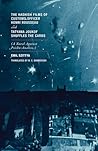
The Hashish Films of Customs Officer Henri Rousseau and Tatyana Joukof Shuffles the Cards: (A Novel against Psicho-Analise)The Hashish Films of Customs Officer Henri Rousseau and Tatyana Joukof Shuffles the Cards: by Emil Szittya
My rating: 3 of 5 stars

I picked up this collection of Emil Szittya's prose poems(?) on a lark while visiting my favorite bookstore in the state of Wisconsin, Within Things. I had gone up there to pick up an album by new-to-me experimental ambient artist Elodie and came away with the album, a copy of Damian Murphy's The Bastion Overwhelmed, a friendship with the owner and his wife, and a copy of The Hashish Films of Customs Officer Henri Rousseau and Tatyana Joukof Shuffles the Cards: (A Novel against Psicho-Analise). A nice little haul on a wonderful summer day up in Door County.

As is usual with Wakewood Press offerings, we start with another great intro by translator W.C. Bamberger. I have been impressed with their opening essays time and time again. I would love to see a collection of Bamberger's short essays, each of which is a gem of information and erudite literary analysis. I could read his essays all day long, they're that good.

With Szittya's work, we begin in the border regions of Surrealism, with Dada on the horizon, but not quite free of the grasp of "traditional" writing. In short, it's getting weird, but not weird enough to be really interesting or compelling.

Out of my sadness I paint garish posters for illuminated dilapidated houses. My train has just steamed off with a spring landscape. It is hateful to be a clown.

"Gabriele's Opinion of My Hashish Hours" is the first section of this book that lives up to the promise of the surreal as a mechanism for breaking through to a more honest world by crashing through the gates of semi-structured nonsense into the ridiculousness of existence. This is over halfway through the volume, so it's a slow start. I'm fine with slow starts, in fact there are places where I prefer them. But for such a short book, the velocity just isn't fast enough for this reader.

"The Bordello," following immediately, is a more coherent prose poem. I had hope that the book might be picking up some speed.

The work gained momentum (and elicited more emotion) as it went along. "A Stroll (for Rita Kirsten)" is particularly moving. The sense of melancholy is not stilted, as in the earlier pieces, by absurdity for the sake of absurdism.

And this highlights my biggest problem with the work. Szittya sometimes wears his heart (or intellect) on his sleeve too much. It's as if he referred to The Dada Manifesto every other paragraph to make sure he was staying "on message," though said manifesto didn't appear in print for another two years. Perhaps he wasn't adhering to the party line so much as inventing it.

Regardless of provenience, the work shows hints of "soul," but often times lacks just that. If you are looking to jar your brain into discovering new ways of thought, by all means, you've found it. I just want a little more flow to my explorations, something with a bit more soul.

View all my reviews

____________________

If you like my writing and want to help my creative endeavors, please ko-fi me at https://ko-fi.com/forrestaguirre. Every little bit is seen and appreciated! Thank you!
Saturday, July 19, 2025

Metal Hurlant


Metal Hurlant: Old Dreams, Young Visions (1)Metal Hurlant: Old Dreams, Young Visions by Brian Michael Bendis
My rating: 5 of 5 stars

If any one piece of media informed my teenage years, it was the movie Heavy Metal . Now, 43 years after I first watched that movie on HBO late night as a early teen (the perfect target for the movie at that particular time), I can honestly say that it still carries a heavy influence on my tastes in art, music, and just plain attitude. It was a significant blip on my cultural radar, but it was, in all honesty, just a blip. I watched it twice on HBO and then . . . the movie just disappeared. Vanished. I looked for news of a videotape release everywhere: magazines (remember, there was no internet back in 1982 - at least none that the military was sharing) such as Starlog or Fangoria , at obscure corners of videotape stores , libraries - wherever. I asked about it a lot. And whenever I asked, I either got a blank stare, or the person's face lit up, then quickly sagged with "Man, I wish. No one can find that." It wasn't until the very late '90s that the movie was released on DVD. There was some kind of legal kerfuffle about the use of the music, if I remember correctly, which prevented its release after the movie was shown on HBO.

But, though the times were dark, they weren't empty. I could always turn to the pages of Heavy Metal magazine, a number of which I usually shoplifted, and sometimes bought, from the gas station down the road from my house. Marvel comics also published a competitor in the form of Epic Illustrated , their first adult-themed publication. I could also rely on my old copy of Mechanismo (which I bought in the 1979, before I even knew about Heavy Metal) for a fix of cutting-edge scifi art. While in those "lean years" I also heard of a magazine titled "Metal Hurlant". It took some asking and researching (again: no internet) to figure out that this was the French version of the English "Heavy Metal". But it wasn't until 1985, when I moved to England, that I saw a copy of Metal Hurlant in the (paper) flesh. Sadly, the magazine ceased publication in 1987. A TV series, "Metal Hurlant Chronicles" emerged in 2012, but to be honest, it had little of the flair of either the original Heavy Metal movie or the magazine Metal Hurlant.

The English variant, Heavy Metal, had a series of misfortunes, mostly caused by abysmal customer service and poor money management, in the last couple of years. A kickstarter was done to re-release the magazine, which I've seen on bookstore (remember those?) shelves, though I hear there were also hiccups involved in getting copies to kickstarter backers.

At the same time, Metal Hurlant was kickstarted by a completely separate entity from Heavy Metal magazine. I did not back the kickstarter, as we were saving for a trip to Europe at the time, among other things. But I book-marked it as something I would look into. Lo and behold, my oldest son bought me a copy of Metal Hurlant for Father's Day. I raised that boy right!

With that long history lesson behind us, let's turn briefly to the book itself. And it is a book, at 267 pages of content. It's a mixture of old, classic pieces that debuted in the pages of the original Metal Hurlant back in the '70s, and newer material that explores contemporary approaches to science fiction illustration. Interspersed are several excellent essays that cover the history of Metal Hurlant, introductions to the newer artists in the volume, and sometimes delve into the punk attitude that informs the art, stories, and even the publication itself of what might be considered a counter-cultural manifesto, as well as an expanded artistic view of possibilities.

Of course, my own attitudes toward art have changed since I was a young teenager. Back then, I was clearly focused on the violence, crazy vistas, and . . . other biologically-driven interests. While those things are still of interest, I've upped my reasoning and critique since those testosterone-fueled halcyon days of yore. It's not enough to be "gonzo," and frankly, I am oftentimes put off by "gonzo for gonzo's sake" in my media consumption. Yes, I'm currently listening to the Heavy Metal soundtrack as I'm writing this review (duh), but my "favorite" songs on this wildly-eclectic album have shifted over time. I like some songs better than I used to and others have grown moldy (though there is one exception that has always been on steady footing for 43 years now - though I prefer the live version to the album version).

The wonder of the current incarnation of Metal Hurlant is that it has chosen "classic" reprints of the highest quality. There are no "dumb" stories in this volume (unlike, for instance, the "snow time" vignette in the Heavy Metal movie - ugh), except for the one overly-indulgent story about Arzach's mount pooping out copies of Metal Hurlant - that was admittedly pretty dumb.

The new stories also create a sometimes subtle sense of wonder at small things and gentle turns of story, among the awe-inspiring and more visceral emphasis of others. "Catching the Wave" and "You Will Remember Me" are downright poignant. Dare I say that I have found a new level of sophistication in the pages of this historically irreverent, "punk" magazine. Yes, yes I dare. I am eager to see what the next volume brings (subscriptions are available). All-in-all, I am rather ecstatic of what we've got here in the "new" (but also old) Metal Hurlant, and I am optimistic about its future, which will contain many futures that we can't even yet imagine.

View all my reviews

____________________

If you like my writing and want to help my creative endeavors, ko-fi me at https://ko-fi.com/forrestaguirre. Every little bit is seen and appreciated! Thank you!

Monday, November 25, 2024

Opeth: The Last Will and Testament: A Pithy Review

 I am no music critic (and an even worse photographer - see below). But I've been listening to music, particularly heavy metal and hard rock, for a long time. Back in about 2004, after having felt jaded and mainly disappointed by the grunge era, I had a revelation. A stumbled on the song "The Grand Conjuration," by Opeth, from their then newly-released Ghost Reveries album. I was blown away in a way that I hadn't been in many, many years. Then one of my coworkers turned me on to their 2001 album Blackwater Park. Again: Mind Blown!

So now, almost 25 years later, Opeth releases The Last Will and Testament, which feels, at once, very familiar, and very new. 

To quote the presser: "The Last Will and Testament" is a concept record of sorts. A restless musical journey in a way mirroring my own relationship with music as a consumer of it," narrates band leader Mikael Ã…kerfeldt. "I pick up something here, dismiss something there. I worship and I hate music at the same time. This ambivalence leads me down some type of creative path of my own and then, all of a sudden, a collection of songs has been written. Best case scenario, these songs are good enough to impress the band. Good enough for the "powers that be" in terms of the industry. Good enough for "you"?! I love this record. I have to say it (write it). Maybe I'm proud even? There are some familiar ingredients in there I suppose. Most of our music has sprung from the same source, so I guess it's not much of a shocker if it's going to sound like "us". I'm a bit in awe of what we did with "The Last Will and Testament". It feels like a dream. There is some "coherence" and " songwriting skills" I hope, but what do I know? I tend to favour the "strange" over the "obvious", but I feel like I'm in the minority, and that's fine. So... fair warning! Don't expect an instant rush (as per usual), but if you do "get it" (have you got it yet?) right away, that's ok too!"

Yeah, I get it. There are strains of Heritage here, but the demon beneath Blackwater Park and Ghost Reveries is there, too. There's even a touch of Damnation there (still my favorite Opeth album, by the way). Yes, the flute, that heaviest of heavy instruments, makes a return, but it's perfect in its place, which happens to be Song 4 - in my opinion, the strongest piece of the entire album. If anything it reminded me of, not Jethro Tull, but. . . Kansas? But a Kansas with a more powerful underbelly, a devil dancing with hope, if you will. The progressive nature of the track (and of several others on the album) is unmistakable and irresistibly magnetic, but the growling, doom-laden counterpoint serves to create a strange storm of contrast and provides, dare I say it? Meaning.

Because at it's heart, this album is about meaning, about who we are, about what we do in relation to what we know that determines our legacy, in time. There's a story behind the story, a way to tell tales that Opeth has been brewing for some time now. What is not said (or sung) is as important, if not more important, than what is. It's in the interstices that the music becomes something beyond mere transition, another realm, between your expectations, a slipstream between death metal and progressive fusion; a universe of its own.


________________________

If you like my writing, ko-fi me at https://ko-fi.com/forrestaguirre. Every little bit is seen and appreciated! Thank you!

Saturday, August 17, 2024

Bootleg Reverse

I believe the last bootleg vinyl I owned was a really crappy live recording of Metallica's "Creeping Death" I got back in 1986 or so. Since I've been bitten again by the vinyl bug, I've avoided bootlegs, but in this case, I couldn't pass it up. The reason is that I can't find any "legitimate" vinyl releases of Pink Floyd's Live at Pompeii, which I consider, along with Blue Oyster Cult's ETI Live and Heaven and Hell's Live at Radio City Music Hall, to be one of the best live performances ever recorded. This was before the Floyd burst into popularity with "Dark Side of the Moon". In fact, it was the year before that high watermark and many, many years before their next biggest hit, "The Wall". This is the Floyd I missed because I was so young and because before the days of the interwebs, one just couldn't find copies of this thing or, as in my case, one didn't even know such a thing existed. 

But now, thanks to a birthday gift from my wife (I'm incredibly surprised by this because she hates most rock music, though she is incredibly musical), I am back in the bootleg business. 


This puppy is soooo bootleg it doesn't even have a sleeve, just this printed piece of glossy in a mylar bag. Please excuse me while I go listen to some psychedelic wanderings. Don't worry, I'll be back. I'm not going to go Syd Barret on this one, tempting as it is.

________________________

If you like my writing and want to help my creative endeavors, ko-fi me at https://ko-fi.com/forrestaguirre. Every little bit is seen and appreciated! Thank you!

Monday, June 24, 2024

Pithy Entries and Social Media

 I am again contemplating, as I have in the past, the abandonment of most social media. I've been asking myself, this time, what is it that draws me back to it, what causes the addiction? I've asked many other people who I know and respect the same question: Why do we have to keep coming back?

I'm not going to answer that question at this time. I need to meditate on it longer, possibly much longer, before I can come to a natural conclusion and do what I need to do. 

I swore in the past that I would NOT let this blog devolve into a long-form twitter/instagram/facebook/blusky/mammoth/fill-in-social-media-platform here. I am developing a strong dislike for the pithy. And yet, there are times when I feel the need to post something that is rather short and unprofound. Here I am doing just that right now. I suppose it's part of a transition.

My writing area is in the top floor of my house. My record player (well, my better record player, as opposed to the record player of my childhood) is in the basement. So, I've been slowly migrating records downstairs. Tonight, I brought down Hawthonn's wonderful Red Goddess (of this men shall know nothing) and played it before putting it away on the shelf.  Of course, I gave it a spin. It's one of the first pieces of vinyl I purchased, actually, I think it was the first I purchased since 1987. It really rekindled my love for vinyl. For those who have heard it and held it, you're probably saying "of course it did. How could it not?"

While listening (I am one of those people who can listen and read at the same time), I read David Tibet's essay"Why I Looked to the Southside of the Door," which is, as one would expect with his writing, elliptical, peeking around the corner, just out of sight, and absolutely enveloping in its charisma. From Coptic grammar to more nicknames than I can keep track of to, of course, Current 93 (don't all roads lead to Current 93 after all?), we journey with Tibet through vast halls of implication, intellect, and imagination. 

On top of this, after a clear, calm day, an incredible lightning storm rolled in. At first, being in the basement, I thought someone was moving furniture on the main floor, then I felt that telltale rumble that indicates that the gods are angry. I went upstairs (to the main floor) and turned out the lights, watching the lightning storm. A block away, on one of the city's main arterial roads, I watched car lights occasionally zip by while the sky became (quite literally) electric. Just beneath my living room windows, where we have a storied thorn bush growing (storied because we've had two families of children raised in it: three robins last year and a cardinal this year), fireflies glowed, as they do this time of year. I penned the following trite missive which I am including here because it was all part of a moment:


The lacerating chaotic violence of lightning shattering the Gates of Heaven

. . . between . . .

Car lights filing down a busy street,

Humans with

Thoughts,

Passions,

Aspirations

at the wheel

. . . between . . .

A stately procession of fireflies;

lift, light, drop

lift, light, drop

Mating awaits.

"It's the amps that kill"

- They say - 

There you are. A social media post outside of social media. Me, shouting at the social media storm, pissing in the virtual wind. Somehow, I'll find my way.

________________________

If you like my writing and want to help my creative endeavors, ko-fi me at https://ko-fi.com/forrestaguirre. Every little bit is seen and appreciated! Thank you!


Tuesday, June 11, 2024

The Complete Lyrics 1978-2022 by Nick Cave


The Complete Lyrics 1978–2022The Complete Lyrics 1978–2022 by Nick Cave
My rating: 4 of 5 stars

I've never read Delueze's Difference and Repetition (though it is on my list), but I am aching with curiosity to see if he has anything to say about song lyrics. Because, by and large, song lyrics suck. There are notable exceptions, but they are notable because they are exceptional. I'll restrain myself from quoting any, because that's not the point of my banal and overly jejune "observation". But really, when you rip lyrics from the context of the music in which they are couched, they most often come across as just plain stupid. I think this has something to do with repetition. Songs don't have to be repetitive, but it helps, especially if you're a music producer whose goal is to shove some catchy bit into the craw of as many brains as you can. Repetition sells when it's associated with a catchy tune. You don't have to think about such music, which is part of the joy of it all, singing inane lyrics at the top of your lungs: The easier, the better.

But this isn't about joy. Well, maybe a little. But we're talking about Nick Cave here. Talk about a man who has suffered. I'll spare the details, but go read about his life some time. Ugh. Yes, he's had fame and fortune and flamboyance, but, ugh, the things he's gone through, especially the death of two of his children - no thank you. It's odd, then, that many of his most poignantly sad lyrics were written before these losses. Or maybe it's not odd at all. Maybe Nick Cave is just good at putting to paper (and music) the inevitability of pain.

Now, Nick Cave is not innocent when it comes to rote repetition in lyrics. This is especially true in his more punk phase while he was with The Birthday Party. Yes, the seeds (pun intended) of brilliance were there, but, really, they were just a pretty good punk band full of, you guessed it, repetitive lyrics. Cave's outrageous energy carried the band's music, and there's something to be said for that, but if you're looking for poetry in his early lyrics, you're going to have to squint.

Now, I can't speak to this musically, but lyrically, the album The Bad Seed (1983) seems to be a watershed moment in Cave's writing. I don't know what exactly triggered this, but here Cave's poetics enter a new phase. From this point on, things are different, and noticeably so. In the past, sheer brute power carried the day, but now you can see that the work has been crafted more carefully. Yes, there is repetition (it's inevitable in music, I know), but that repetition only serves as punctuation marks to the poetry throughout, like lyrical exclamation points or, more often, lyrical question marks.

Song lyrics, like poems, are easy to read but not easy to process, especially if you are reading them. Without voice inflections and different points of emphasis, one must supply these variations oneself, whether audibly or just in one's head. Of course this can make the songs "yours," but you are bound to have to reinterpret upon hearing the singer's expression. And really, the music is an integral part of the lyrics. So, in some ways, The Complete Lyrics didn't resonate with me (no pun intended there, believe it or not). Again, that pesky repetition, when devoid of emotional context, was just plain irritating, at points. Every exception to this, for me as a reader, came because I had a close knowledge of the songs in which the repetitive lyrics were ensconced. Context is everything, in this case, and when I knew the context well enough, my irritation wore off, soothed by the melody (even if it was a raucous one).

I suppose every Nick Cave fan has a favorite album. Mine is No More Shall We Part. It's agonizingly beautiful. Let Love In marches a close second behind as less somber (but still morose) and more animated, sometimes cartoonishly so. There are songs intermingled in all the other albums that I greatly enjoy ("From Her to Eternity" - my introduction to Nick Cave's music back in the '80s by way of Wim Wenders' Der Himmel über Berlin , and "The Carny" both jump to mind), but these two are albums which, from start to finish, I can long and languish in.

Cave, along with the Bad Seeds, has like any good artist, evolved over the years. From punk to strange calliope rhythms to the blues, his music is nothing if not twisting along a path that is unpredictable. If I ever suspected a Nick Cave album to have been written under the influence of an epic dose of LSD, it would have to be DIG, LAZARUS, DIG. It's "way out there," as they say. Definitely the most experimental (whatever that means) album, lyrically speaking. And now, since the publication of this book in it's most recent incarnation, it appears that Cave and company have taken another turn, towards the ethereal and, dare I say it? Religious?

Wherever he goes, I'm along for the ride. While I can't count myself as a member of his cult of personality, I will say that I continue to be interested, even touched deeply, from time to time, as I was when I first read the lyrics to "Nature Boy," which I'll end with here:

Nature Boy

I was just a boy when I sat down
To watch the news on TV
I saw some ordinary slaughter
I saw some routine atrocity
My father said, don't look away
You got to be strong, you got to be bold, now
He said that in the end is a beauty
That is going to save the world, now

And she moves among the sparrows
And she floats upon the breeze
She moves among the flowers
She moves something deep inside of me

I was walking around the flower show like a leper
Coming down with some kind of nervous hysteria
When I saw you standing there, green eyes, black hair
Up against the pink and purple wisteria
You said, hey, nature boy, are you looking at me
With some unrighteous intention?
My knees went weak, I couldn't speak, I was having thoughts
That were not in my best interests to mention

And she moves among the flowers
And she floats upon the smoke
She moves among the shadows
She moves me with just one little look

You took me back to your place
And dressed me up in a deep-sea diver's suit
You played the patriot, you raised the flag
And I stood at full salute
Later on we smoked a pipe that struck me dumb
And made it impossible to speak
As you closed in, in slow motion
Quoting Sappho, in the original Greek

She moves among the shadows
She floats upon the breeze
She moves among the candles
And we moved through the days and through the years

Years passed by, we were walking by the sea
Half delirious
You smiled at me and said, babe
I think this thing is getting kind of serious
You pointed at something and said
Have you ever seen such a beautiful thing?
It was then that I broke down
It was then that you lifted me up again

She moves among the sparrows
And she walks across the sea
She moves among the flowers
And she moves something deep inside of me

She moves among the sparrows
And she floats upon the breeze
She moves among the flowers
And she moves right up close to me

View all my reviews

________________________

If you like my writing and want to help my creative endeavors, ko-fi me at https://ko-fi.com/forrestaguirre. Every little bit is seen and appreciated! Thank you!

Tuesday, May 21, 2024

Blood and Sun: Love & Ashes

 When the opening strains of "Resurrection Charm" pummeled my ears with the same majestic brooding that evokes every folk-horror movie you've ever seen about the continuation of life beyond life and all its incumbent sacrifices (Read: Wakewood, The Wicker Man, and Robin Redbreast), I knew I needed more. Blood and Sun (aka Luke Tromiczak and a bevy of temporary musicians) are not, however, horrific. I used the term "majestic brooding" and I think that's fairly accurate. There are emotional highs and lows throughout, with wistfulness, longing, and triumph melted together like the stench of whiskey and pipe smoke in a far-off pub. This is heady stuff, at times beautiful, at times bruising, but always buoyed up from below by Tromiczak's outstanding baritone. If you're a fan of Nick Cave (as I am) or Johnny Cash (also a fan), you will find a warm, dry, dark place in these vocals. But if I were to describe the attitude, I would not say this was "folksy," but, rather, "metal" or even "punk". Not because of any iconoclastic fist-shaking toward society, but because of it's decidedly individualistic stance, feet firmly planted, fists on hips, assured, but with a core of vulnerability that will be shared with those who are considered worthy of it, and only those fellow-souls who have weathered the maelstrom of life's vicissitudes. It's the ground held between law and chaos, a firm neutrality proteced by a storm-cloud of experience. 

Besides the firm attitude, resonant vocals, and musical adeptness, one must reverence the near-sacred poetics of the work. The plaintive, yet (hopelessy?) hopeful lyrics of "By What Road," evokes an inner story that many of us, myself included, have felt deeply but been unable to express. The sense of loss and adventure in "Madrone" fill one with wanderlust, even if  (or especially because?) the path is one that is forced upon oneself. There's a sense of being carried aloft atop a storm that reveals an incredible sunset in one direction and a simultaneous sunrise in another. 

My mention of Nick Cave earlier is not an accident. Imagine Nick Cave, but instead of wearing a tailored suit on a metropolitan stage, imagine him dressed in worn tin-cloth clothing hiking through a brambles in the Carpathian mountains, and you'll get a taste of the Blood and Sun ethos. 


________________________

If you like my writing and want to help my creative endeavors, ko-fi me at https://ko-fi.com/forrestaguirre. Every little bit is seen and appreciated! Thank you!


Sunday, May 5, 2024

Heilung Ritual at Riverside Theater, Milwaukee, WI 20 April 2024

 I love music. Particularly live music. I'm not rich, so I have to be choosy about what shows I go to see. I do, however, have some bands on my "must see a live show before I die" list. These are, currently:

Sunn O)))

Om

Heilung

Bohren und der Club of Gore

Nick Cave and the Bad Seeds

Well, now I can scratch one off that bucket list. On April 20th, I drove to Milwaukee, all on my lonesome, to see Heilung live. As soon as I saw that they were going to be playing Milwaukee, I assessed my finances and sprang for tickets. 

Let me start by saying that Heilung does not perform concerts. They hold rituals. You'll see this clearly in the video below (which I did not record - my point of view would have been about ten rows back from the stage - which I thought was a great spot to be able to see the whole show from, honestly). It all began as a classic "opening the circle" ritual, but with a strong emphasis on man's interface with nature (listen to the prayer): 


I did get this snapshot of the opening of the ritual, but I was too enmeshed in the ritual to take videos. This was an immersive event. Some of the howling and yelling you hear are me! 


As you might imagine, this "show" was trance-inducing and more participatory than any other show I've been to. And that isn't because the band was trying to get people to participate ("Scream for me, Cleveland!"). On the contrary, Heilung doesn't have to elicit anything from fans. We were all participants. Here are dome of the photos I took:


A couple "closer up" pictures of two of the main leaders of the ritual, Kai Uwe Faust and Maria Franz.


More shots of the ritual. You'll note that this show was not for children (and I didn't see any younglings at the show). Though the spear-women were, um, painted, they did not have tops on. Given that this was to reflect a bronze-age viking/germanic ethos, this makes total sense. But, fair warning, don't bring your younger children to a Heilung ritual! And if you're offended by such, stay away.


I am singling this picture out because it epitomizes just how beautiful a Heilung ritual can be. I passed up dozens of opportunities for beautiful shots like this because, as I have already said, I was "all in" on the ritual and the music and only allowed myself to snap a photo when something shocked me into a need to capture the moment. This was one of those moments.


These are the last two pictures I took, the second one being that of Kai drumming on a shield with a lit torch. This ushered in the closing of the ritual, which was a dionysian free-for-all with a din of screamingand howling, fire lighting up the night, bursting through the darkness, and body-surfing spearmen carried aloft by the crowd like heroes! 

On a personal note, when I bought the tickets, I did not know that two days after the ritual, I would be giving my two weeks notice at my then-current job. Given the circumstances that pushed me to leave that job for another, which I will explain elsewhere (but involve, at it's heart, a deer), this is a stunning convergence to me. In many ways, this event was a ritual that was, in part, for me, and gave me courage going into that uncomfortable conversation wherein I gave my notice. Am I finding meaning where it's not there? You decide for yourself. I know what I know and I feel what I feel. This was the closing to a chapter of my life that I am glad to leave behind. Thank you, Heilung, for providing the bridge between two worlds.

________________________

If you like my writing and want to help out, ko-fi me at https://ko-fi.com/forrestaguirre. Every little bit is seen and appreciated! Thank you!

Monday, March 25, 2024

Sky ov Crimson Flame by Dunjon Magic


First off, thank you to Thorin Thompson for this little magnetic wonder. For those not in the know, the musical genre known as "Dungeon Synth" is, well, just what it says it is: Synthesizer music about and for dungeons. You don't have to play Dungeon Crawl Classics or Dungeons & Dragons to enjoy it, but it helps.Truth be told, you've probably heard this genre before and didn't even know you were listening to it. I would consider the opening lines to Ozzy Osbourne's "Mister Crowley" to be proto-dungeon synth. And if you've watched any really bad late-'70s or '80s fantasy, science fiction, or horror movies, you've probably unwittingly heard the genre before. Why "really bad"? Well, the technology for music back then isn't what it is now. If you're a Generation-X nerd like me, this is the sort of thing you wish you could have played on that cheap Casio-tone your mom bought to practice church hymns on because your family couldn't afford a real piano. But you only wished you could reach the heights and depths of Dungeon Synth. Simply put, you could not. The technology wasn't quite there unless your name rhymed with Ron Rarpenter and had a movie-level budget to buy all the best synths.

Thanfully, technology has progressed and become more affordable to the masses. Queue in mid-90's Black Metal and the need for creepy, melodic intros to more raw, powerful music. This is where the Dungeon Synth movement really began to take hold. I don't have the time or the wherewithal to trace the history of Dungeon Synth. Others have done this (I strongly recommend this reddit post on the subject). 

So what do we have here? Thorin has created a soundtrack for his Sky ov Crimson Flame adventure for Dungeon Crawl Classics (free quick-start rules are here!). It's as creepy as you would expect (I mean, look at that cover!) with an air of menacing mystery. Would I play this in the background while running Sky ov Crimson Flame? Of course. Would I play this in the background while running any weird or eerie dungeon crawling adventure? Absolutely. Would I just listen to the awesome music for the sake of listening to the awesome music? I'm doing that right now! Strongly recommended for your macabre moods!

And I would strongly recommend picking this up. Don't worry, non-cassette-player-owners. You can get the digital download over on Bandcamp. What are you waiting for?

________________________

If you like my writing and want to help out, ko-fi me at https://ko-fi.com/forrestaguirre. Every little bit is seen and appreciated! Thank you!

Wednesday, November 22, 2023

Decasia: The State of Decay. A film by Bill Morrison.


My first forays into "experimental" film were courtesy of the International Cinema at BYU when I was an undergrad. Though not as highly-experimental as Morrison's Decasia, my early exposure to such films as Svankmajer's Faust and Wender's Wings of Desire whetted my appetite for more. When a friend of mine, who shared a shift as a security worker at night on campus, invited me and a few others over to watch Lynch's Eraserhead, I was hooked. 

I stumbled on Morrison's work while searching for clips from my favorite directors, The Brothers Quay (if you don't know how much of a Quay fanboy I am, you obviously have not been reading my blog for long). Morrison's Light is Calling came up in my search, and my interest was piqued. I watched it and was entirely blown away. 

Now, while Light is Calling is done in a warm sepia-tone, Decasia is purely black-and-white, which suits my (very mild) hue blindness just fine. Like any experimental cinematic work, this one takes patience and, in places, pure endurance. I admit to nearly shutting the whole thing off during a sequence in which an anonymous diver is climbing a ladder up to a high diving board (at least that's what I think was happening). Everything is in fairly slow-motion. Not super slowmo, but slow nonetheless. Morrison is willing to make you work for your insights. 

What we're given is a series of black-and-white films damaged by time either by smeared development fluid or outright disintegration of the cellulose acetate medium. The images are often difficult to discern, sometimes inscrutable. At other times, there are moments of relative clarity - the many cuts of whirling dervishes that seem to thread the sparse motifs together are decidedly old and far from perfect, but they offer the eyes a bit of a rest from the more challenging segments. 

I find it interesting that so much of Decasia is set in, well, Asia, whether Asia Minor or the Far East. Though Morrison has said nothing of colonialism that I can find in his interviews, a fair amount of footage is taken from documentary film of the middle east and Japan, among other locales. One of the more haunting segments is that of a pair of Catholic nuns standing as sentinels as a group of young uniformed schoolgirls, likely Vietnamese, if I am correct in my surmisings, marching past into what I presume must be a Catholic mission-school, probably in French Indochina. In one particularly attention-grabbing moment, one of the girls looks back at the camera and we see her full face for the first time. There is a strong look of suspicion in her eyes. It's probably just childhood curiosity for seeing a film camera for the first time, but I like to think of her as telepathically saying "I will be freed from this. If not me, then my children, or my children's children. We won't tolerate this forever."

Other segments are mostly banal documentary pieces, with a few bits from dramatized silent movies scattered throughout. I didn't recognize any of them, but my silent movie mental catalog is quite minimal. When such dramatized performances were presented, there was, for me, a mixed tale of the wonder of acting with th tragedy that, while these images survive, the actors clearly did not. It didn't help that there were, in close proximity to these sections, film of underground miners' bodies being dragged out from mines. A strange contrast. 

The music for the film was originally the film for the music. The initial performance of Michael Gordon's composition was the occasion for which the film was initially created. The music came first, then the film came as a reaction to that music. It's obvious that Gordon and Morrison played off of each other, though, to produce the "final" version that appears in Decasia. Gordon's atonal, intentionally de-tuned avant-classical orchestral piece and Morrison's abstract, surreal imagery play well of of each other.

A PRI interview on the DVD provides some insight into both Morrison's motivations for creating the movie and Gordon's thought process behind the music. Though the interview claims that you can't have one without the other, I'm willing to accept that as a challenge and watch Decasia muted with, let's say SunnO))) playing as musical accompanyment. Actually, I can think of a number of bands whose work would compliment the visuals. The Kilimanjaro Darkjazz Ensemble jumps right out front. Much of Wagner Ó¦degard's work would work, as well.

Morrison claims that the work is both existential and life-affirming. There is no doubt about the former. The film throughout evokes an existential dread through a two-fold process of obscuring and revealing, forming a sort of pulsating rhythm between the eerie and the weird. The viewer often feels trapped between several worlds at once: The world from which they are viewing the movie, the world in which the film was initially captured, and the world that some of the captured film is trying to portray (this is particularly true of pieces that show actors from the 1920s or '30s portraying scenes in historical costume).  Decasia is not only a film, it is a place, its own strange world of mixed up timelines bubbling in and out of perception. Needless to say, it is a very strange place to inhabit, even if only momentarily, a discomfiting space that reminds one of one's mortality in the strongest of ways. 

On the flipside, there is a strange element of hope throughout, as well, that maybe something of us can survive that change called death and still affect the world. It's not an overtly spiritual plea by Morrison, but a little whisper of what might possibly be. Just maybe. Time will truly tell, right?


________________________

If you like my writing and want to help out, ko-fi me at https://ko-fi.com/forrestaguirre. Every little bit is seen and appreciated! Thank you!


Tuesday, May 9, 2023

Strange Attractor Journal Five


Strange Attractor Journal FiveStrange Attractor Journal Five by Mark Pilkington
My rating: 5 of 5 stars

"Eclectic" does not begin to describe the wide-ranging forays of Strange Attractor. The fifth installment is no exception. With such disparate essays, there's no place to begin but the start, so . . .

Being crucified is not on my list to do. It is pretty impressive, though, if that's your thing. Could crucifixion be done as performance art? Maybe, maybe not. An "event" in 1968 is even more shrouded in mystery now than it was at the time the news made headlines, as explored in William Fowler's "Fact or Crucifixion? The Story of the Hampstead Heath Messiah". The world may never know what truly happened there, but do we really want to know anyway. This is the sort of happening that myths are made of.

Hmm. E. H. Wormwood (is that a real name?) examines the use of toads in witchcraft in "the Green Crucible: Speculations on the Cult of the Natterjack Toad". And now we know why witches often had toads as familiars. Hint: it has to do with the witch's ability to fly. Can you connect the dots?

"Haus Atlantis," by Karen Russo, is an intriguing ride through mythmaking, ultra-nationalism, and Nazi aesthetics (yes, there was such a thing, apparently), along with competing notions of the place of art and myth in society. A fascinating read.

Musician and writer Phil Legard's essay "Tree Spirits and Celestial Brothers" is a brief biographical sketch of the magus known as Charubel. I would like to have known a bit more about Charubel's connection with Gustav Meyrink, as Legard opens the essay with an anecdote about this relationship. Nevertheless, this is an excellent overview of what one might refer to as a working man's cunning man. While I'm praising Legard, you should definitely check out his musical forays as half of the duo Hawthonn. I strongly recommend giving their album Red Goddess (of this men shall know nothing) many, many listens.

Speaking of music, for those who think that electronic music has it's roots in the Forbidden Planet soundtrack (which is excellent, by the way), you'll have to dig a little further back for the truly earliest Electronica. This is exactly what Daniel Wilson does in his essay "Electromania: The Victorian Electro-Musical Experience".

The essay "On Losing One's Head: Musings from a Labyrinth: Acéphale, Bataille, Crowley and Seth-Typhon" is fantastic. This is the sort of thing I was hoping for from SA5. The other stuff so far has been good, too, but this is off the charts amazing. Christopher Jossife's "musings" on Acéphale provide a glimpse into Bataille's headless, godless religion. It was taken, in all seriousness, by (most) of it's members, not a mere surrealist bon mot. There was even talk and the offer of human sacrifice (Bataille offering himself as the victim) which, thankfully, didn't culminate in the actual act. Interesting that the dawn of WW II was a harbinger of the Acéphale's eve. One wonders if they helped unleash darker forces than even they know how to reckon with?

I minored in anthropology (with a primary emphasis on archaeology) as an undergrad and have a particular penchant for ice age art. So, I enjoyed Robert J. Wallis's essay "Cave Art, Sex and Death: An Archaeology of the Lascaux 'Shaft Scene'." The analysis is sound, from the viewpoint of comparative anthropology, and well-reasoned, with the usual academic ambiguities (which is not a bad thing, in this case).

I really need to watch Donald Cammell's Performance after reading Nadia Choucha's essay "Scottish Fairlyore, Occult Dulity and Donal Cammell's Performance". I'm intrigued. So intrigued by Choucha's analysis, in fact, that I might be sorely disappointed by the movie itself. Maybe I'll just imagine it for myself. "Aguirre's Performance," sort of like Jodorowsky's Dune, but only in my head.

Ghosts and shapeshifters have an ambiguous relationship with each other and the living in "Humans With Animal Faces: Kows, Tuts, Barguests and Other Shape-shifting Spirits" by Jeremy Harte. The vagaries are the interesting part, where hauntings are, perhaps, not hauntings at all. Or maybe so. Who can tell?

Chris Hill introduces us to an obscure (outside of Italy, that is) mystic in "'Gustavo Who?' - Notes Towards the Life and Times of Gustavo Rol; Putative Mage and Cosmic 'Drainpipe'.". Rol was an intriguing figure, to say the least, enigmatic in his humility and purported miracle / psychic abilities. An interesting biographical exploration of an interesting man.

Elvis, James Dean, and Kaiju are not the major focus of the screenplay "LET ME DIE A MONSTER" by Ken Hollings and David McGillivray, but they all feature prominently. It never hit the actual screen, but it's surreal enough that one would be tempted to see it, should some enterprising director take a wild chance on it.

The Brothers Quay piece "The Flies of Orta San Giulio" is what originally pulled my attention toward this volume of Strange Attractor. It is a very minor piece in the Quay's oeuvre, but it drew me in to this excellent eclectic volume, and that can't be all bad, can it?

So, Strange Attractor Journal Five: how does it all "hang together"? Well, it doesn't. It doesn't have to. I appreciated the divergent subjects and styles throughout, all of them interesting. It reminds me of the Monsters of Rock concerts at Donnington, UK that I attended as a kid. Except that rather than being wildly uninhibited, these monsters are cunning and calculating. There's a certain bacchanalian sensibility to the Pilkington's brainchild here, but also a steady hand barely restraining the weirdness herein. Here, one is in a liminal zone, on the border of something indescribable, something one must experience in order to appreciate the fullness of its meaning. Strange Attractor pulls the reader to the edge of the precipice and allows them to hold academic distance, or take the plunge!


View all my reviews
_____________________

If you like my writing and want to help out, ko-fi me at https://ko-fi.com/forrestaguirre. Every little bit is seen and appreciated! Thank you!

Saturday, January 21, 2023

House of the Nine Devils


House of the Nine DevilsHouse of the Nine Devils by Johannes Urzidil
My rating: 4 of 5 stars

As I write this review, I am listening to Lech Jankowski's "Pause in Shadows" from his album Street of Crocodiles . This is done with intent, as I want to set the proper mood for this review and felt that Jankowski, whose music has been used by the Brothers Quay, echoes the Central/Eastern European tradition in his music. Though Jankowski is Polish and author Johannes Urzidil was a German-Czech-Jewish writer born in Prague, I see some tenuous connections. Jankowski's music, as I have said previously, has been used by the Brothers Quay. The Brothers Quay filmed a short based on Bruno Schulz's The Street of Crocodiles, Schulz has been called "The Polish Kafka," and Kafka and Jankowski knew each other and spent time together (along with Gustav Meyrink). So pardon my syncretism as I create my own little artificial Central European world in my head. I live here, so I get to make the connections.

The artifact-qua-artifact of this Twisted Spoon Press book is solid. The hardcover is elegant, with a silk ribbon spilling from the headband for convenience in marking pages. It is just the exact right size for a book, in my opinion: 5.5" x 7.5" and about .75" thick. It really sits in the hand perfectly. The cover, a negative photo of what I presume to be the titular "House of the Nine Devils" is understated, but complex enough to draw one in. I will definitely be buying more Twisted Spoon books in the future, especially at the price point. That's a lot of great book for $23.00.

And what about what's inside? Let's explore. I should begin by saying that, while I bought the book thinking it was fiction, the autobiographical elements tell me that it's not. Or, if it is fiction, it is extremely well-realized. One feels immersed in Urzidil's life throughout. For those who despise non-fiction, I say give it a chance. You'll find that often, as they say, truth is stranger than fiction, and there is enough of a dose of strangeness throughout to whet the appetite of those who love "The Weird".

The title story, "House of the Nine Devils," tells the uncanny tale of a house that might have been the residence of both Faust and Tycho, or maybe neither. A mysterious visitor and his portrait appear and disappear, and the house itself may be the cause, but maybe not. We are never quite sure and this unsurety places the story somewhere between quaint mystery and unsettling frisson. I was reminded, ever so slightly, of the strangeness of Danielewski's House of Leaves. A fabulous start to this volume!

"Vacation in Flames" is far more beautiful than the title indicates; even sublime. Childhood innocence is somehow betrayed and upheld at the same time, with a profound and moving respect for beauty being the tie that binds. It is a haunting tale, but in a light, lovely way, a gentle haunting, if you will, with an ephemeral character who may or may not be a ghost. This story will stick with ne for some time to come.

It was with "New Years Commotion" that I began to suspect that the book was not fictional. I'm still not completely sure if "New Years Commotion" is autobiographical or not. The narrator claims so, but is the narrator a fictional entity or Urzidil himself? Regardless, the author has captured, quite effectively, something that has happened to most of us: being a child who has lost something and is desperately searching for it, along with the many little steps of experience that come with that.

"Porter Kubat" threads its way through Bohemian society among military officers, ballerinas, porter-messengers, and a young man who becomes entangled by his own guilty conscience in a labyrinthine societal maze of which he has little understanding. Like others in this volume, it is a tale of waning innocence, of the shocks of life, all enmeshed in Prague's streets, theaters, and barracks. A sublime story.

"We Stood Honor Guard" is not a story, but a powerful essay (clearly non-fiction) on the causes of the collapse of the Austro-Hungarian Empire. The relevant argument holds relevance to any historical or contemporary empire, including the one in which I now live: The United States of America. This is critical to "keeping things together". Simple, yet genius.

The question of why the Francisco-Josephinian era (including the brief reign of Charles) actually came to an end repeatedly elicits all manner of possible historical, political and other explanations, enough to fill up thick books and which, taken on their own, may ring true, but that nevertheless mean very little. For they are only symptoms of an overall attitude. And this overall attitude in the Austro-Hungarian Empire was characterized by utter lovelessness, by the absolute lack of kindness or the willingness to ever do anything for anyone except oneself, by the indescribable callousness and selfishness of everyone. It was the ignominy of an all-embracing mutual lovelessness that ultimately destroyed that era. And if one objects that selfishness is fundamental to being human, is a part of our individual social and political nature, the answer to this is simple: it's exactly what ruins human beings and empires, what has always ruined them, and what will keep on ruining them in the future, however rich or powerful they might happen to be at times. As Heinrich Mann once so magnificently expounded during the First World War, this was what ruined the Second French Empire, what ruined czarist Russia, Wilhelmine and Hitlerian Germany, Britain's world empire, the list could go on and on, backwards and forwards, as long as it is selfishness that underlies the political rationales ostensibly causing these collapses - ostensibly because empires do not fall apart due to external causes but begin to crumble from within. These may be truisms. But, as Goethe once remarked, we have to keep on repeating the truth, since the falsehoods all around us are constantly being repeated as well.

In the Austro-Hungarian Empire, everyone hated and no one loved. Everyone sought their own advantage, no one was willing to make a sacrifice. At best they made a deal and cheated their way around it. How was such an empire supposed to hold together?


A long, seemingly meandering coming-of-age story, "The Last Tombola" starts on the most banal of notes, a father's request to his 13-year-old son to deliver a letter to the father's superior. The story "jumps," then ends on an unexpected note that colors the entirety of the story, flipping a switch on that reveals highlights and shadows from the previous 29 pages. It's done naturally, as well, without artifice.

In "The Assassin," Urzidil's encounter with Gavrilo Princip, who changed world history by triggering the events that led to World War I and hence, World War 2, etc.) turns from a chance encounter of morbid curiosity to a rather erudite philosophical analysis of world events and those behind them. Frankly, his implications are horrifying when one thinks of Trumpism, not because of Trump himself, but because of the impetus behind him, the bleak social fuel for the Trump movement's engine.

Again, I don't know if Urzidil is writing fiction or memoir here. But "A Night of Terror" in which he and another soldier spend the night in a friend's apartment hiding from police will stick with me, either way. If it's a fictional story, I wish it was real. If it's truthful, then truth is, indeed, stranger than fiction. Perhaps it lies in that strange limnal zone in-between, much like the narrator.

"One Last Deed" takes place in a real-dystopia: Nazi-occupied Prague. It's a dark reminiscence punctuated by the light of laughter. Old enmity turns to new friendship and provides a gift from the past, a gift that Urzidil would have liked to forget, a gift that ultimately saves his life. This is a powerful, good story about being human.

"Step and Half" starts and spends most of its pages and energy in describing Urzidil's relationship with his step-mother, recounting her acidic personality and comical mannerisms. I won't say what "Half" represents, but I will say that the story takes a melancholy and poignant turn once this element is introduced. This has caused me deep introspection.

Resignation, melancholy, and triumph swirl around "Paternal Prague," and I am struck by the vision I have, while looking into that whirlpool, of my relationship with my own dead father. Though I haven't had Urzidil's self-same experience in life, I read about his relationship and feelings toward his father, and I understand him clearly, as if we had inhabited the same emotional space for a time.

The collection (translated into English for the first time, incidentally) is profoundly moving. I had bought the book largely because I am hungry for more work by Central and Eastern European authors in translation. I am being fed. Well fed.

View all my reviews

_______________

If you like my writing and want to help out, ko-fi me at https://ko-fi.com/forrestaguirre. Every little bit is seen and appreciated! Thank you!

Sunday, June 12, 2022

Welcome to the Machine: Olivetti Lexicon 80, 1948

 I learned to type when typing wasn't cool. Before home PCs were ubiquitous. I don't even remember why I took that typing class in high school. I had no goals at that point in my life (outside of scoring the next bowl, getting enough money to go to the arcade, record, and comic book store, and making sure I had time to play D&D). The teacher was the football coach, so I had absolutely no desire to be "in" with him. Besides, he seemed like he really didn't want to be there. I suppose there were a lot of girls in that class, which I saw as a bonus. But as for aspirations to use typing - nothing . . . at that time. Still, I learned. 

Then, I grew up. When PCs became readily available, I was ahead of the curve of many of my friends, who had to hunt and peck and learn the keyboard. Some still do. Old dogs, new tricks. 

And I discovered that I loved to write. I also discovered that I am a primarily visual learner, and secondarily (a close second, if I'm honest) a kinesthetic learner. When I seriously started writing (back in 2000 or so), I found that I liked writing best with a pen and paper. That hasn't changed. I always do my first drafts by hand, then type the results into the computer, editing as I go.

But keying stories into the computer has its drawbacks. With ottokorrekt, one becomes less cognizant of errors. And word processing programs have only recently developed the AI to catch "their" versus "there," "two" versus "too," and so forth. And, honestly, AI still misses many of the subtleties of the English language. It's better, but it's not perfect. Yet we rely on it like it is perfect. I'd say in reading any published book (my own included), I find such subtle errors almost every time. 

Another issue for writers is that the computer is an amazing tool for research. Perhaps too amazing. As this article points out, the computer is a distraction factory. It draws the writer away from actually writing. And if a writer isn't writing are they actually a writer? Don't get me wrong, I use online resources to research as much as anybody else. But to me, writing is a drug. Why do I so often interrupt my ecstatic, sublime experience? Writing with pen on paper is a rushing start to that sublimity. And, of course, one must edit. Most of the work of writing is editing. But if I go to type in my hand-written notes, editing as I go, and am distracted by all the bells and whistles of the computer, I short-circuit the experience. 

So, I'm trying an experiment. It's an expensive experiment. I won't say exactly how much I spent on my typewriter, but let's just say it was slightly less than . . . my computer. To be fair, I bought my computer many years ago. Nevertheless, I sold many books in order to buy this old piece of technology built in 1948. My hypothesis is that having to carefully key in my words will: 1) Slow down my editing process to ensure I'm using the exact right words, 2) extend the sublime experience of writing by forcing my brain to slow down and be in the moment in order to think about needed turns of phrase, added layers of poetic flavor, or to recognize and remove un-needed dross and clunky phrasing, and 3) give a more kinesthetic experience than the chiclet PC keyboard could ever give. 

Will this slow me down as a writer? Absolutely. I'd pose a question in retort: Is that a bad thing? My experience says "no". Quite the contrary. 

There's a bit of a philosophical agenda here, on my part, as well. I've been intentionally limiting my time on social media. Each day I get 30 minutes each on Reddit, Twitter, and Instagram. And I am going to bring that down to 20 minutes each over the course of the next few weeks. I hardly spend any time on Facebook anymore, and that's by design. I recently watched the excellent Netflix documentary The Social Dilemma. It gave me pause to think about things I had suspected, but never knew explicitly: the Attention Economy, the way in which we are being manipulated by social media, and the way it affects our real-world behavior. It didn't terrify me enough to shut of all social media. I think social media has it's place. But boy have I rethought how I use social media or, more importantly, how social media uses me. This isn't new. I've been working on reducing my social media use for nearly two years now (thank you, Covid). I've read books on the subject. I've taken a few social media fasts, where I didn't use social media at all for weeks at a time, and I've assessed the benefits for myself

An unseen side-benefit of saving for this typewriter was that I was able to put into action my plan to downsize and upscale. This is a continual effort that has a long way to go, but this is a good start to show that I can do this thing! Given that my mom was a hoarder and my mom and dad both bought into the middle-class 1970s - '80s materialist dream (and that I was raised in this environment), being able to make such a fundamental change to attitude was not a given. It's good to have some success in this regard. It emboldens me for the future.

In essence, I want my life back. My analog life. I want more time doing the physical act of writing, I want more time to read physical books (sorry e-book readers, no offense to you, but give me a nice hardback or a ragged, nicotine-stained paperback every day of the week), I want time to sit down and practice my guitar, I want more time at the gaming table, I want more time to blog, I want to do more jigsaw puzzles, I want to be fully focused on my travels, I want to spend more time listening intently to music, like I did when I was a kid. I need to carve out this space in my life, and I'm doing it! The typewriter is one of many tools to help achieve these goals. 

When I took that typewriting class back in high school, I didn't have any goals to speak of. Now, though, that class is allowing me to pursue goals I never knew I had. Way to go, pot-smoking, metalhead, long-haired, spiked wristband-wearing young Forrest. You've come full circle on a more-fulfilling life. You rule. 

Am I leaving the digital world altogether? Heck no. But I'm making a more conscientious choice as to how I interact with that world. I want the best of both worlds!

One final note: This typewriter requires attention. I bought it refurbished, but it needs internal cleaning and maintenance. I sat down for a couple of hours last night, put on some good Fado, and got into the guts of the thing to give the basket a good cleaning. I've got more to do, especially on the bottom. And while you might think this is a distraction from writing, it's quite the opposite. There's something about that repetitive, careful action that drones me into the writing zone where I can think about my characters, my plots, my story. Of course, I keep a pen and composition book handy to write down the things that need writing down. All the time, I know I'm prepping this beautiful machine to take and transform the input that I give it, body and soul!

And for those who have read to the end, the curious, here are a few photos of this beautiful Olivetti Lexicon 80, 1948:


__________

If you like my writing and want to lend your support, ko-fi me at https://ko-fi.com/forrestaguirre. Every little bit is seen and appreciated! Thank you!