Showing posts with label movie. Show all posts

Saturday, July 19, 2025

Metal Hurlant


Metal Hurlant: Old Dreams, Young Visions (1)Metal Hurlant: Old Dreams, Young Visions by Brian Michael Bendis
My rating: 5 of 5 stars

If any one piece of media informed my teenage years, it was the movie Heavy Metal . Now, 43 years after I first watched that movie on HBO late night as a early teen (the perfect target for the movie at that particular time), I can honestly say that it still carries a heavy influence on my tastes in art, music, and just plain attitude. It was a significant blip on my cultural radar, but it was, in all honesty, just a blip. I watched it twice on HBO and then . . . the movie just disappeared. Vanished. I looked for news of a videotape release everywhere: magazines (remember, there was no internet back in 1982 - at least none that the military was sharing) such as Starlog or Fangoria , at obscure corners of videotape stores , libraries - wherever. I asked about it a lot. And whenever I asked, I either got a blank stare, or the person's face lit up, then quickly sagged with "Man, I wish. No one can find that." It wasn't until the very late '90s that the movie was released on DVD. There was some kind of legal kerfuffle about the use of the music, if I remember correctly, which prevented its release after the movie was shown on HBO.

But, though the times were dark, they weren't empty. I could always turn to the pages of Heavy Metal magazine, a number of which I usually shoplifted, and sometimes bought, from the gas station down the road from my house. Marvel comics also published a competitor in the form of Epic Illustrated , their first adult-themed publication. I could also rely on my old copy of Mechanismo (which I bought in the 1979, before I even knew about Heavy Metal) for a fix of cutting-edge scifi art. While in those "lean years" I also heard of a magazine titled "Metal Hurlant". It took some asking and researching (again: no internet) to figure out that this was the French version of the English "Heavy Metal". But it wasn't until 1985, when I moved to England, that I saw a copy of Metal Hurlant in the (paper) flesh. Sadly, the magazine ceased publication in 1987. A TV series, "Metal Hurlant Chronicles" emerged in 2012, but to be honest, it had little of the flair of either the original Heavy Metal movie or the magazine Metal Hurlant.

The English variant, Heavy Metal, had a series of misfortunes, mostly caused by abysmal customer service and poor money management, in the last couple of years. A kickstarter was done to re-release the magazine, which I've seen on bookstore (remember those?) shelves, though I hear there were also hiccups involved in getting copies to kickstarter backers.

At the same time, Metal Hurlant was kickstarted by a completely separate entity from Heavy Metal magazine. I did not back the kickstarter, as we were saving for a trip to Europe at the time, among other things. But I book-marked it as something I would look into. Lo and behold, my oldest son bought me a copy of Metal Hurlant for Father's Day. I raised that boy right!

With that long history lesson behind us, let's turn briefly to the book itself. And it is a book, at 267 pages of content. It's a mixture of old, classic pieces that debuted in the pages of the original Metal Hurlant back in the '70s, and newer material that explores contemporary approaches to science fiction illustration. Interspersed are several excellent essays that cover the history of Metal Hurlant, introductions to the newer artists in the volume, and sometimes delve into the punk attitude that informs the art, stories, and even the publication itself of what might be considered a counter-cultural manifesto, as well as an expanded artistic view of possibilities.

Of course, my own attitudes toward art have changed since I was a young teenager. Back then, I was clearly focused on the violence, crazy vistas, and . . . other biologically-driven interests. While those things are still of interest, I've upped my reasoning and critique since those testosterone-fueled halcyon days of yore. It's not enough to be "gonzo," and frankly, I am oftentimes put off by "gonzo for gonzo's sake" in my media consumption. Yes, I'm currently listening to the Heavy Metal soundtrack as I'm writing this review (duh), but my "favorite" songs on this wildly-eclectic album have shifted over time. I like some songs better than I used to and others have grown moldy (though there is one exception that has always been on steady footing for 43 years now - though I prefer the live version to the album version).

The wonder of the current incarnation of Metal Hurlant is that it has chosen "classic" reprints of the highest quality. There are no "dumb" stories in this volume (unlike, for instance, the "snow time" vignette in the Heavy Metal movie - ugh), except for the one overly-indulgent story about Arzach's mount pooping out copies of Metal Hurlant - that was admittedly pretty dumb.

The new stories also create a sometimes subtle sense of wonder at small things and gentle turns of story, among the awe-inspiring and more visceral emphasis of others. "Catching the Wave" and "You Will Remember Me" are downright poignant. Dare I say that I have found a new level of sophistication in the pages of this historically irreverent, "punk" magazine. Yes, yes I dare. I am eager to see what the next volume brings (subscriptions are available). All-in-all, I am rather ecstatic of what we've got here in the "new" (but also old) Metal Hurlant, and I am optimistic about its future, which will contain many futures that we can't even yet imagine.

View all my reviews

____________________

If you like my writing and want to help my creative endeavors, ko-fi me at https://ko-fi.com/forrestaguirre. Every little bit is seen and appreciated! Thank you!

Wednesday, November 22, 2023

Decasia: The State of Decay. A film by Bill Morrison.


My first forays into "experimental" film were courtesy of the International Cinema at BYU when I was an undergrad. Though not as highly-experimental as Morrison's Decasia, my early exposure to such films as Svankmajer's Faust and Wender's Wings of Desire whetted my appetite for more. When a friend of mine, who shared a shift as a security worker at night on campus, invited me and a few others over to watch Lynch's Eraserhead, I was hooked. 

I stumbled on Morrison's work while searching for clips from my favorite directors, The Brothers Quay (if you don't know how much of a Quay fanboy I am, you obviously have not been reading my blog for long). Morrison's Light is Calling came up in my search, and my interest was piqued. I watched it and was entirely blown away. 

Now, while Light is Calling is done in a warm sepia-tone, Decasia is purely black-and-white, which suits my (very mild) hue blindness just fine. Like any experimental cinematic work, this one takes patience and, in places, pure endurance. I admit to nearly shutting the whole thing off during a sequence in which an anonymous diver is climbing a ladder up to a high diving board (at least that's what I think was happening). Everything is in fairly slow-motion. Not super slowmo, but slow nonetheless. Morrison is willing to make you work for your insights. 

What we're given is a series of black-and-white films damaged by time either by smeared development fluid or outright disintegration of the cellulose acetate medium. The images are often difficult to discern, sometimes inscrutable. At other times, there are moments of relative clarity - the many cuts of whirling dervishes that seem to thread the sparse motifs together are decidedly old and far from perfect, but they offer the eyes a bit of a rest from the more challenging segments. 

I find it interesting that so much of Decasia is set in, well, Asia, whether Asia Minor or the Far East. Though Morrison has said nothing of colonialism that I can find in his interviews, a fair amount of footage is taken from documentary film of the middle east and Japan, among other locales. One of the more haunting segments is that of a pair of Catholic nuns standing as sentinels as a group of young uniformed schoolgirls, likely Vietnamese, if I am correct in my surmisings, marching past into what I presume must be a Catholic mission-school, probably in French Indochina. In one particularly attention-grabbing moment, one of the girls looks back at the camera and we see her full face for the first time. There is a strong look of suspicion in her eyes. It's probably just childhood curiosity for seeing a film camera for the first time, but I like to think of her as telepathically saying "I will be freed from this. If not me, then my children, or my children's children. We won't tolerate this forever."

Other segments are mostly banal documentary pieces, with a few bits from dramatized silent movies scattered throughout. I didn't recognize any of them, but my silent movie mental catalog is quite minimal. When such dramatized performances were presented, there was, for me, a mixed tale of the wonder of acting with th tragedy that, while these images survive, the actors clearly did not. It didn't help that there were, in close proximity to these sections, film of underground miners' bodies being dragged out from mines. A strange contrast. 

The music for the film was originally the film for the music. The initial performance of Michael Gordon's composition was the occasion for which the film was initially created. The music came first, then the film came as a reaction to that music. It's obvious that Gordon and Morrison played off of each other, though, to produce the "final" version that appears in Decasia. Gordon's atonal, intentionally de-tuned avant-classical orchestral piece and Morrison's abstract, surreal imagery play well of of each other.

A PRI interview on the DVD provides some insight into both Morrison's motivations for creating the movie and Gordon's thought process behind the music. Though the interview claims that you can't have one without the other, I'm willing to accept that as a challenge and watch Decasia muted with, let's say SunnO))) playing as musical accompanyment. Actually, I can think of a number of bands whose work would compliment the visuals. The Kilimanjaro Darkjazz Ensemble jumps right out front. Much of Wagner Ӧdegard's work would work, as well.

Morrison claims that the work is both existential and life-affirming. There is no doubt about the former. The film throughout evokes an existential dread through a two-fold process of obscuring and revealing, forming a sort of pulsating rhythm between the eerie and the weird. The viewer often feels trapped between several worlds at once: The world from which they are viewing the movie, the world in which the film was initially captured, and the world that some of the captured film is trying to portray (this is particularly true of pieces that show actors from the 1920s or '30s portraying scenes in historical costume).  Decasia is not only a film, it is a place, its own strange world of mixed up timelines bubbling in and out of perception. Needless to say, it is a very strange place to inhabit, even if only momentarily, a discomfiting space that reminds one of one's mortality in the strongest of ways. 

On the flipside, there is a strange element of hope throughout, as well, that maybe something of us can survive that change called death and still affect the world. It's not an overtly spiritual plea by Morrison, but a little whisper of what might possibly be. Just maybe. Time will truly tell, right?


________________________

If you like my writing and want to help out, ko-fi me at https://ko-fi.com/forrestaguirre. Every little bit is seen and appreciated! Thank you!


Monday, May 29, 2023

The Impersonal Adventure


The Impersonal AdventureThe Impersonal Adventure by Marcel Béalu
My rating: 4 of 5 stars

First off, a huge thank you to Goodreads friend Nancy Oakes for gifting me a copy of the book. It was an incredibly kind gesture. Please go take a look at her blog, Reading Avidly!

Wakefield Press continues to do the (insert your favorite deity here)'s work, especially with their sub-series "The School of the Strange," a series of possibly forgotten novellas and collections by some of the 20th-Century's most under-rated and lesser known European writers in translation. Through the books I've read in this series (Malpertuis, Waystations of the Deep Night, and now this) and several other gems from other publishers, I've developed a strong taste for continental European works in translation. I suppose having spent half my childhood in Europe has something to do with it, but I've become enamored of finding and exploring these works. Since my German and Latin are sub-par, and since there are so many languages I don't have time to learn, I really appreciate what Wakefield (and others) has done here. They've presented an excellent primer for works of "The Weird".

Marcel Beaulu's The Impersonal Adventure continues this trend. The title, as one might guess, is tongue-in-cheek, with several meanings, at least a couple of them laced with irony. The situations that the main character, Fidibus, finds himself in speak to the crumbling of individualism, the loss of "me" in what I will call crowded situations. Simultaneously, Fidibus discovers that his singular importance has been hidden even from himself by the overwhelming tyranny of the majority in which he finds himself. And what if the majority imposing such tyrrany is altogether mad? What if it is so mad that you are unsure of your own sanity? And when one comes to their senses, what happens when the fact that everything making sense doesn't make sense anymore? There's a powerful sense of surreality throughout, which the appended analysis of the novella interprets in Freudian terms (while disavowing a proprietary interpretation - it is pointed out that this is only one way in which the text may be interpreted and acknowledges that this is probably the wrong way to approach the book anyway). Even this last essay at the end of the book adds a further element of ambiguity.

What is not ambiguous about the work is the sheer atmosphere presented here. In my notes, I characterized it as Alfred Hitchcock meets David Lynch, and as I continued reading the book, this feeling never diminished. I felt as if I was immersed in a world created by these two, but in an admittedly anachronistic sense. If you're a fan of Vertigo and Twin Peaks, for example, I think you'll like this book!

This novel becomes more and more claustrophobic, in a social sense, as it goes along. Questions of personal identity vis-à-vis other's expectations and the expectations of society at large are at the forefront. In sum, this might be the greatest gaslighting story ever told, but its surreal tone and bizarre conclusion make it much more than that.

View all my reviews

_____________________

If you like my writing and want to help out, ko-fi me at https://ko-fi.com/forrestaguirre. Every little bit is seen and appreciated! Thank you!

Monday, May 30, 2022

Khazad-dûm, outgunned in Traveller, and 5E

 Trigger Warning: If you looooove D&D 5E, you're probably not going to like this post. I mean, you do you, man. Whatever gets you to the table is great for you. But you're likely not going to like this post.

Events in original version of The Fellowship of the Ring are admittedly different than the movie; in some ways vastly different, in other ways more subtle. The scene in Moria at the Bridge of Khazad-dûm is no exception. The movie, of course, compresses time and does not allow for the same explication that the book provides. Be that as it may, one thing is common: the Fellowship are pursued by orcs. Lots of orcs. In the movie version, they all flee once the Balrog appears, in the book version, they move clear out of the way, but do not flee altogether. They watch, along with the Fellowship, as Gandalf declares his title, gives his command, and seals his own fate.

But the thing I'd like to emphasize here is the sheer number of orcs. I'm sure some enterprising nerd with all kinds of time on their hands has already figured out exactly how many orcs appear in the movie scene. Hundreds, to be sure. The book doesn't elaborate, but states that when they begin to fight their way out of the Chamber of Records "how many there were the Company could not count". I'm guessing they weren't stopping to count. Even with the power that the Fellowship represented, with one of the most powerful wizards of Middle-Earth (not even a human - people forget that Gandalf was, essentially, a demi-god), a Ranger of renown (who wants to guess at Aragorn's level as a ranger? 10th? 12th?), a great warrior in Boromir, a heroic dwarf and elf, and a smattering of halflings (they might be bordering on 2nd level at this point . . . mmmmmmaybe); even with all this firepower, what was Gandalf's reaction? "Fly!"

Remember, this was before the Balrog showed up. With so many orcs giving chase (Okay, they had a cave troll and a big chieftain orc - who doesn't even get a mention in the movie), the leader of this very capable group of adventurers felt it best to just get the heck out of there!

Back in 1983 (I only remember because I watched the Twilight Zone movie on HBO at the Recreation Center right before the game I'm about to tell you about), I played a game of Traveller run by an older gentleman whose name I can't remember. He would run games (D&D and Traveller, mostly, though I only got in on a few of his games) for us kids (I was 13 or 14 at the time - most of the others were a year or two younger than me). In this game, I had a character with a leadership skill of 5, which is absolutely ludicrous. I rolled him up openly and honestly using Mercenary, Traveller Book 4. This guy legit had Leadership - 5. Unfortunately, as a 14 year old kid, I did not.

The scenario was a ticket to assist in training and acting as "observers" (read: people who shoot guns at other people for money) on a backwater planet that was trying to establish its hegemony against, you guessed it, the Imperium. We had visions of glory and took a good part of the session planning the tactics and training the group of rebels in how to fight using guerilla tactics, for the most part. My Leadership score gave us some hints as to how to better prosecute our battle plan, though the GM left it mostly up to us to plan and execute the plan. 

Things started out great. We took out an APC using, of all things, cow manure (flushing the soldiers out and gunning them down, then taking the APC for our own use). Then, we downed an Air Raft and were able to repair it enough for our use. We had a few successful strikes against the local Imperial garrison, wiping out several platoons of surprised low-ranking Imperial navy personnel.

Then the Imperium got serious. They brought in the Marines in a trio of ships boats from ships that were orbiting the planet. And . . . a meson accelerator.

Oops.

Seeing our trainees being needled like swiss cheese with gauss rifles and watching the meson accelerator disintegrate an entire village (and surrounding environs), we felt it wisest to flee.

But it was too late at that point. We had picked our fight. And the fight picked us. Or, rather, the ravens picked our bones clean. It was an utter disaster.

And I'll never forget it. We were devastated that we had been so callously and easily wiped out by the Imperial Marines. But we were elated to be a part of that story, even if the Imperium's data logs would register perhaps one sentence on the incident. We had made history.

Since that time, I've not been afraid to die in an RPG. I've lost countless characters in a number of different games. I'm kind of proud of those graveyards and even more proud of the few characters who made it through adventuring to live to a ripe old age. Okay, one of them was artificially-aged by a ghost, but that's beside the point. 

But I do still get a thrill when my party is outnumbered. Especially when it's *really* outnumbered. These situations can combine the best of hack 'n' slash, puzzle solving (aka: strategy), and roleplaying. Which is more exciting: a group of adventurers ganging up on a big baddie and using their various skills and powers to defeat a single monstrous foe, or having to puzzle out a way to get away when faced with hundreds of little baddies? I can go either way, to be honest. But the prospect of dying at the hands of hundreds of kobolds is, somehow, more terrifying than facing Lolth and knowing you are going to be toast, in all likelihood. I think it boild down to statistics. When my analytical mind boils the situation down, I'm faced with a 5% chance every time one of those little critters attacks that it's going to be a critical hit. And in the games I play (and run), the critical hits tables are absolutely ruthless. 

Same with that Traveller game. When it dawned on us that those three long cylinders dropping from the skies were filled with Imperial Marines (using Gauss Guns, no less) and a Meson Accelerator. Well, we knew the jig was up. And yet, being early teens, we fought on. Stupid. Just plain stupid. We should have fled. We might have had a chance to escape. Or at least to be captured by Imperial authorities and be "re-educated," if the local noble was feeling in a generous mood. Being stuck in that situation could have forced into some great roleplaying. Alas, we were young and inexperienced. But we learned from it.

Now, full disclosure: I have not played 5e yet. It's been out how many years? I dunno. Many. I have plenty to keep my plate full between my regular AD&D 2e game, my semi-regular DCC game, and any games I might randomly run once in a while (usually DCC, MCC, Traveller, Delta Green, or Call of Cthulhu). Plus with all the con games I play in (I usually try to get at least one DCC game, one CoC game, one EPT game, one miniatures game, and one game I've never played before) I really have no need to play 5e. Yeah, it's what all the cool kids are doing, but I never was a cool kid, ESPECIALLY when I was young and into gaming, when mentioning that you played D&D was liable to get you taped to a locker room pillar and have the entire football team punch you in the arms - yeah, that happened to me. Tell me all about bullying . . . 

Anyway, I haven't played 5e, so shoot me. I have lots of friends who have, and they are still cool people. So I've got nothing against others playing 5e. Whatever makes the hobby grow, I'm cool with it, honestly. But I've learned enough about 5e that I can say that I have intentionally avoided 5e. At last Garycon, I sat down to the table thinking I was playing Mothership, when the GM said "we'll be playing a 5th edition version of this scenario". Thankfully, two other players spoke before I did, saying that they came to this session intentionally to learn Mothership. I'd played Mothership a few times before, and that's what I was looking for, too. So I threw in my 2 cents, as well. The GM graciously switched gears and we played using the Mothership rules. Phew! That was a close one!

My two big problems with 5e, and I'm speaking from a stance of relative ignorance here, I admit are: 1) the fact that you have to try really, really hard to die in 5e, from everything I've heard from people who play the game and 2) Challenge Ratings for monsters facilitate this, more-or-less guaranteeing a "balanced" encounter where the difficulty of defeating the monsters is commensurate with the power of the PC party. This is purely a preference. If you play that way, I'm not knocking you. You do you, man. But as for me and my house, we will face enemies that are well beyond our power to defeat and, usually, we will die.

Now is the part where you type up comments telling me I'm sociopathic (if you've ever met me, you'll now how far from the truth that is) and that I'm a boomer (false: my parents were boomers. I'm as Gen-X as they come and I've got the credentials to prove it). But what I'd really like to know are: have you ever faced overwhelming odds, in terms of sheer numbers, as a player? Or have you thrown impossible odds at your players as a DM? And most importantly, how did you handle it? Has it ever gone horribly wrong (for the players, not for the characters)? And what are some of the best solutions you've seen come out of those situations?

__________

If you like my writing and want to help out, ko-fi me at https://ko-fi.com/forrestaguirre. Every little bit is seen and appreciated! Thank you!


Thursday, April 14, 2022

The Haunted Screen: Expressionism in the German Cinema and the Influence of Max Reinhardt


The Haunted Screen: Expressionism in the German Cinema and the Influence of Max ReinhardtThe Haunted Screen: Expressionism in the German Cinema and the Influence of Max Reinhardt by Lotte H. Eisner
My rating: 4 of 5 stars

I don't know where or when my fascination with silent movies began. Definitely not as a child. I couldn't stand the things back then. I think it might have been after I discovered The Dark Side of the Rainbow and realized that the same technique of watching one piece of visual media while listening to another piece of aural media could easily be applied to silent movies. Suddenly, these often-campy, over-acted films could become something sublime or something sinister, with the right music. Eisner's book was grist for that mill in enough volume to last me the rest of my life. Though I was very familiar with a few of these films and had already tried the trick of using two tabs of Youtube in a web-browser - one (the film) set on mute and the other (the music) with volume UP - I found several other good combinations and a couple of great ones. I will continue exploring this way.

If you'd like to give it a try, look up The Student of Prague (1913) or Waxworks on Youtube. Mute that tab. Now open another tab, go to Youtube, then play something like Ligeti's "Lontano" or Penderecki's "Symphony No. 1" (or, for real ambience, play it on vinyl!) with the volume UP. Or, perhaps you'd like to go another route and listen to some more . . . modern music? I have a few suggestions linked here.

I suggest watching without subtitles turned on, if you can. just enjoy the visual and auditory experience. It's a stark contrast from watching the movie alone, even when, or especially when, someone has attached an old-timey organ soundtrack to the movie. It's your experience - make it yours!

Incidentally, because of this book, I understand why sub-titles are called sub-titles. Only took 52 years to be enlightened. "Titles" was the term originally used in silent movies for the words that flashed up on the screen, in the absence of spoken dialogue. "Subtitles" appear, as the name implies beneath the titles. These are, as you know, most often translations from the original language into another.

52 years.

You can teach an old dog new tricks.

Speaking of new tricks, the early years of cinema were a sort of wild west, when it came to creative innovation, especially when constraints brought on by conflict interfered with the procurement of some materials. Interestingly, the lack of materials in the last years of World War I led to playwrights and cinematic directors using light and shadow, rather than elaborate sets, as they used to use, to give depth to the settings and to indicate the passage of time. A happy accident for early German movies.

The recollections of Carl Boese on how the special effects were done for Der Golem (1920) were absolutely fascinating. These practical effects were very dangerous, so volunteers were asked to try them out. The first stunt-men, perhaps. Knowing this has given me an excuse to watch the movie again. Of course, I will also have to reread Gustav Meyrinks novel, which has little to do with the movie, but hey, a good excuse is okay. After all, the book and the movie were both highly influential on one of my own creative works.

And, speaking of old dogs . . .

Eisner has a fixation on the melancholy and gloom inherit in the German soul, as he sees it. I tend to agree to some extent, but when I see this was first published in 1952, I wonder if some of the hyperbole isn't post-holocaust apologetics or manifestations of guilt. There's a bit too much of "Germans are brooding, dark-minded people as a whole" for me. It's overstated and I wonder why?

It is reasonable to argue that the German cinema is a development of German Romanticism, and that modern technique merely lends visible form to Romantic fancies.

These generalizations of German people as a brooding bunch keep coming up again and again. I don't fully disagree, but frankly (and I don't mean "in the manner of the French"), it got a little, well, old.

But if you can ignore the repeated caricature of an entire nation as, well, goths, there is much to be enjoyed about this work. I would also recommend (whether you read the book or not) following the Pagan Hollywood instagram or twitter account. Sometimes NSFW, you'll want to maneuver carefully, but if you want to catch the glamor of early cinema (and much more) in still photos, that's a great place to start. There's also a great interview with Pagan Hollywood's founder, Charles Lieurance over on Youtube, while you're at it.

I must note that the early text on Doctor Caligari instructed "see frontispiece". I turned to the front of the book, and noted the ragged edges where that key marker had been torn out of the book.

Was that a sign that I should not have entered the realm of the torn page?

Maybe I should have heeded it.

But I'm glad I didn't.


View all my reviews
__________

If you like my writing and want to help out, ko-fi me at https://ko-fi.com/forrestaguirre. Every little bit is seen and appreciated! Thank you!

Monday, May 3, 2021

The Secret Life of Puppets


The Secret Life of PuppetsThe Secret Life of Puppets by Victoria Nelson
My rating: 5 of 5 stars

I haven't read a book with marking pencil in hand since graduate school. That was a long, long time ago. This book forced my pencil out of retirement and back into action. The difficult part was not marking nearly every page with something so profound that I wanted to memorize it.

I recently read Arthur Machen's Heiroglyphics and just last year I read Gary Lachman's Lost Knowledge of the Imagination, two incredible books about the need to temper "scientism," for lack of a better term (it's a term that Nelson uses, as well) and to expand the critical use of the Imagination. Nelson would use different terminology: Empiricism versus Transcendentalism, but she traces, essentially, the same lines of thought. Although rather than the artistic evaluation of Machen or the esotericism of Lachman, Nelson traces a socio-anthropological path through the maze of the past two millennia (and beyond), following an unbroken Ariadne's thread that begins and ends (an intellectual ourobos, if you will) with our individual and societal desire to reach for the transcendent, to at least want to believe that there is something beyond this pale existence.

The short version of the thesis is that the idea of an underworld (or, by extension, Plato's cave) was transformed during the Renaissance into the mundus subterraneous, a world beneath the crust of our earth, then to terra incognita, most notably in the form of the Arctic and Antarctic, and after these had all been explored and revealed, our desires turned to the outer worlds beyond earth and to the inner worlds of, among others, cyberspace. All of this exploration, Nelson convincingly argues, is born of a desire to know the unknowable, to transcend our meager lives, to be a part of something grand. She does not engage in psychological speculation on a societal scale as to what causes this drive, merely traces our desires by way of "low" literature, and . . . puppets.

One of the more interesting pieces of this exploration is seeing how man, in past ages, worshipped graven images - anthropomorphic statues imbued with some mystical aura of power, then turned that worship on its head to eventually become a fear of inanimate "men" (or women). We witness the transformation from Baal to Punch to Pinocchio to Maschinenmensch to Terminator to Chucky, with many branchings-off in-between. First, man worships the puppet, then they manipulate the puppet (fulfilling the theandric urge for some kind of false apotheosis), then they fear the manipulation of the puppets they have created.

While Nelson does avoid the psychological analysis of society as a whole, she does give examples of those whose individual psychosis reflect this push-me, pull-me dynamic of manipulating and being manipulated, particularly when it comes to the diaries of Daniel Paul Schreber and the woman who inspired the "false Maria" of Metropolis, a patient of Viktor Tausk, one of Freud's disciples. The analysis of psychosis and particularly schizophrenia in the context of The Secret Life of Puppets makes for a poignant reminder that real lives are affected in real ways by these perceptions.

But the book is largely about a deep dive into popular literature, cinema, etc., to see where we, as a society, long to discover the transcendental, long after "high" society has relegated such longing to the ghetto of ignorance (in their view). Nelson hits many favorites of mine throughout: The movies of Brothers Quay, the fiction of Philip K. Dick, "The Raven" by Edgar Allen Poe, Lovecraft, The Matrix, the works of Franz Kafka and Bruno Schulz, the German expressionist movies The Cabinet of Dr. Caligari, Metropolis, and Der Golem - the list of personal touch-points goes on and on. And I was rewarded with learning of some new or previously un-seeen/un-read cinematic and literary works which I shall have to explore. I also made some of my own connections (as with Machen and Lachman, above) such as the connection between the earthly and celestial poles and another of my favorite problematic and uncategorizable books, Hamlet's Mill.

This will be reread, probably many times, but next time I'll know to have my marking pencil ready before I crack the cover.


View all my reviews

__________

If you like my writing and want to help out, ko-fi me at https://ko-fi.com/forrestaguirre. Every little bit is seen and appreciated! Thank you!


Thursday, May 28, 2020

The Spectacle of the Void

The Spectacle of the VoidThe Spectacle of the Void by David Peak
My rating: 5 of 5 stars

This is philosophy the way I like it: succinct, less jargon-ridden than many philosophical treatises I’ve read, and the referent examples are things I am either familiar with, can easily find online, or contextualized in such a way that I can fill in gaps in my own knowledge/experience.

The Spectacle of the Void is a short work, with only 96 pages of actual text. Its vocabulary is only as complex as it has to be, yet Peak gets his points across with exactitude. You don’t need a PhD to understand it, but a Bachelor’s degree helps. And I love that the examples used are from such things as the work of Brian Evenson, John Carpenter movies, and Junji Ito manga. Laymen’s sources? Sure. Well, except Evenson, who is a thinking man’s writer. But you’ll occasionally need to dip into the dictionary, as Peak doesn’t water down his thoughts, either.

I’d like to ask the question “what is the gist of the book?”, but there are several sub-theses going on here. Peak poses, as his primary thesis, that horror, at its heart, is about communication, or lack thereof. Whether it is our inability to communicate what we know, see, and feel properly or the fact that language simply cannot encompass the breadths of what we experience, particularly in those numinous moments when we sense something “beyond” what is communicable, we all suffer when communication is cut off, whether by us, by another, or by our circumstances. It’s an interesting take that plays out quite well through Peak’s facile use of examples that we either all know or can easily access with a little effort.

The examination of the thesis and corollary sub-theses was great. But what I drew the most from this was a number of notes in my writer’s notebook that got me thinking about how I construct stories and the thematic elements that make them ring or make them fail. I believe that, as a result of reading and understanding this work, I can be more engaging to potential readers. I can now more deliberately examine what aspect(s) of horror (internal or external, for example) affect my characters and determine, much more clearly, why they are affected by them. This is one of the best books about writing (that is not about writing) that I’ve ever read.

The section on extra-dimensionality is outstanding and makes clear something that has been in the back of my mind (in a pocket dimension?) for some time, but Peak makes it explicit. I'm surprised, though, that he did not reference House of Leaves as an example.

I love the idea, briefly touched on in relation to the movie Blowup, that the closer we try to examine something from a distance, the blurrier it gets. That is good insight that one must keep in mind when constructing horror.

The section on "Transformers" (no, not those Transformers) draws upon my favorite Junji Ito story "The Enigma of Amigara Fault" to demonstrate how this content hole can be extrapolated into the general frisson of one's experience of time's passage, where we are constricted and reshaped in our inevitable journey toward death. Peak’s examples are extremely helpful, in that they are scalable – one can extrapolate a larger meaning from the specifics of a story, and Peak is very good at showing the reader the way.

I will have to revisit this book again and again and set it near my dictionary, thesaurus, and other reference books I use for writing. Like any good philosophical text, it has caused me to think deeper about the subject. While the existential (and sometimes nihilistic) focus of the book can sometimes be draining, overall, I have been energized by the read and return to this one again and again.


View all my reviews

Saturday, February 29, 2020

Quay Brothers: On Deciphering the Pharmacist's Prescription for Lip-Reading Puppets

Quay Brothers: On Deciphering the Pharmacist's Prescription for Lip-Reading PuppetsQuay Brothers: On Deciphering the Pharmacist's Prescription for Lip-Reading Puppets by Ron Magliozzi
My rating: 5 of 5 stars

The Brothers Quay are ageing, and someday, they will be subsumed into the darkness, only to emerge in their memory, their cinematic worlds, their graphic art, and books written about them - along with any residuals contained in the wires and boxes of the intrawebs. I hope to outlive them by many, many years. I also hope to enjoy their legacy that whole time. Not only to enjoy it, but to make something of it, if only in the worlds of roleplaying.

There is a strong element of the weird in the Quay's work, largely because of the presence of life where there should be no life - in hollowed-out puppets, stuffed rabbits, screws, and iron shavings. It's almost as if the trickster gods were granted power to imbue life into whatever they wished to.

On Deciphering the Pharmacist's Prescription for Lip-Reading Puppets is a sort of lost scripture dedicated to these twin trickster gods. We learn a bit of their origins, just enough to hint at their moment of apotheosis in art school, standing before a wall of polish movie posters. We learn of their journey through graphic design, their descent into and alongside the artistic works of Bruno Schulz, Franz Kafka, Emma Hauch, Leonora Carrington, Karlheinz Stockhausen, Lech Jankowski, Michel de Ghelderode, and others. We even learn of the nectar of these gods, wines and beers that influenced them and that are hinted at in some of their works.

Two essays begin the work, "The Manic Department Store," by Ron Magliozzi and "Those Who Desire Without End," by Edwin Carels. These are insightful outsider accounts of the influences that propelled the brothers into their dark world and their navigations throughout. Then comes the mythic interview between Heinrycho Holtzmullero and "QQ" - a mystical text akin to Isaiah in its obscurity, yet revealing much that has been hidden. This, along with the dozens of illustrations of the exhibition (a sort of cryptic alphabet?) which gives the book its name, is the heart of the matter, a peek into the brains of the Brother's Quay provided by them, as if they were being interviewed by the long dead "HH". But one must ask, as one should always ask of any of the trickster god's(s') actions - can they be trusted? Are they deceiving us?

Consider me willfully-deceived.

View all my reviews

__________

If you like my writing and want to help out, ko-fi me at https://ko-fi.com/forrestaguirre. Every little bit is seen and appreciated! Thank you!

Saturday, February 1, 2020

Sew Much to Do

On Christmas day, I opened a gift from my children, a black denim jacket. Yes, it was something on my wishlist, but I was still pleasantly surprised to open the gift! I had been plotting and planning for some time to patch up another denim jacket. I have a long history of patched up denim jackets, going back to my high school days when the order of the day was Motorhead, Ozzy, Anthrax, Black Sabbath, and Venom patches. My last denim jacket was my nerd jacket, with patches of a killer robot, Cthulhu, Marvin the Martian, and a crew patch of the Nostromo.

This time, I wanted to indulge in my love of esoteric imagery and symbolism. I've got all the patches I want (so far) and with my abandonment of social media for a month, I have time. I'll try to keep up-to-date on this as I go.

I started by pinning the patches to the jacket. I'm saving that photo for later down the line, when I'm done, but suffice it to say that it looks really punk, with safety pins all over the place. Something you'd see at a Cramps show, but not. Because none of the patches are about bands. Most are simply esoteric imagery that I've taken a liking to, except for two exceptions: One from the film The Wicker Man (which is, arguably, esoteric in and of itself - cultic, at least), and one of Frank the Bunny from Donnie Darko (ditto earlier comment about TWM).

Now, I am no tailor. And I am not a man of much patience. So, this exercise is a bit of a sacrifice (pun intended) for me. I'm fine with (most) people, but when it comes to inanimate objects, we have a love-hate relationship, meaning we love to hate each other. But I committed and no one is going to do this for me (and I wouldn't want them to, anyway), so I started.

Let me say from the get-go that anyone who doesn't appreciate the term "threading the needle" has never attempted to thread a needle. After about a dozen tries under an intensity of light that alien abductors would be jealous of, I was finally able to get that darned thread into that little metal void. I doubled up a string of thread about as long as my wingspan, tied off, and set to work.


Here it is: Stitch #1, in progress. This is the Ouroboros surrounding an all-seeing eye, symbols of alpha and omega and the sun and moon, a patch I bought (along with all the others) on Etsy. It looks like I snatched up the last of this particular design. Good timing! Coincidence or confluence? You decide.

I stopped for a moment to put on some music I had recently been turned on to that I thought would be great for sewing, but my phone started updating and my wife couldn't do the financial stuff she needed to on the computer (thanks, Republicans, for allowing capitalists to ruin internet access for the rest of us). So, I turned my phone off and worked in silence. Well, okay, not silence. This song was playing through my head the entire time, one continuous mental loop. Maybe I have a long-buried memory of my Mom sewing while Abba was on the radio, I don't know. It made a good sound-track . . . in my head.

Note in the photo above that I had only pinned this patch at the top. I continually tried to flatten it as I went. I was hitting a pretty good groove (how can you not, with that ear-worm of a song?) until I noticed that the patch was not where I wanted it to be. It had slid toward the front of the sleeve, totally off center, because of the way I had been sewing it. I thought I was about a quarter of the way there.


Dang it.

Well, I took a seam-ripper to it to undo over half of what I had done to that point, then I pinned that sucker down with safety pins.


Grr!!! This is a clear demonstration of the love-hate relationship with inanimate objects that I mentioned earlier. My brain is much better than my hands. If I could only get the two to work together . . .

With this inquisitional pinning-down of the patch, I started again. This time (yes, Abba was still playing in my head), I was able to make a bit more progress.


Looks like I'm about a third of the way to getting this one on there.

Despite this mutual antagonism between man and material, I found my first session both frustrating and rewarding. There were moments that were, frankly, meditative. I lost track of time for a while (a feeling I seek in my life, truth be told) and realized that when I ended this session, it had been about two hours. It felt much shorter, and was, on the whole, much more enjoyable than I might have expected, going into it. I'm guessing that I won't get the esoteric denim completed by the end of the month, but . . . maybe. My intent is to have it done by Garycon so I can wear it there and start the Satanic Panic all over again - like the Ouroboros itself, One Eternal Round.

________________________

If you like my writing and want to help out, ko-fi me at https://ko-fi.com/forrestaguirre. Every little bit is seen and appreciated! Thank you!

Wednesday, September 11, 2019

Night falls on the Berlin of the Roaring Twenties

Night falls on the Berlin of the Roaring TwentiesNight falls on the Berlin of the Roaring Twenties by Various
My rating: 5 of 5 stars

My initial desire to read this comes out of a snail-mail roleplaying game project that I am currently undertaking (using the De Profundis RPG rules, among others). The idea is to immerse myself into the Berlin of 1933, triangulating this book with Chaosium's Call of Cthulhu supplement, Berlin: The Wicked City (speaking of which, I need to buy myself a hard copy of that one!) and the Trail of Cthulhu supplement Bookhounds of London. I am just starting the actual play of the game, so we shall see how it goes. Getting people on the same page (so to speak) for a snail mail RPG is like herding cats, especially when you have several talented people with wide ranging interests and responsibilities. But I want to game with interesting people, so I sometimes have to deal with the "stop and start" a bit.

Whether you RPG or not (and if not, why not?), Night Falls on the Berlin of the Roaring Twenties is well worth your time and hard-earned cash. It is a Taschen book, which already qualifies it as "good," and it's one of the better Taschen books I've read, which is saying a lot. It is part graphic novel, part educational text, like the old Dorling Kindersley books, but for adults. And it IS only for adults! Nothing is held back in this expose of the roaring '20s. Nothing. So, please, don't let your kids go thumbing through this unless you want them asking "Mom, what's BDSM?" or "Dad, why are they all naked?"

On the other hand, with nothing held back, there's a lot to like here. There are several one page (or sometimes longer) biographies of notable people of Berlin from Marlene Dietrich to Max Ernst to Bertolt Brecht to Albert Einstein and a slew of others you've never heard of, from the police to the underworld, composers to criminals, politicians to prostitutes, it's all here. There are sections on the movies, hotels, traffic, airport, festivals, and brothels of Berlin, noting their features and, oftentimes, events that unfolded at each.

But this is not just a history book, it is a book of cultural unfolding, decadence, and collapse. Its scale is epic, for a work about one city in one decade. This focus provides an immersive experience for the reader. The inclusion of a CD with several recordings of songs from the period help in the immersion, an unholy baptism into the wicked city. You may come to this volume an agnostic, but you'll leave a believer!

View all my reviews

Saturday, August 3, 2019

Folk Horror Revival: Field Studies

Folk Horror Revival: Field Studies - Second EditionFolk Horror Revival: Field Studies - Second Edition by Andy Paciorek
My rating: 5 of 5 stars

This (second edition) of Folk Horror Revival: Field Studies . . . wanders. But, not all who wander are lost.

I recently returned from a trip to the Cotswolds (after a 32-year absence from the UK) where wandering was a good part of our purpose there. We, my wife and I, were “all over the place,” as they say. Our itinerary was packed, but packed in such a way as to not overload us in any particular area or town, outside of a long hike through the country from Moreton-in-Marsh, past Blockley, down to Longborough, then back up to Moreton. 12 miles of magic, with several cases of becoming utterly lost and having to discover our way again, whether by pure serendipity or with the help of strangers. We trod across forbidden areas (because we did not know any better and wished to “pick up the trail” again – a strange turn of phrase, that: “pick up the trail”. From behind you? Or ahead of you?) and broke the boundaries many times (apologies to the many farmers whose land we innocently crossed).

Funny, then, that I should have finished this book right before our journey. This was perfect timing, both thematically, and because this is a huge book and I needed room in my luggage for other books I was hoping to find and bring back from the UK, especially because we were going to the famous booktown, Hay-On-Wye, for a day. And, yes, I did bring several books back, but that is a different story.

This book, also, wanders. It becomes lost. It finds the track again. Then loses it. Ad infinitum.

My readerly advice: become lost with it. Keep it by your side, but don’t worry about your next destination. Just go along for the ride. Yes, there will be moments when you will want to tune out and complain that your feet hurt and you are thirsty, with little water left. There are a few essays that you will skim or skip, I know I did, though I was surprised at how few there were, to be honest. The vast bulk of the book was at the very least enjoyable and sometimes a burning revelation, like the sun in your eyes when you wake up from having slept outdoors. Whether your interest is literary, cinematic, musical, historical, religious, or philosophical or, like mine, a combination of all of these, anyone with interests in the ever-widening circle of Folk Horror will find something amazing here.

Please allow me to share some of the highlights of my wandering . . .

In my travels, there are a few souls who I’d like to meet. Yes, there is an excellent Thomas Ligotti interview herein, and I am a big fan of his work, to say the least. But I don’t know that I’d much like to sit down and have tea with the man.

Gary Lachman (ex-bassist for Blondie), however, is a sort of kindred soul. So much of what he said in his interview resonates with me on the level of “spirituality” (a term he spurns, but principles he lives), a fondness for much of the same art, and shared experience regarding the evolution of taste in music. I would love to spend a few hours with him.

Nick Brown's essay "Ghost, Landscape and Science" hews very closely to my most speculative and wild thoughts regarding quantum mechanics and the spirit world. I don't plan on writing about this, as it's all rather speculative and very, very personal. But I'm glad to see that someone else is thinking in the same general direction as I am, even if we aren't diving down to the specifics. I'd love to chat with Brown.

There are others I should like to meet, not because of them as people, per se, though I’m sure they are fascinating people, but because of the subject matter of their essays and their fantastic treatment of such.

First among these would be John Harrigan, whose essay "The Sacred Theatre of Summerisle" is a profound look into ritual itself based upon the Wicker Man celebration. It is an incredibly insightful piece and lends some reassurance to those of us who do believe that ritual itself carries power to infuse life with meaning. Fabulous essay!

Cobweb Mehers' "One Small Step for Man: Hunting the Nephilim" is a remarkable dive into the archaeology of knowledge: the origins of giants, the evolution of myth, and the contemporary social relevance of stories far older than the Bible from which we know them. This was fascinating and has my philosophical wheels spinning so quickly that my brain is shooting sparks. I could read volumes of this type of work.

One of the more intriguing essay titles comes from Aaron Jolly in his essay “Kill Lists: The occult, paganism and sacrifice in cinema as an analogy for political upheaval in the 1970s and 2010s”. I was a bit wary going into this, as historical recusivity can sometimes be imposed upon evidence, rather than being arising from it. There are some connections here, I think, with Mark Fisher’s ruminations on the slow cancellation of the future, though I would need time to ferret out and clearly identify the threads and how they tie together. In any case, “Folk Horror Historiography” is now a thing, thanks in part to this essay.

It took some research to understand that Jim Peter’s essay “The Wanderings of Melmoth” is a sort of multi-media piece about music, but without the music. You’ll have to go find it online. Here is a sample. Listening to this whilst reading this most excellent and playful essay might take you to realms heretofore unknown or might drive you mad. Perhaps both, at once.

And speaking of music, there are several excellent essays about music, the best of which is Clare Button’s “’See Not Ye That Bonny Road?’ Places, Haunts and Haunted Places in British Traditional Song”. This is an incredibly well-researched and carefully documented essay that thoroughly and critically examines the subject matter without becoming academically stodgy. This is the only essay in the book for which I used the term “amazeballs” in my notes. This should speak volumes.

Another well-documented essay is Phil Legard’s “The Hunted Fields of England: Diabolical Landscapes and the Genii Locorum,” in which he provides the psychogeographical connective tissue between pagan tradition and post-Christian diablerie. I must add here, also, that Legard and his partner, Layla, perform as the band “Hawthonn”. Their album Red Goddess: of this men shall know nothing is one of my absolute favorite pieces of Folk Horror music. I cannot recommend it strongly enough!

One final essay that caught my attention featured Chris Lambert quoting Tony Redman in his treatise on M.R. James: "Wherever you've got a margin between two types of culture and two types of landscape you often get a deeper awareness of the supernatural and the spiritual". This rings true to me, who lived overseas most of my childhood and loved (and still love) to wander the "spaces between". This is especially true given our recent trip (back) to Europe (my wife lived in Austria for a year and a half in her early-twenties), where we stepped across several liminal boundaries, cultural, geographical, and psychogeographical. I could go on, but should probably do a blog post about this some time.

Folk Horror Revival: Field Studies is a wild and wooly volume like
A Year in the Country: Wandering Through Spectral Fields, which is to say that it’s not easily defined or corralled. And I like that: variety is good. I may re-read A Year in the Country alongside Folk Horror Revival: Field Studies, as the volumes complement each other quite nicely. Both of these volumes have given me a thousand threads to chase regarding the subject of Folk Horror. That makes me a very happy reader!


View all my reviews

Saturday, July 21, 2018

No Man's Land: View from a Surveillance State

No Man's Land: Views from a Surveillance StateNo Man's Land: Views from a Surveillance State by DeSieno Marcus
My rating: 5 of 5 stars

Outside of an introduction by Ariel Shanberg outlining the aesthetic purposes behind DeSieno Marcus' photographs and an outro by Martha A. Sandweiss delving into the technologically transgressive nature of the project, this book is all about the photographs. The simple design lets the photos breathe in a startling way.

Once one understands (through reading Sandweiss' essay) the subversive nature of Marcus' methods, the landscapes take on a decidedly hauntological tone, but in a twisted way. Rather than fostering a vision of a past that never was hoping for a future that never will be (as in the Ghost Box Records oeuvre, for a musical example), Marcus' photographs subvert our inner version of the "wilderness" by tricking us about our assumptions. Without context, one looks at these photos and thinks that they are beautiful vintage photos of the world's great wildernesses. The astute observer will see that there are sometimes elements - a line of power poles, for example, or a graded road - that indicate that these are not necessarily old photographs and that the photographer might have used old techniques to emulate antique photographs. This is true . . . partially.

The true hauntological element comes in when one realizes that the way Marcus produced these photos was by hacking into trailside and wilderness security cameras. He then sets up a wooden camera (complete with bellows and brass fittings) and shoots a picture of his computer screen. Then, using "a waxed paper negative process", he creates images that look as if they were shot in the very early days of daguerreotypes.

Genius. Pure, subversive genius.

Of course, this opens up a whole Pandora's box of questions: Since he is hacking into security cameras, who is watching who? And if you happened to be on the trail or in the landscape at the time Marcus "took" his photographs (I use the word intentionally) and you are now viewing those photographs, are the observer and the observed the same? Or, through Marcus' manipulation, has the observed changed in some way because of the nature of the transformation? Furthermore, what about the purposes of the trailside cameras? Are they "secure"? Do they reach the objective of their "security" if they can be hacked by an outsider, then viewed by the world, at least in a frames'-worth snapshot in time?

The hauntological implications are really quite staggering. How often do we fool ourselves into accepting a certain vision of "the past," when, in fact, that vision has been manufactured in the present? I was a child of the '80s - graduated high school in 1987, if you must know - and it is easy for me to listen to music, for example, that was created recently, but that I swear could have been present at that time, but absolutely was not. The retrowave synth movement is the classic example of this. Listening to it, I can say that, yes, it evokes the way it felt to be a teenager in the '80s (I realize I am generalizing my nostalgic feelings and applying them to millions of people, which I have no right to do, since each individual experience of that decade was different), but if asked to provide examples of where and when I heard such music, I am hard-pressed to come up with good examples. I suppose the movies Tron, Escape from New York, and Blade Runner and their soundtracks provide the best readily-accessible example, but not every movie in the '80s was Tron, Escape from New York, or Blade Runner. In any case, none of these soundtracks are identical to the retrowave music being produced today (and vice-versa), so, really, even the nostalgia I feel when listening to new-retrowave music is not truly memory, it is a reflection of my present views of the past, not a mirror of the past itself, an imposition of my present mind laid on top of my muddle memories of the past. My memories of the past are haunted by the phantoms of the present and my present impressions are haunted by the underlying memories of the past.

Which begs the question: Am I even myself? The question . . . haunts me.

View all my reviews

__________

If you like my writing and want to help out, ko-fi me at https://ko-fi.com/forrestaguirre. Every little bit is seen and appreciated! Thank you!

Friday, November 24, 2017

The Street of Crocodiles

The Street of CrocodilesThe Street of Crocodiles by Bruno Schulz
My rating: 5 of 5 stars

Reading Schulz's work is like discovering my newest, best literary friend. Bruno, I wish you had lived longer, though your tragic end might have been merciful, given the later alternatives. It was a strange end to an author of strange work.

The Street of Crocodiles is a fever dream. It is the exposure of the bizarre from behind the curtain of what is "proper". The setting here is every bit as much of a character as the humans, dogs, and birds we come to know:

After we passed a few more houses, the street ceased to maintain any pretense of urbanity, like a man returning to his little village who, piece by piece, strips off his Sunday best, slowly changing back into a peasant as he gets closer to his home.

This abandonment of pretense is a running theme throughout these vignettes. Civility is continually stripped away to reveal the ugly, beautiful, rotting, shining underneath. Is it any wonder that the Brothers Quay did a cinematic version of The Street of Crocodiles?

Take, for example, the account of madness setting into a narrator's father:

Then again came days of quiet, concentrated work, interrupted by lonely monologues. While he sat there in the light of the lamp among the pillows of the large bed, and the room grew enormous as the shadows above the lampshade merged with the deep city night beyond the windows, he felt, without looking, how the pullulating jungle of wallpaper, filled with whispers, lisping and hissing, closed in around him. He heard, without looking a conspiracy of knowingly winking hidden eyes, of alert ears opening up among the flowers on the wall, of dark, smiling mouths.

He then pretended to become even more engrossed in his work, adding and calculating, trying not to betray the anger which rose in him and overcoming the temptation to throw himself blindly forward with a sudden shout to grab fistfuls of those curly arabesques, or of those sheaves of eyes and ears which swarmed out from the night and grew and multiplied, sprouting, with ever-new ghostlike shoots and branches, from the womb of darkness.


But Schulz is not only able to paint a wonderful visual picture again and again; he also has a keen gift for evocation by allusion, as when he describes one of his characters, Charles, meditating:

One of his eyes would then slightly squint to the outside, as if leaving for another dimension.

Brilliant. If I knew nothing else about this character, this one line speaks volumes about Charles' motivations and inner life, while causing me to be instantly suspicious, as well as fascinated, by this one strange tic.

At one step of abstraction further, we must note that Schulz not only provides mood, he describes mood in a way that draws the reader in, or, rather, infects the reader in the mind's eye:

In an atmosphere of excessive facility, every whim flies high, a passing excitement swells into an empty parasitic growth; a light gray vegetation of fluffy weeds, of colorless poppies sprouts forth, made from a weightless fabric of nightmares and hashish.

In a word, his work is incredible. Schulz will take you to the extremes of exhilaration and debilitating depression. His work fascinates and enthralls, like a dream from which one cannot awaken. Even in its darkest moments, I would not want to awaken from such an awe-inspiring literary dream. The "weightless fabric of nightmares and hashish," indeed!


View all my reviews

_______________

If you like my writing and want to help out, ko-fi me at https://ko-fi.com/forrestaguirre. Every little bit is seen and appreciated! Thank you!

Thursday, July 13, 2017

The Quay Brothers' Universum

The Quay Brothers' UniversumThe Quay Brothers' Universum by Marente Bloemheuvel
My rating: 5 of 5 stars

This entire book is a Wunderkammer. It's a memory of a relationship I've never had with the Quay's, incomplete snippets of our shared experience, though we've never met. I remember as I read, but there are memories hidden in the gaps between pictures and words, interstitial recollections that may or may not be fully material. This has steeped my brain in ether. I don't know if I will wake up. What is waking, what are dreams?!?

Suzanne Buchan's introductory essay "Short Circuits and Footnote Traces" is sheer brilliance, and by "brilliance," I mean a murky shadow of darkness. Buchan has articulated what I love about the Brothers Quay works in a way that I cannot. And I will not go into depth on her essay here. It deserves to be explored by you directly, without my interference. If you love Quay or are merely curious, let her essay be your Baedeker.

Beyond the introduction are dozens of stills from the Quay Brothers' films interspersed with prose selections by Robert Walser and Bruno Schulz. A short selection from The Diaries of Franz Kafka is also provided, like Walser's and Schulz's fictional pieces, without context. Those familiar with the Quay's films will feel the spontaneous firing of synaptic connections as they read, more from the feel of the prose than from direct situational or plot parallels (though they are present, as well). This method of loose association probably won't do much for those who are unfamiliar with the Brothers Quay cinematic art. But for those of us who already love their work, this book allows for a subconscious association with the film art while away from the film. The inclusion of fragments of Karlheinz Stockhausen's score for Helikopter Streichkwartet, Werk nr. 69 is another example of this dynamic. One cannot actually hear the music and one is not actually watching a Quay film in real-time, but one familiar with both will find their brain stretching to reach back into the darkness and pull forward "sounds" and "images" from memory.

And this is one of the qualities of Quay films that I love: The sense, while watching, that there is something hidden, some memory that holds the key to understanding, just outside of our conscious perception. I strive to find that (collective unconscious?) memory, but never quite find it. Yet, in that striving, I find something, some meaning, partially, at least, but never fully-formed, which keeps me striving even harder, which keeps me engaged, immersed.

I gladly submit to being thus lost, again and again. How can I resist the pull of the simultaneously eerie, yet numinous shadows that the Brothers Quay lead me into? I am driven by wanderlust into the dark, seeking enlightenment, doubtful that I will ever find it, though it is possible that, in seeking, I already have.


View all my reviews

__________

If you like my writing and want to help out, ko-fi me at https://ko-fi.com/forrestaguirre. Every little bit is seen and appreciated! Thank you!

Monday, May 30, 2016

Marvel Masterworks: Doctor Strange, Vol. 1

Marvel Masterworks: Doctor Strange, Vol. 1Marvel Masterworks: Doctor Strange, Vol. 1 by Stan Lee
My rating: 3 of 5 stars

As a child back in the '70s, I couldn't get enough Doctor Strange. Steve Ditko's psychedelic dimensions, along with the restrained majesty of the doctor himself, enwrapped me in imaginary worlds that my child-mind had never even considered before. My life since then has been a series of attempts, through various means, to kick my perception of reality into other, more interesting realms, whether through writing, roleplaying, or (earlier in life) psychoactive substances. I gave up the drugs and alcohol a long, long time ago, but I admit to hanging upside down to get a different view of a place, or spinning around in circles until I'm dizzy, then watching the sky as my senses try to catch up again, to real-time. Yes, even now.

So I was hoping for the same thing, the same sense-reeling sweet confusion that had so effectively introduced me to meta-realities as a youth. But I forgot that when I entered the fray of understanding, in the early to mid-70s, Doctor Strange had been around for ten years already. The story, the character, and the comic had already evolved for ten years from the earliest works.

And those early stories really, really sucked.

It's only about halfway through this volume that Stan Lee does anything of substance, and even then it's a hackneyed, derivative work based on pulp sorcery fantasies of earlier decades, but without the nuance and panache of, say, Clark Ashton Smith or Jack Vance. That said, though the story is awful, the visuals, while restrained, at first, by the very nature of their setting, become something spectacular once we are introduced to the bizarre dimensions of Strange's enemies: Nightmare, Tiboro and The Dread Dormammu. Then we see what I remember: Alternate realities that have little to do with our own, which became a hallmark of subsequent appearances of Doctor Strange.

Now I think I need to read the later volumes and leave the origin story to the movies. I sincerely hope they can do a better job in that medium. I have high hopes!

View all my reviews

____________________

If you like my writing and want to help my creative endeavors, ko-fi me at https://ko-fi.com/forrestaguirre. Every little bit is seen and appreciated! Thank you!

Saturday, April 16, 2016

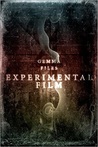
Experimental Film

Experimental FilmExperimental Film by Gemma Files
My rating: 5 of 5 stars

I've known Gemma File's work for a while now. In fact, we were "TOC Mates" in A Clockwork Phoenix #2. I believe that her outstanding story in that volume, "each thing i show you is a piece of my death" served as a springboard to Experimental Film. Both are dark tales dealing with cinema, a subject on which Files is, obviously, an expert.

Truth be told, this is the first book I have ever pre-ordered before the book was even finished. Yes, it took me a while to get around to reading it (go look at my TBR list to find out why - and, yes, I intend on reading all of those and reviewing the vast majority of them - not to mention other projects of my own I've been working on), so while I was an early adapter, the rest of the reading world passed me by. No problem. It was worth the wait!

Experimental film is about exactly what the title says. The narrator, Lois Cairns, a lapsed teacher of film at a local (sham) school and sometimes film-critic, discovers the work of one Mrs. Whitcomb, possibly Canada's first film-maker, who vanished from a train after making a series of films about . . . well, I'm not going to give it away so easily.

Nor does File's give it away easily. This is a multi-layered work, really a melange of literary techniques and styles, each used for a specific purpose; not for the conceit of the method itself, but as a means to an end. Yes, the book is, appropriately, "experimental," at least intermittently. But the use of what otherwise would be charlatan's tricks to cover up bad writing are actually carefully, purposefully crafted pieces that weave into the fabric of the story. The method, here, matters - much like it does in cinema itself.

But these methods are used sparingly. The book breathes with its own literary life, and, as usual, Gemma File's voice is beautiful and brilliant. Take, for instance, this passage:

You think that being blind is darkness, and sometime's that's true, yes. Mostly. Not always, though.

When I woke up back in St. Mike's, Mrs. Whitcomb's ghost voice in my ear and her bony hand in mine, the world around me had all gone hot and stark, consumed by the idea of brightness without any of its effects. Reduced to a vague tint of red, polluting an otherwise unbroken absence. And what I found was that this would wax and wane as time went on, with no apparent consideration for what time of day it was
supposed to be, outside my own head - that 'round midnight I often seemed to orbit a weird, unblinking light, pitiless as some supermax prison cell's single bulb, while at noon things became still and quiet, colourless, nothing but gloom on gloom.

Of course, you'll gather from these paragraphs that Experimental Film is a horror novel, and you'd be right. However, this work is so much more than that. File's ability to portray the frustrations of being the parent of an autistic child is truly amazing. And this is not just a side issue, it is dealt with front and center, as a vital part of the plot with all the love and frustration, all the impatience and longing that one would expect from the mother of an autistic son. Lois Cairns is no saint, but she is human. She is flawed and real. I believed in her. Watching Lois negotiate between the relationships she has with her son, her awkward mother, her loving husband, and another powerful, vengeful member of the cinemaliteratti (yes, I just made that word up - get over it) is a treat in-and-of itself, without the supernatural horror elements. This book is not really about ghosts, it's about relationships . . . which might happen to include some ghosts.

But if you're not predisposed to reading "Horror" books, don't worry. This work is more grey than black, more subtly creepy than startlingly scary. Think Twilight Zone, not The Exorcist. Dark? Yes. Weird? Definitely. Pee your pants scary? Nope. It is ethereal and fascinating, while being solidly grounded in the day-to-day struggle of just getting on and getting along.

Still, the work itself is a sort of cinematic piece, with all the grit and character that implies. It's not an action movie in full color. It is an old black and white. A slightly surreal piece, something not nearly as bizarre as The Brother's Quay, but maybe Ingmar Bergman strange, in places. One can almost see the scenes glowing unevenly and hear the "tick-tick-tick" of a projector in the back of one's mind while reading. And the climactic scenes are like a hot bulb burning through the black film, moving from utter darkness, spreading into irregular sepia splotches, to gold pinpoints that eat away the obfuscation, to reveal that which you had hoped would remain hidden, in blinding brilliance.

Brilliant. Yes, that's the word for it. Brilliant!

Strongly, strongly recommended. Read it alone at night by the light of a single projector bulb. I dare you.


View all my reviews

If you like my writing and want to help out, ko-fi me at https://ko-fi.com/forrestaguirre. Every little bit is seen and appreciated! Thank you!