Showing posts with label Noir. Show all posts

Monday, May 29, 2023

The Impersonal Adventure


The Impersonal AdventureThe Impersonal Adventure by Marcel Béalu
My rating: 4 of 5 stars

First off, a huge thank you to Goodreads friend Nancy Oakes for gifting me a copy of the book. It was an incredibly kind gesture. Please go take a look at her blog, Reading Avidly!

Wakefield Press continues to do the (insert your favorite deity here)'s work, especially with their sub-series "The School of the Strange," a series of possibly forgotten novellas and collections by some of the 20th-Century's most under-rated and lesser known European writers in translation. Through the books I've read in this series (Malpertuis, Waystations of the Deep Night, and now this) and several other gems from other publishers, I've developed a strong taste for continental European works in translation. I suppose having spent half my childhood in Europe has something to do with it, but I've become enamored of finding and exploring these works. Since my German and Latin are sub-par, and since there are so many languages I don't have time to learn, I really appreciate what Wakefield (and others) has done here. They've presented an excellent primer for works of "The Weird".

Marcel Beaulu's The Impersonal Adventure continues this trend. The title, as one might guess, is tongue-in-cheek, with several meanings, at least a couple of them laced with irony. The situations that the main character, Fidibus, finds himself in speak to the crumbling of individualism, the loss of "me" in what I will call crowded situations. Simultaneously, Fidibus discovers that his singular importance has been hidden even from himself by the overwhelming tyranny of the majority in which he finds himself. And what if the majority imposing such tyrrany is altogether mad? What if it is so mad that you are unsure of your own sanity? And when one comes to their senses, what happens when the fact that everything making sense doesn't make sense anymore? There's a powerful sense of surreality throughout, which the appended analysis of the novella interprets in Freudian terms (while disavowing a proprietary interpretation - it is pointed out that this is only one way in which the text may be interpreted and acknowledges that this is probably the wrong way to approach the book anyway). Even this last essay at the end of the book adds a further element of ambiguity.

What is not ambiguous about the work is the sheer atmosphere presented here. In my notes, I characterized it as Alfred Hitchcock meets David Lynch, and as I continued reading the book, this feeling never diminished. I felt as if I was immersed in a world created by these two, but in an admittedly anachronistic sense. If you're a fan of Vertigo and Twin Peaks, for example, I think you'll like this book!

This novel becomes more and more claustrophobic, in a social sense, as it goes along. Questions of personal identity vis-à-vis other's expectations and the expectations of society at large are at the forefront. In sum, this might be the greatest gaslighting story ever told, but its surreal tone and bizarre conclusion make it much more than that.

View all my reviews

_____________________

If you like my writing and want to help out, ko-fi me at https://ko-fi.com/forrestaguirre. Every little bit is seen and appreciated! Thank you!

Monday, October 10, 2022

The Robot Novels: The Caves of Steel / The Naked Sun


The Robot Novels: The Caves of Steel / The Naked Sun (Robot, #1-2)The Robot Novels: The Caves of Steel / The Naked Sun by Isaac Asimov
My rating: 4 of 5 stars

It was probably around 1977 that I became fully aware that this specific edition of this novel had sat on my dad's bookshelf, probably since before I was born. It's strange to say, but that freakish cover with the vacuum-cleaner robot was a fixture in my house, as I said, likely from before I was born, to the day of my father's death in 2018. The stranger thing, I suppose, is that I have not read it until now. When my parents passed away (both within two months of each other - but that heartbreaking story is for another day), we got rid of most of their books. Many I had already read or owned, and most of the rest I wasn't terribly interested in. Dad had purged his collection back in the '90s or so, and, well, mom read romance novels almost exclusively, so . . .

But this one I kept. I can't look at the book without thinking about my dad. He was a huge fan of science fiction and of Isaac Asimov in particular. I gave some of the Foundation material a go some time ago, but wasn't floored by it. It was . . . good. But didn't strike me as amazing. But I had read many other books that my dad had (or had recommended to me) and he read some that I gave to him.

And what did my dad see in The Robot Novels? I can't tell you, but I can tell you what I saw.

First off, I'm convinced that Asimov wasn't really a science fiction author. At least not with this book. Sure, it's got all the trappings - robots (obviously), enclosed cities cut off from nature (the "Steel Caves" referred to in the first novel), spaceships, and blasters. But really, this is a noir novel along the lines of The Maltese Falcon or The Big Sleep.

Secondly, Asimov was a product of his time. The use of the term "boy" for robots, the undercurrent of sexism, etc. While these things are not as blatant as, say, Lovecraft's racism or the sexism of E.E. Smith's Triplanetary, you can sense that Asimov was writing at a time when society was starting to "deal" with these subjects.

Lastly, Asimov is a good, solid writer. But don't expect anything fancy. Like its noir predecessors, The Robot Novels are a working-man's prose work. I'm not sure if this was an intentional choice by Asimov or the next step in science fiction writerly-ness, one step removed from the pulps. But there seems to be a neo-Hemingway sensibility to the prose itself. Nothing fancy, but it gets the job done. And the job, as they say, needs doing.

Overall, I really enjoyed the read. The plot was a twisty as you'd expect from a quasi-noir novel in a science fiction setting. The characters, while showing their "age," were interesting and while not three-dimensional, they were also not two-dimensional, filling some fractal character space in between. Will I read it again? Probably not. But I might be convinced to dip into another Asimov down the road, who knows?

To tie this one off, one of my proudest moments as a writer came when I was able to tell my dad that my story "The Auctioneer and the Antiquarian, or, 1962" was to appear in Asimov's magazine. He was effusive in his praise, something that was counter to his demeanor most of the time. It really is one of my happiest memories of my dad. Little did I know that ten years later, he would be gone and I would be collecting from his belongings the copy of the magazine that I had sent to him.

Folks, ten years can slip away very, very quickly.

Hold on.

View all my reviews

If you like or appreciate my writing and want to lend your support, ko-fi me at https://ko-fi.com/forrestaguirre. Every little bit is seen and appreciated! Thank you!

Tuesday, April 26, 2022

Bitter Distillations: An Anthology of Poisonous Tales


Bitter Distillations: An Anthology of Poisonous TalesBitter Distillations: An Anthology of Poisonous Tales by Mark Beech
My rating: 4 of 5 stars

Anthologies are a hard sell. Meaning they hardly sell. I know a bit about this, having edited several volumes myself. Heck, I even won an award for editing one, a long time ago. Note that it's been a long time since I've edited a fiction anthology. I love short fiction, but editing a short fiction anthology is hard work, if you're doing it right. And it's often thankless. I remember speaking with author Stepan Chapman years ago about editing anthologies and his comment was "something for everybody to hate"! Truth.

A great anthology is one in which the whole is greater than the sum of its parts. A careful balance has to be maintained for this to work. A theme needs to be strong, but not overwhelming. And there needs to be a variety of voices, but not so varied that they all become a choir of chaos.

Bitter Distillations: An Anthology of Poisonous Tales is an anthology that could easily fall out of balance in this regard. But it largely (though not completely) succeeds. Mark Beech, the editor, thankfully took a broad approach to the theme, though there is a preponderance of stories about "poison gardens". Of course, it might be difficult to winnow down the the absolute best stories about poison gardens, but that is an editor's job - to build a collection, then hack it down to the best of the best.

The presentation is nothing short of amazing. This is a book you want to have in your collection to show off to your friends. It is beautiful, well-built, and smartly-designed. This is typical of Egaeus Press books. You know you're getting a quality artifact when buying an Egaeus volume.

Some of the stories herein are outstanding. I guessed this would be the case after looking at the table of contents. Many of my favorite contemporary authors had stories in here, and they did not disappoint. There were other authors unknown to me (which is, actually, something I always look for in an anthology - including "unknown" authors was something I prided myself on while editing), some of whose stories succeeded, some of whose didn't quite. If you're on Goodreads, you'll note I gave the anthology a four-star rating. Not because most of the stories were four-star stories, but because many were five-star stories, and a not-insignificant amount were three-star stories. With that, here are my notes on the stories:

"A Night at the Ministry" is as crisp and decadent as one should expect from
Putting the "decay" back in "decadence," the story "The Blissful Tinctires," by Jonathan Wood, marries the grinding post-grandeur of Peake's novels or Wilde's Dorian Gray with the banality of Great War England (and France, for a critical few short moments). It is a grueling, lustrous, dirty, pathetic, and triumphal read, all at once. This is Wood at his hollow, beautiful finest, mixing glory and defeat. It's a tricky story, one that you think you have figured out in the split-second before you figure out you were completely (and delightfully) wrong. I like being tricked in this way.

"Delightful" isn't the first word one would use for a story about poisoning, but Rose Biggin's "The Tartest of Flavours" is light-hearted. This tale, set in the universe of Alice in wonderland (in a slightly different guise) is, shall we say, "frivolous"? I didn't dislike it, but, at times, it seemed to be trying too hard to be cute (in a grim sort of way). Still a nice change of pace, but the weakest story to this point of the book.

Timothy Jarvis' "The Devil's Snare" is everything I would expect from his pen: carefully-crafted mythic storytelling with a limning of dry-humor and dark beauty. What I was not expecting was the ending. In hindsight, I should have seen it coming - but should the townsfolk. Alas, they are in for a big surprise. I love the mix of rather ordinary people moved to extraordinary visions here.

Rosanne Rabinowitz hits a simultaneously melancholic and celebratory mood here with "The Poison Girls". It's a long story, grazing over many years, and the main character, Marla is a complex and interesting person. The story blurs the line between the nostalgic and the imaginal, "breaking" chronological constraints in an emotionally-satisfying story of joy and grief, healing and pain. Beautiful.

I greatly enjoyed "The Invisible Worm" by Ron Weighell (if one can call cringing discomfort brought on by masterful writing "enjoyment"), but I fail to see how it fits, thematically, with the rest of the volume. I suppose it is, loosely speaking, a "poisonous" tale, but it involves no poisonous substance outside of religious fanaticism. Still, it's a great story, though it reads like an introduction to a novel.

A nice, evocative poem with a deeper story between the lines in "Chatterton, Euston, 2018" by Nina Antonia.

"Out at the Shillingate Isles" is a tragic story of a socially-rejected woman named Gert making a living in a harbor fishing village. She meets a new friend, "Low-key," who has compassion for her and her plight. He has a flair for performing strange tricks of magic. They go together on a scheme to give Gert the upper hand against her enemies, and things seem to be going great. Seem to. Four stars to Lisa L. Hannett.

When George Berguño is at the top of his game - and he is at the top of his game in "The Other Prague" - there are very few who can match his writerly voice. Calvino, Borges, Schwob . . . he stands in good company. And this story is polysemic, not content to settle on one meaning . . . or the other. All is one. And none is all.

I don't know that I've read Sheryl Humphrey's work before, but if "The Jewelled Necropolis" is an indicator of the quality of her writing, I will read her work again. This is part of the joy of reading an anthology: discovering a new (to me) author whose work I can continue to explore. I love the framing piece of an anonymous manuscript found as a result of the Federal Writer's Project, and the way Humphrey leverages it is more than just clever. It's a dreamlike tale of searching and finding a glimmer of paradise.

"Not to be Taken," by Kathleen Jennings begs the question "who is who's victim"? Or, more properly "who is the real perpetrator"? It's a story of disturbed individuals who happen to meet and orbit around each other, further disturbing the universe around them. It's a touching piece, in Its own perverse way, with very distant echoes from the decadent tradition. Four stars.

With a writerly voice reminiscent of Sarban, yet with a cuttingly-clever humor very unlike the staid Sarban, Louis Marvick, in his uniquely Marvickian way, immerses the reader in a sea of poisonous plants with "The Garden of Dr Montorio". But he takes it a step further, not only trapping the protagonist in a presumably lethal maze, but by trapping readers in a deadly story within a story. Marvick continues to amaze.

I've been effusive in my praise of Stephen J. Clark's writing. "Of Mandrake and Henbane" does nothing to quell my enthusiasm. Here the triple goddess of Maiden, Mother, and Crone are tied to The Green Man (under a slightly different guise) by a "sacred unguent" that binds them all together. This is a beautiful story of loam, love, and loathing that blossoms under Clark's deft pen.

There's a kernel of what could be a good story in Joseph Dawson's "Beyond Seeing," but it appears to me that this is a rough draft in need of serious revision. I was willing to cut some slack, but with an awkward writerly voice that is too terse and too verbose in all the wrong places, I had little patience with such a predictable plot. This is harsh, but the anthology would have been stronger without this story.

For some reason, I sometimes greatly enjoy stories that obliquely or peripherally toy with the theme of an anthology (though I do like some connection). Such is the case with Yarrow Paisley's excellent "I in the Eye". Poison plays a part, but only a small part in the larger narrative of dissociation with self and family. The writing here is fantastic, and this is one of the darkest stories in the volume. Five stars.

Jason E. Rfe's "Canned Heat" was quaint, in a disturbing way. It feels like there could have been so much more to this story; should have been more. It felt like a pedestrian effort to me.

Alison Littlewood's "Words" is a weak story, strongly told. But I'm afraid that the eloquence, in this case, doesn't outweigh the inevitability of the plot. There may be something to "tried and true" stories (I'm certain I've written a few myself), but when one can determine what's to happen when one is only a quarter of the way through the story, no amount of good writing can save it, ultimately (and unfortunately).

The tone of Carina Bissett's story "An Embrace of Poisonous Intent" is strikingly different from the rest of the book. This is high sorcerous fantasy replete with unicorns and griffins. The mythic element here is powerful, and the story excellent. It stands on its own strength, meaning it contrasts, somewhat jarringly, with the rest of the volume. But I can't fault the story itself. Viva la difference!

So overall, an excellent anthology. It has it's weaknesses, but every anthology does. The strongest stories (Murphy, Wood, Jarvis, Berguño, Humphrey, Marvick, Clark, Paisley) will infiltrate your veins and seize your brain, just as one would expect from the theme. Cheers and bottoms up!

View all my reviews

__________

If you like my writing and want to help out, ko-fi me at https://ko-fi.com/forrestaguirre. Every little bit is seen and appreciated! Thank you!


Thursday, April 14, 2022

The Haunted Screen: Expressionism in the German Cinema and the Influence of Max Reinhardt


The Haunted Screen: Expressionism in the German Cinema and the Influence of Max ReinhardtThe Haunted Screen: Expressionism in the German Cinema and the Influence of Max Reinhardt by Lotte H. Eisner
My rating: 4 of 5 stars

I don't know where or when my fascination with silent movies began. Definitely not as a child. I couldn't stand the things back then. I think it might have been after I discovered The Dark Side of the Rainbow and realized that the same technique of watching one piece of visual media while listening to another piece of aural media could easily be applied to silent movies. Suddenly, these often-campy, over-acted films could become something sublime or something sinister, with the right music. Eisner's book was grist for that mill in enough volume to last me the rest of my life. Though I was very familiar with a few of these films and had already tried the trick of using two tabs of Youtube in a web-browser - one (the film) set on mute and the other (the music) with volume UP - I found several other good combinations and a couple of great ones. I will continue exploring this way.

If you'd like to give it a try, look up The Student of Prague (1913) or Waxworks on Youtube. Mute that tab. Now open another tab, go to Youtube, then play something like Ligeti's "Lontano" or Penderecki's "Symphony No. 1" (or, for real ambience, play it on vinyl!) with the volume UP. Or, perhaps you'd like to go another route and listen to some more . . . modern music? I have a few suggestions linked here.

I suggest watching without subtitles turned on, if you can. just enjoy the visual and auditory experience. It's a stark contrast from watching the movie alone, even when, or especially when, someone has attached an old-timey organ soundtrack to the movie. It's your experience - make it yours!

Incidentally, because of this book, I understand why sub-titles are called sub-titles. Only took 52 years to be enlightened. "Titles" was the term originally used in silent movies for the words that flashed up on the screen, in the absence of spoken dialogue. "Subtitles" appear, as the name implies beneath the titles. These are, as you know, most often translations from the original language into another.

52 years.

You can teach an old dog new tricks.

Speaking of new tricks, the early years of cinema were a sort of wild west, when it came to creative innovation, especially when constraints brought on by conflict interfered with the procurement of some materials. Interestingly, the lack of materials in the last years of World War I led to playwrights and cinematic directors using light and shadow, rather than elaborate sets, as they used to use, to give depth to the settings and to indicate the passage of time. A happy accident for early German movies.

The recollections of Carl Boese on how the special effects were done for Der Golem (1920) were absolutely fascinating. These practical effects were very dangerous, so volunteers were asked to try them out. The first stunt-men, perhaps. Knowing this has given me an excuse to watch the movie again. Of course, I will also have to reread Gustav Meyrinks novel, which has little to do with the movie, but hey, a good excuse is okay. After all, the book and the movie were both highly influential on one of my own creative works.

And, speaking of old dogs . . .

Eisner has a fixation on the melancholy and gloom inherit in the German soul, as he sees it. I tend to agree to some extent, but when I see this was first published in 1952, I wonder if some of the hyperbole isn't post-holocaust apologetics or manifestations of guilt. There's a bit too much of "Germans are brooding, dark-minded people as a whole" for me. It's overstated and I wonder why?

It is reasonable to argue that the German cinema is a development of German Romanticism, and that modern technique merely lends visible form to Romantic fancies.

These generalizations of German people as a brooding bunch keep coming up again and again. I don't fully disagree, but frankly (and I don't mean "in the manner of the French"), it got a little, well, old.

But if you can ignore the repeated caricature of an entire nation as, well, goths, there is much to be enjoyed about this work. I would also recommend (whether you read the book or not) following the Pagan Hollywood instagram or twitter account. Sometimes NSFW, you'll want to maneuver carefully, but if you want to catch the glamor of early cinema (and much more) in still photos, that's a great place to start. There's also a great interview with Pagan Hollywood's founder, Charles Lieurance over on Youtube, while you're at it.

I must note that the early text on Doctor Caligari instructed "see frontispiece". I turned to the front of the book, and noted the ragged edges where that key marker had been torn out of the book.

Was that a sign that I should not have entered the realm of the torn page?

Maybe I should have heeded it.

But I'm glad I didn't.


View all my reviews
__________

If you like my writing and want to help out, ko-fi me at https://ko-fi.com/forrestaguirre. Every little bit is seen and appreciated! Thank you!

Saturday, December 4, 2021

The Delicate Shoreline Beckons Us


The Delicate Shoreline Beckons UsThe Delicate Shoreline Beckons Us by Jonathan Wood


At 71 pages (in the paperback edition, at least) this is a slight book, but it is by no means a trifle. The introduction by Mark Valentine is a treat in and of itself, as Valentine's essays usually are. When I finished the essay, I had the impression that I was about to read something along the lines of "Morrisey's 'Every Day is Like Sunday' meets Alan Moore". I was not far off, though I had a more Oscar Wilde sense than Alan Moore. Whatever the comparison, the book works and it works well.

Fans of Wood's prose and poetry will find much to like here. Were I to quote a particularly beautiful selection of prose from the book, I would be quoting the entire book! This does not, however, mean that the voice is delicate (which belies the title). Rather, there is a workman's voice throughout - an intellectual narrator who is steeped in a workman's frame of mind. It makes for a very interesting voice that sometimes shows a crass edge to the smartness, a sort of "knowing" of how the base man lives while delivering that knowledge in some clever turns of phrase:

The landlord is the sort of bloke that likes a crafty half-pint in a pint glass that he hides just under the corner counter next to the old whiskey tumbler with the 'hunting with hounds' coloured transfer on the side of it. The hunstman's head has been worn off by the repetition of the same fat fingers day in and day out, raising the tumbler to the optic of the finest blended and then down again with precision and native speed, to ensure his Missus does not catch him at it too often. There's nothing better than an alcoholic running a pub and using all the camouflage at his disposal so do do and to do it well and with pride. The faded thick cardigan fits him perfectly as he raises his fourth double blended of the day to his lips and down the hatch, evoking all that he could ever want to see from his past as it tumbles like dying gulls into the vortex of the open grave of the rest of his life.

Again, while Wood's depictions of brutal lives hit hard upon the consciousness, the words themselves are gently deceiving. Wood is very sly, surreptitious in his dripping of hints. He is a careful craftsman, just like his narrator. Even the "slips" that the narrator commits as the plot unfolds are intentional, but don't seem intentional on first or even second reading. There is a sleight of hand there, a very pleasant sleight of hand, that sneaks in, ultimately, for the throat. It is an artful strangulation, so well done that one must examine it again and again, like a football player watching film in slow motion to improve his game, in order to catch the moments when the fingers clasp the trachea. Such sweet suffocation!

View all my reviews

__________

If you like my writing and want to help out, ko-fi me at https://ko-fi.com/forrestaguirre. Every little bit is seen and appreciated! Thank you!

Monday, May 3, 2021

The Secret Life of Puppets


The Secret Life of PuppetsThe Secret Life of Puppets by Victoria Nelson
My rating: 5 of 5 stars

I haven't read a book with marking pencil in hand since graduate school. That was a long, long time ago. This book forced my pencil out of retirement and back into action. The difficult part was not marking nearly every page with something so profound that I wanted to memorize it.

I recently read Arthur Machen's Heiroglyphics and just last year I read Gary Lachman's Lost Knowledge of the Imagination, two incredible books about the need to temper "scientism," for lack of a better term (it's a term that Nelson uses, as well) and to expand the critical use of the Imagination. Nelson would use different terminology: Empiricism versus Transcendentalism, but she traces, essentially, the same lines of thought. Although rather than the artistic evaluation of Machen or the esotericism of Lachman, Nelson traces a socio-anthropological path through the maze of the past two millennia (and beyond), following an unbroken Ariadne's thread that begins and ends (an intellectual ourobos, if you will) with our individual and societal desire to reach for the transcendent, to at least want to believe that there is something beyond this pale existence.

The short version of the thesis is that the idea of an underworld (or, by extension, Plato's cave) was transformed during the Renaissance into the mundus subterraneous, a world beneath the crust of our earth, then to terra incognita, most notably in the form of the Arctic and Antarctic, and after these had all been explored and revealed, our desires turned to the outer worlds beyond earth and to the inner worlds of, among others, cyberspace. All of this exploration, Nelson convincingly argues, is born of a desire to know the unknowable, to transcend our meager lives, to be a part of something grand. She does not engage in psychological speculation on a societal scale as to what causes this drive, merely traces our desires by way of "low" literature, and . . . puppets.

One of the more interesting pieces of this exploration is seeing how man, in past ages, worshipped graven images - anthropomorphic statues imbued with some mystical aura of power, then turned that worship on its head to eventually become a fear of inanimate "men" (or women). We witness the transformation from Baal to Punch to Pinocchio to Maschinenmensch to Terminator to Chucky, with many branchings-off in-between. First, man worships the puppet, then they manipulate the puppet (fulfilling the theandric urge for some kind of false apotheosis), then they fear the manipulation of the puppets they have created.

While Nelson does avoid the psychological analysis of society as a whole, she does give examples of those whose individual psychosis reflect this push-me, pull-me dynamic of manipulating and being manipulated, particularly when it comes to the diaries of Daniel Paul Schreber and the woman who inspired the "false Maria" of Metropolis, a patient of Viktor Tausk, one of Freud's disciples. The analysis of psychosis and particularly schizophrenia in the context of The Secret Life of Puppets makes for a poignant reminder that real lives are affected in real ways by these perceptions.

But the book is largely about a deep dive into popular literature, cinema, etc., to see where we, as a society, long to discover the transcendental, long after "high" society has relegated such longing to the ghetto of ignorance (in their view). Nelson hits many favorites of mine throughout: The movies of Brothers Quay, the fiction of Philip K. Dick, "The Raven" by Edgar Allen Poe, Lovecraft, The Matrix, the works of Franz Kafka and Bruno Schulz, the German expressionist movies The Cabinet of Dr. Caligari, Metropolis, and Der Golem - the list of personal touch-points goes on and on. And I was rewarded with learning of some new or previously un-seeen/un-read cinematic and literary works which I shall have to explore. I also made some of my own connections (as with Machen and Lachman, above) such as the connection between the earthly and celestial poles and another of my favorite problematic and uncategorizable books, Hamlet's Mill.

This will be reread, probably many times, but next time I'll know to have my marking pencil ready before I crack the cover.


View all my reviews

__________

If you like my writing and want to help out, ko-fi me at https://ko-fi.com/forrestaguirre. Every little bit is seen and appreciated! Thank you!


Saturday, January 18, 2020

gun, with occasional music

Gun, With Occasional MusicGun, With Occasional Music by Jonathan Lethem
My rating: 4 of 5 stars

For the truly sick individuals that pay attention to my meanderings on Goodreads, you'll note that I frequently take notes as I'm reading. Except when I don't. And I didn't, much, while reading this. Why? Because 1) I was too engrossed in the story, 2) things happened so fast that I didn't have time to process them, and 3) I have no good way of actually conveying what I thought as I read.

So, "why", you ask "are you even writing this review, Forrest?" - because: Duty. You see, back in 2017, I vowed to become more intentional in my reading, to really only list on my "to-be-read" list books that I intended to buy and actually read. Because I am a slow reader, that meant cutting that list dramatically, which I have done. But part of being intentional in reading, for me, is reviewing each book, as difficult as it might be, and as craptacular as the review might be. And so, here we are.

I have to thank two of my favorite Goodreaders, Glenn Russell and Dan Schwent, for pointing me towards this genre-blurring novel. I am a big fan of genre-blurring, and I love it when it's done right, and really, really hate it when it's not. Here, Lethem has a winner. When I first read the blurb on the book "Marries Chandler's style and Philip K. Dick's vision," I was intrigued, but wary. I've heard that kind of praise before, and . . .

In this case, the claim is accurate. Take one part Dashiell Hammett, one part Raymond Chandler, one part Philip K. Dick (minus the mysticism), play some Big Bad Voodoo Daddy in the background, do a line of coke, and you are in the zone. The characters are fantastic, especially the narrator, who is as snarky as they get. The setting is caught somewhere between the 1940s and the "future" - honestly, I had something between the movie version of "The Big Sleep" and "Blade Runner" in my head, though the futuristic accouterments were not nearly as pervasive as in Ridley Scott's film. The thing that sets gun, with occasional music apart (besides it's intriguing title, which, you will note, is uncapitalized, at least on the cover) is the way that it interweaves seemingly disparate elements in such a way that they feel perfectly natural. An "uplifted" (not Lethem's term -I'm stealing it from the scifi hive mind) kangaroo as thug, babies who have been genetically accelerated into adulthood (except their heads, hence the term "Babyheads"), and the titular gun, with occasional music, all seem to be of a piece (okay, pun intended - i couldn't help myself, so shoot me). Nothing seems shoehorned in, which is often a shortcoming in such genre-blurring novels. No, this book is as smooth as butter.

View all my reviews

________________________

If you like my writing and want to help my creative endeavors, ko-fi me at https://ko-fi.com/forrestaguirre. Every little bit is seen and appreciated! Thank you!


Saturday, December 7, 2019

Fiendish Pamphlets

Fiendish PamphletsFiendish Pamphlets by Ramon Lasalle​
My rating: 5 of 5 stars

Raphus Press is a little-known fine literary press - little-known except among a certain subset of small-press connoisseurs. Fiendish Pamphlets is a slim, elegant volume. Sexy, like a well-dressed Femme Fatale. Crisp and alluring. Physically, it's a model of what a book should be. I dare say, the production is near-perfect.

But what's on the inside? What will drive this reader-book relationship? Not much is given, a mere 44 pages of poetic prose. Because of small press economics, and the fact that this is a very limited edition, it's admittedly pricey. Maybe that's part of the allure - we covet that which is rare. But having obtained, what do we find inside?

Three (very short) segments of literary poetic prose fill the pages (along with some elegant illustrations that add to the luxuriousness of the volume). These are short pieces, but not something to charge through. Reading and appreciating them fully requires a slow hand, an examination of the text, ruminations, meditation. And they are meditative pieces.

In "Nocturnal Gardens," the self-discovery Demiurge, escapes into dreams, slipping the bonds of the workaday world. This was the least effective of the work, as far as I am concerned, and yet it is still of a very high caliber of work. Consider this piece an initiation into Lasalle's dark world.

"Distant Realms of the Kingdom" is an ode, of sorts, to animal instinct in the face of certain destruction. Beautifully lyrical and alien, there is a lot of meaning coded within the poetic language even when, or especially when it admits the inadequacy of expression in and of itself. This is the further descent into Lasalle's labyrinth.

"The Third Pamphlet" takes on a decidedly meditative tone, like some shadowy Zen philosophy of history filled with dark suppositions of causation and decay. This is the culminating ritual of the book, and it left me awestruck. Holding a rare, beautiful little book, reading about the covetousness of evil people lusting after a rare, beautiful little book . . . the effect is sinister, leaving one with a sense of wonder and a tinge of self-reproachment lingering in the background. Lasalle reintroduces decay into Decadence and ropes the reader in with a chaffing leather noose. This last segment is far more powerful than the sum of its parts, and it is the crown of the work.

Finis Opus Coronat

View all my reviews

________________________

If you like my writing and want to help my creative endeavors, ko-fi me at https://ko-fi.com/forrestaguirre. Every little bit is seen and appreciated! Thank you!

Monday, May 27, 2019

Snail mail RPGing

Back when I was a kid, I remember reading "wanted" ads in Dragon magazine and White Dwarf magazine where people were looking for play-by-mail players for their RPG. Invariably, there was a fee involved, usually rather exorbitant. I didn't play them, because, as a kid, I couldn't afford to. This was back in the '70s and '80s. Lo and behold, the mid-'90s rolled around and with it, the interwebs. This has opened up a plethora of opportunity to game with those who live far away from you, something I take advantage of every week or so, while running and/or playing AD&D 2e with old friends and new. Currently, I am DMing a Dark Sun campaign, as I just wrapped up playing in a Greyhawk campaign. Good fun (until Google hangouts dies, then we have to move to some other technology).

I will admit that during the time from about 1994 until now, I have spent WAY too much time online. It's really gotten under my skin, and this past year, I decided to do some things about it. I am cutting a lot of my time on social media and will dispense altogether with Facebook (except to have my account still there and available for people to contact me, if they wish) once a volunteer commitment for my church is done and over in August of 2020. I'm looking forward to turning my back on FB, honestly - just a breeding ground for family and non-family arguments, by and large. Not only that, but I am trying to fill my time with more analog pursuits: taking time to read more real physical books, getting out and hiking like I did when I was younger, exercising more regularly (i.e., more than every couple of weeks), doing more jigsaw puzzles (which I love and which keeps my brain young), and taking the time to write actual, physical, snail mail letters to people I really dig.

As a part of this, I've invited a few people who I know are excellent roleplayers or who are incredibly interesting persons, to participate in a snail mail campaign with me. We had to coordinate things via email, to begin with, but I think the groundwork is laid. I just prepared the first snail mail letters to send out this week:


The central conceit is very loosely based on the Trail of Cthulhu supplement Bookhounds of London. But this is a horror game without tentacles. We have agreed to a theme of Cosmic Horror, but cosmic horror in the abstract, NOT Cthulhu and friends, which has gotten a bit old. We are also interweaving themes of "The Weird" and "Cults and Conspiracies" throughout. Our main ruleset is DeProfundis, second edition. And for a twist, we are using the rules to the little-known (but rather clever) solo RPG English Eerie to create some randomness on the individual level, which will play into the interaction between the six of us. I will also draw heavily on the Chaosium supplement for Berlin: The Wicked City and the graphic novel (can you call it that?) Night Falls on the Berlin of the Roaring Twenties, for reasons I will outline below.

We settled on a timeframe starting in 1933. The biography for my character, Felix von Wagner, goes a little something like this:

Felix von Wagner – An English-born German raised in the England by a German father, Alric, and Irish mother, Alaia. His childhood was spent on the edge of the Cotswolds, just west of Oxford. His father was a wealthy man, having inherited a stipend via his petty- noble family (hence the “von” designation}. The elder von Wagner had left Germany to open a pharmacy in the town of Burford to live with his love, Alaia, whom he had met while on holiday in Venice in his early ‘20s.

The child, Felix, showed academic promise at a young age. Recognizing this, Felix's father sent the boy to attend Magdalen College School, where he received honors and eventually landed at Oxford to study Medieval History with emphases on Catholic Architecture, Irish Catholicism, and German Folklore. He graduated - barely - spending "far too much time" in the Bodleian Libraries and not enough time concentrating on his core studies. His fascination for the printed word led to indiscretions, thankfully never discovered, which gave him a (stolen) start in the rare book trade. His knowledge in his chosen subject matter has served him well in this trade. Being raised bilingual, with enough knowledge of Latin to get by, has helped in sourcing books, as has a knack for finding books that are desirable to his clientele. A touch of risk-taking has given him opportunities that the squeamish and highly-principled might not enjoy.

Felix currently resides in Berlin, where "anything can be bought," though political unrest has lately made the procurement of desirable tomes more difficult and has led to some close brushes both with the civil authorities and those elements who would subvert them. 

I say that the bio is a little something like that because there are several things about Von Wagner that I am not yet ready to share. It might be too much of a temptation for my fellow-players to sneak a peek online and learn too much too soon!

Now, how do we play this? Frankly: I don't know. We write and make stuff up, really. Everyone has a character with a different background, from different places in the world. I think we have two characters in different areas of Canada, one in northern Minnesota, one in Milwaukee, one in NYC, and Felix in Berlin. The thing that binds us together is our search of rare and strange books. But, really, I am relying on these five interesting people, all of whom are great roleplayers, and each of whom has some common interest with my own (and, I am certain, they will discover what interests they share with each other). 

As a practical matter, we are willing to accept some limited level of anachronism. For example, some of the events in Berlin in 1933 might be just a titch out of order, else Felix's story veer wildly out of control from day one. Yes, the Nazis are still screwing things up today (don't even get me started). But for the most part, we are sticking to 1933, a very interesting time, given the Great Depression, the repeal of prohibition, and the rise of Fascism. A crazy time, indeed.

I shall provide updates, from time to time, but since I will be handwriting all of my correspondence for this (except for the Raro Libro Quaestores Aerarii or RLQA newsletter), you may have to settle for scans of letters, etc. Others are, so far as I know, going to write by hand or by typewriter, for those who have one. And I am all about the wax seals on my letters! I love the smell of molten sealing wax!

Wednesday, June 6, 2018

Traitor's Purse

Traitor's Purse (Albert Campion Mystery #11)Traitor's Purse by Margery Allingham
My rating: 3 of 5 stars

I picked this book up on a lark. I happened to be in a book store in Door County and saw this mystery on the cheap paperback shelf and thought "I haven't read a good mystery in a while. I'll give it a try."

Keep in mind that Traitor's Purse is one in a series of mystery novels about Albert Campion. I had no knowledge of the background of the character. I swore that if I got too lost and felt that I would need to back-read one of the preceding novels, I was going to lem the book. Thankfully, that didn't happen.

The reason is, the main character starts out waking up in a hospital bed with no memory of why he is there or even who he is (I've kind of experienced this myself, after my back surgery years ago). Tabula Rasa right from the get-go; we learn to know Albert Campion as he gets to know himself. And it sort of works.

I have to wonder, though, how much of the plot Allingham actually knew as she wrote the novel. It seems to meander, at times, with several oddly-placed sidenotes. Toward the end, things felt thrown-together. The reveal-ation of Campion's memories is very, very clumsy. It could have been much better had I felt that Allingham had a stronger auctorial voice. Strength of prose can carry an otherwise mediocre work to new heights, especially in a mystery novel (or, at least, it did in the few mystery novels I have read). I kept hoping that the novel would resolve itself more strongly and really come together, but it never really did.

I am, of course, lacking all context. Maybe if I had read a Campion novel or two before, or even one after, I might have a stronger connection with the plot. But maybe this is why I largely don't like reading series - give me what I need as a reader, please. In the words of Queen: "I want it all, and I want it now!"

I enjoyed the novel, but was often confused. More confused than I felt I ought to be. The most appropriate quote to describe how I felt is found in the book itself:

"He was trying to fit together a jigsaw puzzle without knowing what sort of picture the pieces were expected to make."

View all my reviews

Tuesday, December 12, 2017

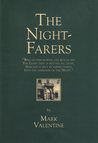
The Nightfarers

The NightfarersThe Nightfarers by Mark Valentine
My rating: 5 of 5 stars

Mark Valentine's name and fiction is often associated with authors such as Reggie Oliver, Quentin S. Crisp, John Howard, Stephen J. Clark, and Mark Samuels, largely because of these authors' associations with a handful of publishers known for producing extremely high-quality books, in limited editions, that focus on the borderline between the classic ghost story and the modern strange tale (e.g., Tartarus Press, Ex Occidente, Egaeus, Zagava, etc). These contemporary authors can be seen as the inheritors of a line of literary descent that includes such authors as M.R. James, Lord Dunsany, Arthur Machen, and Robert Aickman, among others. And yet, to lump them all together does a disservice to the individual authors and to the unique approach of each author to writing stories of this ilk.

This is particularly true of Mark Valentine's work. Valentine's writing is not as "weird" as Oliver's or Crisp's, for example. Nor is it as horrific as Samuels' or Clark's work. It is more . . . "restrained," is probably the best word, though "stoic" might be used to describe his work, as well. There's a certain nobility to Valentine's work in subject matter, tone, and structure; a bit of the old "stiff upper lip", if you will. His characters (primary or secondary, depending on the story) are often aristocrats. The stories themselves, at times, are of a more formalist bent - not the straight academic track, mind you, but something more like an armchair philosopher or dabbler in history might find most attractive. Something you would expect to be written by a man wearing a smoking robe and using a cigarette holder routinely. This is not to say that Valentine's fiction is unapproachable. No, far from it. But there is a certain "air" about it that will sometimes make you wish you had worn your best clothes to read in.

This collection is a beautiful hardcover book put out by Ex Occidente, limited to 350 copies. The cover I have is a full wrap-around of a beautiful purple (literally) painting of a handsome figure, nude, staring at the painter with glowing, nay, glowering yellow eyes as it (he) rests his chin in his hand. Though the frontispiece in the book is done by John Coulthart (and is clearly, distinctively, one of his pieces of art), I don't know who did the actual cover painting. But it is beautiful and sinister and entirely appropriate to the mood of the book. So, on to the contents:

"The 1909 Proserpine Prize" is a wonder. A story about the judgement of a literary prize for dark literature in which one of the books itself has a say. Include mystic languages and auctorial subterfuge on a cold winter night locked away in a storied building and, well, you get the picture. But not until the very end! This is one of several books wherein Valentine shows, through his fiction, his love of book collecting. Five stars and this collection starts off with a bang!

"Carden in Capaea" is an ephemeral tale, or is it an ethereal tale of . . .? I forget. The words escape me. I felt that I had them, long ago, but their meanings have blanched from my memory, fading into . . . what I don't exactly recall. But whatever they were, they were beautiful, if indescribable. Five stars is all I know, was all I ever knew.

"White Pages" is a beautifully written ghost of a story that could, itself, have served as the beginning of a ghost story. The ending-as-beginning was intriguing, but could have been further built into something far more terrifying. Still, it provides its own sort of satisfaction by letting things play out in the reader's theater-of-the-imagination. Four stars.

"The Inner Sentinel" is a brooding story caught somewhere between the oast houses of Kent and a fantastical, dreamland weald. The sense of dread is palpable and the prospect of betrayal by infiltrators is unnerving. A moody story, not terrifying, yet disturbing in the same way that one might feel after waking from a nightmare and almost forgetting the specifics of the fright behind you. I loved this story for the way it caused my emotions to ebb and sway as I read it. Five stars.

"The Dawn at Tzern" is pretty, but unspectacular. It carries the mood of the stories before it, but does little to deepen it. It's not boring; neither is it particularly exciting. Three stars.

"The White Sea Company" is a ghost story without being a ghost story wherein the "ghosts" are spoken of, but never seen, their presence so thin as to be almost imperceptible. They are presented in a manner of storytelling that can only be called "ethereal". Thin MR James meets Dunsany, but with some unique, unexpected "twists" on the canonical oeuvre. Five stars you can barely see in the mists.

Well, the five star stories can't go on forever, can they? "Undergrowth" is erudite, but less than compelling. "Underwhelming" is, I think, the right word. Three stars.

Joyce's Ulysses, Richard Francis Burton, a masked ball, a bizarre octopus-god that might merely be a preserved carcass, yet-unwritten secret books, and rituals involving white-clad virgin boys invoking writing by candlelight. What's not to like about "The Seer of Trieste"? I loved this literary occult tale. Five stars!

Though I appreciate the dark mystical message and tone of "Their Dark and Starry Mirrors," I think this story suffers just a touch from a lack of engaging plot points. Normally, I don't mind this at all - I love atmosphere over plot - but in this instance, it just feels like a blank space in an otherwise excellent piece of prose. Four stars.

At first, I felt that the ending to "The Bookshop in Novy Svet" was abrupt; non-sequitur. But as I re-examine the plot lines, I see that it was inevitable. And when I recognize the titular reference to Prague, it is clearly evident: This strange story of actuarians, artists, booksellers, and poets ended right where it must. It is a story I will read again, several times, and savor, a masterpiece. This is the kind of story where any writer of strange fiction will say "I wish I had written this". Or at least this writer did. Five stars.

"The English Leopard: An Heraldic Dialogue" is intriguing in its subject matter and stylistically exploratory, but not compelling. I have to be honest here and only give three stars to this one. This is the one story where I felt that Valentine was waxing a bit too academic. I wanted to like this story more than I actually did, which is a shame.

"The Box of Idols" is more or less a mystery story, albeit a short, curt mystery story. Still, the story fills the measure of its creation and is a satisfying tale involving idols, the ancient Assyrian language, and the process of printing itself. It's a great dalliance for book lovers with a slightly dark bent. Four stars.

"The Axholme Toll" is a clever metafictional slight-of-hand about a mysterious series of islands and books associated with these islands. I enjoyed it, but I couldn't shrug the feeling that this is what an author does when he knows the story he really wants to tell but really doesn't know how to tell it. So I appreciate the careful artifice, but felt that there was too much left unexplored or left unexplored in the right manner. Still a four star story.

"The Seven Treasures of Bucharest" is a beautiful story to end this excellent collection. A spiritual, sort of Arthurian quest, but a quest carried out by the intellect, shrewdness, and diplomacy, rather than the sword. And rather than ranging across England, this quest is confined to a quarter of Bucharest. But the "adventure" here is no less than that of the Knights of the Round Table. The sense of mystical wonder that permeates this story is palpable. Five stars.

Up to this point, this is the most I've spent on one book. Ex Occidente titles are notoriously expensive, and this one is no exception. But was it worth it? Totally! The incredibly high quality of the book, from presentation to construction to contents, bumps this one well into the five star range. I think I have here yet another example of what I call my "chained books". I will lock this one up and take it out to savor from time to time, re-reading and smelling its pages, which reek of ancient magic, though produced not so very long ago.

View all my reviews
__________

If you like my writing and want to help out, ko-fi me at https://ko-fi.com/forrestaguirre. Every little bit is seen and appreciated! Thank you!

Thursday, July 13, 2017

The Quay Brothers' Universum

The Quay Brothers' UniversumThe Quay Brothers' Universum by Marente Bloemheuvel
My rating: 5 of 5 stars

This entire book is a Wunderkammer. It's a memory of a relationship I've never had with the Quay's, incomplete snippets of our shared experience, though we've never met. I remember as I read, but there are memories hidden in the gaps between pictures and words, interstitial recollections that may or may not be fully material. This has steeped my brain in ether. I don't know if I will wake up. What is waking, what are dreams?!?

Suzanne Buchan's introductory essay "Short Circuits and Footnote Traces" is sheer brilliance, and by "brilliance," I mean a murky shadow of darkness. Buchan has articulated what I love about the Brothers Quay works in a way that I cannot. And I will not go into depth on her essay here. It deserves to be explored by you directly, without my interference. If you love Quay or are merely curious, let her essay be your Baedeker.

Beyond the introduction are dozens of stills from the Quay Brothers' films interspersed with prose selections by Robert Walser and Bruno Schulz. A short selection from The Diaries of Franz Kafka is also provided, like Walser's and Schulz's fictional pieces, without context. Those familiar with the Quay's films will feel the spontaneous firing of synaptic connections as they read, more from the feel of the prose than from direct situational or plot parallels (though they are present, as well). This method of loose association probably won't do much for those who are unfamiliar with the Brothers Quay cinematic art. But for those of us who already love their work, this book allows for a subconscious association with the film art while away from the film. The inclusion of fragments of Karlheinz Stockhausen's score for Helikopter Streichkwartet, Werk nr. 69 is another example of this dynamic. One cannot actually hear the music and one is not actually watching a Quay film in real-time, but one familiar with both will find their brain stretching to reach back into the darkness and pull forward "sounds" and "images" from memory.

And this is one of the qualities of Quay films that I love: The sense, while watching, that there is something hidden, some memory that holds the key to understanding, just outside of our conscious perception. I strive to find that (collective unconscious?) memory, but never quite find it. Yet, in that striving, I find something, some meaning, partially, at least, but never fully-formed, which keeps me striving even harder, which keeps me engaged, immersed.

I gladly submit to being thus lost, again and again. How can I resist the pull of the simultaneously eerie, yet numinous shadows that the Brothers Quay lead me into? I am driven by wanderlust into the dark, seeking enlightenment, doubtful that I will ever find it, though it is possible that, in seeking, I already have.


View all my reviews

__________

If you like my writing and want to help out, ko-fi me at https://ko-fi.com/forrestaguirre. Every little bit is seen and appreciated! Thank you!

Monday, July 10, 2017

The Endless Fall and Other Weird Fictions

The Endless Fall and Other Weird FictionsThe Endless Fall and Other Weird Fictions by Jeffrey Thomas
My rating: 4 of 5 stars

I've known Jeffrey's work (and Jeffrey) for a very long time now, nearly twenty years. I must admit that I am one of those horrible acquaintances that pops up every few years (or more) and remembers "Oh yeah, Jeffrey. I wonder what he's up to?"

Well, my timing was good, at least, this time around. I had been poking around the Lovecraft eZine website and noticed that Jeffrey had a new book out at about the same time I had wondered what he (and his brother, Scott, also an excellent writer, though of a very different tone) was doing. When I saw the cover, I was absolutely smitten. I have a penchant for bizarre art, and the cover by Nick Gucker fit squarely into that crevasse of my brain that loves to dwell on pulp surrealism. It was not long after that the Lovecraft eZine podcast featured Jeffrey's new book on an episode. When I learned that the title story in this collection was based on the art of the cover, I dove for my wallet.

Like any short story collection, some stories appealed more than others. But none of them are bad, not even borderline bad. Not a one. But I expect a lot from Jeffrey. So let's see how he did!

"Jar of Mist" proves that weird, horrific fiction need not be unsympathetic or lacking positive emotions. This story tugs at your heart (but leaves it in your chest, even if it's broken). This was five star material. I love strangeness in my horror, but when you can tug at my soft spot while dosing out the strange, that's a winner!

"The Dogs" is a nice atmospheric piece. Weird, very weird, of course, but with less emotional impact than the first story. And the assumptions that go into the suspension of disbeliefaere a tiny bit difficult to absorb, but not so jarring that it throws the reader out of the story. Four stars go to the dogs.

"Ghosts in Amber" is a very strange story in which Thomas creates a palpable frisson with not only his creepy descriptions of bizarre things, but also through his evocation of the inner sense of fear, the raw feel of terror in your body. A sad story. Four stars.

"The Prosthesis" is good, but not great. Well-crafted, but I didn't feel that the twist "caught" me, though the setup was perfect. Could have been much better, like really over-the-moon cool, but it sort of fizzled for me. Three stars.

"The Dark Cell" is a near perfect example of effective auctorial sleight-of-hand. Oftentimes, I can tell when a writer is trying to deceive the reader, but the twist in this story caught me totally off-guard.

Pun intended.

You'll know what I mean when you read it. Five stars.

"Snake Wine" reads like a modern update of an old pulp horror story from Weird Tales. Well told, if a little "already done". Three stars.

"The Spectators" is a heartbreaker. Man, I ached for the narrator. An emotionally-effecting story with an incredible sense of loss, along with catharsis, to say the least! Five teary-eyed stars.

"Bad Reception" is the most Twilight Zone-esque story in this collection so far. And seeing that Twilight Zone is my favorite TV show ever (the original TZ, that is) and that this story is very strange and very well-written and set in the atomic age, I'm giving it five stars. Speaking of TV, you might not see yours the same way after you've read this story! I really loved this story. A collection of stories that gave me the same sense of dissociation, the eerie, and a twinge of nostalgia for an apocalypse that never happened; well, such a collection would truly knock my socks off.

"Sunset in Megalopolis" is a quaint, simple story about a superhero with no one left to protect. Cute enough for three stars.

"Portents of Past Futures" is exceptional. A freaky-weird noir detective story with surreal overtones centering around the subject of street art. Yet another story where a static-riven TV screen serves as a key plot device (the first was "Bad Reception"), giving the whole an un-nerving sense of evil just beyond our perception, but wanting to come in front and center. Thomas at his best. Five stars!

"Those Above" is as nihilistic piece as any I've read. It was great, however, I am not a big fan of steampunk. And here, the steampunk elements featured so prominently seemed over-emphasized, even shoehorned in. Perhaps this is why it was first published in Steampunk Cthulhu. I felt that the gears and brass and leather elements were so exaggerated, so forced that they were calling attention to themselves and away from the narrative. Four stars.

"The Individual in Question" is a marvelous 2-page story of cosmic horror in the idiom of detective noir. I really loved this little story. So much packed into such a little space! Combine this with "Portents of Past Futures" and add a few more similar stories, and you'd have one of the best weird-detective collections available. Five stars.

"The Red Machine" is an excruciating tale about a tough life and revenge. But it's not the revenge story you've come to expect. Thomas plumbs the depths of desperation in this excellent story. Five stars.

The titular piece "The Endless Fall" is a beautifully-strange piece of science fiction based on the book's cover art (by artist Nick Gucker). It is an atmospheric piece about survival and its consequences in a situation where time and causality have all gone wrong. A wonderful, wonderful way to end this collection! Five stars!

View all my reviews

Monday, May 29, 2017

Weird Detective

Weird DetectiveWeird Detective by Fred Van Lente
My rating: 5 of 5 stars

I sincerely hope that this is not the first and last of this excellent comic. The premise is intriguing: Detective Sebastian Greene is not Detective Sebastian Greene, though he . . . it . . . is housed in Detective Sebastian Greene's mortal coil, so to speak. As the blurb says "It takes a monster to catch a monster". Greene's not-being-Greene is portrayed quite well here, as he . . . it . . . whatever . . . learns how to move in human society and, in particular, through the maze of NYPD corruption headed by mastermind J. Randall Carter. The story just touches the possibilities of complexity available, given the setting and characters. There is much more here that is available to explore. Still, Van Lente does an outstanding job of plumbing his characters' depth, tapping into their emotions, fears, domestic issues, and hopes with a likable sense of humor throughout. The running joke about Canadians is, well, funny if you're not a Canadian. Or maybe even if you are. I wouldn't know.

So just how "Lovecraftian" is it? Very much so! The mythos elements are critical to the heart of the story, not just because of Greene's actual identity, but also because a couple of key Lovecraftian mythos entities are critical to the engine of the story. They are not mere cameos or pastiches. They are keys (and locks and doors) to the plot. That said, this is, primarily, a detective story, and should be enjoyable even to those who know nothing of the mythos, though Lovecraft fans will find much to enjoy here that might be hidden from those unfamiliar with the eldritch master's work.

I've read some fantastic comic interpretations of Lovecraft's work, some very good original work loosely based on his work, and some not so great (but not horrid) homages, as well. This is definitely among the best!

That's not to say it's perfect. I'm finding, in my dotage, that a great story, competently drawn and colored, still leaves me a little flat. Don't get me wrong - this is a five star book, but it could have been much more. Each section, for instance, is led by a monochrome plate in a strange green tone showing one of the frames from the story after it. I understand that this is meant to provide some contrast with the work following, but why stop there? Why not do an entire graphic novel in this beautiful monochrome? Do it in this strange green and let the artist's lines be the center of the visual narrative! Dump the full color, and you put the viewer in an unfamiliar visual milieu, snapping the reader's mind out of their preconceived notions of what a graphic novel "should" be. This visual "alienation" could be leveraged to add a strangeness to the whole that would greatly enhance the overall presentation. Besides, Guiu Vilanova's artwork is adequate in and of itself, in fact, I think it is enhanced by the monochrome, allowing it to breathe, rather than to be drowned out by traditional coloring techniques. Or, take the amazing pinup artwork by Rafer Roberts in the back of the book and use that pulpy, aged style instead of your standard line work. My brain is on fire with the possibilities of what this could have been. Still, this doesn't take anything away from the work as it is, which is a must-own for fans of Lovecraftian fiction with an eye for graphic novels.

View all my reviews

________________________

If you like my writing and want to help my creative endeavors, ko-fi me at https://ko-fi.com/forrestaguirre. Every little bit is seen and appreciated! Thank you!

Friday, February 24, 2017

The Complete Symphonies of Adolf Hitler and Other Stories

The Complete Symphonies of Adolf Hitler and Other StoriesThe Complete Symphonies of Adolf Hitler and Other Stories by Reggie Oliver
My rating: 5 of 5 stars

You know, I've always been more of a short story reader than a novel reader. Yeah, I'm that oddball. I'm also much more of a short story writer than I am a novel writer. Maybe it has something to do with attention spans. But I think I just like the brain-juicing rush I get from a really great short story, whether reading or writing. Cheap thrills? Maybe. But they're my cheap thrills!

Problem is, short story collections are really difficult to review. Say too much about each story and it's really easy to spoil things. Say too little about each story and your review becomes pithy. And only after reading the entire collection can one really assess the author's overall oeuvre (well, for that collection, at least) and it's sometimes difficult to go back and piece together what it is you think about the author's work without re-reading every story.

So I guess all I have to offer here are my notes on The Complete Symphonies of Adolf Hitler and Other Stories, modified and elaborated on a tiny bit from my original notes, with a little summation at the end.

Before I dive in, though, please let me state for the record that Reggie Oliver is a magnificent stylist. Reading his work is easy. Not that the language is banal, not by any means. It just simply flows incredibly well. In both style and subject matter, M.R. James and an easier-to-understand Lord Dunsany come to mind as the best comparisons for Oliver's voice. But that is boiling things down too much. Olivers voices are rich and more widely varying than James and/or Dunsany. But the sheer ease-of-use to the reader make these stories smooth as silk. A dark, corrupted, sometimes terrifying silk, like a silk noose, but smooth, nonetheless.

Anyway, on to the stories:

The title story (and who could resist such an incredible title?) is a weird sort of weird. It's very moody, but not edgy, The narrator is a bit paranoid, but justifiably so. Still, his fears are a little unjustified, but this makes his flaws all the more critical to the story. I like this story a lot, but I don't know if I can place my finger on exactly why. And I like that lack of definition. It works to the point of 5 stars for me.

"Lapland Nights" is a very well-written story, but it has too many loose ends. I don't mind loose ends at all, but I came away from this story feeling like I was missing something fundamental that I should have found in the story. Re-scanning it, I found that it wasn't me, it was the story. I love the premise, plot, and characters, but feel like there is an impetus behind the plot turns that is too-well hidden. 4 stars.

"The Garden of Strangers" is a quiet tale about Oscar Wilde and suicide (a theme that recurs in Oliver's work). I can look past the pedantic (in a morally-corrupt way) nature of the story because it is so well written. 4 stars.

I made the mistake of reading "Among the Tombs" by firelight and a small, dim lamp, with the firelight by which I read flickering over my shoulder. Don't do this. Too creepy. Way too creepy. This story about possession and charity gone wrong got under my skin. I've still got the jibblies! 5-stars!

I found "The Skins" eerie enough but it lacked a needed touch of coherence. It sometimes felt like the plot elements were reaching for each other, but not quite touching. Unlike two of the main characters . . . 4 stars.

"The Sermons of Dr Hodnet" - now *this* is what I've been expecting. A twisted interpretation of Genesis 11:7 and a weird story that satisfies on all fronts. 5 stars for this one. More like this, please!

"Magus Zoroaster" puts a supernatural spin on what is, at it's heart, a tale of deep noir about doppelgangers and murder-mystery. 5 stars!

"The Time of Blood" was, well, bloody good. I was surprised by the ending, but it made all the sense in the world, in hindsight. I'm usually not as big on stories that begin with a pseudo-mythic framework, but this one worked well by the end. 5 stars.

A weird tale disguised as romance? Romance disguised as a weird tale? It doesn't matter. I loved it, and I am most explicitly not a fan of romances. "Parma Violets" drew me in and wrapped me up. 5 stars to this excellent story!

"Difficult People" provides a modern and slightly distanced riff on the themes of one of my favorite stories, "The Picture of Dorian Gray", but adds a murky layer of mystery to the whole thing while twists it into new vistas of horror. 5 stars.

"The Constant Rake" is a dark story about an obscure play manuscript and its discovery by the narrator. The original author of the play had suffered losses at the hands of a rival and vowed to exact revenge. But revenge may be a long time in coming! This tale brilliantly weaves destinies and motives together in a satisfyingly gruesome way with a dash of the supernatural. I have been wowed by this 5 star story!

While I enjoyed the self-aware humor of "The Blue Room" (I laughed aloud twice), it seems out of character for this collection. I enjoyed it, but it lacked the gravitas that the rest of the collection has had so far. I get it: people want variety, and humor often serves as an adjunct to horror. Still, it seemed a little "twee" to me. 3 stars

"A Nightmare Sang" is one of the longer stories in this collection. A strange, esoteric tale of ecstasy, initiation, and entrapment. I was caught up in it, much as the protagonist was caught up in the acting troupe/cult that simultaneously served as his compliment and foil. The characterization is what stood out in this mystical, yet banal story. 5 stars!

"The Babe of the Abyss" has so . . . much . . . potential! It could have been twice as long to allow more character development, but as it stands, it felt cut short, with one of the character's info-dump explanations making it feel even more rushed and artificial. Dang it, that could have been a five-star story, but I have to give it 4 stars. I even considered 3, but the ending was a "good save".

"Bloody Bill" is a memorable piece, if for nothing but the imagery. The mood is cohesive and rather gray and the story held together thematically. Still, there was something missing - maybe another connection or two between the narrator, his friend, and the antagonist, expressed more clearly by events, objects, etc. This "looseness" kind of lost me. Still a 4 star story, though.

I thought "A Christmas Card" might be a pithy retelling, or a horrific twist on "A Christmas Carol," but I was completely and utterly wrong. And I've never been so glad to be so wrong in my initial impressions. It is a surprising tale of hope in the face of suicidal depression. Somber, but very much full of hope. A poignant ending story that I was not at all expecting, and which took my breath away, especially as the end piece in this collection. 5 very bright stars.

That's a solid 4.6 on average. Throw in the wonderful production values, even on my paperback edition (what, you didn't know you could buy some of Tartarus Press's titles in affordable paperback?), and you've got a solid five star book here. If you want some creepy, but without the gross, and some excellent writing featuring some memorable characters and even more memorable plot lines, go get yourself a copy!

View all my reviews

____________________

If you like my writing and want to help my creative endeavors, ko-fi me at https://ko-fi.com/forrestaguirre. Every little bit is seen and appreciated! Thank you!

Saturday, June 4, 2016

Experimental RPGing: Help, opinions, and insights needed! Part II

A continuation of an experimental piece I began in an earlier post. Thanks to those (especially of the G+ gaming community) that have offered encouragement and thanks to those who supplied me with a list of directors whose work might fit in this "ouvre". For those who were not privy to that initial conversation, I asked people to complete the following list with directors whose works closely match those already in the list:


  1. Brothers Quay
  2. Jan Svankmajer
  3. David Lynch
  4. ????
One obvious one I missed (and shouldn't have) is Guy Maddin. Two of the entries in this segment are stolen from influenced by his movies. Oh, and there's an item shanghaied wholesale from inspired by one of Don Hertzfeldt's brilliant short films, as well (see if you can spot it. Hint: it's red). Again, I am hoping to put together a system-agnostic, stats-free campaign . . . thingy . . . that DMs can use for their own dark purposes. I might throw it together into a loosely-organized world-book, I might not. Tempting. Sorely tempting. But I have other projects pressing right now.

At some point, I should name this thing, this project, book, whatever; though I've already determined that the world in which this is set will only be known as "This Place" by its inhabitants. But that seems like an awfully generic title for an RPG supplement.

Anyway, here we go again:

The Lurker in the Bell-tower (Denizen):

We all know it is there, but no one talks about it. No one even looks up, let alone raises hopes so high as to think we will ever escape. It will smother us with its bumpy, slick mass, rubbery buboes oozing a cold, acidic slime that sloughs skin from muscle, meat from bone. There is no escape. it sees all beneath it from the laced needle-spire of the bell-tower, a black dagger stabbing the sky. It will find us, smother us, consume us. Maybe it already has. 

Scale Mail (Item):

What little protection it does offer - the bony skull, the thin scales as proof against lesser weapons, the spined dorsal over shoulders and neck - is offset by the stench of fish. Still, the immense pale eyes, each the size of a dinner plate, have been known to dissuade would be attackers . . . or perhaps it was the army of cats that trailed behind the wearer.

The Blazing Chrome Sickle-Mantis Scorpion, aka "Scipio" (NPC):

She emerged from the sloughed-off frame of the now-ruined Flower Queen, slicing her way out in an explosion of petticoats and skirt hoops. She has not stopped cutting since. Yet there is no method to her madness. She is without motive, casually wandering, sickle-clawed arms and scything tail waving, flailing at . . . nothing in particular, but whatever may be in the way. Once, she spent five years scoring her way through a castle wall, night and day, battering herself against the stones, never thinking to turn to the left or to the right or to give up altogether. She is relentless, but completely without purpose, Most just avoid her. Thus, there is always a void around her.

The Heart of the World (Location):

You cannot imagine The Heart of the World as it pulsates beneath the skin of the Earth. It is bigger than you can possibly comprehend. Capillaries are mountain ranges, the aorta a continent. If the world was stripped of its skin and viewed from afar, The Heart of the World would appear smooth and glistening. But come in close and you'll see folds the size of entire countries, creases more vast than borders, caves bigger than the largest craters of the moon. But the fiercely-pumping heart is not alone. It crawls with phosphorescent life, of a sort, an infection of blind crawlers, climbers, and spelunkers that skitter across the pulsating bulbs and creases of The Heart of the World. Serpent-limbed moles, venomous glowing yellow sentient slimes, and armies of misshapen and inappropriately-named "star people" plague the ever-changing landscape. ?They are not overly fond of the residual photons carried in, however inadvertently, by outsiders.

Billy's Balloon (Item):

A red helium balloon possessed by an inimical spirit that delights in enticing young children to hold its string, then viciously attacking the child, buffeting the youngling's face with a a rubber staccato assault, trying to strangle the child with its string, then hoisting the hapless youth into the sky by an arm or leg, then dropping it to the ground. It often drops the child one to six times from ten to forty feat in the air, each time, then grows bored and flies off to find another plaything.

The Whispering Grove, the Screaming Oak(Location):

SILENCE! you that enter the Whispering Grove. Here, even the trees make no sound, save one. Their branches silently strain, leaves wave in the unheard breeze, letting mottled patches of milky skylight through, but all is dead quiet. You move your mouth to speak, but cannot. You rap your lantern with your knuckles, but no response. Then you shout at the top of your lungs . .  . and hear a whisper. Listen intently: there are others. You scream until your throat is raw and hear your words trail away, barely audible. 

You feel a hand on your shoulder and turn to see a stranger, also screaming, by her strained expression, her furrowed brows, her jaw agape. But her voice comes across a whispered sussuration, the sound that the trees' leaves should be making, but are not. In time, you both realize that it is your focused thoughts, not your physical voice, which whispers. Shouting forces singleness of thought. Thought here is sound. Any distraction strangles the thought, silences the words.

Then you hear more whispers, like wind through a wheat-field or the fading, dying wishes of the wounded in a blood-spattered sanatorium. There, a large clearing, and in the midst the thick trunk of a gargantuan gnarled oak, limbs as thick as a mammoth and acorns as large as a fist blocking out any hope of skylight. Around the base, figures lay prone, face-down in the crisp, stunted grass or sitting with their backs against the trunk, staring out at the Whispering Grove beyond the clearing.

Voices whisper, thousands-strong, far more than the score or so people present. They are coming from the tree itself.

You touch the tree and instantly recoil, clasping your hands over your now nearly-deafened ears. ?The howling, screeching of thousands in emotional agony echoes in your head. your hearing slowly returns and you recognize the whispered voices as those that invaded your quiet skull box when you touched the tree.

Do you dare touch it again?

And why, why are those others reaching out, yearning for, even resting against, intentionally touching the Screaming Oak's rough and scratchy bark, clinging to its roots?

Do you really want to know their secret desires?

Electra Chair (NPC):

Shockingly beautiful, short blond curls over navy-blue eyes under a wire-coiled metal cap above the face of innocence itself. She was pronounced dead so long ago that her crimes have all been forgotten, her death certificate worn to illegibility by time. Hers is a face to die for, the martyr's price too cheap to honor such transcendent beauty. Many men would die (and have died) for her. But they would not be blessed with her supernatural stamina. Something in that execution left her better, stronger. She was also shot-through with ambition and she works tirelessly (she has already awoken from the eternal sleep) to increase her influence in the criminal underworld, where she is a legend in her own (borrowed) time. She is possessed of a wicked intelligence, belied by the quirky expressions that suddenly seize her face, along with the sparks that shoot from her eyes and ears when she is seized by a stroke of genius. She still wears the burnt coverall and manacles (wrist, ankle, and neck) that she wore to her own execution. No one is quite sure why. It goes without saying that she possesses a sparkling personality, with which she lures in her lovers and directs her minions (all of whom can be readily identified by the lightning-bolt-shaped brand on their left wrist). One would surmise that she is electrifying behind closed doors, though none of her erstwhile lovers could tell you.

__________

If you like my writing and want to help out, ko-fi me at https://ko-fi.com/forrestaguirre. Every little bit is seen and appreciated! Thank you!