Showing posts with label Small Press. Show all posts

Saturday, March 28, 2026

The Hashish Films of Customs Officer Henri Rousseau and Tatyana Joukof Shuffles the Cards


The Hashish Films of Customs Officer Henri Rousseau and Tatyana Joukof Shuffles the Cards: (A Novel against Psicho-Analise)The Hashish Films of Customs Officer Henri Rousseau and Tatyana Joukof Shuffles the Cards: by Emil Szittya
My rating: 3 of 5 stars

I picked up this collection of Emil Szittya's prose poems(?) on a lark while visiting my favorite bookstore in the state of Wisconsin, Within Things. I had gone up there to pick up an album by new-to-me experimental ambient artist Elodie and came away with the album, a copy of Damian Murphy's The Bastion Overwhelmed, a friendship with the owner and his wife, and a copy of The Hashish Films of Customs Officer Henri Rousseau and Tatyana Joukof Shuffles the Cards: (A Novel against Psicho-Analise). A nice little haul on a wonderful summer day up in Door County.

As is usual with Wakewood Press offerings, we start with another great intro by translator W.C. Bamberger. I have been impressed with their opening essays time and time again. I would love to see a collection of Bamberger's short essays, each of which is a gem of information and erudite literary analysis. I could read his essays all day long, they're that good.

With Szittya's work, we begin in the border regions of Surrealism, with Dada on the horizon, but not quite free of the grasp of "traditional" writing. In short, it's getting weird, but not weird enough to be really interesting or compelling.

Out of my sadness I paint garish posters for illuminated dilapidated houses. My train has just steamed off with a spring landscape. It is hateful to be a clown.

"Gabriele's Opinion of My Hashish Hours" is the first section of this book that lives up to the promise of the surreal as a mechanism for breaking through to a more honest world by crashing through the gates of semi-structured nonsense into the ridiculousness of existence. This is over halfway through the volume, so it's a slow start. I'm fine with slow starts, in fact there are places where I prefer them. But for such a short book, the velocity just isn't fast enough for this reader.

"The Bordello," following immediately, is a more coherent prose poem. I had hope that the book might be picking up some speed.

The work gained momentum (and elicited more emotion) as it went along. "A Stroll (for Rita Kirsten)" is particularly moving. The sense of melancholy is not stilted, as in the earlier pieces, by absurdity for the sake of absurdism.

And this highlights my biggest problem with the work. Szittya sometimes wears his heart (or intellect) on his sleeve too much. It's as if he referred to The Dada Manifesto every other paragraph to make sure he was staying "on message," though said manifesto didn't appear in print for another two years. Perhaps he wasn't adhering to the party line so much as inventing it.

Regardless of provenience, the work shows hints of "soul," but often times lacks just that. If you are looking to jar your brain into discovering new ways of thought, by all means, you've found it. I just want a little more flow to my explorations, something with a bit more soul.

View all my reviews

____________________

If you like my writing and want to help my creative endeavors, please ko-fi me at https://ko-fi.com/forrestaguirre. Every little bit is seen and appreciated! Thank you!

Sunday, March 1, 2026

Censure forthcoming from Zagava

 I am thrilled beyond measure to announce that Zagava is publishing my short story collection Censure in 2026, first as a very limited slipcased hardbound edition, then as a paperback edition. 15 dark tales, 4 of them previously-unpublished, the rest from a bevy of obscure and difficult-to-find editions (some of them also very limited). The cover art is by one of my favorite artists: Odilon Redon, the Symbolist master. Exact publication date is TBD, but here is a taste of what's coming:


Link to the signed and lettered edition is here!


____________________

If you like my writing and want to help my creative endeavors, please ko-fi me at https://ko-fi.com/forrestaguirre. Every little bit is seen and appreciated! Thank you!

Monday, January 26, 2026

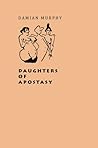
Daughters of Apostasy


Daughters of ApostasyDaughters of Apostasy by Damian Murphy
My rating: 5 of 5 stars

I don't think of myself as a fan of Damian's work, so much as a devotee. There is something of the sublime that frequently speaks to me from the pages penned by him. Reading Damian's work is not so much a "mystical" experience as a "preparatory" experience, a view of an initiation from afar, full of anticipation. I often ask myself when I read his work "when am I going to become a part of the story, or when is the story going to become a part of me".

Revelatory experiences aside, one must (absolutely must) admire the craft of his work. There is an obvious love of the subject matter, setting, characters, and strange circumstances that the characters often find themselves in. One can almost feel the author feeling his own way through the labyrinthine maze hidden carefully away in his citadel of thoughts. But, reader beware, you are walking alongside a trickster and a thief whose sleight of hand can leave you dazzled by illusion or, even worse, your own delusions.

But you need not fear demons (outside of your inner fiends). You are safe, as you read, even as his characters sometimes are not. You have the luxury, particularly in the present volume, of simple elegance to see you through. I'm referring, of course, to the restrained (yet seemingly decadent, especially for such an inexpensive hardcover limited-edition) eloquence of presentation that Snuggly Books seems particularly skilled at. A salmon-colored cover (at least I believe so - I have hue blindness to some extent, so maybe I'm just seeing it as such) with a simple illustration of three women (two nude, one a spectral figure) on the front by none other than Henri de Toulouse-Lautrec seems hauntingly appropriate for the stories in Daughters of Apostasy, whose main protagonists are women. And what a variety of characters!

As usual, Murphy's vision here is a series of inner visions of cosmic consequence. Trespass becomes initiation into an imaginary city hidden in the bones of the physical world in "The Scourge and the Sanctuary". Christopher Wren collides with Huysman's, but Murphy's work is all and none of these. The key is in the story itself:

The fictions we partake of, as with the fictions we create, bear consequences for each of us that lie beyond the understanding and control even of their authors.

An ever-changing labyrinth of a hotel, spurred in its metamorphoses by seekers of gnosis, is both setting and character in "Permutations of the Citadel". It's a lavish tale full of mystery and misdirection, a lair for tricksters, initiates, and those seeking the other side of the mirror. Add a little playful devilishness and you have what Wes Anderson might be if he was to ever take his subject matter seriously.

"The Salamander Angel" is a journey of several pilgrims into and out of regions beyond the veil of this world. There's a kind of Hegelian dialectic of the divine and the blasphemous, a looping together of heaven and hell through the travels, intentional and accidental, of oneironauts, occultists, and tricksters. The (anti?)heroes charge and stumble their way through "above" and "below" in their epic quests. This is an extremely powerful tale. Handle with care.

"The Book of Alabaster" is a somewhat surprisingly-emotive story that starts by pulling the nostalgia strings (at least for this teen of the '80s) before winding its way into an enfolded reality of simulation. What is reality and, as important, when? Most important of all: the mystery of The Programmers remains, or, as one of my favorite obscure songs from the '80s asks "Who are the unwatched men"?

Oftentimes, the "previously unpublished" story in a collection is the weakest. This is clearly not the case here. If you desire to sup at the table of "The Music of Exile," you'll need to pay for entry; make a sacrifice. The price is well worth it, that I can guarantee. But be prepared to discover what is hidden and then to hide what is discovered. This the initiated know.

View all my reviews

____________________

If you like my writing and want to help my creative endeavors, ko-fi me at https://ko-fi.com/forrestaguirre. Every little bit is seen and appreciated! Thank you!

Tuesday, December 23, 2025

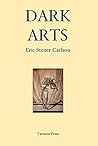
Dark Arts


Dark ArtsDark Arts by Eric Stener Carlson
My rating: 3 of 5 stars

Let me start by saying that I absolutely love Tartarus Press. In fact, I just had Mark Valentine's most recent collection from them show up in my mail this past week. My first Tartarus book was a copy of Meyrink's The Golem, which a good friend of mine gifted me many, many years ago. I think I own about twelve volumes from Tartarus, most of them hardcovers (though I'd have to verify that number). I've never been disappointed by a Tartarus publication. Unfortunately, that streak may have come to an end with the current volume. Carlson's Dark Arts isn't bad, it's just not up to par with the other Tartarus books I've read. I suppose not every volume can be outstanding. I also just encountered what I would consider Wakefield Press's weakest volume that I've read so far. Maybe it's a bad batch. Maybe it's just me, who knows? But I have to call them like I see them. And here is how I see each of the stories in this volume:

Can a story in which not one, but four deaths occur (one being an alleyway murder) be considered . . . comforting? Soft? Even loving? Carlson tells just such a tale in "Golden Book," in which an Ikiryo meets a young girl destined for her first encounter with death. This story is more of a blessing than a curse, as dark as it is.

"Coffee Shop" was ripe with dazzling poetics. Unfortunately, the incredible potential of the plot and language was unrealized. I wanted so much more than what the ending had to offer, but then again, that might have been the point of this story of trapped desperation?

I feel the same way about "Divining Rod" as I did about the last story. So much poetic potential, so little punch. This tale seemed to meander, directionless, like a series of disjunct writing exercises strung together on a frayed, insubstantial plot line. But again, maybe that was the point? I'll never know. Or maybe that is the point and I'm just too shallow of a reader to realize it?

I thought that maybe I would warm up to Carlson with the next tale. "Leopard-Spotted Scarf" is a touching (if tinged by horror) tale of a woman daring to become her childhood self, yet again. It's a bittersweet tale that doesn't telegraph the surprise ending, though one can likely figure out what's happening beforehand from the subtle cues left by the narrator. It's a Twilight-Zone-esque tale, which is one of the highest compliments I can give a story

Alas, the relative highs of "Leopard-Spotted Scarf" weren't reached again over the next few stories. "Corridor" is full of anticipatory horror past and present. Two journalists wait for the terrorists who are about to take them hostage. One has suffered throughout his life from an extreme neurosis about what will happen to him in the future. The other is terrified by the prospect of capture and death. But in this case, one's terrors can atone for the terror of another. A good (not great) tale of strange redemptions.

Somewhere along the way, I lost the thread of "Bradycardia". The heady mixture of dream and waking life, along with what might be psychosis, goaded along by a manipulative lover(?) gets almost too convoluted. There's a fine line between complex and incomprehensible, and I wavered over both sides of that line throughout.

The premise of "Stray," a story told by a dog about his many previous lives, was, to be honest, not to my liking. But Carlson handled that premise with tenderness and an ongoing emotional charge that won me over. I didn't like the idea, but the execution was handled by such a deft hand that I couldn't help but love the story.

Mood and atmosphere dominate "Strasse 60, Berlin". This story has a heightened sense of tension that gives it a higher ceiling of dread and eeriness than other stories thus far in the collection. The press of confusion is palpable. Chronology is shuffled and the narrator is misdirected by the phantoms of his own memories. A disconcerting, very effective story. This was more of what I had hoped for.

"Salt" is an excellent story of gaslighting by an authoritarian regime. It's a twisted narrative of unraveling untruth and an emotional gut punch to a narrator that may or may not be insane, but is absolutely in a lot of trouble.

Despite a baldly-telegraphed "twist" and some pushy histrionics, I rather liked "Monsieur Machine". Delivery aside, this was an excellent tale of love and ambition coming into stark contrast, then resolution of the dialectic. Given its mechanistic themes, there is an evocation of emotion that moves the reader while horrifying at the same time. Here love and loss combine to create awe and the awful.

I liked "I Loved You at Your Darkest," but didn't love it. Pardon the horrid attempt at a pun. Yes, the story twisted in an unexpected way, but resolved too quickly, in my mind, with the narrator able to make logical leaps using clues that shouldn't have evoked his conclusions. Another good, but not great tale, straining my belief a touch too much, which was the kiss of death (another horrible pun, given the plot).

I heard hinted echoes of Dhalgren in "The Atelier," a dystopian post-disaster (and pre-even-bigger-disaster) tale set in a fractured Europe held together by authoritarianism. But Delaney's novel was far superior to this tale, which is only a faint, thin shadow of the former. I found rays of hope in the hopelessness, but, again, this story just wasn't really "for" me.

Again, it's not a bad collection, just not up to my expectations of Tartarus' usual work. Do I regret buying it? No. I don't think I can ever regret buying a Tartarus title - they are, to me, the height of craftsmanship and elegant design. Would I buy it again, knowing what I know now? Also no. Like I said: maybe it's just me. High expectations + more experience over time = jadedness, I suppose. Then again, maybe it's not just me. You'll have to decide for yourself.

View all my reviews

____________________

If you like my writing and want to help my creative endeavors, ko-fi me at https://ko-fi.com/forrestaguirre. Every little bit is seen and appreciated! Thank you!

Sunday, December 21, 2025

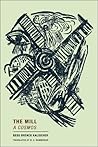
The Mill: A Cosmos


The Mill: A CosmosThe Mill: A Cosmos by Bess Brenck Kalischer
My rating: 3 of 5 stars

I believe this is the lowest rating I've given to a Wakefield Press title yet. It makes me sad, because I love what Wakefield does: bring fantastic obscure works in translation to light in the English-reading world. They've done some fantastic work in the past (including the amazing work of Marcel Schwob, Marcel Bealu, Otto Julius Bierbaum, and, most remarkably, Jean Ray). So, you'll excuse me if my expectations are sky high . . . but they are.

My unrealistic expectations were met with the introduction to this volume. As with every other Wakefield Press book I've read, the translator's introduction, this time by W.C. Bamberg, is worth the ticket price alone. It's an extremely evocative piece about this essentially unknown author: well-researched (with a hint of the historiography involved, even), captivating, sympathetic, and enlightening. This is the fine scholarship I've come to (unfairly?) expect from Wakefield. At times, the writing in the introduction out-paced the writing in the actual story.

It didn't take long after reading the introduction to become somewhat disenchanted. What seemed to start out as a staccato poesis descended into pure Dada. I understand that makes the work "of its time," but that doesn't excuse near-incoherence. Yes, the story is about a woman holed up in a sanitorium, but the experimental form . . . well, the experiment just didn't work for me.

The section "The Island of Destiny, or Encounter with the Caliph" was the first truly coherent narrative of this work. It started on page 25 and sustained through page 32, but I have to admit that making it to this section was a feat in and of itself. I've read plenty of stories with insane (or at least highly neurotic) and unreliable narrators, plowed my way through some notoriously difficult prose (Proust, Joyce, and Beckett, I'm looking at you), and read more than my share of stories about madness. But the first 25 pages of Kalischer's work here had me nearly leming the book, but I decided to press ahead. It is a short work, after all, and I'd bested tougher (though better-written) material.

After that the narrative gets wobbly, teetering on the edge of coherence, threatening to fall into Dada at any moment. It's sometimes difficult to discern between playful intellectual brilliance and an utter collapse of reason. It's almost as if Kalischer weaves in and out of each, with no warning about what direction she is turning; blind curves ahead. Sure, the narrator is struggling with mental illness, but a reader needs some kind of compass, even a weak one. Still, I pressed on.

Lest you think this ship has utterly sunk, that all was lost, that's not true. Later, near the end, I uncovered "On Sirius". It is by far the best section of the book. It's a gentle, smoothly flowing prose poem, not entirely lacking disjuncture, but not as chaotic as some earlier sections of the book. It is a piece that is of a piece, well-put-together, but not stodgy. I can (and have) wrap(ped) myself up in it. It is comfortable, but not so cosy as to be uninteresting. If the entire book was written this way, it would be at least a four-star book for me. Alas, that can't be. The neurotic narrator, like most humans, had a long string of near-coherence which, of course, wouldn't last.

However, I didn't mind the ending being disjointed. In fact, I think it worked quite well, given that we had a comfortable baseline in "On Sirius" from which we could jump off. The tragedy of this last section felt real and poignant. A good ending, given what came immediately before it. But the first part of the story started off in such a stark, jarring manner that I just couldn't make the connection with the narrator until halfway through the book. In fact, I wonder what the book would have read like had it begun with "On Sirius" and the erstwhile early material was tagged on to the back of the story (after the sanitorium episodes)? Possibly a stronger narrative? Unfortunately, Kalischer isn't around to ask for a rewrite.

Still, kudos yet again to Wakefield for presenting a work obscured by history and doing so with all the reverence and academic rigor it deserves. Yes, it fell short for me, but that's not stopping me from continuing to dip in the stream of Wakefield works. In fact, there's another waiting on my shelf right now that I am eager to read. I'm still on the Wakefield train and won't be getting off any time soon!


View all my reviews

____________________

If you like my writing and want to help my creative endeavors, ko-fi me at https://ko-fi.com/forrestaguirre. Every little bit is seen and appreciated! Thank you!

Saturday, September 6, 2025

Urx Quonox


Urx QuonoxUrx Quonox by Adam S. Cantwell
My rating: 5 of 5 stars

I'm reading the Occult Press version, gifted to me and signed by Adam, 37/120 limited edition. Thanks, Adam!

I'm a big sword and sorcery fan, have been since the mid-70s, reading Savage Sword of Conan and the old Howard paperbacks. Here, with Grasm the Barbarian, Cantwell has taken S&S to a higher literary level, the inevitable evolution out of pulp and into thinking-man's writing, and I'm here for it.

If Robert E. Howard had cast aside all prudery and collaborated with William Burroughs, this might start to approximate the style of "The Monarch in Disarray," but this tale is much more transgressive, visceral, and psychedelic than that. It's a decadent sword & sorcery tale, pushed to carnal extremes with an emphasis on the sorcery and its deeper effects on the psyche. Grasm > Conan, maybe. The writing is head and shoulders above Howard's.

Another story of Grasm the Barbarian, "Scream of the Bluejay," is a barnacle-encrusted sea-salt soaked rope of a tale about revenental vengeance. While the center of attention in the story isn't the barbarian, it says much about him and twists in such a way as to wring out more of his past. It's a clever tale of sword and sorcery, of regret, betrayal, and murder; a hideously glorious, horrifically beautiful tale.

The final entry in the Grasm trilogy, "Cities Below the Strand," again puts an emphasis on sorcery over swords. No swords are drawn in this tale, but there is a deep cut of nihilism here, particularly as regards both the past and the future of Grasm himself. This is a small window into what could be a large, inglorious panorama both for the barbarian himself and for his world as a whole. Hearts die, nations collapse, the world keeps spinning.

Three tales about the same person, but exploring different aspects of his past, present, and future. Grasm learns about Grasm even as we do. I want to continue this journey!

View all my reviews

____________________

If you like my writing and want to help my creative endeavors, ko-fi me at https://ko-fi.com/forrestaguirre. Every little bit is seen and appreciated! Thank you!

Monday, September 1, 2025

Now It's Dark


Now It's DarkNow It's Dark by Lynda E. Rucker
My rating: 5 of 5 stars

I first encountered Lynda E. Rucker's work in such magazines (remember those?) as The Third Alternative , Shadows and Tall Trees , and Nightmare Magazine . I've always admired her work, but I've read it intermittently, in sparse doses. The wonder about short story collections is that a reader can encounter stories by the same author, one after another. Sometimes this is disconcerting - quality is varied, voices change so dramatically as to be jarring, the same themes are done to death - but the best collections show just enough of the author's range of voices and themes, all at high quality, to introduce the reader not just to a new world, but to new worlds.

The worlds that Rucker takes us to in Now It's Dark are, well, dark. Not gory, not reliant on jump-scares, but more than just weird. At times, her work is creepy, emotionally gut-wrenching, or shocking, and sometimes (as in the last story of this volume) all three at once. Let's explore each story, in turn.

"The Dying Season" is composed (with a deft authorial hand) of a series of mis-steps by a fragile, emotionally-shaky woman who is on a supposed vacation in an off-season resort. This is not a fairytale but a tale of dark fairy that leaves one befuddled and even less sure of one's place in the world, like a psychogeographic black blot on the map, where being found is being lost. An unsettling tale.

"The Seance" was first published in Uncertainties, volume 1 and I can . . . certainly . . . see why. It's the vagaries peeking around corners, not the jump scare or obvious gore, where the real terror lies. Or does it? Just when you think you know something or, worse yet, someone, another angle reveals a hint of things you really don't want to see clearly. But you're the curious type, aren't you? Careful! You don't want to peek! But Rucker forces the issue and you are helpless and wide-eyed.

Rucker captures liminality in a bottle in "The Other Side". It's not a horrific tale, far from it, though the weird element might be considered horrific by some. Dark? Yes. But this was a somber contemplative piece drenched in sadness. Reflective and vaguely hopeful at the same time. Not only is liminality the subject of the story, but Rucker has captured the feel and mood of the liminal. Outstanding!

Egaeus Press's anthology A Soliloquy for Pan recently went through it's second printing and, once again, I missed my chance to get a copy. If Rucker's "The Secret Woods" is representative of the quality of the other stories in that volume, I have lost out on a treasure. It evoked in me both a deep emotional response and intellectual resonance. It's a gem in Rucker's crown.

I needed to sit with "Knots" for a while. It's a story about control and abuse, but there's a supernatural thread passing throughout that takes it firmly into the territory of the weird. It's heartbreaking, though, to think of those in abusive relationships that can't or won't get out. What are the knots that tie them to the situation? Mental illness? Emotional immaturity? Or something much more sinister than that? If you like to feel helpless, this is the story for you. And therein lies the horror: the horror of co-dependence.

Another story in the register of Aickman, "The Vestige" tracks a hapless traveler who has lost his passport, phone, and money. A traveling worst nightmare scenario. I've been in a similar situation when I last travelled to the UK and, on my way back, was detained in Heathrow Airport and had to give up my passport to authorities for reasons that were not clear to me then, but are now. I'll spare you the details of what is a very long story, but suffice it to say that I (and several others) were on Homeland Security's list for extra vetting and the first thing they did was confiscate our passports. Of course, that is a terrifying thing, but it's not the terror of the loss or fear of being a stranger in a strange land that affect the reader. These are sharp elements in the story, but it's the mystery of a past that might not have been and a present that also might not be that create the most emotional dissonance in this tale.

The next story was written for the anthology Gothic Lovecraft . There's just enough Lovecraft in "The Unknown Chambers" to call the story Lovecraftian. "Deep Ones" are mentioned once, as is Lovecraft himself. If you're familiar with the mythos, you'll figure out what's happening or going to happen early on. If not, then this might be a good introduction to Lovecraftiana not from the man himself. Disconcerting and stultifying, it's a good mythos tale, but not spectacular.

I suspected the final conceit of "So Much Wine" about three-quarters of the way through. The obtuse narrative could only lead to one conclusion, in the end. I was right. But I still love this story, not because of the way it concludes, but because the writing throughout devoured my attention, pulling it away from the fact that I already knew what was coming. The journey is more important than the destination.

"An Element of Blank" presents a coming-of-age story of three girls, now women, who experienced something - though it's never quite clear how fully - which may have been a demonic possession, those many years ago. Now, the possessor is back and the girls are wiser and braver than . . . what, exactly? Memory is a fickle mistress and cannot be trusted. And, yet, it must. But trauma, while it cannot erase the past, can redact it.

"The Seventh Wave" finishes this volume with, dare I say it? A splash. At turns, deeply sad, empathetic, and desperate, this story ends on a high note of pure terror. Possibly the most effective story in the volume, the voice of the narrator is strong, not in intensity, but in its depth. And the story will push and pull at your heartstrings until they're about to break until the inevitable, yet shocking end. I cannot recommend this story strongly enough.

And I cannot recommend this collection strongly enough. The physical object, as with all Swan River titles, is crisp and engaging. It might sound silly, but I love their size, the way they feel in the hand. The cover art for this volume is a painting by the amazing

View all my reviews

____________________

If you like my writing and want to help my creative endeavors, ko-fi me at https://ko-fi.com/forrestaguirre. Every little bit is seen and appreciated! Thank you!

Friday, April 18, 2025

Ossuary of Dreams: Twenty-Five Tales of German Horror and Weird Fiction


Ossuary of Dreams: Twenty-Five Tales of German Horror and Weird FictionOssuary of Dreams: Twenty-Five Tales of German Horror and Weird Fiction by Robert Grains
My rating: 2 of 5 stars

My kids are great. They're all adults now, so to call them "kids" feels a little disingenuous. But my kids are great (and my wife and grandkids, too, I must add).

"So why," you are likely asking yourself "are you leading off a review of a collection of weird horror fiction with 'My kids are great'."? Well, here's the deal. At around Christmas time, I do a bunch of massaging to my Amazon wishlist. Before you go ballistic, I try to order my books direct from publishers or, even better, directly from authors, so get off your high-horse for a second. I keep that Amazon wishlist to help my kids with Christmas shopping for dear old dad. One of the biggest issues with this is a recency-bias. If I see something new and shiny and it's getting near Christmas, I add it to my wishlist.

Such was the case with Ossuary of Dreams. I don't remember why I added it to my list last minute, but I did. Maybe it was the cool title or the even cooler font on the cover (no seriously, I live that font), or maybe I read a review about it that impressed me . . . I don't know. But, added it, I did.

So, this might be a sort of apologia to my daughter, who bought me the book. Kiddo, I really do appreciate the gift. It means a lot to me . . .

But I gotta give this one two stars.

The collection had its high points.

I found "A Walk in the Morning" to be a highly effective story.

There are echoes of Dhalgren in Grains hurtling-toward-the-collapse story "Our City at Night," but with a strong injection of occult forces. Here, I found that I prefer Grains at longer word counts. It gives his voice needed breathing space and makes the flourishes more emphatic and impactful.

I rather liked the unfolding-apocalypse (with a dream-time glimpse into the pyrrhic acknowledgment of respect to the lone survivor, imparted by the new God of this world) portrayed in "The Golden Age". I, for one, embrace the arrival of our robot overlords. This was an effective story, paced perfectly, with an air of reverent restraint that fit the tale to a tee. Well-played, not-quite-terminator.

"The Portraits of the Baron," the second-longest work in this collection, was, admittedly, very enjoyable. I loved the deep dives of esotericism here and the ending, while predictable, was satisfactory and held an ironic twist. This is the strongest work in the book.

"Metamorphosis" is an apocalyptic horror story somewhere between Clark Ashton Smith and China Mieville, wherein the narrator embraces the inevitability of change on the cosmic level, accepting fate with a philosophically stoic attitude that masks the shock of an undeserved fate of extreme horror.

So, there was something to like the collection. But, as Stepan Chapman used to say, there's also "something for everyone to hate".

I didn't hate most of the other stories. They ranged from "meh" to "I want to lem this book," but few of them went to the extreme of me wanting to do physical harm to the actual object. I reserve most of that hatred for one book in particular, which I'd like to see burned off the face of literary history. So, I didn't hate any of them that much. But there were some in there that I just kind of wanted to punch in the mouth.

I think that there are two fundamental problems, for me, with the work. First, the absolute fascination, nay, worship of overwrought and just plain faulty description drove me batty.

For example:

. . . a rumbling like from a squadron of unleashed poltergeists in the entablature.

This phrase has so many problems, I can't even begin to enumerate them. Well, maybe I can, but I really don't want to. Suffice it to say that I have more questions than answers about what is happening here.

Unfortunately, this was not an isolated incident.

Secondly, the overuse and downright abuse of adverbs had my inner editor clawing at my innards the whole way through. I honestly wanted to scream at times. Instead, I sighed heavily (I wince at having used an adverb here - is there no escape?!?) so I wouldn't wake up my wife. the "ly" ending now makes me twitch whenever I see it, like an abused puppy. It's going to take a while before I can see it without twitching.

Finally, I think that while the translation is mostly very good, you can also tell, in places, that it is a translation. I speak conversational German, and I know how convoluted German sentences can get. I don't envy anyone translating such a work of purple prose from German to English. The effort was good, but it is inevitable that there are some hiccups, and given the often awkward phraseology, they really show.

Had this been my first weird fiction rodeo, and had I read this, say, thirty years ago, I might have felt differently. But I can't, in good conscience, say anything beyond "it was ok," hence the two stars.

As always, your mileage may vary.

View all my reviews

____________________

If you like my writing and want to help my creative endeavors, ko-fi me at https://ko-fi.com/forrestaguirre. Every little bit is seen and appreciated! Thank you!

Monday, January 6, 2025

Prisms of the Oneiroi


Prisms of the OneiroiPrisms of the Oneiroi by Martin Locker
My rating: 5 of 5 stars

While I've read bits and bobs of Martin Locker's work before, this is my first full-length foray into his work and I feel like I've struck gold in the Pyrenees. I paid for it (including shipping from Andorra), but this is worth ten times what I spent! There's a wonderful variety to the stories in this collection, all girded by Locker's own voice, or, more properly, voices, as his characters are distinctly-identifiable from one another. Each tale is a different facet of the same gem.

Ligotti has nothing on Locker when it comes to existential dread on a cosmic scale. This was the sort of suffocating fear of the universe that Lovecraft strove for, but Locker has found. "The Dreaming Plateau" is horror of a different order of magnitude, made all the more impactful by the elision of the most purple prose. The poetic heart is intact, but without un-necessary frills, with terrifying clarity. And for some reason, my mind kept flashing images from the Tibetan scenes in The Imaginarium of Doctor Parnassus throughout, which is not a bad thing. I was waiting for Tom Waits to burst through a door at any moment.

"Corfdrager" examines one of my favorite enigmatic pieces of art, Bruegel's "The Beekeepers and the Birdnester" (and the art used on one of my favorite albums from one of my favorite bands, Sunn's White 2) as a catalyst for the narrator's encounter with his family's past and his own inheritance via a seemingly academic investigation. One wonders, by the end, if the academics aren't the most horrific aspect of the story. If you went to graduate school, you know what I'm talking about here. The dive into apiary lore is more sinister and more irresistible than one might imagine.

While reading Prisms of the Oneiroi, I am using a Winterthur Poison Book Project bookmark (you can get one, like I did, for free here). The irony of reading "The Temple Consumes the Rose," which features a green book by Sar Peladan, is not lost on me. I might also be tempted to consume such a book, if I was to be rewarded the visions of Latoure, even if it cost me my life. Such is the price of true art. A moving occult tale.

"The Secrets of Saxon Stone" was a delight to read, and I am not being facetious. Daimons abound, the psychogeography of the region portrayed is reflective of the spirits that not only dwell there, but are interwoven into its very fabric. This is like Dunsany, but without the pedantics that sometimes overween his work. This is mythical and approachable, lending familiarity to the representation of the divine.

Locker displays his acumen for ethnography and mythic studies in "Sea Salt and Asphodel," a story of dreams, prophecy, and the cycle of life and death. The depth of immersion here just has to be experienced - I can't describe it. Suffice it to say that this tale is told in such a way that one feels at one with the others presented in the story. You don't read this story, you live in it. The reader feels a part of the tale, such is the attention to detail.

"In Search of the Wild Staircase" is an epistolary story in the vein of Harper's magazine travelogues from the late-19th- and early-20th-centuries, albeit with a folk horror twist. That twist is set on its head, though, as it is implied, at least, that The Church itself is the source of the frisson. The story ended a bit too hurried for me, but it's still a very solid work. I'll never look at the little country of Liechtenstein the same again.

Locker, you clever, clever man. "The Jasmine Tear" is a story worthy of a Twilight Zone episode, which is one of the highest compliments I can give to a short story. The koummya, the djinn, the deal with a demon, and the treasures of the Maghreb - this is worthy of Musiqa al-Ala; a masterstroke of storytelling that will stick in my mind until the Last Day (or fifty years, whichever comes first)!

I found "A Dialogue of Innocence with the Hidden Parish" deeply moving. First, it created a deep psychogeography of a particular house seeping with sadness, longing for company. I thought of my parent's home and the sorrow I associate with it, but more of that at a later time. I also thought of my own childhood and the deep impressions of place I felt as a young world traveller. Moving every two or three years (Dad was in the military) forces one to latch on to the feeling of a place rather quickly, so I might be a little hypersensitive that way. Combine that with the death of my parents a few years back, and maybe I was destined to fall in love with this story.

Ever contemplated choosing homelessness? I have (when it's warm out). In fact, I was very strongly tempted at my last job to just give a try at homelessness, but fate, thankfully, intervened. In "What the Vagabond Sees or The Parish Coda," an entire society and cosmology is outlined for English Vagabonds, whose motto is "No Parish But Albion". If you know, you know. I immediately connected with this tale, due in part to a trip I took in 2019 that allowed a fair bit of rambling around the Cotswolds. I recalled the many carefree hikes that friends and I took in the English countryside, from Brighton and Eastbourne to the Midlands to the Cotswolds, when I lived in the UK as a teenager. As I understand it, after The Great War, many veterans, disillusioned from the horrors they saw during the war, became homeless wanderers in the 1920s. I think that the song "The Tin Man" by Grasscut is inspired by that phenomenon or, if it's not, I'm going to interpret it that way anyway. I've often dreamt of what it would be, in my dotage, to hike around England until I just drop dead. I know I'm going to sound borderline insane, but it's a very tempting prospect, in all seriousness. This story just unlocks that morbid longing in my heart all over again. Maybe. Someday. Maybe. But only if I'm alone. And it's warm. But I can't imagine a better way to go.


View all my reviews

________________________

If you like my writing and want to help my creative endeavors, ko-fi me at https://ko-fi.com/forrestaguirre. Every little bit is seen and appreciated! Thank you!

Sunday, December 29, 2024

To Those Gods Beyond


To Those Gods BeyondTo Those Gods Beyond by Giorgio Manganelli
My rating: 5 of 5 stars

I have yet to read an Atlas Press title that hasn't surprised me and delighted me. Giorgio Manganelli's To Those Gods Beyond is no exception. Again, Atlas captures and presents the work of a heretofore-unknown-to-me master of literary expression with near perfection. I'll explain the "near" at the end. Even with that forthcoming caveat, this is an outstanding work that should be read more widely. I absolutely see why Italo Calvino praised Manganelli's work and why Atlas published this book. The first 50-ish pages alone are worth the price of entry. Far more, if you ask me. The book is divided into seven sections, which I've outlined below. Calvino remarked on the coherence of the work, which is seemingly all over the place. I agree, but I can't quite put my finger on exactly how it coheres. This bears more examination and thought.

Manganelli's essay "Literature as Deception" flatters the writer's vanity, crowning him buffoon, but in the sense of The Fool in the tarot. The foolishness is freedom and the buffoonery wisdom. The writer is, in essence, the trickster god of words and semantics. I wholeheartedly agree with his assessment. At least I flatter myself thusly. Call me a vain fool.

"A King" may be an existentialist shudder from the whispering of death or it may be a eulogy to solipsism itself. But why not both? In any case it is as bold and majestic as the title.

"Simulations" takes the narrator from kingship to poverty to being a renegade and, finally, to nothing but a "child's hallucination". Manganelli, like Beckett in his famous trilogy, breaks down the character to the point of less than nothing, a mere figment of imagination. The last paragraph is a masterful paradigm shift from the observer to the observed; an existentialist epiphany.

"A Few Hypotheses Concerning My Previous Reincarnations" is exactly what it purports to be, which is a baffling thing for any reader. Suffice it to say that the "S" word (-uicide) figures prominently in the narrative as the author tries to piece together his past life. It's a whimsical and tragic examination of identity and the twisted roads one can go down when reflecting on the self.

"Ignominy" sees the (yet another) dead protagonist slowly reason themself into the state defined by the title. The self-awareness of The Dead leads them to disappear in the ever-diminishing (or, rather, spreading thin to near-infinity) of the self. Ignoring, it seems, is both ubiquitous and inevitable for those without a body and, hence without a firm place in space and time. All dissolves into near-nothing.

In hindsight, it's plain to see that the title of the book: To Those Gods Beyond derives, in tone and principal, at least, from the story "An Impossible Love". Here, Hamlet (deceased) finds means to communicate with the Princess of The Princess of Cleve (also deceased) by means of a verbal catapult that launches missives across realities. But what is between and behind those realities? The answer is rather distressing.

The lengthy and exhaustive essay "Disquisition on the Difficulty of Communicating With the Dead" is precisely what the title promises. Where does one begin searching to find the dead, seeing that we have no way to measure those who have no body? Where are they hiding? And what language would we or should we use when communicating with them, once found? More importantly, do they even care? Or are they just stupid?

Now, on to my only complaint. I understand why Alastair Brotchie's afterword was, well, after the rest of the book. Here Brotchie tries to provide a framework for the volume as a whole, attributing all the references to death to an ongoing metaphor about writers and literary work. The evidence feels very thin, with Brotchie admitting as much, and I was absolutely unconvinced. Besides, the afterword saps the work of its mystery - the speculation, often with a darkly humorous twist, about what the state of the dead actually is. All I can say is that I'm glad it wasn't at the beginning, as the tenuous, yet overwrought analysis of Manganelli's work wouldn't have spoiled the joy of To Those Gods Beyond so much as polluted it utterly. I'd rather it just not have been a part of this volume.

So, excising the weak afterword, this is a strong collection of . . . well, it's not exactly easy to find an appropriate genre category for this work. It's its own thing. Unique. A bit of an enigma. And I love it for that.

View all my reviews

________________________

If you like my writing and want to help my creative endeavors, ko-fi me at https://ko-fi.com/forrestaguirre. Every little bit is seen and appreciated! Thank you!

2024 on Goodreads


2024 on Goodreads2024 on Goodreads by Various
My rating: 4 of 5 stars

I kept my reading goal to 11 books this year because I had plans to read some BIG ones. Fact is, I got in a couple of BIG ones, but not nearly the amount I had anticipated. As always, some books came fluttering along out of thin air and grabbed me by the shirt collar (at least the idea of reading them did). Yes, Finnegans Wake is still sitting on my shelf, squatting and staring at me. And there are others I had intentions on that will have to wait for 2025. Sorry, not sorry. I read what the voices in my head tell me to read.

As far as superlatives go this far, here you go:

Book that will stick in my brain and never depart, living rent-free in my head till I die (I might call this "a classic"): Dhalgren

Book with the most surprises in the form of authors whom I've never read, but will read more of: Appendix N: The Eldritch Roots of Dungeons and Dragons

Book that will actually affect my day-to-day life in a most useful way: The Bullet Journal Method

Most stunning presentation, and the contents matched the beauty of the artifact: Cathode Love

Most elegant and profound (also living rent-free in my head): The Explosion of a Chandelier

Most intellectually challenging (and rewarding): On Poetic Imagination and Reverie

And if I took the time, I'm sure I could find or invent categories of all the other books I read this year. It was a good year of reading.

Next year, I am keeping my challenge low. I haven't decided on a number of books I plan on reading yet. I'd like to think I could read through all 22 on my TBR shelf (I have physical copies of all of them) plus the three I'm currently reading, but I am planning on doing a few re-reads this year, which will slow my consumption of new books. This is by design, as I have dubbed 2025 The Year of Simplification, and I plan on sticking with that. If you must know, some of the books I will be re-reading are: Malpertuis, The Jade Cabinet (I recently got back in contact with Rikki and am writing a handwritten letter to her now), and I will be actually doing Thousand Year Old Vampire (take that as you will, Lestat). So, I have a busy reading year ahead of me.

As for writing, look for a short story collection to come out from Underland Press this year, sooner rather than later. I'm pretty excited about this. This will collect many of the short stories that have been published by boutique publishers in South America and Eastern Europe, which are very difficult to find and incredibly expensive, once found. I am currently working on two short stories, one just about to be finished up, and another in the early stages. We shall see what else I can write this year, but I'm planning on a year of good output.

Part of the reason for my optimism on writing output is that after grousing a lot about social media and all of its issues, I am essentially withdrawing from Twitter (this actually happened years ago, though I still have an account open), Bluesky, Facebook, and Instagram. My social media of choice will be Goodreads, my blog, and handwritten letters to a select few individuals - the original social media. If you'd like to be one of the select few, message me here and get me your address. No promises, as I have a handful of "must write to" people, but I will do what I can. Since I won't be polluting my life with social media of the most banal kind (see above), I will have a bit more time to write to friends, and some of you here I do consider friends, so don't be shy, message me. And I don't expect a handwritten reply in return. I'll do me, you do you.

On to 2025!

View all my reviews

________________________

If you like my writing and want to help my creative endeavors, ko-fi me at https://ko-fi.com/forrestaguirre. Every little bit is seen and appreciated! Thank you!

Saturday, December 28, 2024

2025: The Year of Simplification

 2024 was, for me, a year of change and renewal. The previous year, 2023, was one of ever-escalating stress at the workplace. In January of 2024, driving home from another long, depressing day of work, I hit a deer, which was the impetus for a major life change, namely: changing my place of employment. Another change was that, after having the car totaled, we decided to try and make it as a one-car family. My wife works from home and my new job is an 8 minute drive away, so we've made it work. She has three days off, so on her off day, when I have to work, she drops me off and picks me up. 

All that said, I've been taking time to assess 2024 using YearCompass. It's been a very valuable exercise to examine the previous year, acknowledge the successes and challenges and failures, and move on to the next year. If you're one who likes to do New Years resolutions, or if, instead, like me, you just want to process the previous year and prepare for the next, I strongly recommend it. 

Over the last couple of months, I've taken a significant amount of time to study Minimalism and Slow Living. I've found several Youtube channels to be of great help. The three most helpful and practical ones I've watched (and subscribed to) are Seve - Sunny Kind of JourneyGabe Bult, and The Swiss Simpleton. Honorable mentions go out to Olly Staniland, Poetry of Slow Life, and Helena Woods. There are others that have proven helpful, but they might only peripherally touch on these lifestyles, or some (and I find these the most insidious, if I'm being honest) use Minimalism as a leverage to productivity/Hustle. And I am not about the hustle life. I'm about simplicity.

This hasn't always been the case. My dad was in the military, an NCO for as long as I was being raised, so we led a fairly middle middle-class life. I was a child in the 70s, a teen in the 80s (yes, you did miss out, if you must know, they really were that great), the perfect receptacle for the decidedly American (at the time, though this has spread elsewhere like a disease) culture of buying and holding on to whatever you possible could. I've heard that the poorest people value, above all, relationships, the richest value connections, and the middle-class values . . . stuff. As I examine myself and those I come in contact with, I've found that to be a good thumbnail assessment, with many exceptions, of course, but generally speaking, I've found it accurate. So, I was firmly planted in the camp that values stuff. My parents did nothing to discourage that. In fact, my Mom was a bit of a hoarder, when it came to physical possessions and both of my parents ended up in financial counseling because of their indebtedness and addiction to gambling (which, thankfully, didn't really manifest until I was out of the house). My parents taught me many great life lessons, but how to manage one's wants was not one of them. 

Fast forward through life to today, with me firmly planted in middle age. My parents are gone, and I have unlearned many of the things I learned that I wish I had not and have benefitted from many of the things I learned for which I am eternally grateful. Mom and Dad did the best they knew how, and I am the beneficiary of the things they taught me, whether intentionally or not. Now, it's my opportunity to leverage the past and look to the future.

In the manner of Seve, I have dubbed 2025 The Year of Simplification. The changes of 2024 have set the stage for this year of simplification, wherein I am striving to take the best lessons I've learned over the course of life and stripping out the un-essential. I could not have done so back in 2023, simply because of the emotional duress and mental health challenges I was undergoing. I was not in a good place. Now, I am on a stable footing and ready to move on, to calve off the things that I have been burdened with and with which I have burdened myself. Here is the simple plan.

  1. I will simplify Technologically. I recently committed some money to buying a "dumb" phone, which I am planning on supplanting my "smart" phone when the Mudita Kompakt arrives sometime late next spring. I am also saving to buy the Boox Go 10.3, an E-ink reader with android capabilities. I won't be abandoning technology, but by adding some friction to the interchange, I am hoping to stall myself in order to divert to more analog activities (something I've been working on for some time now) when I am tempted to dwell too long in the digital sphere.
  2. I will simplify Digitally. Yes, I will still keep my Instagram, Blusky, and Facebook accounts open, but they shall join the eerie ether-zone that my Twitter account is in, namely, full dormancy. Will I occasionally check these accounts? Probably. But by not having any of the apps on my phone or my tablet, I will have to make an intentional choice to go to my PC to engage in any of them, again, adding friction to the interchange, a moment to stop and think "is this really what I want to do with my time right now?" I will still be on Goodreads and, of course, here at the blog, but I am otherwise severely limiting my social media interactions. Part of this will involve writing more physical letters (something I actually love to do) to a limited number of friends. 
  3. I will calm my mind. I'm not talking about a full-on meditative practice here, though that might come into play down the road. Here I will strive to further leverage my existing Bullet Journal practice I've read and re-read the Bullet Journal Method and have taken time on Youtube to see what others have done with their own bullet journals. Here, I must point out Jashii Corrin and Elsa Rhae and Barron for their wonderful guides to bullet journaling. Because of what I've learned, I will be making more time to be introspective and have an appropriate "space" (physically and mentally) as a receptacle for this introspection. Part of this will be a gratitude journal to help me to see the good in my days, in my circumstances, and in other people.
  4. I will simplify Physically. I've already pointed out, above, some of the many Minimalism practitioners. Part of Minimalism is loving what you have, minimizing physical clutter, and putting the reins on consumerism. Yes, I have already outlined two pieces of technology that I'll be buying, but I am buying them intentionally and foregoing a lot of other things (meaning physical stuff) in order to purchase these tools. I have other "big ticket" items on my list: expensive, high quality tools for living, for example, or experiences that I hope to have that require more than just a bit of change. Of course, I won't stop buying books, but I am going to be very picky about getting new ones. In fact, a couple of weeks ago, I went through my books, tabletop games and supplements, clothes, and knick-knacks (I have a lot of these in my writing area) and ended up donating two huge bags of books and a garbage bag full of clothes and knick-knacks to a local charity shop, and selling some of my higher-end books and tabletop games and supplements for credit at the stores at which I sold them. Granted, the book money immediately went to a book I've been eyeing for some time now, but I shrank my book collection by about thirty books in exchange for one very nice signed edition of Centipede Press's edition of Quentin Crisp's I Reign in Hell. From what I understand, this may be one of the last signed copies "out there" available now. Crisp is a writer I love, and now I have what is sure to become an heirloom for my kids and grandkids, as well as providing me with hours of enjoyment. Win-win! And I have a large amount of credit waiting at one of my favorite places to buy RPG games and supplements online, just waiting for that perfect treasure to come through. 
  5. I will prioritize Experience. Here, I mean a couple of things. First, I want to savor the moments. I'm only getting older, and when I think of the frantic pace that my life has been at times, I see a black hole of missed opportunities to enjoy the people and places that surround me. Did I say "screw Hustle culture" yet? I'm saying so now. I'm ready to live more slowly, whenever it is in my control, and take my time. I was thinking a lot lately about what I missed the most about my childhood, and it's the sense of time. Time seemed almost endless then. And while I'm glad to have learned the many lessons I've learned through the loss of innocence, I want to regain that sense of time as a friend to embrace, rather than an enemy to be run away from. With my new employment, I get an hour lunch break, and more often than not, I take the majority of that time to walk down the Ice Age Trail (which is conveniently less than a quarter mile from my work) and go for a languid walk, sometimes reading a book (a print book, not digital), sometimes not. This has helped me a great deal to decompress in what can sometimes be a very stressful job (though way less stressful than the place I fled). I've learned, during those walks, to pay attention to my surroundings and really absorb the experience. I've gained perspective on the shortness and fragility of life which has given me resolve to practice all the things I'm outlining here. One thing I noticed in my examination of the past year is that I only went to one live concert (outside of high school concerts we might have attended to see friends' kids perform). Usually, I try to hit a few shows. Now, I am picky about the shows I see, but I might have missed a couple of opportunities along the way. I'm going to keep my eyes open for more shows this year. Also in the realm of experience: we are going on a cruise to Alaska this summer. I'm guessing there are going to be some memorable experiences there! And, of course, I'll be going to Schimpkon, Garycon, and Gameholecon, as far as it is in my power. I can't live without gathering with my tribe frequently!
This is my blueprint. Are things going to go wrong? Absolutely. Will I hit all of my goals perfectly? I hope not, otherwise I'm not truly experiencing life. In any case, this is how I will strive to live my life this year: more simply, more intentionally, more meaningfully. A special thanks to all those who make this possible. 

I'll end with a poem which I first heard on one of the aforementioned Slow Living/Minimalism Youtube channels. It sums things up rather nicely:

My Symphony

To live content with small means.
To seek elegance rather than luxury,
    and refinement rather than fashion.
To be worthy, not respectable,
    and wealthy, not rich.
To study hard, think quietly, talk gently, 
    act frankly, to listen to stars, birds, babes, 
    and sages with open heart, to bear all cheerfully, 
    do all bravely, await occasions, hurry never.
In a word, to let the spiritual, 
    unbidden and unconscious, 
    grow up through the common
This is to be my symphony

William Henry Channing

 ________________________

If you like my writing and want to help my creative endeavors, ko-fi me at https://ko-fi.com/forrestaguirre. Every little bit is seen and appreciated! Thank you!

Sunday, November 24, 2024

Appendix N: The Eldritch Roots of Dungeons and Dragons


Appendix N: The Eldritch Roots of Dungeons and DragonsAppendix N: The Eldritch Roots of Dungeons and Dragons by Peter Bebergal
My rating: 5 of 5 stars

First off, thanks to Peter Bebergal, editor, who graciously sent me a review copy of this book. I've long admired Peter's work and he is definitely one of the better human beings on the planet. That said, I've been careful to keep a critical eye on the ball here.

The question to be answered is: Did the book hit its mark? Of course, the answer depends, in part, on the audience. For me, a reader, a writer, an editor, and a long-time gamer, the answer is yes, with some slight caveats. They will be registered in the reviews of the stories themselves, below.

Those who have been playing D&D for some time (I've been playing since 1979) and those who have read extensively in the fantasy genre will, likely, approach with caution. All of us old-skool gamers have read Gary Gygax's "Appendix N" from the first edition of the Dungeon Master's Guide (still, as far as I am concerned, one of the best helter-skelter amalgamations of gaming tools and even some gaming wisdom - though the absolute best guide on how to run a game is found in the Call of Cthulhu 7th edition Keeper Rulebook: Chapter 10). We all know about it, but how many of us have read those works in their entirety? Not me! That might have something to do with a lazy streak, because digging up all those titles is a lot like real work, especially with some of the older, more obscure works.

So, here, Bebergal has done the work for you, and then some. Okay, not every work is collected here (that would take entire volumes), but he has picked out some of the best short work mentioned in Appendix N, and mingled in some pieces not specifically mentioned, but that may have influenced the game, and definitely have influenced players and dungeon masters for decades. But you won't find many direct corollaries with D&D spells, monsters, classes, magic items, or dungeons. No, outside of a few notable exceptions (all noted in the Introduction or Afterword), you'll have to extrapolate from the material provided - you'll have to use your imagination! After all, TSR, the founding company for D&D and many other tabletop roleplaying gems, told you right up front that these are "Products of your Imagination" all the way back in 1983. So, get with it! Get reading and get imagining!

Here's what you have to look forward to:

Right as I started reading this book, my next turn on the Play By Mail game Hyborian War arrived. I read the report on how my Darfarian armies and heroes were doing (not well, honestly - and since then, things have gotten worse). Then I read Lin Carter's "How Sargoth Lay Siege to Zaremm" and I couldn't differentiate between the two. I count that as a very good thing. I can use a lot more epic sword and sorcery on that scale (and yet, in such a short story) in my life.

"The Tale of Hauk," by Poul Anderson: Viking undead undead undead undead. Three stars. The epic "poetic" language came across stilted to me. Even ten-year-old-OMG-I'm-new-to-D&D-and-everything-is-so-awesome Forrest would have balked at the choppy only halfway-historically-accurate prose. What can I say? I was a jaded snob at a very young age. I blame Lewis Carroll. So, not bad, not great. But do not let this stop you from reading more of Anderson's work. He really is an excellent writer!

I've read my share of Leiber's Fafhrd and Gray Mouser tales, but not "The Jewels in the Forest," until now. These are not mere Murder Hobos, but people with real emotion. I could have used these role models in my early TTRPG days (I started when I was 9): Adventurers, but not sociopaths. It's the humanity of the two that I love. There is some genuine pathos here, and Bebergal has slipped other stories into this volume with more emotional impact than you might expect ("Tower of Darkness" and "Black Gods Kiss" most especially). But the pulp-action adventure and mystery here is also up front and real.

Clark Ashton Smith's "Empire of the Necromancers" may be the absolute highpoint of grimdark sword and sorcery (with an emphasis on the sorcery, though swords are utilized). It's difficult to find a darker story, where the level of vengeance would make Poe pale and Evenson blush. The voice is Dunsanian, but a Dunsany gone horribly wrong, which makes this tale horribly right. Machen might have loved this.

I've read "Turjin of Miir" before, but this reread did not tarnish the experience at all. On the contrary, now, more than ever, I can see the subtle genius of Jack Vance's work. There's a cleverness that never becomes self-seeing, a burbling sense of unaware-of-itself humor and a phantasmagoric atmosphere that's weird enough, but not crazy

I have to admit that I haven't read much Tanith Lee. But after the outstanding "A Hero at the Gates," I want more. Cyrion, the protagonist, uses his keen power of observation and quick decision making with even more skill than he shows as a swordsman. Steel may finish the deal, but the critical analysis is made in the hero's head long before a blade is unsheathed. A fantastic character study. In my mind, I couldn't help but picture Erol Otus' D&D character Valerius as I read.

I've read and enjoyed Howard's "Tower of the Elephant" thrice before, and I know why it was contained in the current volume. Still, it's not without it's faults, and I would like to have seen some other Conan story, maybe "Rogues in the House," which, to me, is more of a D&D adventurer's tale. Still, the volume would be incomplete without "Tower," I think, at least for someone new to Sword and Sorcery. So, it's really a must-have. Shame that another Conan piece couldn't have been squeezed in.

Poetry? In Sword & Sorcery? Well, of course. What do you think the old epics were? Here, in Saberhagen's "The Song of Swords," poesis and evocative epic storytelling meld perfectly. This would make any bard proud.

I've had the chance to talk with Michael Moorcock a few times on the phone, while co-editing the Leviathan 3 anthology with Jeff Vandermeer. Mike is a scholar and a gentleman, and I enjoyed some long conversations with him about the writer's craft and his time working with Blue Oyster Cult and Hawkwind. One wonders how he could create such an anti-hero as Elric, but when you read carefully, you realize that Elric might have been a "good man" once. But his world, as shown in "The Dreaming City" is broken. The dream has shattered, and so, the man, who is a shell of his former self, driven by his evil sword.

"The Doom That Came to Sarnath" is one of those tales in which a deep lore is established. Here Lovecraft paints the picture of a lost city saturated by a long-duree history of corruption and fear. Just the sort of place adventurers might go to seek treasure, and just the sort of place where they might meet their own doom!

David Madison's "Tower of Darkness" is amazing. The protagonists, Diana and Marcus, are thoroughly-realized characters that might have been every bit as well-written as Fafhrd and Gray Mouser, had Madison not died an untimely death at age 27. I want to read more of his work. Much more. Absolutely fantastic fantastical work, and such a loss to the world of Sword and Sorcery.

I've often mused on where Gygax found his monsters. I think that Manly Wade Wellman's "Straggler from Atlantis" might be a source for what later became the gelatinous cube (I'm certain his ochre jelly came from Hiero's Journey). Regardless, Wellman crafts a good tale of sword sorcery, and even a crashed flying saucer here. Expedition to the Barrier Peaks , anyone?

Margaret St. Clair's "The Man Who Sold Rope to the Gnoles" holds no surprises, nor does it need to. This is one of those rare stories where you can sense what's coming, what is almost inevitable, but it is so cleverly written that you gladly come along for the ride. This was a joy to read, alas for Mortensen, and the ending was a delightful (for us, not for the salespoerson) cherry on top. I loved this little story.

I've ,read my fair share of Ramsey Campbell's work, especially his Cthulhu mythos fiction. I didn't quite know what to think when I saw that his story "The Pit of Wings" appeared in this collection. Now I see that it's a brilliant mix of Sword & Sorcery and outright horror; exactly the type of game I like to run! If you've ever worried about stirges, don't read this story. Oh, and stirges are one of my favorite things to throw at a party of adventurers!

I will run out of words before I can explain how absolutely marvelous C.L. Moore's "Black God's Kiss" is. Jirel of Joiry is so well-realized in this one story that I immediately ran off to find more of Moore's work. She is a complex character who encounters turns of emotion and morality that reflect an inner reality absent in most Sword and Sorcery. And Moore's Hell is truly a Hell; terrible, yet beautiful. The image of a herd of fleet-footed blind white horses stampeding through hell will probably never leave me:

As the last one of all swept by her, sweat-crusted and staggering, she saw him toss his head high, spattering foam, and whinny shrilly to the stars. And it seemed to her that the sound was strangely articulate. Almost she heard the echoes of a name - "Julienne! Julienne!" - in that high, despairing sound. And the incongruity of it, the bitter despair, clutched at her heart so sharply that for the third time that night she knew the sting of tears.

"The Fortress Unconquerable, Save for Sacnoth" is everything you'd expect from Lord Dunsany. I have to admit that his penchant for hyperbole in all of his stories is simultaneously endearing and annoying. But he wrote in a epic mythological register, so it's to be expected. Still a great story, especially if you haven't read Dunsany before. Plenty of inspiration here for dungeoneers old and young, though! Note that Stormbringer isn't the only great sword of fantasy fiction. I'm going to venture a guess that Gygax took his idea (or was it Arneson's?) for intelligent swords both from Moorcock and from Dunsany.

I have heard A. Merritt's "The People of the Pit" as a great exemplar of pulp weird fiction. That may be true, but the telling of the tale felt off to me. The mimicry of Lovecraft's prose wore thin, and the high vocabulary of a character that clearly wouldn't use it was also a hindrance, throwing me out of my willing suspension of disbelief. So, it might be iconic, but it isn't particularly good. Didn't hate it, didn't love it.

As much a morality tale as an adventure tale, "Legacy from Sorn Fen," by Andre Norton is told in a register one step down from Dunsany's high flights. This suits the story more, with a grit that will appeal to most gaming tables. The biggest takeaway is to be careful what you wish for. Anyone who has been playing D&D long enough realizes the potential pitfalls of fulfilled desires. "Is that what you really want?"

Following these prose pieces are two comics. The first one is "Crom the Barbarian," a comic from 1950 that reads and looks like, well, a comic from 1950, with all that implies. The plotline definitely informed that of a certain '80s movie staring Arnold Schwarzenegger.

The final piece is "Sword of Dragonus," from 1971, three years before the appearance of the epic black-and-white adult comic series The Savage Sword of Conan. I have a special place in my own Appendix N for Savage Sword. This is where I cut my teeth on sword and sorcery fantasy. While living at San Vito AFB, Italy, my parents dropped me off one night at the base day care so they could go watch Superman. I was 7 or 8 years old. Someone, probably some half-drunk airman, had left a copy of Savage Sword in among the kids books and comics that people had donated to the child care. It was there I read my first Savage Sword story, The Slithering Shadow. I had no idea why the women hardly wore any clothes, but I didn't really care. I was all about the swords and monsters! Thankfully, the guy running the Stars and Stripes Bookstore on base thought I was just buying comics when I bought my own issues of Savage Sword. This was what set me on the path that prepared me for my encounter with D&D about a year later. But that's a different story.

In summation: I'm impressed by the breadth of the collection. The varied tones and excellent writing make this not just a book about stories for gamers, it is a collection of good to outstanding writing in and of itself. What ties it all together is the imagination and the potential for collaborative imagining, riffing off the themes, characters, settings, plots, monsters, and, of course swords (lest we forget them). The book itself is an experience that rewards both the non-gaming reader and the long-time gamers.

I can't end without noting that though this copy is a paperback, there is fold-out endpapers that are - you nerds guessed it - an old blue dungeon map! Would you expect anything less from Strange Attractor Press? If not, you obviously haven't read enough of their books. So, intrepid adventurer, start here!

____________

Note: I would be remiss if I didn't mention my own, personal Appendix N. There's some overlap here. The Venn Diagram does cross in a few places, but it's obvious that old E. Gary and I might take an oblique view of each other. No worries, there's room under the TTRPG umbrella for just about anyone!


View all my reviews
________________________

If you like my writing, ko-fi me at https://ko-fi.com/forrestaguirre. Every little bit is seen and appreciated! Thank you!

Tuesday, November 5, 2024

Lost Estates


Lost EstatesLost Estates by Mark Valentine
My rating: 4 of 5 stars

I'm not shy about my opinion of Mark Valentine as one of the best writers of strange tales penning today. Or maybe he's "quilling," yes, that seems more like his protagonists, most of them people who you can't help but like, from the book collector of "Worse Things Than Serpents" to the four quirky mystics of "The Readers of the Sands" to the curious amateur historian of "The Fifth Moon," his protagonists are just so darned likeable. I think this intensifies their rather strange encounters (some of them downright horrific). I'd like to think that they reflect aspects of the author's personality, but you know where that gets us when assessing fiction. And, having never met him, I can't say if these are projections of his inner life or not, but if not, he does have a convincing way or portraying people, like myself, whose curiosity can get them in a bit of trouble, innocent as they may be. And perhaps that's why their various discoveries and predicaments carry such a sense of immediacy. I could easily see myself, or people I know, blissfully blundering into situations with the beyond that they can barely comprehend, let alone deal with in any kind of meaningful way. These are not stories of highly-competent detectives who flippantly "figure it all out". If you want that, I'd point you to Valentine and Howard's excellent The Collected Connoisseur or his Herald of the Hidden . No, these are not the same as the highly-competent Connoisseur or Ralph Tyler, these are rather ordinary people with strange interests thrust into extraordinary circumstances. And I am all for it. My notes for each story (with some post-note-taking embellishment as always) are here presented:

"A Chess Game at Michaelmas" is classic Mark Valentine, but with an air of folk magic, like sage hanging heavy in the air, a consecration to a sort of tale that Valentine has avoided, or at least minimized, in the past. It's a new "look," but with the same rigor and steady hand that Valentine practices so well. The horrific element is quick, a flash in the pan, but it turns the tale completely, capturing the reader.

Valentine is a connoisseur (note the lack of capital leading letter - see above) of rare and strange books, and "Worse Things Than Serpents" has this avocation on clear display. The wandering narrator enters a bookstore called "Brazen Serpent Books" wherein he finds a rare book, not a grimoire or antique tome, but a book that piques his interest. His presence at the bookshop, in turn, piques the interest of something else. Something he doesn't want to take an interest in him. No one would . . .

How to place my finger on "Fortunes Told: Fresh Samphire"? I can't do it. I'm reminded of a recent substack post by Matt Cardin about the need for mystery in writing. I told him he's gonna love this Robert Aickman guy I heard about. This story is much the same. A mystery. But not a mystery to be solved, a mystery to be savored. Let the prose poetry wash over you and wander for awhile. But don't get lost along the way.

As I read "The House of Flame," I kept thinking "this sounds like it was almost lifted directly from Machen's Hill of Dreams," only to find that the story was written for a volume in homage to Arthur Machen. I have to admire that it even matched Machen stylistically; no easy feat. But then I ask, for the first time ever, "did Valentine do anything new here"? Maybe not. But to be blunt, I don't care. This is still a worthy and well-crafted tale, and maybe it will lead others down the Machen road.

"The Seventh Card," like its protagonist, ambles along at a slow pace, languidly moving, then melding with a soft sense of the strange, not sudden or harsh, but gently enveloping him (and us) into a softly spoken, but inevitably odd new reality.

I'm not fond of the title "And Maybe the Parakeet Was Correct," but I am quite fond of the story. A side-passage into sports journalism leads to a side-passage into a sport that has no heroes, only villains. The stakes here might be much higher than your standard football match and there is no willing audience and no cheering. On the contrary, no one wants to be a part of this match, though some must. If you've ever walked down the wrong alley in the wrong neighborhood - and I have done this many times in my travels - you'll relate to the awkwardness and dull sense of background dread in this story.

"Laughter Ever After" strikes a hopeful tone for a book collector's story. And it's set in Biggleswade, not far from where I lived in England. It's on the dull side, but that's kind of the whole point of the story.

"The Readers of the Sands" is a strange, yet subtle tale, the sort of story that balances in a razor, but never falls one way or another. It is a quiet tale of four individuals, each with an affinity for sand, each with their own insights and talents, all of them distantly cognizant of something Other in the shifting patterns, something sentient and, perhaps, inimical to them, individually and collectively. I think this story, surprisingly, has stuck in my head the most out of all of the stories in this volume. It was one of the least horrific of the stories, or perhaps one of the more "triumphant" stories, but this contrasts rather sharply with the strange ouvre of the tale, a sort of, well, shifting, slithering something that underlies . . . well, everything. Maybe it's the ontological questions that arise long after the story is read that have captured my lingering attention. I shall have to go read it again and again, as there's something expansive beyond just the events portrayed here. Something . . . I don't know . . . just . . . more.

What starts as a dry, treatise on pub signs and their origins slips from the academic to the folksy to the downright hallucinatory. This is a path that Valentine sometimes embarks on, but doesn't always finish the journey. Here, I am glad to say, we are plunged into phantasmagoric visions that might drive the bookish seeker after fact and data completely over the edge of madness. I was happy to dive off that cliff and swim in strange waters.

I suppose every short fiction collection has one - that previously-unpublished piece with an amazing title and mysterious premise that just doesn't quite connect with the reader. "Lost Estates" was that for me. A "minor piece" as the literati say. It just didn't jive with the rest of the collection, which is strange, given the story is about the creation of music, at it's heart, maybe even ironic, if unintended.

The next tale, "The End of Alpha Street," has the signature marks of Valentines work that I so love: a warmth of character, a hint of witty humor, a fascination with the outre and the neglected sides of life, and a mystery left mysterious. The story is eerie and yet so human; the juxtaposition pulling the reader in, even while alarms are going off in your head. But is there really need to be alarmed? Maybe.

Take "Oh, Whistle, and I'll Come to You, My Lad" and add ten layers of sinister intent. James was just scratching the surface, but Valentine goes all in, even if his protagonist is incredulous. If you think King John wasn't evil, your naivete won't save you. This is folk horror taken to the next level by Valentine's deft hand. A nod to James, but a story that is completely Valentine; well, outside of a sprinkling of The Bard's work. Five stars for "The Fifth Moon"!

I can't end without mentioning the absolutely beautiful presentation here. The dust jacket is, obviously, striking, but strip that thing off for a minute and just admire the even-more-striking hardcover. The aesthetic of this book is complex in its simplicity. Swan River keeps producing elegant hardcovers in limited editions that one must keep one's eye on, lest they sell out and you are left with a gaping hole on your bookshelf that could have been filled with a true gem. I've regretted missing more than one Swan River title, and I plan on snatching them up more often. If you're on the fence, splurge!

View all my reviews

________________________

If you like my writing, ko-fi me at https://ko-fi.com/forrestaguirre. Every little bit is seen and appreciated! Thank you!