Showing posts with label Dreams. Show all posts

Friday, June 19, 2026

Stones Beneath a White Star


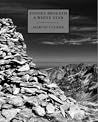
Stones Beneath a White StarStones Beneath a White Star by Martin Locker
My rating: 5 of 5 stars

I was speaking with someone recently about teaching young children complex concepts. This friend is a teacher of very young children (three- to five-year olds) and is tasked with teaching them some advanced concepts. She was concerned that these kids were never going to remember these principles, though they might integrate them subconsciously, the same way that back in our secondary-school grade introduction to trigonometry and pre-calculus, we all said "we're never going to use this stuff". That turned out to be true for most of us, though our brains were permanently rewired, ever so slightly, to form thoughts in a new and different way than we had done before. All of this aside, we agreed that while these young kids probably won't remember a thing about what was said to them, they absolutely will remember the way they felt when they were being taught. I can attest to this. I remember my third-grade teacher, Mrs. Wells, not because of the things I learned, but because of her kindness and patience and her great sense of humor. I remember her reading us the Winnie the Pooh stories and her spot-on voices (with the Disney movies as her template). And I remember her encouraging my reading, even recommending me to what they called the "talented and gifted" readers program for reading and writing. I didn't even fully comprehend what that meant, but I remember the way she made me feel: special, recognized, an individual. I'll never forget her. I can't even name my second or fourth grade teachers, but Mrs. Wells; she was an icon.

I share this because of the way Martin's book Stones Beneath a White Star made me feel. If someone asked me what the book was "about," I would stumble and mumble my way through an answer. Something about friends and loss and mysticism and mountains and reconnecting with the past . . . mumble mumble mumble . . .

It's tough to pin it down. But I know how the book made me feel.

Excuse me while I get a little personal. I'm hardly on social media these days (intentionally), so I don't spill my guts like some people do regularly. So, humor me. I'll try not to be boring. And maybe this indulgence will say a bit about the book. One caveat: I am a pen pal with the author. We write each other, pen and paper, yes, the old-fashioned way, irregularly. As a result I've gotten to know Martin a little. I apologize if you think this shades the review in any way, but hey, it can't be helped now, can it?

What I didn't say about my experience with Mrs. Wells above is that I was living in Italy at the time. My dad was military - I was what is colloquially called a "Military Brat" (hey, if the shoe fits . . .) - so I lived in a lot of different places through my life. I sometimes wonder if Air's song "Universal Traveller" wasn't written for me (did I mention the word "brat"?). I've been around . . .

One problem with having been around is that some of the places I lived, I can never visit again. The Air Force base I was born at in Germany is now a US Army base, the base where we lived in Italy, San Vito, is abandoned and off-limits, the base in England where I spent most of high school is now a British spy base (though I can, and did go on a tour of some of the base a few years back, "my" house is strictly off-limits), and the house I lived in when we were in The Philippines was buried under volcanic ash and the base abandoned by the US military. In essence, a lot of my childhood stomping grounds are either inaccessible to me or just plain don't exist anymore, though I have written a bit about my dream-life in one of those places.

This makes me a little melancholy. While many people can just drive (or even walk) to their childhood home, I just can't. I can get bits and pieces and visit places near some of those places, but time and circumstance have effectively banished me from my own childhood. It's a little more than mere nostalgia. I am haunted by the ghosts of the places of my past.

And here we have a segue into why I feel the way I feel about this book. Stones Beneath a White Star is the most profound work of Psychogeography I have ever read. It is about the spirit of a place, in this case, the Pyrenees Mountains (where, incidentally, my ancestors on my father's side hail from, generally - though they lived in the Basque regions, while this work takes place largely in and around Andorra). The religio-mystical history of the region is dealt with in encyclopedic depth. The book as historical treatise on the area is exhaustive, thick with referents and nuances that I admittedly know little or nothing about. But this didn't affect my reading, outside of wanting to know more about the people, events, and places portrayed.

The real rub of the book is the intimate connection of a few close friends and fellow-believers to the land itself. Their connections to each other (and some of those who have passed on before them) provide the engine for the story (such as it is). These relationships, between people, the land, and the history of the land, is absolutely immersive. I cannot say what the book is "about," nor do I care. This is the kind of book you just live in, for the moment, a meditation on friendship, loss, and retrieval, of the fluctuating bonds of love despite the catastrophes and disappointments of living life on this planet. It is a novel about the resilience of friends finding peace in a broken world.

You can probably see where this is heading . . . I live in a world of broken memories, unretrievable. I'd like to think this isn't just a function of mawkish nostalgia. I literally can't go back. But the memories still haunt me. Needless to say, this book affected me . . . deeply.

Thank goodness that while much of my past is bricked off (or behind barbed wire), one thing persists, despite location, and that is meaningful friendships. I've made and lost many friends throughout the years (as I get older, I lose more and more), but as I retain some ties over the decades and form new friendships with people I've not known before, whether intentionally or through pure happenstance, there is connection. And this connection is something to be nurtured, something sacred.

View all my reviews

____________________

If you like my writing and want to help my creative endeavors, please ko-fi me at https://ko-fi.com/forrestaguirre. Every little bit is seen and appreciated! Thank you!

Monday, February 9, 2026

A Natural History of Empty Lots


A Natural History of Empty Lots: Field Notes from Urban Edgelands, Back Alleys, and Other Wild PlacesA Natural History of Empty Lots: Field Notes from Urban Edgelands, Back Alleys, and Other Wild Places by Christopher Brown
My rating: 3 of 5 stars

I have a soft spot for books about psychogeography. Having been lucky enough to have been born a world traveler (thanks, Dad), I have a strong sense of place, particularly for places I've "discovered" and wandered through. A lot of those places were (and are) off the beaten path. As a result, I was particularly vulnerable (that's the popular word all the kids are using these days, isn't it?), which, of course, exposes one, makes one maybe a little touchy, when assessing a work like Christopher Brown's A History of Empty Lots: Field Notes from Urban Edgeland, Back Alleys, and Other Wild Places. I saved up for this book, and was ready to really cherish it, give it the benefit of the doubt, you know, be vulnerable.

I'd be lying if I didn't say that things got off to a rough start. I'll be frank, the beginning was downright boring. I even thought about lemming the book. But I love the subject matter enough that I gave it a chance. It felt choppy and poorly written. Only about 80 pages in did I feel like it had gained momentum and a bit of eloquence. I'm not sure where the editing really kicked in - was the first part poorly edited, or later parts well-edited, or did the editors start with an iron fist and let off as the book ran its course? I'll never know. But at some point it felt like two different books. Even 133 pages in, my notes read:

Is this book good, or just nice? I toggle back and forth between opinions on this one. I can't decide if it's "big" or "small," and I frankly only have an ill-conceived hint of a notion about what I even mean by that. It has its moments, but, then again, it has its moments, whatever that means in my intellectually lazy assessment. Maybe this book isn't for me, or I'm not for it?

This didn't bode well.

Thing is, I liked Brown's approach: Not alarmist, but not letting us off the hook for our environmental sins so easily, either. There's a touch of sadness and a touch of hope in those interstitial spaces where wilderness and domesticated spaces meet. I find a particularly wry, grim humor at work when Brown points out that roadkill might be one of the best indicators that wildness persists even in our most urbanized areas.

Really, I think the issue might be a problem with scope. A Natural History of Empty Lots feels most effective when focused on smaller scopes. The lone-standing "Holy Tree" (I'll call it), the lot on which the author carved out his own ecological/familial niche, etc. This reading might be the result of my own experiences exploring, particularly as a child, my own little niches: the Priory at Chicksands, dirty mechanical access tunnels to underground parking at the high-rise apartments where we lived in Brindisi, Italy (I still have nightmares where a hag suddenly appears in front of me in those tunnels, sending a chill up my spine and paralyzing me), the vast water-drainage system I entered (and almost got stuck in) at the bottom of the hill where I lived in Capehart Base Housing in Nebraska, the abandoned (and supposedly haunted) owl-infested Albion school in Idaho where we had a family reunion years ago.


The macro-scale of the book is interesting, to some degree, on a philosophical level, while the micro-scale foci are very interesting at an experiential level. I suppose there's something to be said for having one's own (now internal) experiences evoked by an external source. Maybe that's the trick.

For instance, the subsection "Foraging for Meaning," a list of found and created objects, does more to paint the narrative of the liminal space between civilization and the wild than any narrative. It is merely a list, but to me it seemed something much, much more poignant, showing, rather than telling, revealing meaning without speaking of meaning at all. Just a list of found and curated junk, for the most part. And yet, it seemed profound. Apotheosis in the trash stratum.

View all my reviews

____________________

If you like my writing and want to help my creative endeavors, please ko-fi me at https://ko-fi.com/forrestaguirre. Every little bit is seen and appreciated! Thank you!

Sunday, July 27, 2025

Le Livre des Fourmis: The Book of Ants


Le Livre des Fourmis: The Book of Ants (Trail of Cthulhu)Le Livre des Fourmis: The Book of Ants by Robin D. Laws
My rating: 4 of 5 stars

One of my favorite games is the old Surrealist game Exquisite Cadaver. I'm not only a proponent, I'm a teacher of the game. I spread the gospel of Exquisite Cadaver far and wide, whenever I have the opportunity. My primary reason for loving the game is that it breaks my brain and causes me to look at live in a whole new way. It's the cognitive equivalent of cubism - seeing objects (in this case, either grammatical objects, if you are playing the "sentence" version, or illustrative objects, if you're playing the "three part drawing" version). Through what appears to be an aleotory excercise, but is really a channeling of the sublimated unconscious, one discovers new ways of looking at (or reading or writing or drawing) Things. I capitalize "Things" because I think of those creations as entities - self-sufficient, complete entities created by a group of people exercising the collective unconscious in a double-blind experiment. These Things emerge as we take our disjointed thoughts or pieces of thoughts (memes, perhaps?) and force them into a relational structure that causes disparate bits of our processed perceptions to be ordered in a template that we would normally use to create "meaning" - sentences and/or drawings. Through this, we form a new "reality". Or, at least, we form a new perception of reality. And if perception is reality, well, you get the picture.

In The Book of Ants (I will use the English title, because, to be honest, there is very, very little French in the book, even though most of the protagonists are French Surrealists), we are introduced to all the most famous of the surrealist cadre, and quite a few minor, even peripheral players of that artistic/poetic era. The book is told from the viewpoint of one Henri Salem, but don't go researching him, he's not real. At least not in this reality. In the reality of The Book of Ants, however, he is a young poet who develops relationships (and rivalries, and sometimes downright mutual loathing) with Breton, Dali, Bataille, Magrite, and many others you have likely never heard of, who keeps a diary set in two worlds: The world of the Great War and the interwar years of Paris, and the strange "place" underlying the conscious world, The Dreamlands.

As others have pointed out, this book serves as a sort of addendum to an RPG book, The Dreamhounds of Paris (which I shall review at some future point), written for the Trail of Cthulhu gaming system. It is referenced in the rulebook as a possible history from which players and game-masters might leverage for their own game play.

That said, there is nothing game-specific about the book at all. It reads quite well (outside of some annoying typos). The style is sparse, at times elegant, but not "purple," which is a bit surprising when the narrator and many of the characters are French poets and artists and even more surprising when once considers the overly-ornamented prose of H.P. Lovecraft, who brought The Dreamlands into the popular conscience. It helps to know the Cthulhu mythos and The Dreamlands, specifically, but those aren't absolutely necessary to understanding and enjoying the story, in fact, that knowledge isn't necessary at all. There's enough context and explication to allow the reader "in," though some references, such as the names of certain creatures that inhabit The Dreamland, might miss their full impact. In summary, no experience with the game or the subgenre is necessary, though knowing the subgenre is helpful.

I acknowledged the annoying typos. And I've edited and written enough books to know that eliminating all typos from a manuscript is a herculean task and, in many cases, nearly impossible. But the number of typos in the book can throw one out of the "dreamstate" of the book, which is a real shame. One might be luxuriating in the strangeness of it all, only to be suddenly jettisoned back to grammatical reality by obviously missing words (or obviously "extra" words). Can this be forgiven? Sure, but not without losing a star on my rating.

But when it's flowing, this story will capture you, slowly at first, intriguing you through the historical relationships of the surrealists one to another, then accelerating with the discovery that many of those sensitive enough (note: Breton was not) might enter the dreamlands, then, with the discovery that the surrealists could not only enter that place, they could manipulate it, create, and destroy, the pace becomes almost frantic. A new reality is discovered, then it is manipulated, subverted altogether, and disintegrated by those who have crossed over. There is a strong thread of the responsibility of those who colonize and the heinousness of the erasure of another's culture. Some serious ethical questions are asked and the answers to those questions affect not only The Dreamlands, or early-20th-Century Paris, but our own waking reality today. This isn't a book about strangeness and horrific caricatures of monstrosities - it really is about what it means to have influence, and about the consequences of one's actions, intended or not. This takes the work a step further than any other book I've read that was based on a roleplaying game. This isn't a "real play". It's much more than that. It will cause something that roleplaying games rarely do, and which the best gamemasters will engender in their players: introspection.

It's not just a book based on a game. It has, dare I say it? Meaning.


View all my reviews

____________________

If you like my writing and want to help my creative endeavors, ko-fi me at https://ko-fi.com/forrestaguirre. Every little bit is seen and appreciated! Thank you!

Thursday, August 22, 2024

Dreamland RPG Preview

 If you know me, or if you've read my blog for any length of time, you'll know that three things that inform a great deal of my life are dreams, "weird" fiction, and tabletop roleplaying games. So when I learned, several years ago, that Jason Thompson, artist behind the amazing graphic novel version of The Dream Quest of Unknown Kadath & Other Stories was behind a TTRPG focusing exclusively on the dreamlands, I was very excited. 

Then, last year at Gameholecon, I had the privilege to play in a game and, frankly, was blown away. This is a game that rewards creativity, it is not a player's game, but a creator's game, and I am ALL in on it! The mechanics use word cards that players use to influence and create actions and even the environment itself (a malleable dreamworld where creation is the ultimate power). I had been prepared to be disappointed (just in case), but that preparation melted away as the game play far surpassed my cautious emotional hedging. It was one of the most fun games I've played at a convention (and I've played a few). 

So now, you can download the quickstart rules in preparation for the upcoming Kickstarter next year. I'll be saving my gold pieces to be able to splurge on this one. I only get excited about Kickstarter campaigns every few years - yeah, I'm a skeptic and a bit of a cheapskate at times - but 2025 is going to be the year I get excited. 

Go here to download the quickstart rules. And have a gander at this art! This is just a sample of the goodness that is and will be the Dreamland RPG


________________________

If you like my writing and want to help my creative endeavors, ko-fi me at https://ko-fi.com/forrestaguirre. Every little bit is seen and appreciated! Thank you!


Tuesday, April 16, 2024

The Explosion of a Chandelier


The Explosion of a ChandelierThe Explosion of a Chandelier by Damian Murphy
My rating: 5 of 5 stars

Like any good sleight-of-hand, even the publisher name, "Occult Books," is a deception, at least in the popular conception of what "Occult" means. Here, I think it's wise to refer to the original meaning of the word: hidden from view. You won't find wild sabbats, goat sacrifice (virgin or otherwise), or sulfur and brimstone here. No, this occultation of of a more refined sort. Something far more interesting (and sinister in the trickiest of ways).

What we have here is an exploration of the imagination and the manifestation of the imagination into the "real" world. This world is filled with subterfuge and the already-mentioned slight-of-hand. It is labyrinth whose walls shift. A game where the rules change in unexpected, winsome ways. But it's a make-believe which breaches the wall to that-which-is-hidden. These games and labyrinths create thin cracks in the zones that contain realities.

You'll recall this from your childhood, the imaginative playfulness and discovery of places undiscovered by most of society, the unveiling of the "truth" behind individual identities, the understanding of the true mechanism of seemingly ordinary objects that are much more than they seem on the surface.

Some of us are lucky enough to have survived into adulthood with those same revelatory faculties intact. But we have to work at it. It's a gift, to be sure, but a gift that has to be wrested, nay, stolen from the universe.

The Explosion of a Chandelier is a carefully-encrypted guidebook on how one might access such gifts, if one is bold enough to sieze them! But, like Damian's other works of a similar ilk (The Exalted and the Abased, The Academy Outside of Ingolstadt, and Abyssinia all jump to mind), those who are not accustomed to seeking for hidden things, who have forgotten the very real power of imagination, or who lack the courage to sieze the scepter that cracks the barriers between realities . . . well, they simply do not, cannot, and will not Know. On the surface, they will read a story about young men living in Spain during the age of anarchic revolution, a story about hotels and keys and bombs and chandeliers.

But, trust me, there's much more in there, SO much more! Hidden between the words, behind the pages, and most importantly, inside. Look inside! Don't let your reading eyes deceive you. Or, actually, please do!

View all my reviews

________________________

If you like my writing and want to help out, ko-fi me at https://ko-fi.com/forrestaguirre. Every little bit is seen and appreciated! Thank you!

Saturday, November 12, 2022

Waystations of the Deep Night


Waystations of the Deep NightWaystations of the Deep Night by Marcel Brion
My rating: 5 of 5 stars

I recall a night. It was probably 1982, if I've triangulated correctly. In Bellevue, Nebraska, a suburb of Omaha. My friend Ray and I were staying at our friend Shawn's house. Shawn's dad was kind of a celebrity to us. He had a killer conversion van (though, unfortunately, no barbarians painted on the side), a copy of Rush's 2112 in the tape deck, and he knew the guitar player from REO Speedwagon. Pretty cool to us 13 year olds!

Back then, young teenagers were pretty "free range". I recall Saturdays and summer days where I would ride my bike for hours, covering many miles, just sort of going from place to place, running into friends, creating adventures. There were no helicopter parents back then. At least I didn't know any. Needless to say, Shawn's dad was not a helicopter parent. We stayed out in the conversion van, listening to Rush while playing Tunnels & Trolls, with no adult influence whatsoever. It was bliss.

When it comes to exact details of that night, I can only recall a couple. After finishing our T&T session, we went out for a nighttime stroll. It was one of those strangely surreal nights where the three of us seemed like the only people out on the streets. We went to Top Dog Hot Dog for the arcade games as much as for the hot dogs. I recall playing Moon Patrol, Zaxxon (I still suck at that game), and then playing the Centaur pinball game (still my favorite board) until they closed at about 11 PM.

Then, we wandered. I can't tell you where all we went and what all we did, though I am certain involved a lot of trespassing and maybe some breaking and entering.

What I can tell you about is the feeling I had. Did I mention that we had stayed awake the entire night before that night? No? It's true, we had been awake for close to 36 hours straight before the night began. For those of you who have done this, first of all, don't continue. I have first-hand experience of a loved one becoming temporarily psychotic and having to be hospitalized in the psych-clinic due to lack of sleep. It's terrifying to see from the outside. I wonder if I hadn't experienced something similar that night. How could I know? When you're in the middle of psychosis, your thoughts seem pretty logical (even hyper-logical, to coin a term) to you.

I want to say there was a dulling of the senses, but "dulling" doesn't describe what I felt. It was more a compartmentalizing of the senses. The "I" in "me" was one step removed. I heard things, but it was as if it was from a distance. Vision came as if from a television or movie screen. Even my own voice felt like it emanated from somewhere outside or "behind" me. It was summer, but my skin felt numbed. A high-pitched whining continually sounded from the back of my skull.

And I felt like anything was possible. Everything, though one step removed from my senses, was alive and full of potential. I wouldn't have been surprised by a miracle, and wouldn't have been taken aback by the end of the world.

Since then, I've had a few other experiences late, late at night that I won't detail here. There is some kind of physiological and psychological reaction to the deep night that makes each of those experiences to feel "of a piece," as they say. And the same is true of the stories in Marcel Brion's excellent Waystations of the Deep Night.

The title story is exactly what you would expect from such a title: an oneiric tale straight out of a de Chirico painting. I'm honestly shocked that the Brothers Quay haven't done a short film based on this story. It would be a perfect fit, as Brion's painterly prose is beautifully imagistic. Or is that magicistic? Borderline majestic. It's everything I hoped for, judging by the title. Dark and refulgent, at once.

"The Field Marshal of Fear" is a quiet, somber piece, but steady as marching feet. The short, simple sentences, however, do not fail to evoke a stupendous sadness, an eternal drudgery experienced by the dead veterans of wars long since won or lost. A graveside sleepwalk, full of night's heaviness.

In "The Fire Sonata," Brion's voice reminds me of Calvino, but with a sinister edge much sharper and darker than anything the Italian master wrote. I had to split this story into two readings, and I had high expectations for the concluding read. My expectations were met and then some! This could have been an episode of the Twilight Zone that Rod Serling would have been proud of. That's the highest praise, coming from me, as TZ is my favorite shoe of all time.

I would swear David Lynch had written "Incident on a Journey," had I not read it in this collection. The ending came as no surprise, but the inevitability of the tale made it all the more uncomfortable and awkward, like you know you're walking into a trap, but there is no way to avoid it, so you take in every excruciating detail and just watch in desperate silence as the void closes in on you, closer and closer.

Though it could be read merely as a fabulously well-written eerie tale (in the Fisherian sense), "Dead Waters" is, pardon the pun, much deeper than that. It's a story primarily about agency, manipulation, creation, and causality, with many of the characters being potentially marionettes or God Himself, or neither. There are no clear answers, but plenty of compelling questions about what transpires on dark streets. This was the most blatantly "dreamlike" story in the collection, and a deeply-intriguing read.

"La Capitana" is a child's long, slow fading into a dream-world of potential adventure beyond the seas. It is simultaneously happy and sad, bittersweet, full of hope and, yet, utterly hopeless. Imagine your eight-year-old self on a boring, sunny afternoon, given the power to disappear into mysterious dreams of exotic lands on a ship named "La Capitana," a name that you gave the ship, because it is yours, in dream.

"The Glass Organ" was every bit as ephemeral and strange as the object in the title implies. It is a multi-faceted story, but tenuous, images slipping onto one another, transforming into a world that may or may not exist.

"The Lost Street" is a more traditional ghost story. I use the word "more" intentionally, as it is not a fully-traditional ghost story. There are enough more surreal elements that take this beyond the realm of, say M.R. James and approach Bruno Schulz by way of Dali.

Overall, Brion's stories evoked a visceral familiarity within me, feelings I've felt mostly when I've had too little sleep (day or night) and some of the oddities of life in the deep night. Here's sampling of what I mean - Brion describes it much better than I do, from the story "The Glass Organ":

That nocturnal stroll through a park that merged imperceptibly with the forest - certain domestic trees having recovered their wild freedom - already contained within it the qualities of a labyrinth. I didn't choose paths. When several opened before me, I accepted now the darkest, with the childlike hope of encountering a marvelous creature, now the brightest, for the pleasing reward of a downpour of moonlight like a narrow stream between the serried darkness of the trees. Concerns about time or direction would have diminished the sense of the unreal that I received from the night. To let myself be carried along by it, to consent to the paths it offered me, ah! the sheer bliss of no longer choosing. What did it matter if dawn overtook me in the middle of the forest or at the first houses of a distant village? The joy of abandoning myself to the indefinite character that moonlight bestows on deeds and things ruled out any directed action on my part. There was nothing I sought, nothing I fled. For several hours I was at peace with myself, relinquishing both desire and regret, indifferent to wherever, in the end, I must inevitably arrive, not caring whether that place was one of fulfillment or one of oblivion.

This is how it feels to flee into the deep night.

View all my reviews

If you like or appreciate my writing and want to lend your support, ko-fi me at https://ko-fi.com/forrestaguirre. Every little bit is seen and appreciated! Thank you!

Saturday, September 3, 2022

The House of Silence


The House of SilenceThe House of Silence by Avalon Brantley
My rating: 5 of 5 stars

RIP to the late Avalon Brantley, whose novel, The House of Silence was released in the same year she sadly passed away. It sounds like a platitude, but it's not: Brantley's passing was a true loss of some incredible young talent, and The House of Silence is proof-positive of her excellence as a writer.

Truth be told, for the first 100 or so pages, I found little to no evidence that this was a horror novel.

I should have been more careful . . .

Brantley will pull your heartstrings with sympathy and respect for the protagonist, she will make you love them for all their weaknesses and foibles: but she is only setting you up for a long, loooooong plunge into horror.

And what kind of horror? All kinds. Brantley here plays with tropes of gothic, folk, supernatural, cosmic horror, psycho-geographical, and post-apocalyptic horror, and even a dose of what feels like sword and sorcery. She has claimed that Poe was "Virgil to my Dante", and it shows in all the right ways. This is no pastiche, but an infusion of Poe. But even more so, this work rings with echoes of Gene Wolfe's best work, especially in terms of a non-linear plot, replete with long memory gaps, flash-backs that might be flash-forwards, and just an overall churning of time itself.

Furthermore, there is a great deal of vagary regarding who is and is not a friend or foe. The mistrust engendered here adds to the confusion, occasionally knocking the reader off their balance. This is true right up to the end, where friends become foes and foes become friends - ulterior motives are hidden until they explode on the scene, but in an organic way. Nothing here feels forced.

It's rare to read a novel that has so many disparate elements ("something for everyone to love/hate") and yet feels like a tightly-coiled whole, especially when said novel has a staccato structure and such whirling emotional highs and lows, all of it done in a highly poetic style that flows like a river.

A river of blood.

Those who know, know . . . You really should know!

View all my reviews

If you like or appreciate my writing and want to lend your support, ko-fi me at https://ko-fi.com/forrestaguirre. Every little bit is seen and appreciated! Thank you!

Monday, July 11, 2022

The Dream and the Underworld


The Dream and the UnderworldThe Dream and the Underworld by James Hillman
My rating: 3 of 5 stars

Clearly an innovative work, I could not help but think that Hillman's admixture of psychology and esotericism was often strained, or at least at odds with itself. This is what happens when one tries to wrest both psychology and mythology out of their "traditional" contexts (the ones our intellects are accustomed to) and place them in a new, unique relationship. Hillman eschews many aspects of Freudian and Jungian analysis, while embracing others (particularly the idea of "depth psychology") in his new paradigm.

My issue in trying to fit The Dream and the Underworld in my head is the habit of Hillman in seeming to reject certain aspects of the waking world in relation to the sleeping world.

What one knows about life may not be relevant for what is below life. What one knows and has done in life may be as irrelevant to the underworld as clothes that adjust us to life and the flesh and bones that the clothes cover. For in the underworld all is stripped away, and life is upside down. We are further than the expectations based on life experience, and the wisdom derived from it..

This seems intuitive, on the face of it. But later in the book, Hillman espouses the need for therapy (which inevitably takes place in the waking world) that encourages the patient to immerse themselves in their dreams and simply run with it. There's really no clinical diagnosis taking place (none that I can see, anyway) beyond just encouraging people to dream and dream deeply, rejecting any imposition of waking world ideas on the sleeping world.

There's a certain pedantism present also. For example, Hillman lists three "habits of mind that impede grasping the idea of the underworld as the psychic realm": Materialism, oppositionalism, and christianism. I see his points and at least partially understand each one, but I find it interesting that rather than explain how the underworld can be understood as the psychic realm up front, he first sets out to imply that misunderstanding such is an error in judgement. That may be true, but there is little coaching (as one should expect from a clinical therapist) on how rejecting these impediments help the patient to get any kind of resolution to their issues.

Now, I probably sound like I hated this book, but that is completely untrue. I laud Hillman for "freeing" the dreaming world from the waking world. Rather than trying to translate dreams into waking world analogues, he encourages us to dive deeper, to plumb the depths of the underworld, with the understanding that it is a dangerous, strange place, an internal hell (in the Classical Greek and Roman sense of the word, not in a Dante-ish sense) that is intentionally separate from our day-to-day experience.

I admit that after having read this, I have allowed myself to delve deeper in my dreams, to leave the workaday world behind, and have felt a fresh breeze of good mental health, as a result. Ironically, one of the dreams I have had since reading this, a darkened hell-scape in which I met three witches over a pentagram, resulted in one of the most resful nights of sleep I've had in years. There was no night terror, no fear at all, really. I felt that I was embracing the place and that these crones were more guides than guardians. I don't remember all of the details, nor do I want to. I want the incentive to return and see where things go now.

One personal note: Hillman notes that dreams and death are closely intertwined, as if dreams were a practice run for death (which is reminiscent of the argument that Brian Muraresku makes in The Immortality Key that practitioners of ancient religion may have descended into the underworld by "dying" while taking psychoactive drugs in the well-known phenomanon of "ego-death" that often occurs while tripping on a heroic dose of psilocybin, for instance). Sometime during the early stages of the Covid outbreak, before I moved to my current home, I had a profound, extremely intense dream in which I saw and spoke with my deceased maternal grandmother (another crone, perhaps?). I saw her crystal-clear, as I remember her when I was a child, but with bright light streaming from her - an angel in the darkness, you might say. We spoke briefly, and I had the most profound sense of love and gratitude that I had felt in a long, long time. The dream ended when I "burst" with love and "died". I have no other way of putting it. I exploded with love and felt it in every single atom of my body, then, I simply expired. I awoke shaking and crying (for joy, not for sorrow), but felt physically exhilirated (resurrected, perhaps?), ready to face the many changes that were taking place in my life at that time.

I was told by a friend once, who had clinically died after a stroke, then came back, that "dying was the coolest thing I've ever felt." If that's what dying feels like, I'm really not worried about it at all. In the meantime, though, I'll be satisfied to dream a little deeper. I've still got a lot of things to do in the waking world!

View all my reviews
__________

If you like my writing and want to lend your support, ko-fi me at https://ko-fi.com/forrestaguirre. Every little bit is seen and appreciated! Thank you!