Tuesday, December 23, 2025

Dark Arts


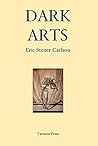
Dark ArtsDark Arts by Eric Stener Carlson
My rating: 3 of 5 stars

Let me start by saying that I absolutely love Tartarus Press. In fact, I just had Mark Valentine's most recent collection from them show up in my mail this past week. My first Tartarus book was a copy of Meyrink's The Golem, which a good friend of mine gifted me many, many years ago. I think I own about twelve volumes from Tartarus, most of them hardcovers (though I'd have to verify that number). I've never been disappointed by a Tartarus publication. Unfortunately, that streak may have come to an end with the current volume. Carlson's Dark Arts isn't bad, it's just not up to par with the other Tartarus books I've read. I suppose not every volume can be outstanding. I also just encountered what I would consider Wakefield Press's weakest volume that I've read so far. Maybe it's a bad batch. Maybe it's just me, who knows? But I have to call them like I see them. And here is how I see each of the stories in this volume:

Can a story in which not one, but four deaths occur (one being an alleyway murder) be considered . . . comforting? Soft? Even loving? Carlson tells just such a tale in "Golden Book," in which an Ikiryo meets a young girl destined for her first encounter with death. This story is more of a blessing than a curse, as dark as it is.

"Coffee Shop" was ripe with dazzling poetics. Unfortunately, the incredible potential of the plot and language was unrealized. I wanted so much more than what the ending had to offer, but then again, that might have been the point of this story of trapped desperation?

I feel the same way about "Divining Rod" as I did about the last story. So much poetic potential, so little punch. This tale seemed to meander, directionless, like a series of disjunct writing exercises strung together on a frayed, insubstantial plot line. But again, maybe that was the point? I'll never know. Or maybe that is the point and I'm just too shallow of a reader to realize it?

I thought that maybe I would warm up to Carlson with the next tale. "Leopard-Spotted Scarf" is a touching (if tinged by horror) tale of a woman daring to become her childhood self, yet again. It's a bittersweet tale that doesn't telegraph the surprise ending, though one can likely figure out what's happening beforehand from the subtle cues left by the narrator. It's a Twilight-Zone-esque tale, which is one of the highest compliments I can give a story

Alas, the relative highs of "Leopard-Spotted Scarf" weren't reached again over the next few stories. "Corridor" is full of anticipatory horror past and present. Two journalists wait for the terrorists who are about to take them hostage. One has suffered throughout his life from an extreme neurosis about what will happen to him in the future. The other is terrified by the prospect of capture and death. But in this case, one's terrors can atone for the terror of another. A good (not great) tale of strange redemptions.

Somewhere along the way, I lost the thread of "Bradycardia". The heady mixture of dream and waking life, along with what might be psychosis, goaded along by a manipulative lover(?) gets almost too convoluted. There's a fine line between complex and incomprehensible, and I wavered over both sides of that line throughout.

The premise of "Stray," a story told by a dog about his many previous lives, was, to be honest, not to my liking. But Carlson handled that premise with tenderness and an ongoing emotional charge that won me over. I didn't like the idea, but the execution was handled by such a deft hand that I couldn't help but love the story.

Mood and atmosphere dominate "Strasse 60, Berlin". This story has a heightened sense of tension that gives it a higher ceiling of dread and eeriness than other stories thus far in the collection. The press of confusion is palpable. Chronology is shuffled and the narrator is misdirected by the phantoms of his own memories. A disconcerting, very effective story. This was more of what I had hoped for.

"Salt" is an excellent story of gaslighting by an authoritarian regime. It's a twisted narrative of unraveling untruth and an emotional gut punch to a narrator that may or may not be insane, but is absolutely in a lot of trouble.

Despite a baldly-telegraphed "twist" and some pushy histrionics, I rather liked "Monsieur Machine". Delivery aside, this was an excellent tale of love and ambition coming into stark contrast, then resolution of the dialectic. Given its mechanistic themes, there is an evocation of emotion that moves the reader while horrifying at the same time. Here love and loss combine to create awe and the awful.

I liked "I Loved You at Your Darkest," but didn't love it. Pardon the horrid attempt at a pun. Yes, the story twisted in an unexpected way, but resolved too quickly, in my mind, with the narrator able to make logical leaps using clues that shouldn't have evoked his conclusions. Another good, but not great tale, straining my belief a touch too much, which was the kiss of death (another horrible pun, given the plot).

I heard hinted echoes of Dhalgren in "The Atelier," a dystopian post-disaster (and pre-even-bigger-disaster) tale set in a fractured Europe held together by authoritarianism. But Delaney's novel was far superior to this tale, which is only a faint, thin shadow of the former. I found rays of hope in the hopelessness, but, again, this story just wasn't really "for" me.

Again, it's not a bad collection, just not up to my expectations of Tartarus' usual work. Do I regret buying it? No. I don't think I can ever regret buying a Tartarus title - they are, to me, the height of craftsmanship and elegant design. Would I buy it again, knowing what I know now? Also no. Like I said: maybe it's just me. High expectations + more experience over time = jadedness, I suppose. Then again, maybe it's not just me. You'll have to decide for yourself.

View all my reviews

____________________

If you like my writing and want to help my creative endeavors, ko-fi me at https://ko-fi.com/forrestaguirre. Every little bit is seen and appreciated! Thank you!

Sunday, December 21, 2025

The Mill: A Cosmos


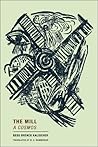
The Mill: A CosmosThe Mill: A Cosmos by Bess Brenck Kalischer
My rating: 3 of 5 stars

I believe this is the lowest rating I've given to a Wakefield Press title yet. It makes me sad, because I love what Wakefield does: bring fantastic obscure works in translation to light in the English-reading world. They've done some fantastic work in the past (including the amazing work of Marcel Schwob, Marcel Bealu, Otto Julius Bierbaum, and, most remarkably, Jean Ray). So, you'll excuse me if my expectations are sky high . . . but they are.

My unrealistic expectations were met with the introduction to this volume. As with every other Wakefield Press book I've read, the translator's introduction, this time by W.C. Bamberg, is worth the ticket price alone. It's an extremely evocative piece about this essentially unknown author: well-researched (with a hint of the historiography involved, even), captivating, sympathetic, and enlightening. This is the fine scholarship I've come to (unfairly?) expect from Wakefield. At times, the writing in the introduction out-paced the writing in the actual story.

It didn't take long after reading the introduction to become somewhat disenchanted. What seemed to start out as a staccato poesis descended into pure Dada. I understand that makes the work "of its time," but that doesn't excuse near-incoherence. Yes, the story is about a woman holed up in a sanitorium, but the experimental form . . . well, the experiment just didn't work for me.

The section "The Island of Destiny, or Encounter with the Caliph" was the first truly coherent narrative of this work. It started on page 25 and sustained through page 32, but I have to admit that making it to this section was a feat in and of itself. I've read plenty of stories with insane (or at least highly neurotic) and unreliable narrators, plowed my way through some notoriously difficult prose (Proust, Joyce, and Beckett, I'm looking at you), and read more than my share of stories about madness. But the first 25 pages of Kalischer's work here had me nearly leming the book, but I decided to press ahead. It is a short work, after all, and I'd bested tougher (though better-written) material.

After that the narrative gets wobbly, teetering on the edge of coherence, threatening to fall into Dada at any moment. It's sometimes difficult to discern between playful intellectual brilliance and an utter collapse of reason. It's almost as if Kalischer weaves in and out of each, with no warning about what direction she is turning; blind curves ahead. Sure, the narrator is struggling with mental illness, but a reader needs some kind of compass, even a weak one. Still, I pressed on.

Lest you think this ship has utterly sunk, that all was lost, that's not true. Later, near the end, I uncovered "On Sirius". It is by far the best section of the book. It's a gentle, smoothly flowing prose poem, not entirely lacking disjuncture, but not as chaotic as some earlier sections of the book. It is a piece that is of a piece, well-put-together, but not stodgy. I can (and have) wrap(ped) myself up in it. It is comfortable, but not so cosy as to be uninteresting. If the entire book was written this way, it would be at least a four-star book for me. Alas, that can't be. The neurotic narrator, like most humans, had a long string of near-coherence which, of course, wouldn't last.

However, I didn't mind the ending being disjointed. In fact, I think it worked quite well, given that we had a comfortable baseline in "On Sirius" from which we could jump off. The tragedy of this last section felt real and poignant. A good ending, given what came immediately before it. But the first part of the story started off in such a stark, jarring manner that I just couldn't make the connection with the narrator until halfway through the book. In fact, I wonder what the book would have read like had it begun with "On Sirius" and the erstwhile early material was tagged on to the back of the story (after the sanitorium episodes)? Possibly a stronger narrative? Unfortunately, Kalischer isn't around to ask for a rewrite.

Still, kudos yet again to Wakefield for presenting a work obscured by history and doing so with all the reverence and academic rigor it deserves. Yes, it fell short for me, but that's not stopping me from continuing to dip in the stream of Wakefield works. In fact, there's another waiting on my shelf right now that I am eager to read. I'm still on the Wakefield train and won't be getting off any time soon!


View all my reviews

____________________

If you like my writing and want to help my creative endeavors, ko-fi me at https://ko-fi.com/forrestaguirre. Every little bit is seen and appreciated! Thank you!
Tuesday, December 2, 2025

Goodreads Sucks More? Again?

 Well, Goodreads has done it again. And by "it" I don't mean anything good. Exhibit A:


I have a long history with Goodreads, and I've got the receipts to prove it. I tried Booklikes, but, well, I didn't like it. Why? I can't even remember, that was so long ago. Suffice it to say that I stuck with Goodreads and for a time considered it my only social media.

Given the message above, that is coming to an end. I did send a "WTF?" message to Goodreads. I don't expect a response, but you never know. They've surprised me before by actually responding to my questions about a previous move they had made. But, I admit, my email back then was much more restrained and well-thought-out than my kneejerk reaction tonight. 

I posted a message there asking anyone who wants to keep contact to message me ASAP and I would exchange emails with them. 

As with other changes, I suspect that this is just the tip of the iceberg. I cannot fathom the reasoning behind this, as it is one of the things that keeps Goodreads members connected. The conspiracy theory side of me wonders if other social media applied pressure to make Goodreads less of a social media and more of a commercial enterprise. Or maybe Goodreads just did that themselves. What? Following the almighty dollar at the expense of actual human interaction? That's never happened before, has it? 

Ugh.

My selfish fear (outside of losing direct contact with many people whose opinions I greatly appreciate) is that Goodreads is up to something even bigger. You'll note that many of my blog entries/reviews use the HTML template that Goodreads provides. So, there is a possibility that I will need to (somehow) transfer essentially all of my book reviews from Goodreads to my blog which, frankly, sounds like the height of tedium. 

I can't shake the feeling that this will lead to me being online even less (and I've already taken many steps out of the virtual world and back into the analog world).

Well, let's see what happens. Will this finally be the death knell for Goodreads as a viable venue for enjoying books with other book lovers in a meaningful, personal way? Maybe. As with all things, time will tell.

____________________

If you like my writing and want to help my creative endeavors, ko-fi me at https://ko-fi.com/forrestaguirre. Every little bit is seen and appreciated! Thank you!