Previously, (
twice, actually) I raved about
my favorite social networking site (loosely defined), Goodreads. My opinion remains unchanged, I absolutely love Goodreads. I can gush on and on about it -and, fair warning, I probably will continue to do so. The reason is that before I was ever a
writer, I was a reader. I love reading. I love books. I love libraries. I know some very cool librarians. In another life, I might have gone on to a Master's in Library Science with an emphasis on
archives and preservation. Alas, I don't have another life to live. But Goodreads puts me in touch with people who both love reading and love books, people after my own heart.
That said, I have a confession to make that pains me: I have, from time to time, "unfriended" people on Goodreads. In fact, I've been doing more of that lately. At one point I had over 1,000 friends on Goodreads, due to my over-enthusiasm. After a while, though, I got to thinking about the wonderful interactions, discussions, and even debates I'd participated in with a select few (by this, I mean probably somewhere around 200-300 people) and how much I enjoyed interfacing with these Goodreads friends. Then I thought about the many hundreds of people who, while sharing some of the same "likes" and taste in books, I had never really interacted with in any meaningful way. Beyond that was a tier of people, mostly self-published authors, who had friended me with, I
think, the notion that it would help them market their books to me.
As an author myself, I have to walk a fine line at Goodreads. Yes, I write. And, yes, I market my books. I'll tweet about them occasionally, though not with the obnoxious frequency of many self-published authors. I prefer a more subtle approach, and maybe that's to the detriment of my writing career. Of course, writing is not my full-time job, so reaching every reader in the world is not my primary concern. Mostly, I just love writing.
At Goodreads, I am careful about how and where I mention my own work. Do I mention it? Of course. Do I direct people to it? Yes, by providing "easter egg" links in my postings. I did that in the fourth sentence of this blog post. I hope it doesn't seem to self-referential and weird that I mention it "down" here, but I wanted to make the point that many of you likely missed the link, and that's fine. I'm not about being "all in your face" about my work. If you like it, great. If not, great. No hard feelings.
Again, I was a reader before I was a writer. And I love reading and sharing my opinions about books with others, as well as enjoying others' insight into whatever books they happen to have read. When I'm at Goodreads, I am first and foremost, by a long way, a reader, not a writer.
So when I get friend requests from authors at Goodreads, I've learned to go through a vetting process. Before I outline that, let me say that I am not a fan of Goodreads users who use an arbitrary rule for screening friends. The most common one I see is: "If you have more friends than books, don't bother friending me". I understand the sentiment behind the statement. Life can be cluttered enough as it is, and this "rule" provides an easy way to keep the clutter down. But it's lazy, disingenuous, and just plain un-friendly. If I had made and enforced such a rule, I would have missed out on several outstanding Goodreads friendships that have developed with some people who have many more friends than books rated. If everyone were to enforce such a rule, then some others, because of their need to feel accepted, would falsely rate books they haven't even read in order to meet the books/friends ratio criterion. Not that I don't think that goes on anyway (I voiced my suspicion of this in my
first entry about Goodreads), but the incidence of such behavior would likely skyrocket under those conditions. Furthermore, many people would miss out on many wonderful friendships if such a rule were to become the norm.
No, the books/friends ration rule is not the answer. If you're serious about fully participating in Goodreads, managing your friends requires real work, real attention, and genuineness (yes, that's a word. I just looked it
up). Of course, you might prefer facebook,
twitter, or
Google+, and that's fine. But if your goal is to really talk books in a meaningful way with people who share your interest, without wasting your valuable time on those who don't participate in the way you'd like, you've got some decisions to make regarding those requesting your friendship or those you are considering friending.
First, have you used the book comparison tool that Goodreads provides for matching your tastes with another reader? That's the first thing I do if I suspect I'd like to friend someone or if I receive a friend request. This is almost never enough to make a decision either way, but it does provide a good starting point. If I don't share at least some measure of commonality in my tastes with the other person, how do I know whether or not to trust their opinions on books I have not read? That's not to say that our tastes need to match exactly - that's almost statistically impossible. And there are times where I've read erudite, insightful reviews of books I hate by Goodreads friends who loved the same book (and vice-versa). But overall, has the person read some of the same books that I've read, and if so, do they rate them, on the whole, similarly to me?
Of course, star ratings can seem rather arbitrary. My 3-star might not be the equivalent of yours. So it's necessary for me to go and check out the potential friend's reviews. This can be done by going to the person's profile page and looking immediately below their profile picture. Underneath that picture will be something that says "X reviews," with X being the number of books that person has reviewed. If there are 0 reviews, I really have nothing to go by. I often ask myself if those with 0 reviews really spend any time on Goodreads. Sometimes, they are new to Goodreads, so they won't have any or many reviews. Do take into consideration how long a person has been on Goodreads. For most people, you can find this information in their profile under "member since" or alongside "activity" there should be a notation showing when the person joined and when they were last active on the site. This is modifiable by the user, so sometimes this information isn't there, but that's rare.
You'll also need to determine what kind of insight you're looking for regarding listed books. Is a one-liner good enough? Or do you require more? Do you want a plot summary, or are you looking for deeper analysis? Finally, do you like the reviewer's style? I've seen some really
incredible reviews, some
insightful, some blazingly sarcastic, some done in the
style of the book in question, and some just plain
funny. I, for one, enjoy a great review like I enjoy
dark chocolate, savoring it, soaking it up, and letting it carry me away - hopefully to the "my books" section where I can add the book to my "to read" pile.
Finally, there are a lot of intangibles that could go into your decision to friend or not to friend. Is the reviewer active in groups that I'm interested in? This can be ascertained by scrolling down on the reviewer's profile page to see the list of groups of which she or he is a part. Who are the reviewer's other friends, and are they people you'd like to get to know, or people you already know, on Goodreads? How often does the person do updates? Are they active? Check the quotes section on their profile page - any potential political or religious arguments in the making, based on their "liked" author quotes? And, based on their comments, whether about others' reviews, in reading/book groups, or on their status updates, is this a person you can get along with?
That's a lot to digest. It's a lot like real work. But if you're careful, you might save yourself the embarrassment of having to unfriend someone down the road. That brings up another point - you may want to make your decisions over time. I've friended some people who have just joined Goodreads and done due diligence making contact with them, liking reviews of theirs that I genuinely liked, commenting on their status updates when appropriate, etc. Then, months later, I've noticed no further activity on the part of that person. In that case, I'm likely to "ping" them again somehow in an attempt to see if they're really interested in participating. And if they're not, I might just unfriend them. I don't ever threaten people with this, nor do I let them know, I just quietly slip out the door and let them sleep, as it were. If they wake up at some point and decide to participate later on, they can find me. Or I might just peek in every once in a while to see how they're doing.
Last thing: back to authors. The danger of authors friending other authors
en masse is that it can lead to what
Paula Guran called "tribalism," something she noticed among small-press horror writers in a long-dead forum thread that I can no longer locate online. She pointed out the hyperbolic praise on the part of these authors for one anothers' work polluting the air waves with unwarranted online congratulatory pats on the back. The community, she said, had become self-absorbed and lacking in good, critical analysis, largely because these authors were not very well-read - they didn't know the roots from which they had grown and frequently repeated tropes and plots that had been done over many times in the past, usually with much more skill than the current bevy of copy-cats. But because these authors had not read widely or well, they thought that what their companions were presenting (some of it bordering on plagiarism) was new, original, and cool. This resulted in good, critical analysis of contemporary work being buried under the tyranny of the majority, which would be turned on those doing the analysis, those who were keeping it honest. The defensiveness of some authors and the way their friends "ganged up" on those with legitimate arguments about the quality of work at the time sometimes turned downright acidic. In the outside world, we call this "bullying" and it's not okay.
That's not to say that I see much of that going on at Goodreads, but it's there, and the potential for things going sideways is going to remain. I have confidence that Goodreads will remain
good, though, so long as we remain civil, know how to pick good friends, and avoid bullying.
Sounds a lot like the lessons Mom taught me as a kid. Thanks, Mom!
________________________
If you like my writing and want to help out, ko-fi me at https://ko-fi.com/forrestaguirre. Every little bit is seen and appreciated! Thank you!
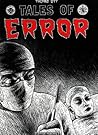 Tales of Error by Thomas Ott


