Showing posts sorted by relevance for query aickman. Sort by date Show all posts

Sunday, June 21, 2020

Dark Entries

Dark EntriesDark Entries by Robert Aickman


To say that Robert Aickman is a Master-Craftsman may be redundant. If you are unaware that I consider Aickman to be one of the best writers of the 20th-century, you haven't been reading my reviews. Or, perhaps, you think I'm engaging in hyperbole. Make no mistake about it: Go into Aickman's work with high literary expectations - they will be met and, many times, exceeded. I hate to rely on Neil Gaiman as any kind of authority, but even he states, about Aickman: "He really is the best". If that doesn't work for you, read the last section in here by Ramsey Campbell, who was a friend of Aickman's. Not only is it an intimate look at the author himself, it shows, quite clearly, the high standards of writing he set for himself (and expected of others).

This does not mean, however, that Aickman's greatness comes from an effusive use of descriptors or the perfectly placed "reveal". Quite the contrary. While Aickman's sentences are masterful works of art, they oftentimes only serve as a frame for what is missing. It is in what is not there, that which remains unsaid, that the horror of these stories festers and grows. Aickman creates voids that act as pocket dimensions of potentiality, as outlined in both David Peaks The Spectacle of the Void and Mark Fisher's The Weird and the Eerie.

Take, for example, the first story in the collection Dark Entries, "The School Friend". Hear, about halfway through this story of old "friends" returning, one expects a jump scare as the protagonist, Mel, explores the strange home of her friend. The abandoned, then reclaimed house, the strange friend, Sally, who disappears and comes back changed in a twisted sort of way (and who currently owns the dilapidated house), the dismembered stuffed animals strewn on the floor - any reader can see these as signposts of some sort of abject horror about to reveal itself in full horror. Sally discovers Mel inside the house, and Mel hears ". . . and animal wailing above . . . [and] a noise resembling that of a pig scrabbling."

Sally, who is decidedly insane at this point says "Do you love children, Mel? Would you like to see my baby? . . . Let me tell you, Mel . . . that it's possible for a child to be born in a manner you'd never dream of . . .Will you be godmother? Come and see your god-child, Mel."

A scuffle ensues and then . . . no more mention of the baby. At all. Nothing. The potentiality that is left in the air, as it were, is positively haunting, a terrifying possibility out there, in the darkness, just around the corner, or upstairs . . . somewhere. The words in the final sentence, ". . . shall probably . . .," usually banal to the point that we don't even acknowledge that they have been read, have now become two of the most horrifying words in the English language.

And yet, in the next story, "Ringing the Changes," we get a sentence like:

Her expression indicated that she was one of those people whose friendliness has a precise and never-exceeded limit.

I cannot describe that expression to you, but I know it. I see it and, more importantly, feel it. That one sentence does more to explain the attitude of the character than paragraph after paragraph of blatant description could ever convey. It is exactly the right sentence to convey what Aickman wants us to know about this woman.

One must note here, also that "Ringing the Changes" must have had a profound effect on movie director David Lynch. Awkward, stilted conversation, the growing presence of a looming something, the unspoken, willfully-unacknowledged terrors felt by strangers in a community that seems to have "gone wrong," and the permanent, but unknown changes that come to those who have experienced true horror, are all Lynch's hallmarks. They are all present here.

Does all this mean that Aickman is absolutely comprehensible all of the time? No! I was left completely baffled by "Choice of Weapons". Is it a story of mesmerism? Vampirism? Hallucinatory madness? All of these? None? Lust and unrequited love, or a test of love, are at the heart of it, though there is an overtly political element to it, with its emphasis on caste and class. Despite my confusion, it is an engulfing story, especially at its twisted, unresolved ending. It left my brain churning. I loved this vortex. Or maybe it was lust?

At other times, his plots are pretty stock (though this is rare, I must admit). One of the more straightforward and predictable stories of Aickman's tales, "The Waiting Room" makes up in execution (pardon the pun, yes, it was intentional) what it lacks in originality. You know the plot (though I'm not going to reveal it), you've read it before, but you don't know with what exactitude and precision Aickman can write such a tried and true story until you read it yourself. His deft crafting adds a dimension lacking in other stories of its ilk, but it's not a mere embellishment of existing tropes. Aickman truly makes it his and his alone by the way he exercises his auctorial pen.

"The View" returns us to the labyrinth of imagination. There are few way-markers here, and the story roils in on itself, much as the house in which it takes place and the hostess of the house baffles the protagonist. We have here a house every bit as complex as the House of Leaves (though much less inimical). But, whereas Danielewski uses hypertextual methods to open the house to exploration and the reader's imagination, Aickman does so with a single sentence:

Apartments of the most various shapes and sizes led into one another in all directions without doors; and as no two apartments seemed to be decorated alike, the mirrors set up a chiaroscuro of reflections co-existent with but apparently independent of the rich and bewildering chiaroscuro of the apartments themselves.

Take a moment and digest that sentence. Who but Aickman could use the word "chiaroscuro" twice in the same sentence and make it feel like it's the most natural, sensible thing in the world? It enables the imagination without jilting the reader's thoughts. Yes, one may have to read it twice, carefully, in order to let the image fully bloom in one's mind, but it is worth a patient reading and meditation.

Even in describing the subtleties of the relationships between lovers, Aickman shows a deft hand:

. . . he . . . did not risk another of those so natural interrogatives she so lightly made to seem so heavy and unnecessary.

This sentence speaks volumes about the tension between the two characters of "The View," but also of the sensitivities of each character toward one another. One should not be surprised, then to find that "The View" is winsome and absolutely heart-rending. It has caused in me a genuine fear of growing old, something I have never really felt before. This is more from the sense of things past and lost than worry about future decrepitude. This is the empty hole at the center of nostalgia, a true existential dread. This story bit deep into my heart. It hurt, and I am better for it.

Finally, Aickman descends into decadence with "Bind Your Hair," a story about one innocent's introduction to what really goes on in a rural English village. This is folk horror with an Aickmanesque touch - the ending leaves us at a precarious point as to what to expect for the heroine; this unpredictability engendering a more lasting dread. Fear for her safety and innocence continue to rise after the last word is read. The potential is there for both good and bad in her future (short and long-term), and we agonize to know what she will choose, and which path she will go down, and what the consequences will be. We know the stakes are high, but the answers to all those questions are obfuscated from us.

Only the reader can supply the final narrative.

View all my reviews

________________________

If you like my writing and want to help out, ko-fi me at https://ko-fi.com/forrestaguirre. Every little bit is seen and appreciated! Thank you!

Wednesday, November 14, 2018

Sub Rosa

Sub RosaSub Rosa by Robert Aickman
My rating: 5 of 5 stars

Wouldst thou like to write sentences deliciously, like this?

I might compare them, though a little distantly, with the once controversial last works of the late Charles Sims: apparently confused on the surface, even demented, they made one doubt while one continued to gaze, as upon Sim's pictures, whether the painter had not in truth broken through to a deep and terrible order.

Of course, you would. You're tired of Lovecraft's confused, adverb-sodden descriptions. Bored with his hundreds of pale imitators. But you still want to capture that eerie sense of something missing.

You, my friend, want to read Robert Aickman.

Aickman's clarity and ability to plunge the reader under the water of the mind and personality of his narrator here locks the reader in and provides confidence that the author is going to deliver something special. Reading this is a lesson in writing. A graduate seminar, no less. Like any class, there is at least one "slow" point, but this might be a mercy, rather than a failing. Given the height of literary airs here, one must come down into the atmosphere to breathe, at least once. Given the depths of subtly-hypnotic writing that draws the reader down like a long-missed lover on a warm bed, one must, for a moment, come up for air.

The opening breath, "Ravissante" is, at turns, wonderfully subtle, then ridiculous, then embarrassing, then horrifying. There may or may not have been a supernatural element to the story - a black poodle that was as much spider as dog, a domineering crone who stoked the bellows of lust in the narrator for a girl that may or may not have been real, an insect-demon, all of which might have just been occlusions of the mind - or not. Marlowe is banging his head against his sarcophagus because he knows what Faust could have been, since Aickman has shown the world how to best portray the invasion of the demonic into the banality of life on planet earth. Five stars that may be either real or imagined. You decide. Aickman isn't telling.

As the trees around me became yet bigger and thicker, fear came upon me; though not the death fear of that previous occasion, I felt now that I knew what was going to happen next; or, rather, I felt I knew one thing that was going to happen next, a thing which was but a small and far from central part of an obscure, inapprehensible totality. As one does on such occasions, I felt more than half outside my body.

"The Inner Room" is a creepy dollhouse story. Take the best of Danielewski, Angela Carter, and Brothers Quay, stir it together, make the syntax perfectly exquisite, the imagery simultaneously vivid and murky, and each character's mannerisms subtly but thoroughly manifest through their dialogue and actions, with just a touch of philosophical insight into people's hearts, and you have a start. But only a start. Add this bit of inner dialogue, which accurately portrays the strange frisson that children often feel, or at least that I often felt as a child, before an ominous, momentous event:

As the trees around me became yet bigger and thicker, fear came upon me; though not the death fear of that previous occasion, I felt now that I knew what was going to happen next; or, rather, I felt I knew one thing that was going to happen next, a thing which was but a small and far from central part of an obscure, inapprehensible totality. As one does on such occasions, I felt more than half outside my body.

. . . which is reflective of the way I felt as I read this story. Five stars.

"Never Visit Venice" coddles you in hope, warmth, and the promise of love. It lulls you, like a gondola on the water. Then, it thrusts you into the waves and begs, nay, insists the question: Is it preferred to live like a lion for an hour than to live a lifetime like an ass? Five stars above a lilac sky with the waves lapping up against the sides of your wooden gondola.

There's synchronicity in that I read "The Unsettled Dust" at the same time I read Est: Collected Reports from East Anglia. A (un?)happy coincidence(?). Like the landscape it's set in, this is a slow, malingering, matter-of-fact character study intertwined with the supernatural. This one is a little more straightforward for Aickman, but still sprinkled with the dust of uncertainty. Four stars.

"The Houses of the Russians" is a prime example of Aickman's ability to control pace. You think you're coming to a horrific conclusion, then find out you're not. You think you are going to gain some great knowledge, and you do not. You think that the nightmare is over, but it has just begun. Aickman says this is his own favorite story of the collection, but what does an author know about his own work? Nothing, I can assure you. And though this is a fabulous story, I don’t think it’s the best of the collection. Then again, how does one compare one story’s quality against another’s when every story is a miniature master-class in writing? Five eerily-meandering stars to this tale of anachronistic spectres . . . or not.

"No Stronger Than a Flower" is the one disappointing tale in the book; inscrutable, really. Is Nesta a vampire, insane, or merely symbolic? Maybe all three? In any case, her withdrawal seems merely whimsical, perhaps a touch spoiled. A mere three stars here.

AAAAH!!! CREEPY CHILDREN! "The Cicerones" has them. This tale is particularly chilling when compared to the others in this collection. “Sinister” doesn’t even begin to describe the level of paranoia-inducing conspiracy that this tale dredges up from the catacombs. Yep. I've got the shivers now. And yet, this story still has that Aickmanesque power of understatement (unlike my screaming introduction to the paragraph). The ending phrase "especially after everyone started singing," so seemingly innocent when seen alone, is absolutely one of the most terrifying things I have ever read in context. I do not want to hear that hymn! Five stars.

The novella, "Into the Wood," the centerpiece of the book (though it appears last) is one of the most satisfying reads I've had all year. Ostensibly a story about insomnia, it's really a (strange) tale about self-discovery and empowerment of the main characters, Margaret. It's a walk into dreamlessness that blurs the line between night and day, erasing notions of the way things "should be," while remaining gentle and respectful of the needs of those who don't follow the same path. It's about as feminist a work as a man writing in the early 1960s could produce. Consider the thoughts of Margaret, the protagonist, who has accidentally checked in at a Scandinavian resort for insomniacs while her husband attends to business matters in a nearby city:

Margaret took a small pull on herself. Henry must be broadly right and she broadly wrong, or life would simply not continue as it did, and more and more the same everywhere. The common rejoinder to these feelings of rebellion was, as she knew well, that she needed a little more scope for living her own life, even (as a few Mancunians might dare to say) for self-expression. But that popular anodyne never, according to Margaret's observation of other couples, appeared in practice to work. nor could she wonder. It reduced the self in one to the status and limits of a hobby. It offered one lampshade making, or so many hours a week helping the cripples and old folk, when what one truly needed was a revelation; was simultaneous self-expression and self-loss. And at the same time it corrupted marriage and cheapened the family. The rustling, sunny forest, empty but labyrinthine, hinted at some other answer; an answer beyond logic, beyond words, above all beyond connection with what Margaret and her Cheshire neighbours had come to regard as normal life. It was an answer different in kind. It was the very antithesis of a hobby, but not necessarily the antithesis of what marriage should be, though never was.

This paragraph perfectly brings to light the desire and need I have to read and write "spooky" or "strange" fiction, as well as my drive to immerse myself so much into roleplaying games, and my penchant for strange art and hiking alone in the woods. I've learned something about myself and my desires/needs that I couldn't articulate before, but Aickman renders clearly and compellingly into words. Wonderful!

The satisfaction of "Into the Wood" is worth the entire price of the book. And, while Aickman thought "The Russian Houses" was one of his best stories (in this volume, at least), I think he under-rates what he's created here. The depth of insight here, into desire for self-satisfaction (without hedonism) and into the pleasures (not sexual) of losing oneself, is profound. This story is ripe for analysis, whether Marxist, feminist, or what have you. I sense that this story would hold up to any sort of theoretical microscope under which it is examined. It is a writer's story by a writer's writer, nearly perfect in every way. Five stars.

If you are not a writer, have no fear. Well, I take that back. Have some fear, but let Aickman serve it to you in little, enticing doses of unease and just a hint that something isn't right, though it may be; but it probably isn't, unless you look at it in a certain way, which you shouldn't. You think I'm full of vagaries? Try Aickman. The difference is that Aickman's vagaries are as carefully measured and doled out, calculated, really, as mine are flippant and chaotic. Aickman is in control.

Aickman is always in control.


View all my reviews

________________________

If you like my writing and want to help out, ko-fi me at https://ko-fi.com/forrestaguirre. Every little bit is seen and appreciated! Thank you!

Thursday, March 22, 2018

Haunted by Books

Haunted by BooksHaunted by Books by Mark Valentine
My rating: 4 of 5 stars

How could a true bibliophile resist such a title as Haunted by Books? Add the fact that it was written by Mark Valentine and the siren's lure was irresistible. Having recently read Valentine's stellar collection The Nightfarers, I was altogether hypnotized by the prospect. One might say "possessed".

But, like all unrealistic expectations, some aspect of anticipated pleasures are bound to disappoint. Thankfully, the disappointments here are few.

For example, the chapter on Aickman I found to be a bit of a stretch. The exposition on a couple of lines of Aickman's writing, lauding the complexity hidden beneath so few words, just wasn't very convincing to me. Aickman's a great writer, but looking at the same text as Valentine, I think he's stretching the evidence to the breaking point.

And if Valentine was hoping to encourage me to read Vernon Knowles' work, his attempt was a spectacular failure. If he was warning me away from it, mission accomplished! Still, a poignant story.

I also had a hard time seeing the influence of hermeticism in Vansittart's work, judging purely from Valentine's essay. I'm sure he is a fine writer, but how can you title an essay "Secret Names: The Hermetic Fiction of Peter Vansittart" and not have a hint of hermeticism in the essay? I felt a little cheated by the title, though it did spawn in me a number of thoughts which I shall be taking down in my writing notebook. So it's not all a loss.

These disappointments did not last long, however. I found much to like in this volume. Heart-rending stories about writers who nearly rose to prominence, then faded to obscurity, abounded. As it a bevy of accounts regarding anonymous writers or well-known writers whose works have been lost to time. And not a few books were added to my "must read someday" list: Mary Butts' Armed with Madness, Morris' Bretherton, The London Mercury (which I should like to see resurrected), and the lost volume A Book of Whimsies - lost to me, anyway, as I can't find any reference to it outside of Valentine's essay. I am haunted by the absence of these books.

Valentine is at his best when he is digging through the layers of creation, showing how a writer does what they do. Valentine's analysis of Walter de la Mare's Seaton's Aunt is the sort of essay that makes me want to be a better writer and reader and gives me the tools to do so. It is a careful unpacking of a subtly horrific story that gives a peek behind the panels at the gears that make the story move. Fantastic stuff.

Valentine uses Sax Rohmer's The Orchard of Tears as a digging tool to uncover the shadowed trends and hidden interstices of occult movement happening at, or just before, the writing of the novel. I am fond of these socio-intellectual archaeologies. They are so rare and so rarely done well. I could stand to read a book filled with such insightful essays.

Digging among the dead stirs up ghosts. And there are ghosts of all different kinds here.

The essay on Charles Welsh Mason was everything I hoped for: a thoroughgoing assessment of an extremely interesting writer whose career faded into the mists of time under most mysterious circumstances. This sort of essay was what I thought of when I first saw the title Haunted by Books. Fascinating and eerie.

As a young man growing up in the time of James Leslie Mitchell, I might have loved his fiction, particularly his shorter works. Alas, I was born to late and am probably too jaded to fully appreciate his work. But maybe not. There is a certain wistful longing for simpler times in me. I am a haunter out of time, it seems.

Valentine's premise of the inverse relationship between the amount of esoteric/occult content in a book and the book's popularity (at least among mid-twentieth-century readers) is interesting. Readers want a glimpse of the occult, but they don't want to read a text that might imply that they have actually learned something of esoteric teachings. Interesting fiction/non-fiction dynamic there. These readers are haunted by longing, but unable to receive revelation, in a sort of limbo of faith. A literary purgatory.

I should give a copy of The Fifth of November to my daughter and see if she can figure out it isn't Shakespeare. I constantly tease her about Shakespeare being Francis Bacon or Robert Marlowe. She has acted in several Shakespeare productions and actually been paid professionally to do so on a couple of occasions, and I'm a Dad, so I can't help teasing her about Shakespeare's reality or lack thereof. I suppose I am, in some strange way, haunting her with my own notions of literature. Poor woman!

"Or Opaline Algol" is a sweet, sweet mystery - an anonymous poet of significant talent remains, somehow, completely anonymous. The texts drop hints of the author, but never enough to reveal them. This is what I anticipated when I first read the title Haunted by Books: The identity of the poet is just around the corner, but when you spin around it to look down the hall, you only catch faint, ectoplasmic wisps dissolving up into the ceiling.

The story of the Johnsonians is poignant and possibly the most well-written essay in this entire book, so far. Valentine's personal anecdotes of his childhood are creepy and insightful into his mode of thinking. Haunted by books, indeed!

"What Became of Dr. Ludovicus" is a fascinating archaeology of creativity and the vain quest to seek publication, only to later become lost to the sands of time - except for the correspondence between the two authors who were working on it. It's like an epistolary novel that might or might not have ever existed. A little eerie by reason of omission. What is not seen is usually much more terrifying than what is perceived directly.

"Wraiths," the long-lost poetry of some fin-de-siecle would-be-writers which have been utterly lost to the sands of time, are the perfect haunters for this book. Beautiful words like a vapor, or so it is rumored.

"The Piccadilly Goat" was the most entertaining, whimsical essay of the book. It reads like a turn-of-the-(20th)-Century Harpers article and hits all the right notes. Absolute perfection.

The final essay sends the reader off into the atmosphere of what might have been. A wonderful way to end this eclectic, but intellectually-upward-spiraling work. The reader finishes the book with a sense of awe, as of watching spirits rise from a graveyard through the illuminated fog on a moonlit moor.

footnote: Special thanks to Acep Hale for his generous loan of the book to me.

View all my reviews

________________________

If you like my writing and want to help my creative endeavors, ko-fi me at https://ko-fi.com/forrestaguirre. Every little bit is seen and appreciated! Thank you!

Monday, November 30, 2020

Splendid in Ash

Splendid in AshSplendid in Ash by Charles Wilkinson
My rating: 4 of 5 stars

Charle Wilkinson's sophomore outing with the elegant and accomplished Egaeus Press is less of a novelty to me than his first Egaeus book, A Twist in the Eye. My earlier "discovery" of Wilkinson was startling and swept me off my feet. Now that I've become more familiar with his work, it feels more . . . well, familiar. And that's not a bad thing. The ebbs and flows of a reader with "his" author can become a sort of cat-and-mouse game, where some maneuvers lose their surprise and others add a whole new dimension to the readerly relationship that would otherwise not emerge. We grow, taste changes, the author's voice ages, and yet, there is, inevitably an element of wonder amidst the familiarity. Here is my "dance" with the text of Splendid In Ash:

The title of the first story in Wilkinson's second collection. "In the Frame," is a triple entendre: one for art, one for being set up, and one for ten pin bowling. The one that is most horrific is not the one you're thinking of! Deftly written, as usual, this story will send your expectations into a tailspin in a fit of readerly vertigo.

"The Ground of the Circuit" is a strange admixture of folk horror and technological terror. The ending reminds me of Aickman - one is left wondering what has already happened, while seeing clearly what is coming, and it's not going to turn out well for the man who was a husband. The disjointedness of rurality and modernity, combined with the short circuited thoughts of both pro- and antagonist, frame it all well.

Did I predict the ending of "Slimikins" well before it came? Sort of. The overall event on which it ended, I saw coming. But I did not see the exquisite detail forthcoming. Wilkinson has an eye for details and, in this case, that meant absolutely plunging the reader into the final moments of a story. Yes, it was inevitable. But by "shoving your face in it," so to speak, the story is raised to an unexpected pitch!

One part David Lynch, one part Robert Aickman, one part Brian Evenson
Limn rim with Charles Wilkinson bitter and salt
Stir quickly
Stir the other direction, quickly!
Shake vigorously
Voila! "Boxing the Breakable"

And though the influences are apparent, this drink is undiluted Wilkinson. Bitter, salty, with a lingering aftertaste, intriguing, and altogether unpleasant.

A marvelous weird cocktail. Bottoms up!

The elements of "The White Kisses" were just a touch too ephemeral for me. I like open-ended stories that don't have to explain themselves, but I prefer a story that is thematically tighter. Don't explain everything, but explain something, please. Anything. Or at least "hang" all the elements together. Sorry, but this one just dissipates into wisps for me. There's potential, but I felt this one too easily forgotten. One needs a few touchpoints, and "The White Kisses" didn't press hard enough for me.

"The Lengthsman" is a tale that bubbles with meaning underneath. You can sense the horror rising from below, surfacing as a bubble whose surface tension expands the dread. Wilkinson does well to let that tension grow, but leaves it to the reader's imagination to pop! The cultural underpinnings are also redolent with alienation and hints of barbarism. An outstanding tale that shimmers with an earthy darkness.

"Absolute Possession" does nothing to slake my thirst to revisit Wales. Quite the contrary. Again, Wilkinson subverts expectations by thrusting the reader even deeper into the weird than expected. Here, nature itself, the land itself, is the realm of the weird. The issues of ownership, free agency, and self are questioned here in the most fundamental of ways. Is it a marvelous escape, or a trap? Or both?

I might note there that a few other stories in the volume are set in Wales (unsurprisingly, given that this is where Wilkinson lives). When I visited the booktown of Hay-On-Wye in summer of 2019, I was a bit saddened that I didn't see Wilkinson's work in any of the bookstores there. Someone has to rectify this! Come to think of it, I had a hard time finding a Machen book there, which is downright criminal and unpatriotic, though I did eventually find a copy of The Hill of Dreams. Anyway, I digress. I'd like to digress permanently to Wales, but my wife won't have it. Oh well.

"Mr. Kitchell Says Thank You" is . . . scattered. Like it's trying to be too many things at once. There are intriguing elements - an occult master, motive for revenge, academic intrigues. And while there is a thematic continuity of . . . elephants . . . the theme isn't strong enough to tie it all together. It's a decent enough story, but I'm not nearly as compelled to love it as I was with other tales herein.

I found "Drawing Above the Breath" a fine story, but also uncompelling. There's a very slight twist on the vampire and fountain of youth myth, a fine point, if you will, on the canon. While the subtlety of the idea is interesting and the writing gorgeous, at times, I can't view the story as anything other than minor, given the context of a volume with so many excellent stories. And, truth be told, I'm just not a fan of vampire stories. Bauhaus did me in on that front. The Count is dead, long (un)live The Count.

"Aficionado of the Cold Places" is a thematically-solid tale whose banal title belies a deeply-fantastical weird, even borderline-surreal story of yearning and the haunting past. The understated use of the word "Aficionado" for such a life-preserving need gives this very serious tale a bitter (I use the word intentionally) twist. Stark beauty pervades the setting, the characters, and the mood. Wonderfully chilling.

Sometimes you pick the perfect soundtrack for reading. This was the case as I listened to Paysage d'Hiver while reading "Catapedamania," thus far, and by far, the most outright disturbing tale in this volume. Bizarre and forlorn with a touch of schizophrenia, just like the musical accompaniment.

In lesser, more rudimentary hands, I would call "The Solitary Truth" a clever story. But Wilkinson's facile handling of language and character make this story not just clever, but intelligent, even cunning. There is a certain dark manipulation happening here that sneaks up and taps you on the shoulder when you least expect it. It could be a sad story, or not, depending on whom you believe. The story is a kind of Rorschach Test with no pass or fail.

"His Theory of Fridays" is an ethereal, yet altogether satisfying story of four siblings, one of whom has a theory . . . of Fridays. The theory isn't mentioned and, in fact, cannot be, according to the narrator, as there are no words to form it. Yet it is a reality, unwritten, unspoken, possibly even unformed. A ghostly-wisp of a story, this is, in a way that "The White Kisses" was not, vanishing, yet fulsome.

"An Absent Member" is the most classically-surreal of the stories in this volume. Ribald, if a bit silly, I found the story enjoyable in its farce, especially in the way it never took itself seriously, even if the narrator did. A nice little change-of-pace story that would normally upset the "flow" of a collection, but seems to appear at just the right point here. I don't know if that was Wilkinson's choice or that of the editor, but it was well-played.

With a heavy does of Brian Evanson-esque matter-of-fact irreality, "Might be Mordiford" shows a glimpse of a bureaucratic hell that would torment even Franz Kafka. Stultifying consequence is not so easy to shake when even memory loss is no excuse for paying the price of one's misdeeds.

"Legs & Chair" (the ampersand is important!) is a science fiction story (so far as I can tell) in the mold of the New Wave (now old) of Science Fiction, tinged with an extra dose of Philip K. Dick. A good story, strange and heartfelt, and a different voice for Wilkinson. Not a fully dystopian vision of the future, but definitely a view of a dysfunctional future society.

The collection ends powerfully with "The Floaters," a post-apocalyptic tale of the erosion of the land and relationships and the crumbling of language itself. The tight narrative speaks volumes more than its word-count. And, in the end, it really is about words and how they are tied to our reality. When one disintegrates, so does the other. As above, so below, but only in a hopeless sense. Grim, grey, awe-inspiring. Reading this could be a way to ease in to Beckett's Molloy trilo- no, who am I kidding? Nothing can prepare you for that.

You will note that I drop the names of several authors throughout this review. While I disagree with at least one review that stops just short of calling Wilkinson's work a wholly derivative mishmash of weird fiction, the influences are apparent, at times. This happens with all writers. I've done my share of channeling other writers myself, even to the point where I have a 100K page manuscript of a science fiction novel that I will have to rewrite, oh, say 90K pages of to make it mine (I was channeling Alastair Reynolds, if you must know). So, maybe I'm remiss in looking past that to some extent. Wilkinson is his own man. And this is his own collection. But, if you like Aickman and Evenson as much as I do, you're going to want to get a copy of this and see what he brings to the table!


View all my reviews

________________________

If you like my writing and want to help out, ko-fi me at https://ko-fi.com/forrestaguirre. Every little bit is seen and appreciated! Thank you!

Saturday, November 3, 2018

Est: Collected Reports from East Anglia

Est: Collected Reports from East AngliaEst: Collected Reports from East Anglia by Wendy Mulford
My rating: 5 of 5 stars

Place possesses us. Place colonises us. It is a dirt simple, soil simple truth that we so often deny.

I lived a tough, yet charmed life as a child. Tough because I was raised by a military man, with all that implies. Charmed because, as a military brat, I lived in more places around the world than most people even see in their lifetime. People often ask "what was it like moving around so much"? To which I reply "It's all I ever knew. It was just how we lived." To recap, I was born in Germany and lived in The Philippines, Italy, England, and all over the US. And I mean lived, not "visited," not "touristed," not "vacated"; Lived. Yes, we saw the sights, but I was much more likely, for example, to intentionally find my way to the seedy parts of London, get propositioned by hookers, watch bums fighting, drop into a game store and play a game of Dungeons and Dragons, and drink at the local pub than to visit the Tower of London (never been there) or Madame Tussauds (never been there, either). Each country and each section of each country had their own je ne sais qua. But of all the places I lived, I loved England most. I lived on RAF Chicksands, near Bedford, Beds, in the "midlands" as they call it. I gathered, during my time there, that Bedford was considered one of those towns - so big that you had to acknowledge it was there, but with so little to do that no one went there for anything in particular. With London less than an hour train ride south, why would you go to Bedford? Well, suffice it to say that me and my mates found ourselves off-base, in Bedford, often enough. Getting off-base was always a good thing (those who have lived behind the barbed wire know why I say this).

We didn't always head straight for Bedford, or London, for that matter. My favorite city was actually Oxford. And my favorite area to "get away" from people was the Cotswolds. My wife and I are hoping to make it over there next year, in fact. We'll see what circumstances and finances allow.

Very occasionally, thrice, I think, I went to the area known as East Anglia. Frankly, there wasn't much there to do. We went to the coast there to pick up our car when it shipped from the States. I went to a Model United Nations Human Rights day at RAF Bentwaters (which is the subject of one of the essays in this book) and had a one night stand with another student there (I happened to be assigned to room at her house, which we both . . . like very much). And the third time, I can't remember why I was out there, just that I was out that direction.

As much as people ignored Bedford, they downright looked down their nose at East Anglia. For American readers, East Anglia is sort of the equivalent of the plains of North Dakota. People live there, but few of them really want to live there. It was considered a waste-space, to be honest.

So, what did I want out of this book? Maybe it's gritty nostalgia. Or my fascination with the cast-off corners of all places, the liminal zones between desireable and undesireable places. Maybe I wanted to recapture the feeling of living near there. I don't know. But, in the end, I felt satisfied, possibly because of the immersiveness of this book. This is a broad range of essays and poetry, but not so broad that it loses all semblance of structure. It's eclectic in both style and subject matter, just the sort of quirky, undefinable sort of book that I love most.

It feels like there's a touch of pride nestled into the self-deprecation of the introduction, and an appreciation for the hidden glory of the banal. Maybe that's what I seek: justification for the "small guy" living in the undesirable spaces. I might just have a chip on my shoulder. While I most miss the hills of the Cotswolds and the bustle of London, East Anglia was very near my home for an important time in my life, my "coming of age" in my late teen years (15 - 18). I do recall hiking out that way over what seemed like a lot of sand dunes, or at least sandy-soiled hillocks. There was a certain ruggedness that held appeal, like the way some people love the desert (though not me!) or the bayou. And the scent of the ocean was always just over the . . . well, not hill, um . . . horizon. Though the horizons there were vast. One felt, at times, like one could fall into the sky.

But it wasn't just the land itself. People lived here. One thing Americans just do NOT understand is the vast old-ness of Europe. Sure, there were people in the Americas thousands of years ago, but there's no tangible sense of inheritance or continuity from those times. In Europe, there is that sense. For example, when I was a teenager, we used to sneak into a priory that had originally been established in 1150 - eight hundred and thirty five years before I arrived in England - to hold seances, frighten girls (they cuddled more that way, when they weren't punching you for being a jerk) and drink, mostly. There were actual secret passages in the walls and a couple of underground tunnels, though one of them had been bricked up by the police years before and the other led to an old stone wine cellar. And it was supposedly haunted. I have so many good, spooky memories of that place!

David Southwell hints at what we were on about in his essay "The Empty Quarter:

Fossil spaces - buildings that outlived their original purpose - still sing songs of their former lives. We march to them not to find shelter nor succour, but something of ourselves. Something lost. What was forgotten in the static of the city, now waiting on the horizon as derelict memories. Ready to be walked to, ready for conversation with us. Ready to live in our imagination.

As you can see, there is some great writing in this collection. One of my favorite segments is this haunting historical anecdote by Edmund Blakeny:

Our travels begin where all my journeys ind, in the fishing town of Cromer, which bravely faces the iron sea. She is a strange sloping town forming an 'L' shape from the four pinnacles of the church tower to the fantastic limb of the pier stretching out beyond the coast. The town and the sea coexist with relative ease, though this has not always [been - sic] the case. Indeed, at one time Cromer was far removed from the abyss and relatively inland, for beneath the frowning arch of the horizon, beneath the swelling waves, lies the memory of Cromer's older brother, the town of Shipden.

It was a cold Medieval night, as the Angelus rang out over the rising gale, imploring the townsfolk to prayer, when a devilish storm was riding out at sea. it lashed the charging waves with its lightening whip and roared with malevolent glee. Terrified by the hollow crash of air against the cliffs, not a single man, woman nor child dared answer the Church's call fr fear of being struck down without mercy, and so the village hid in terror. But the storm was too cruel to accept their submission. The galloping waves smashed into the weak shield of the cliff; rain and hail, like stones from a sling, were hurled against the earth; the wind tore trees and gorse up out from the ground; and the jetties and houses were swept away as the angelus continued to ring out over the chaos. The next day, Cromer awoke to a sky of remorseful pink hanging over the sea's flat and mournful expanse, like a satin cloth covering the tomb of Shipden.

Five centuries later, in 1888, the steamer
Victoria was travelling en route from Cromer to Yarmouth when it struck an unknown object and rapidly began to take on water. The local fisherman rushed to rescue the passengers as the ship was consumed by the sea. When it was discovered that the vessel had collided with a church steeple rising above the waves, Shipden emerged from the mists of history and tales rapidly began to circulate.

But the lost town had long since been a present reality for the people of Cromer before the
Victoria disaster: on frozen nights when the sea strikes out at the cliffs, a toll can be heard resounding under the storm; a sorrowful chime, again and again, like an Angelus bell calling the fearful to prayer.

This is some exquisite writing. This is the sort of non-fiction that can carry one away into the numinous without any reliance on the supernatural. It's rare to find non-fiction prose this good, especially on such a banal subject as the landscape. Yet, here it is.

As I mentioned, I've been to RAF Bentwaters, back when it was an active US Air Force base. Funny that they don't mention the well-known UFO incident that happened there in the '80s, which is still, even now, causing controversy. They do mention the fact that the runway, the longest in Europe (to accommodate the Space Shuttle, should it have needed to land there) is paved over the central village of the East Angles, who ruled the region for 400 years. There has to be a symbol there

Speaking of strange happenings, through this book, I discovered "Seahenge," an ancient stone circle that seemed to emerge from the waves (shades of Lovecraft) long after I had left England.

As most of my Goodreads friends know, I like to read more than one book at a time (life's too short not to). I've been reading Robert Aickman's Sub Rosa in between the chapter breaks for Est. I went from reading Aickman to reading Lander Hawes' short piece without skipping a beat. This is a huge complement to Hawes, whose atmospheric piece here, "His Winter View," is an evocation of the relationship between man and land.

Elaine Ewart's essay on the archaeology of Sutton Hoo and the deaths of her loved ones, "Digging," resonated deeply with me, since my parents both passed away this past Spring. That was a hard read for me, but cleansing for the soul in some ways. Books do that to you, sometimes, baptize your soul with fire, as it were. I needed that read.

On the less pathos-driven, but no less compelling front, there is a bookstore story in here! And a wonderful one, at that, about a bookstore being opened in an abandoned chapel in the heart of an East Anglian village. Robert jacksons "the Chapel" is a delightful read!

"Living Landscape," by Darren Tansley, is a fascinating natural history of the Essex/Suffolk border region of the Stour Valley that reminds me that Britain is, after all, very small, an island where changes in climate and human practices have immediate effects on the land. In very few pages, Tansley gives the reader a strong sense of the earth-spirit of the area, a short glimpse that provides a great deal of "knowing" in its few words. Nature writers should strive to emulate this sort of "unfolding" writing that allows the reader to peek under the covers without shoving his face into the sometimes crassness of academic science. The essay feels, well, natural.

"Deep Traces" goes underground. Here archaeologist Philip Crummy outlines the evidence of Roman inhabitants and, strikingly, the Boudicann destruction of the invaders. In the matter of five pages one is immersed (almost literally) into the pre-Christian history of Britain, learning the human stories behind the artifactual remains. Wonderfully insightful and even evocative. This is how archaeology should be written!

MW Bewick pens a delightful skip through East Anglia by way of Ian Fleming and his famous character in "00". Bond bonds it all together. An interesting contrivance for pulling disparate thoughts together. A neat piece of literary sleight-of-hand. What would you expect from an essay whose touchpoints are spy novels?

There is good poetry interspersed throughout this volume, but none rises to the level of Wendy Mulford's gothic "The Doppelganger II," a dark, melancholy poem of loss brought on by The Great War happening within earshot of the shores of East Anglia.

Across the channel, the guns. That's all she hears.

I won't quote it in full, out of respect for the author. But it is one of the more compelling poems I've read in an age or two. A wonderful way to cap off this excellent volume!

Whether or not you've been to or live in England, you would do well, especially on a drizzly autumn day, to immerse yourself in Est. Though it didn't bring me "all the way back" to England (that's what next year's trip is for!), it did provide enough glimpses to remind me of my time there and the wonderful place it is, even in its most undesirable, empty spaces.

View all my reviews

________________________

If you like my writing and want to help out, ko-fi me at https://ko-fi.com/forrestaguirre. Every little bit is seen and appreciated! Thank you!

Friday, February 12, 2021

Flowers of the Sea

Flowers of the SeaFlowers of the Sea by Reggie Oliver
My rating: 3 of 5 stars

I'm normally not one for complaining about not having the ability to assign half stars on Goodreads, but if I'm being honest with myself, I'd have this collection squarely at 3.5 out of 5 stars. I know, shocking for me, since I have absolutely loved Oliver's work in the past, and, well, Tartarus Books - need I say more? There were some outstanding stories in this collection, I mean some really amazing stories. But there were a few clunkers. "This is normal," you say, "it's a short story collection. They all have some clunkers in them." True. However, I expect more from Oliver (and Tartarus). But I don't think I can lay the blame solely on the author or the publisher. Every author writes clunkers and some of them get published (I can name a few of my early published stories that I'd rather have a "do over" on), and publishers all run the tightrope of trying to be commercially feasible while staying true to their art. Sometimes publishers come to trust an author so much that they are not so rigorous in collecting later works as they might have been early on - if they've seen success selling books from this author, why should they rock the boat? Again, I can tell stories about myself (and a couple of my stories) that I'm not proud of, in this regard.

But, again, I have a hard time laying the blame at the feet of the obvious potential culprits. Okay, everyone is complicit to some degree or another. But would it be terribly socialist of me to say that "the market" has something to do with it? And here, I mean the book market's seeming need for profit on a large scale: "the machine," if you will.

The machine needs to make money. That's what keeps writers, editors, marketers, bookstore owners and employees, and distributors all eating. Without money, nothing (or at least next to nothing) gets done. Unfortunate, but true. So the element of profitability enters the equation. Don't even get me started on the element of greed, or you'll see one angry Socialist in this boy.

What the market seems to have found is: big sells. Big series and big, thick books are what keeps the machine running and puts dollars on the table of those who produce the books. I remember back in the '70s and '80s that books, generally were much thinner than they are today, at least the ones on the mainstream bookshelves. I recall science fiction books that had two novel(la)s between front and back cover by two different authors. Thick books were there, yes, but they were a rarity, possibly having to do with binding glues on paperbacks in those decades, I'm guessing.

Then, along came Stephen King. I would love to see a study about how books "grew" in page count after King's The Stand came out. Perhaps that was not the watershed moment, but it's when I first recall thinking "jimminy Christmas, that is a BIG book!". Then, BIG books started sprouting up all over the place. And long series. Yes, you had series fiction before the '90s (I think of the Xanth novels or Terry Pratchett's Discworld, for instance), but the book market seemed to make a swift shift from K-Reproducers to r-Reproducers at about the same time as the sound of King's behemoth thumping down on reading desks resounded around the world.

This might be a direct product of the generation in which I was raised (Gen-Z, if you're wondering - no, I'm not a Boomer, okay?). Reagonomics made it not only okay to deregulate trade and open the door to "free" trade, it veritably blew the doors off the hinges. Not only was it permissible to feed the greed, it became a sin not to do so, as God seemingly rewarded the ambitious with untold wealth. You're poor? Well, God must hate you then. You obviously did something wrong!

And we all bought into this. Or the vast majority of society did, at least.

But as I've gotten older (at half of a hundred, I'm finally willing to admit that I am "middle aged"), I've found that fulfilling all those childhood dreams of collecting all the Star Wars toys I ever wanted and all the comic books I never had as a (middle-middle-class white) kid and getting to eat out at fancy restaurants almost as often as I want to (I wish) . . . was empty. I'm in the process of discovering (because old habits and attitudes are hard to break and clearing the scales from one's eyes requires time and habituation) that less really is more. Less property, less digitalism, less social media. Yes, even (here I'm going to be crucified) fewer books.

Regarding the latter, this is the point I've been coming to with all this rambling. Some books, especially short story collections, could do with fewer stories - screw the machine! The invisible hand of the market needs a sharp slap!

And what am I doing about it? Well, first off, I find myself, more and more, buying slimmer books. I've always been a huge fan of novellas, which I've expressed before and will continue to espouse. Heck, my two most recently published books, The Varvaros Ascensions and The Simulacra, are novellas (the first is actually two novellas in one book). Secondly, I'm buying slimmer books. I have found that some of the best literature "out there" is hiding in chapbooks and small, limited run editions of small press books. They tend to be expensive (i.e., less "bang for your buck" than traditionally-published books), but I know that this money, by and large, is going to smaller operations. My order of operations for ordering such books are: 1) contact the author and buy direct, if possible, 2) buy direct from the publisher, if possible, 3) buy from Ziesings or a local bookshop, 4) buy on E-bay, 5) buy from you-know-who (but only as a last resort). I like feeding the smaller machines, rather than the juggernauts, if at all possible, so I'm often willing to pay a little more (and in some cases a lot more) for books that are way smaller than their gigantic, less-expensive competitors. I like underdogs.

Now, how does all this relate to the book at hand, Reggie Oliver's collection Flowers of the Sea? Well, to be honest, this book could stand to be shorter. Like about 5 of 13 stories shorter. Or at least 3 of 13 shorter. You'll see why in my comments on each story below. Many of these tales were mind-blowingly good, including the first novella (also the first story in the book). A couple were good, but not quite great, and, well, there were clunkers. Shave those clunkers out and even a couple of the good stories, and you have a gem of a collection here. So, without further ado, here are my notes on each story. I think these notes are mostly spoiler-free, but if you're going to read the collection, read it first, then read my review (and tell me that I'm wrong):

"A Child's Problem" starts off rather stodgy. Right from the get-go, I could see that little George was going to learn some discipline. Things got ugly quick, as one might predict from the mix of characters in the house. It's easy to see why "A Child's Problem" was a Shirley Jackson Award nominee. The novella is near-perfect, a ghost story in Jamesian fashion wherein the main protagonist, the child George, grows from his pains and sorrows. Even the "evil uncle" trope can be forgiven because Oliver leans into the stereotype so strongly that the reader willingly accepts it. I could see BBC making this into television drama easily. Five stars and Christopher Lee as the uncle, please!

"Striding Edge," a tale of the capriciousness of nature and the intent of those who immerse themselves in it, doesn't end with a sudden, sharp twist, like some supernatural tales do, but it meanders, like a group taking a hike up a steep mountain ridge . . . until it plunges off into the abyss. I loved the "soft shock" of the unveiling (or, rather, the veiling) at the end. Five stars.

"Hand to Mouth" was just plain terrifying. I normally don't get shivers while reading works of horror, but this one chilled me (as the narrator is, quite literally, chilled). This went beyond my desire for a creepy story and skipped awe for pure fear. This could give me nightmares, a thing that I normally don't take from reading. Five stars like the five fingers of a cold, dead, wriggling infant exploring your body in the darkness. Ewwwww! Ew! Ew! Ew!

While suitably gruesome, "Singing Blood" felt a bit academic, as fiction modelled after the style of, say, Nabakov, can sometimes be. Not that Nabakov was dry or boring - far from it - but a pastiche of Nabakov, which this felt like to me, is a bit pedestrian. Unfortunate, as I usually love Oliver's work, but this one only gets three stars from me.

The titular story is a musical piece of grief, loss, and finally, abject horror. What happens as those we love "lose" themselves and we see the inevitability, after having been subjected to such pain, of losing ourselves. An unhealthy diet of existential dread is served here, which leads to the decay of all that is beautiful into something ugly, something . . . else. Chaos looms. Five stars.

"Lord of the Fleas" is a tale that Oliver admits was written reluctantly when he was asked to write a zombie story. It is an epistolary novel written in a strong Dickensian voice, both aspects of which make this a very unusual zombie story, pulpish yet "proper". I liked it well enough, but was about as thrilled to read a zombie story as Oliver was to write one - not very. Still, good enough for four stars, more for the stylistic panache of the writing itself than anything else.

I finished the story "Didman's Corner" and thought "that really reads like an Aickman story," only to find that Oliver admits he was trying to do an Aickmanesque story. Well, he succeeded, and in spades. And, what can I say? I'm a sucker for Aickman. The climax of this story is a soft, fluffy, stifling, and terrifying thing. And the denouement classic quiet, yet unfeeling despair. Five stars.

"the Posthumous Messiah" was likeable until the very end and the denouement. Endings are hard to pull off - I know I've flubbed a few here and there in my own stories. But this was really a let-down. There are moments when the story "sparkled" with promise (strange for a story that depicts almost everything as drab and grey, I know), but I didn't feel the promise was ever kept. Three stars.

"Charm" is a squeamishly uncomfortable story about a type that everyone knows: that party-animal playboy who is far, far past his prime and becomes an embarrassment for everyone to be around. This fall from charming to awkward is a long one, and the erstwhile player can't weasel his way out of this one. A cringeworthy, then terrifying (but sort of bordering on ridiculous, in the end) tale. Alas, only three stars.

"Between Four Yews" was written as a "prequel" story to M.R. James' "A School Story". Only James' setting is reflected in the story, and Oliver's tale is something quite apart from James'. It is a well-told tale of revenge (on multiple accounts) but without many of the typical tropes. The ending is a fantastic subversion of James' stories and quite effective, on reflection. Five stars.

Another case of liking a story up until the very end. "The Spooks of Shellborough" has compelling characterization (Oliver's characters are usually believable and familiar), an extremely compelling backstory, and a great set up . . . for what could have been a spectacular, eerie end. But the literal revealing of the "monster's" face just felt cheap. Four stars, but could easily have been three. Or five.

I'm usually not fond of stories in which the main character is dying throughout. But from start to finish, "Süssmayr's Requiem" held me in it's grasp, like the composer's own visions of blood and death, which are woven throughout the work. As you would expect, it's a solemn piece, and Oliver sustains the mood throughout, without making it drag, just like a great requiem should be! Five stars.

"Come into my Parlour" is a riff from the (in)famous poem "The Spider and the Fly". It was quite predictable, outside of one small twist near the end that proves inconsequential to the tale. Three stars.

Oliver is at his absolute best when he writes about acting, and "Lightning" is no exception. He captures all the pettiness that happens behind the curtain, the politics and personalities, with perfect clarity. It is clear that Oliver knows the stage. It would be very interesting to see this work staged as a play about a play. I loved this story, whose horror comes absolutely unexpectedly. Incredible. Five stars!

"Waving to the Boats" was an appropriate story to end the collection. Quiet and grey, with a morose bit of humor at the end. And while the subject matter and setting were languid, the story didn't have to be. Only three stars for this last tale, the collection ending with a whimper, rather than a bang. Then again, I think the author intended it this way. Still, a bit of a let down. The story "Flowers of the Sea" already hit a similar sort of theme as this story (at least peripherally) and did it much more effectively.

In all, a good collection, but not his best. I liked Mrs. Midnight and Other Stories and The Complete Symphonies of Adolf Hitler and Other Stories much better. One thing that Oliver does as well or better than many other writers currently writing is creating characters that are, well, characters. They are unique and he reveals them, usually, in the most clever ways possible. Unfortunately, in the case of this collection, there is an over-reliance on a pithy last phrase in many stories that just does not tie out well. I'm going to hate myself for doing this, but I'm going to give it three stars and redirect you to his other outstanding collections.

View all my reviews
__________

If you like my writing and want to help out, ko-fi me at https://ko-fi.com/forrestaguirre. Every little bit is seen and appreciated! Thank you!


Tuesday, April 2, 2024

On Poetic Imagination and Reverie


On Poetic Imagination and ReverieOn Poetic Imagination and Reverie by Gaston Bachelard
My rating: 5 of 5 stars

How does such a slight book pack in so much insight? I think there's a corrollary here between On Poetic Imagination and Reverie and the works it uses for it's examples. Bachelard is careful and particular about using such examples, but is able to expand the readers understanding and appreciation with only a scant selection of representative samples. This fact mirrors his insight into the works themselves, works that don't speak to the reader, but speak with the reader, works that invite the reader between the letters and words immerse the reader in a hidden world that breathes behind the page.

For example, Bachelard cites Poe's "A Descent into the Maelstrom":

On a theme as slight as falling, Edgar Allan Poe succeeds in providing, by means of a few objective images, enough substance forthe fundamental dream to make the fall last. To understand Poe's imagination, it is necessary to live this assimilation of external images by the movement of inner falling, and to remember that this fall is already akin to fainting, akin to death. The reader can then feel such empathy that upon closing the book he still keeps the impression of not having come back up.

Conversely, he states:

The picturesque disperses the force of dreams. To be effective, a phantom should not have bright colors. A phantom lovingly described ceases to act as a phantom.

Which reflects one of the most common charges levelled against Lovecraft. With his overly-long descriptive passages, Lovecraft holds his terrors too dear, robbing them of both their cosmic aspect and their aspect of horror. This is why I find Aickman's horror so much superior. It is not what is said or how it is said, it is what is unsaid, but apparent to the reader who is paying close enough attention, that generates the real horror. It is the implication, the throbbing background "sound," rather than the brazen crash of trumpets that draws the reader in to be embraced by dread.

And this applies to other human emotions, joy, loss, love. It is more lasting to use an image to imply the unsaid, to, rather than impress the reader with words, to invite the reader through unspoken cues to become embraced by the implications that only images can foster. As the old Deep Purple song says "it's not the kill, it's the thrill of the chase".

The ideal image must seduce us through all our senses and draw us beyond the sense that is most clearly committed.

View all my reviews

________________________

If you like my writing and want to help out, ko-fi me at https://ko-fi.com/forrestaguirre. Every little bit is seen and appreciated! Thank you!

Wednesday, December 23, 2020

The Unconsoled

The UnconsoledThe Unconsoled by Kazuo Ishiguro
My rating: 3 of 5 stars

Why, you ask, did I give three stars (meaning "I liked it") to a book I DNF? Because I see what Ishiguro is doing here, and he does it masterfully. Reading The Unconsoled is like reliving some sort of dream, with all the unexplainable rifts in memory and sudden recollections, the impossible-in-real-life shortcuts, and the full knowledge of the context of a situation even though that situation is unfolding in-media-res. But I can only take so much of this. I quite like vagaries in my fiction (I'm a huge fan of Robert Aickman, for example. But there comes a point where I need to be able to at least infer a point, and 39% of the way through, I feel like I am taking one step forward and two steps back and forcibly so. It's one thing to let me noodle about an open ending, it's quite another to feel like I'm being yo-yoed by the author and he's not letting me come to my own conclusions. Frustrating, in a word. And yet, Ishiguro's prose is such a gentle, effortless thing. I fully admire what he's done here, but I'm going to admire this one from afar, as I'm a little tired of being led along. It's time to turn away, be grateful for the experience, and move on to something more substantial.

View all my reviews

Thursday, August 22, 2019

Revenants & Maledictions

Revenants & MaledictionsRevenants & Maledictions by Peter Bell
My rating: 4 of 5 stars

Last month, my wife and I took a holiday to Europe – England, Wales, Germany, and Austria. We had a fabulous trip, and I hope, someday, to make it back again. As with any vacation, choices had to be made, and potential destinations had to be dropped. If we go back again, Scotland, Ireland, and more of Germany are on the list. Alas, I had to take my trips to Scotland and Ireland via Bell’s book. Or maybe “alas” isn’t quite the right word. And maybe it’s best to leave well-enough alone, to specifically not travel to the areas that he’s written about so as to preserve my imaginary view of these ancient, strange places. Bell paints an evocative series of pictures of the British Isles (and one of Iceland). Let’s explore:

Our first stop is "Apotheosis,” a somber, moody piece about a visit to a Hebridean isle. The narrator finds that he is or was an unknowing stranger visiting strange shores. I can't say it was "heavy handed", but the fingers fell just a touch too bluntly on the "X" of the plot map, and I like more subtlety in my reading material. Still, a four-star story and well worth the read.

"The House" is clever, with the perfect amount of creepy. Much is left to the imagination in this self-referential mobius-strip of a meta-story, pulled off to perfection! The story is a trap for the characters, but not one the reader can anticipate. Five stars to this excellent tale, a primer on how to creep your reader out! Fantastic!

Having been lost, alone, on an unfamiliar mountain at night, I had a strong reaction to "The Executioner". While not everything correlated internally, I know the sense of fear that comes with that situation. California or the Outer Hebrides, that fear is the same! This story is a horror of nature, along the lines of some of William Hope Hodgson's work. Respect nature, because it won't respect you, haunted or not! Four stars.

"Many Shades of Red" is a prettily written story set across a stretch of sea, in Iceland, but it was not very effective at pulling an emotional reaction from me. Three stars.

"The Virgin Mary Well" gave me shivers. Stories don't often do that to me. Reality maps on phantom reality in spite of efforts to contain or banish malevolent spirits. Not precisely the ending I expected, but a nice (that is, nasty) bit of a surprise. Bell caught me off-guard with this one. I shall not look at wells in quite the same way now, especially when young ladies are present. Five twisted stars.

"The Island" was well-written, but standard fair for an English-isles ghost story. Bell did well, James did it better. Three stars.

"Wild Wales," with an introductory quote by Aickman, is on the border of what I might call "Aikman-esque," but not quite up to the same standard. Still, what struck me is the strength of the voice in the story. The narration itself heralded the predilections and preferences of the narrator himself: His likes, his comforts, his dislikes, his fears. It was a view into the soul, through a glass, darkly. For this, and a story well-told, four stars.

Maybe "Sithean" wasn't the right story for me to read on the same day I had browsed travel information on the Isle of Skye and just returned from holiday in the UK AND the same night my wife is flying home from having visited her mother. Now I'm spooked. Five annoying stars. Thanks a lot, Bell. (P.S. She made it back here safe and sound. Still . . .)

Anyone who fell deeply in love in the summers of their youth will feel the sweet tugging of old joy and the profound sadness of loss upon reading "Blackberry Time". I can't tell if the ending was too abrupt or exactly terse enough. I'm leaning far enough toward the latter to call this a five-star story. Uncanny and melancholy, this story might set its hooks (in the form of blackberry thorns) into you, too.

Here, in "The Robing of the Bride," all my expectations for what I was anticipating when I bought this book are met - gothic atmosphere, a revelation of hidden things that ought not to be, an unholy masquerade un-veiled. Or, rather, veiled. To quote the sound advice of one character "it is best you do not see". Also, the history here correlates closely with what I am currently reading in Robert Grave's The White Goddess, which has added some verisimilitude for this particular reader/ing. This story, previously unpublished, shows that often in collections, the new works are the best. Five stars

Not a bad trip at all. Outside of a couple of flat spots that seemed all-too familiar, the scenery here is (darkly) beautiful. Stamp your passport and take the trip!

View all my reviews
__________

If you like my writing and want to help out, ko-fi me at https://ko-fi.com/forrestaguirre. Every little bit is seen and appreciated! Thank you!

Tuesday, December 12, 2017

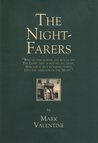
The Nightfarers

The NightfarersThe Nightfarers by Mark Valentine
My rating: 5 of 5 stars

Mark Valentine's name and fiction is often associated with authors such as Reggie Oliver, Quentin S. Crisp, John Howard, Stephen J. Clark, and Mark Samuels, largely because of these authors' associations with a handful of publishers known for producing extremely high-quality books, in limited editions, that focus on the borderline between the classic ghost story and the modern strange tale (e.g., Tartarus Press, Ex Occidente, Egaeus, Zagava, etc). These contemporary authors can be seen as the inheritors of a line of literary descent that includes such authors as M.R. James, Lord Dunsany, Arthur Machen, and Robert Aickman, among others. And yet, to lump them all together does a disservice to the individual authors and to the unique approach of each author to writing stories of this ilk.

This is particularly true of Mark Valentine's work. Valentine's writing is not as "weird" as Oliver's or Crisp's, for example. Nor is it as horrific as Samuels' or Clark's work. It is more . . . "restrained," is probably the best word, though "stoic" might be used to describe his work, as well. There's a certain nobility to Valentine's work in subject matter, tone, and structure; a bit of the old "stiff upper lip", if you will. His characters (primary or secondary, depending on the story) are often aristocrats. The stories themselves, at times, are of a more formalist bent - not the straight academic track, mind you, but something more like an armchair philosopher or dabbler in history might find most attractive. Something you would expect to be written by a man wearing a smoking robe and using a cigarette holder routinely. This is not to say that Valentine's fiction is unapproachable. No, far from it. But there is a certain "air" about it that will sometimes make you wish you had worn your best clothes to read in.

This collection is a beautiful hardcover book put out by Ex Occidente, limited to 350 copies. The cover I have is a full wrap-around of a beautiful purple (literally) painting of a handsome figure, nude, staring at the painter with glowing, nay, glowering yellow eyes as it (he) rests his chin in his hand. Though the frontispiece in the book is done by John Coulthart (and is clearly, distinctively, one of his pieces of art), I don't know who did the actual cover painting. But it is beautiful and sinister and entirely appropriate to the mood of the book. So, on to the contents:

"The 1909 Proserpine Prize" is a wonder. A story about the judgement of a literary prize for dark literature in which one of the books itself has a say. Include mystic languages and auctorial subterfuge on a cold winter night locked away in a storied building and, well, you get the picture. But not until the very end! This is one of several books wherein Valentine shows, through his fiction, his love of book collecting. Five stars and this collection starts off with a bang!

"Carden in Capaea" is an ephemeral tale, or is it an ethereal tale of . . .? I forget. The words escape me. I felt that I had them, long ago, but their meanings have blanched from my memory, fading into . . . what I don't exactly recall. But whatever they were, they were beautiful, if indescribable. Five stars is all I know, was all I ever knew.

"White Pages" is a beautifully written ghost of a story that could, itself, have served as the beginning of a ghost story. The ending-as-beginning was intriguing, but could have been further built into something far more terrifying. Still, it provides its own sort of satisfaction by letting things play out in the reader's theater-of-the-imagination. Four stars.

"The Inner Sentinel" is a brooding story caught somewhere between the oast houses of Kent and a fantastical, dreamland weald. The sense of dread is palpable and the prospect of betrayal by infiltrators is unnerving. A moody story, not terrifying, yet disturbing in the same way that one might feel after waking from a nightmare and almost forgetting the specifics of the fright behind you. I loved this story for the way it caused my emotions to ebb and sway as I read it. Five stars.

"The Dawn at Tzern" is pretty, but unspectacular. It carries the mood of the stories before it, but does little to deepen it. It's not boring; neither is it particularly exciting. Three stars.

"The White Sea Company" is a ghost story without being a ghost story wherein the "ghosts" are spoken of, but never seen, their presence so thin as to be almost imperceptible. They are presented in a manner of storytelling that can only be called "ethereal". Thin MR James meets Dunsany, but with some unique, unexpected "twists" on the canonical oeuvre. Five stars you can barely see in the mists.

Well, the five star stories can't go on forever, can they? "Undergrowth" is erudite, but less than compelling. "Underwhelming" is, I think, the right word. Three stars.

Joyce's Ulysses, Richard Francis Burton, a masked ball, a bizarre octopus-god that might merely be a preserved carcass, yet-unwritten secret books, and rituals involving white-clad virgin boys invoking writing by candlelight. What's not to like about "The Seer of Trieste"? I loved this literary occult tale. Five stars!

Though I appreciate the dark mystical message and tone of "Their Dark and Starry Mirrors," I think this story suffers just a touch from a lack of engaging plot points. Normally, I don't mind this at all - I love atmosphere over plot - but in this instance, it just feels like a blank space in an otherwise excellent piece of prose. Four stars.

At first, I felt that the ending to "The Bookshop in Novy Svet" was abrupt; non-sequitur. But as I re-examine the plot lines, I see that it was inevitable. And when I recognize the titular reference to Prague, it is clearly evident: This strange story of actuarians, artists, booksellers, and poets ended right where it must. It is a story I will read again, several times, and savor, a masterpiece. This is the kind of story where any writer of strange fiction will say "I wish I had written this". Or at least this writer did. Five stars.

"The English Leopard: An Heraldic Dialogue" is intriguing in its subject matter and stylistically exploratory, but not compelling. I have to be honest here and only give three stars to this one. This is the one story where I felt that Valentine was waxing a bit too academic. I wanted to like this story more than I actually did, which is a shame.

"The Box of Idols" is more or less a mystery story, albeit a short, curt mystery story. Still, the story fills the measure of its creation and is a satisfying tale involving idols, the ancient Assyrian language, and the process of printing itself. It's a great dalliance for book lovers with a slightly dark bent. Four stars.

"The Axholme Toll" is a clever metafictional slight-of-hand about a mysterious series of islands and books associated with these islands. I enjoyed it, but I couldn't shrug the feeling that this is what an author does when he knows the story he really wants to tell but really doesn't know how to tell it. So I appreciate the careful artifice, but felt that there was too much left unexplored or left unexplored in the right manner. Still a four star story.

"The Seven Treasures of Bucharest" is a beautiful story to end this excellent collection. A spiritual, sort of Arthurian quest, but a quest carried out by the intellect, shrewdness, and diplomacy, rather than the sword. And rather than ranging across England, this quest is confined to a quarter of Bucharest. But the "adventure" here is no less than that of the Knights of the Round Table. The sense of mystical wonder that permeates this story is palpable. Five stars.

Up to this point, this is the most I've spent on one book. Ex Occidente titles are notoriously expensive, and this one is no exception. But was it worth it? Totally! The incredibly high quality of the book, from presentation to construction to contents, bumps this one well into the five star range. I think I have here yet another example of what I call my "chained books". I will lock this one up and take it out to savor from time to time, re-reading and smelling its pages, which reek of ancient magic, though produced not so very long ago.

View all my reviews
__________

If you like my writing and want to help out, ko-fi me at https://ko-fi.com/forrestaguirre. Every little bit is seen and appreciated! Thank you!

Saturday, February 22, 2020

The Sound of His Horn and Other Stories

The Sound of His Horn and Other StoriesThe Sound of His Horn and Other Stories by Sarban


I had heard the name "Sarban" whispered in mysterious tones for years. The pseudonymous author's works were difficult for me, an American with very limited resources at the time I had heard of his fiction, to procure. Now, more well-off and a beneficiary of the internet age where the acquisition of books from across the world is much easier, I ordered The Sound of His Horn and Other Stories from one of my favorite publishers, Tartarus Press.

Expectations had been building for some time - many years, in fact - and I had, in my imagination, a certain type of story, a certain voice that I associated (with no prior experience) with Sarban. I suppose my imaginary Sarban was a mixture of Machen and Aickman, influenced by Arabic poetry.

I was not terribly far off.

But I was off just enough that my expectations were . . . sidestepped. It's not that expectations were not met, not at all - this is a fabulous collection of stories that will immerse your reading mind - but what I imagined I was going to read and what I read in reality were overlapping, but slightly offset from each other. This created a pleasant sense of familiarity that was also full of surprises and a bit of bafflement that added to the mystique of the act of reading. What more could a reader ask for?

I am usually not a fan of alternate histories (probably because I am a historian by academic training) but knowing that "The Sound of His Horn" is alternate history did not encroach on my enjoyment of the story. In fact, I was pleasantly surprised that I quite liked the tale: the first bucking of expectations.

Somewhere between "The Most Dangerous Game" and "The Great Escape," the titular story is well-crafted, borderline "literary," but shot through with pulp sci-fi elements. It mostly works, despite some of its intentional anachronism. Four stars.

The second story, curiously, was about a subject that I'm usually not interested in - that is, mermaids (or maybe mermaids) - hooked me and reeled me in. "The Sea Things" is a creepy one set in the Middle-East. Questions of the relationship between colonials and the colonized pop off like fireworks, but in the background, not at the main focus of the story. The tale is of its time, when the sun was, indeed, setting on the British Empire, with echoes of the Arabic poets mentioned above. As far as the horror element, this was a "B" creep factor for me, not chilling but definitely attention-grabbing; still worthy of four stars, one for each mermaid and their hapless victim.

"Number Fourteen" is, by far, the creepiest of the stories in this volume. There is a strong proto-Aickmanesque vagueness to the resolution of this story that heightens, rather than resolves the mystery. Sarban realizes, here, that the reader's flights of supposition are the most powerful plot-engine available to the author. My thoughts have gone places I'd not care to revisit after this horrific tale, including the far reaches of colonialism, which play a vital part in the plot. This was exactly the Sarban I had been seeking! Five stars to this powerful story.

A classic English weird story, "The Sacrifice" is precisely what I had hoped for when I picked up this volume. I'm glad for the variety of tonal textures between the stories, however. Because of the differing voices, this story stood out for what it was. Had more of the stories been more similar, "The Sacrifice" might have been drowned (pun intended) by same-ness. Again, the far reaches of India play a critical role in this story. It seems that most of the stories in this volume are a sort of lingering swan-song to the diminishing British Empire and some of the unforeseen consequences of contact and retreat with conquered peoples. The empire touched many places, but those places left their mark, in turn, on Great Britain. Strangely, though, one does not find the bigotry one might expect in this story. There is sort of a fearful respect of the Other, not altogether prejudice-free, but not as condescending and loathing as, say, Lovecraft or Howard. Five stars. This one will become an RPG adventure, I will see to that!

Lastly, a pair of English adventurers, young women with a penchant for exploration, go into the Sahara for "The King of the Lake". It's interesting to see the late- or post-colonial influence on these stories. They are of their time, and yet, somehow, timeless. Maybe because I studied so much about colonialism in college and was raised on U.S. military bases overseas - spending some of my most formative years in England - yes, my perspective may be different than that of most Americans.

"The King of the Lake" further shows Sarban's fascination with forcibly turning humans into animals . . .of a sort. There is a demonization of the autochthonous inhabitants of the desert here, or, perhaps, a nod to the justifiable revenge of the colonized on their colonizers, it's difficult to tell. One's demon is another's Angel of Vengeance. Four stars.

The more I ruminate on this volume, the more I am struck by the complexity of the tales here. Sarban is still a bit of a mystery to me, even knowing his real name and a bit of his background. I'm okay with leaving some mystery in this puzzle so my imagination can continue to fill in the gaps between my expectations and his printed words on the page. That shadow cast by the light of a book is one of my favorite places to take shelter.

View all my reviews

________________________

If you like my writing and want to help out, ko-fi me at https://ko-fi.com/forrestaguirre. Every little bit is seen and appreciated! Thank you!