Thursday, October 3, 2013

Shadows & Tall Trees 5

Shadows & Tall Trees 5Shadows & Tall Trees 5 by Michael Kelly
My rating: 4 of 5 stars

I owe my writing career to the small press. My first story published in print appeared in the February 2001 issue of Indigenous Fiction. Since then, my work has appeared in over 50 venues, some of them prestigious or popular, but most of them in the small press universe (both literary and speculative). So, feeling nostalgic, I bought a copy of issue 5 of Shadows & Tall Trees. The cover art is amazing, and the submission guidelines rang a happy bell in my head, the kind that says "you just might like this".

Now, I've done a little editing here and there. I'm pretty keen on having a unifying theme or at least a unifying sense of atmosphere in the anthologies I edit (or have edited - it has been a while). Still, I understand that most anthologies and magazines are mixed affairs. As Stepan Chapman once said, remarking about Leviathan 3, "there's something for everyone to hate".

While I didn't truly hate any of the pieces in this (let's call it what it is) short anthology, it was a bit of a roller-coaster ride, in terms of quality. I was a little worried, at first, as the introductory story really didn't do it for me. "New Wave" gave too much away early on. Today, on NPR, I heard the writers of Breaking Bad extol the virtues of telling a story by what is not said. I tend to agree with them. Give the audience 2+2 and let them figure out it's 4. Unfortunately, this story seemed like it felt the need to explain everything. It gave me 4 - I'm giving it a 2, as in 2 stars.

"Casting Ammonites" was much more moody than the first piece. It left enough unsaid, building the skeleton of a story around the bones of dialogue between two characters, but leaving the meat of the narrative up to the reader's imagination. This helped create mystique that added to the brooding nature of this 4 star piece.

"A Cavern of Redbrick" telegraphed the ending way too early. Still, it was a decent story; 3 stars worth, at least. One note: A lot of these stories had children as either protagonists or narrators. Long ago, I was given advice by Jeff VanderMeer, with whom I was editing Leviathan 3, at the time. He said, in essence "never include children in your stories - it's too easy to rely on sentiment to get a response from the reader". I've only spurned that advice a few times (all of them here). It's good advice for you writerly types. Writing about children often slips into child-like writing, which is not good if you're not writing a children's book.

"Laudate Dominum (for many voices)" continued in the same sombre mood that pervades the earlier stories. Again, the author "telegraphed" a bit too much for my liking. As soon as the narrator stated that his milk was sour, the gig was up - I had a pretty good idea of what was coming. The surreal central conceit of the story, however, knocked me back on my heels. So, despite knowing (view spoiler), I found this an enjoyable, very creepy, 4 star story.

"Moonstruck," by Karin Tidbeck, was the jewel of the anthology. It is a brilliant piece of speculative absurdism that avoids becoming silly. I was reminded of one of my favorite authors, Italo Calvino, which is some of the highest praise I can give to a story. The main child character in this fable is held in check by her staid, logic-driven mother. By far the best story in the volume, and possibly worth the cover price alone. 5 enthusiastic stars!

"Whispers in the Mist" is a ghost story set on its head, a'la The Others. At least that's how I read it. It was more emotive than most pieces in this volume, but not super compelling. I liked it, didn't love it. 3 stars.

Interestingly, this volume of Shadows & Tall Trees contained a non-fiction piece entitled "A Woman's Place". This essay examines Charlotte Perkins Gilman's The Yellow Wallpaper in the context of fin-de-siecle feminism. It was an intriguing take on Gilman's story, with little substantiating evidence (in the form of cross-referenced sources). The reader in me enjoyed it, the trained historian bathed it in red ink. Still 3 star worthy.

"The Other Boy" continues in the child-as-central-figure vein. I really enjoyed the characters in this family ghost story, but it was a very slow read. 3 stars.

The volume closes out with "Widdershins," the story of an American expatriate in Ireland who finds himself enmeshed in the local scene a little more than he would have liked. This story is an excellent example of giving 2+2 to the reader. I give it 4 stars.

From a rough statistical viewpoint, the anthology rates a 3.44. But, given the absolutely stunning cover art and the fact that editor Michael Kelly can keep a theme (children) and an atmosphere (brooding and a touch sad) running strong throughout, I have to "cheat up" to a 4 star.

Seriously, you've got to read Tidbeck's story. Wow.


View all my reviews

Friday, September 27, 2013

Exile

Exile (Forgotten Realms: The Dark Elf Trilogy, #2; Legend of Drizzt, #2)Exile by R.A. Salvatore
My rating: 4 of 5 stars

. . . In which Forrest's children con him into reading yet another book that wasn't originally on his TBR pile . . .

Yet another inadvertent social-science commentary, this time of a more psychological bent than sociological. Here we see Drizzt, the renegade drow-elf, struggle to regain his . . . well, his self. It's a lonely life out in the tunnels of the Underdark, worse, even, than the halls of your local middle- or high-school (if you can believe that). You see, the Underdark is full of bullies. Not your pudgy, freckle-faced, push-you-into-a-mud-puddle class bullies, but bullies that really want to kill you and eat you (and not necessarily in that order). As a result of this environment, the kind, gentle Drizzt has become a killing machine, a survivor, a bully's worst nightmare.

Worst of all, Drizzt has suffered abuse at the hands of his own sisters and mother. No, that's not exactly true. His mother wants to kill him. More than anything else in the world. This does nothing for his self-esteem.

I'm no psychiatrist, but it shouldn't take a PhD to figure out that this guy is pretty messed up.

Still, he has to have friends, right? Even the most awkward social reject has friends (who are also awkward social rejects). Enter Belwar, a svirfneblin that Drizzt encountered in the first book, Exile. Yes, there was the relationship-limiting issue of Drizzt having ordered Belwar's hands being cut off (if I'm remembering that right), but let's let bygones be bygones. Can't we all just get along? And who better to forgive an outcast, "good" drow who has abandoned the evil ways of his family, than a gnome with a pickaxe and magical hammer for hands? Reasonable, no? While we're at it, let's throw in a Pech that has been polymorphed into a Hook Horror (if I were the wizard who did this think, I would have changed him into a slug or a pudding or a soggy cardboard box or something, but what do I know of wizarding?). Three buddies, all trying to help Drizzt overcome his evil inner self.

If that's not enough, let's throw in some foes. Of course, there's Matron Malice, Drizzt's mother. Then there's the undead corpse of his father, Zaknafein, which is being controlled by Matron Malice (who really wears the pants in all this?). Add in a few random encounters with mindless whatnots, and a whole section of Mind Flayers, and you've got a recipe for a pretty good book.

Seriously, as much as I mock, I admire. Not the writing. Salvatore has a penchant for using words that don't make sense, though they sound like they should make sense (we call those "malapropisms," children). In the words of Inigo Montoya, "You keep using that word. I do not think it means what you think it means." But other than a bit of grammatical sloppiness, and a touch of overly sappy dialogue (both external and internal), I do like this book. It was written for teenagers, no doubt, and I'm a little older than that. Just a little. But the action was exciting, the characters were good, but not great, and the Underdark is fascinating. What really pushed this from a 3 to a 4 star book, however, was the intrigue between the drow themselves. Homeland set the stage for this, but watching the theory play out into practice was absolutely amazing. Hopefully I'll see more of that when I kowtow to my son's desires for me to read the final book in the trilogy and maybe even take a sidestep into one or two other Forgotten Realms books.

View all my reviews

Monday, September 16, 2013

Mort

Mort (Discworld, #4)Mort by Terry Pratchett
My rating: 3 of 5 stars

In a previous review of Pratchett's The Color of Magic, I speculated that I might have become jaded since high school. I noted that I enjoyed that book, but it was not as hilarious as I had remembered it, initially. There will be no such danger with Mort, meaning, I probably won't be re-reading it. Again, this one was funny, but not hilarious, and more cutesy than clever.

Still, it has its moments, the best of which, I thought, was the interchange between the Sun Emperor and his Grand Vizier, a game of wits, really, and a contest in the manipulation of societal niceties to one's lethal advantage. Death's own search for what it means to be human was very funny and almost poignant, though the lure of mortal banality was idealized with a bit too much treacle.

I will give Pratchett one thing, though: he understands teenage awkwardness. I thought the book really hit its stride when Mort's unrequited love of Keli and Ysabell's growing fondness of Mort lead to a few uncomfortable moments. Again, these themes are almost emotive enough to be compelling. But Ysabell's sudden switch from being annoyed by Mort's very presence to her fawning on Mort, with no real indication of why she changed, left me feeling just a little cheated.

I'll admit it - I like Pratchett best when he's off-subject. His little asides are what make this book enjoyable. The plot line is fairly flat, with big ideas that go unrealized. But it's the little ideas that I love and that make this a book worth reading, like valuable gems in a rather ordinary diadem. I'll search out another Discworld book, maybe two, looking for those same gems. But I can't say that I'm dazzled by Discworld . . . yet.

View all my reviews

________________________

If you like my writing and want to help my creative endeavors, ko-fi me at https://ko-fi.com/forrestaguirre. Every little bit is seen and appreciated! Thank you!

Thursday, September 12, 2013

Writer's Gear and My Writing Hideaway

I believe strongly that while things themselves don't bring happiness, surrounding oneself with material objects that one loves does bring a certain pleasure to the soul. Maybe I've read A Rebours one too many times, but I'm a fan of creating an environment in which I can flourish, creatively speaking. Now, I'm not wealthy, so I can't carve out the creative space I'd really like. Then again, having to scratch together my creative space is a creative act in and of itself.

I also believe in dressing for occasions. If you're going to go to an Opeth concert, for example, you probably want to wear black. Going out canoeing? Put on your PFD! If you don't know what a PFD is, you shouldn't be canoeing. Hunting? Best to wear Filson gear. Sitting down (or in my case, standing up) to write? Put on your writing shoes!

Yes, writing shoes!

And your writing fez!

Yes, WRITING FEZ!

Pardon me if I get a little crazy about my writing . . . accoutrements. It's not that I can't stand up (more on this later) and churn out a chapter without them. With my busy life, much of my writing is done on the fly, in-between other tasks, waiting while one of the kids gets a haircut, while cooking dinner, in line at the bank (that one got a few stares), etc. But when I can block out a chunk of time and I want to get serious about writing, I put on my writing gear and crawl into my writing cave.

It really is kind of like a cave, being in my basement and all. I have four kids and a small house, so space is at a premium. As they grow up and move on, I might be able to have a room to myself, though I sometimes wonder if I really want a larger room all to myself. There's something about my dark little corner of the basement that actually helps me focus. Sure, there are all kinds of distractions down there, I've surrounded myself with them. But they're the kind of distractions that fuel my creativity, rather than divert it.

So, without further ado, here are a few of my favorite things, the gear and space and knick-knacks out of which I create my little auctorial universe. Now, if you'll excuse me, after I'm done with this, I'm going to disappear into my lair . . .

Writing Shoes:


Here they are, my writing shoes: Dr. Martens Mens Brogue, size 9 (I'm a small guy). Comfort, quality, inspiration. And the high soles give me a little more lift for writing. No, seriously. You'll see why later. It's not just my Napoleon Complex.

Writing Fez:


Selfie! OK, I hate them, too. Don't focus on me, focus on the out-of-focus fez. Look into its voided eyes. Deeply. Deeply. That's it. No, wait! Stay awake! Keep reading! It's a blog, for crying out loud, you're here to read! Seriously, now, this fez holds great meaning for me. I bought it for myself after I finished writing my novel Heraclix & Pomp, which I'm very proud of. A skull-embroidered fez plays a key symbolic role in the book, as a matter of fact. Agent Kris is still pimpin' it to editors, so if you want to read more of my completed fiction, you can go here, here or here. If you're interested in reading the beginnings of the sequel to Heraclix & Pomp, chapter 1 can be found, rather conveniently, on my blog, here.

Behind me:


This is actually the view behind me, as I write.  The left side is a mirror, the right a corkboard. You can see the reflection of my writing desk in the mirror. The interesting blob at the lower left of the mirror is a melting-face theater mask that my youngest son made in his art metals class. The mirror and corkboard are surrounded by white Christmas lights. In fact, Christmas lights are ubiquitous in my little cave. The mirror isn't there for vanity - it's to double the light provided by the Christmas lights. On the corkboard, from top to bottom are: 1) a string of pictures of my children, oldest to youngest, 2) a particularly cool digital art piece of skeleton keys that I bought myself after selling my story "Keys I Don't Remember" (which you can read in my collection, Fossiloctopus), 3) a venetian mask (Do you sense a theme here? Me too. Hmm. Curious.), and 4) a framed collection of some of my favorite dark chocolate wrappers. I'm a little obsessive about dark chocolate. But not as obsessive as these guys!

Knick-Knacks


This is my knick-knack shelf, below the mirror and corkboard. I'd be here all day explaining all the full details, if I tried to tackle this open wunderkammer. I'll just hit the high points. There is a bit of my own artwork there, a framed, signed print by collage artist Michael Shores. I also have here a collection of several lead miniatures, including a fantastic set of martians by Eureka miniatures, some Mi-Go (with a brain cylinder), and a pair of pulp-era science fiction killer robots (I can't, for the life of me, remember who I bought these from - someone whom I contacted through theminiaturespage). Behind the minis is my well-provisioned box of cone incense, which I often burn while writing (hit all the senses, I say!). To the left is a jester statue by the very talented Lisa Snellings (over which is draped a bloodstone mandala that my brother made for me), and a vinyl copy of the E.T.L., Extraterrestrial Live album by Blue Oyster Cult, which is a work of art on many levels.

The Corner:


The corner. I find myself staring at this area when I need to think. Mostly because my World Fantasy Award trophy is there - Lovecraft all decked out in a beanie with a fake Pinocchio nose (the beanie was from a reading I did once, the nose was from Halloween one year).  Staring into Howard's vacant eyes helps the brain juices to get boiling, somehow. Below that, we have a set of medieval silver coins, a cup of my writing pens, and, of course, my writing fez. Up in the air, there, you'll see my caged origami ravens. Here's a closer look.

The Book Shelf:


Many, many wonderful books. Some of them for reference, some just because I love them. One of these days I'll have to list them all. On top of the shelf there's a pic of my lovely wife and a set of Moebius trading cards, along with an angel smurf my youngest gave me. There are a couple of rayguns there (one of them the notorious Fizziwig Thresher Mark II Ioniser), a tentacle that my middle son made in ceramics class (what's a fantasy writer's den without a tentacle somewhere?), and at the bottom is a  . . . thing . . . a lightbox, I suppose, that I made out of an old ammo box. 

The "Desk":


Confession time: My writing desk isn't really a desk. It's an old phonograph cabinet that someone was putting on their curb one day, when I asked them what they wanted for it. "You want it? Go ahead and take it!" Apparently, I'm not the only one who doesn't have enough room in his house. So I scored it for free. I found, years ago, that I'm much more energetic and much happier standing at a desk, rather than sitting. This is true at the day job, as well. And this is why my writing shoes, with their extra bit of lift, add to my writing enjoyment. Sure, I could go all Gene Simmons, I suppose, but those writing shoes are comfy and stylish! Anyway, inside my writing desk, you'll find several composition notebooks, pen cartridge refills, a can of coconut water or two, and mmmmmaybe some dark chocolate.

Where the Action Happens:


Whoa! What's that? Could it be a bar of dark chocolate on top of the writing desk? Why yes, that's exactly what it is, along with yet another raygun (that's three within arm's reach - watch it, alien scumbags!), my Google Nexus (playing Krzysztof Penderecki's De Natura Sonoris No.2 - you may remember this piece from the movie The Shining - via Pandora), a beautiful wooden pen I inherited from a wonderful friend who passed away recently (sorry for the sad note), and chapter 19 (right in the thick of it, in fact) of the science fiction novel I'm currently working on, entitled Solistalgia.

So there you are, from shoes to schrift, a tour of my imagination factory - well, at least the portion outside of my head and closest to my body, as I write. Hopefully the internet doesn't up and croak as I post this, my most memory-hogging blog post to date. If you have any questions or comments, feel free to tweet me @ForrestAguirre. If you'd like to read some free fiction of mine and purchase some almost-free fiction (both long and short form), pop on over to my Smashwords page and have a look. In the meantime, I'm going to head down, stand up, and do some more writing!
 _____________
Addendum: The skull fez makes a cameo appearance, well, many cameo appearances, in my novel Heraclix & Pomp, which I just sold to Resurrection House publishing!
_____________
Addendum 2: I have added the wonderful Bronze Hugonaut to my writerly cabinet of wonders. He offers a lot of inspiration when I'm stuck.

________________________

If you like my writing and want to help out, ko-fi me at https://ko-fi.com/forrestaguirre. Every little bit is seen and appreciated! Thank you!

Friday, August 30, 2013

A Stranger in Olondria

A Stranger in OlondriaA Stranger in Olondria by Sofia Samatar
My rating: 5 of 5 stars

Drenched in equal parts beauty and sorrow, Sofia Samatar's lush first novel makes for compelling reading. I had first journyed to the island of Tinimavet, homeland of Jevick, a pepper merchant's son and subsequent heir, via a chapbook preview given out at WisCon 2012. After reading the first several chapters, I was addicted to Samatar's rich prose, as well as being enamored of the Tea Islands and the titular Olondria, to which Jevick travels after his father dies and he takes over the family trade.

The beauty of the milieu is that, rather than yet another medieval Euro-clone fantasy world, the world of Olondria and the Tea Islands is derived from South Asian, Middle Eastern, African, and Malaysian or Indonesian frames. Having tangentially studied some of these areas (my Master's Degree is in African History), I was impressed not only by the trappings, but by the cultural honesty and authenticity that informed the characters' actions and attitudes. This is no simplistic rendering of quaint folk-tales, either, though there is a fairy-tale quality to some of the sub-stories that are told within the greater narrative. It is a rich and varied web, a real relief from Eurocentric works and the tired glut of urban fantasy. Sick of Tolkien clones? Give this a try. Love Tolkien clones? Try this.

I must admit that the opiate prose of the chapbook set me up for an emotional fall where the chapbook left off and the rest of the book picked up. I had no idea that I was standing on the edge of an abyss. You see, I waited a full year for the full book to be published and had been lulled into a sense of warmth and security by the beauty of the settings and of Samatar's writing. That warmth and security was soon shattered as I read about Jevick finding himself thrust into a series of mishaps, through no fault of his own, which affect him and those around him, shattering the envelope of innocence and optimism that might have surrounded him in his childhood. Worst of all, he is haunted, literally, by the soul of a young girl, Jissavet, whom he met on his way to Olondria and who subsequently died from the disease kyitna. Her ghost invades his life, ordering him to immortalize her by writing a Vallon, or book. When he reveals to others that Jissavet's ghost has come to visit him, some are convinced that he is insane and in need of confinement and healing, others see him as a saint, an Avneanyi, blessed with the gift to speak with angels. Through all the intervening intrigue, he searches for her body so that he can burn her remains and give her a proper send-off into the afterlife, releasing her from entrapment between the worlds of the living and the dead.

Ultimately, A Stranger in Olondria is about the power of books, both redemptive and destructive. By being taught to read and write in his youth by an Olondrian tutor, Jevick is eventually thrust into his harrowing journey by the books he reads. He is tormented into writing a book and, (view spoiler)

This is a deeply moving book, intellectually stimulating and emotionally poignant. The story, the characters, the overwhelming sense of sweetness, sadness, and nostalgia will stick with me for some time. It is a multi-layered work, with stories within stories like Russian dolls, and this structure works, for the most part. Even the one structural hiccup, the mechanical transition from Jevick's story to Jissavet's, is smoothed out by the overall excellence of the writing, the beauty of the setting and cultures, and the heart-breaking feeling of yearning that tears at the reader's soul. This is clearly the best book I've read thus far this year.

It was worth the wait.

Don't wait. Read it!

View all my reviews

Tuesday, August 13, 2013

Sorcery 2: Khare: Cityport of Traps

Sorcery 2: Khare: Cityport of TrapsSorcery 2: Khare: Cityport of Traps by Steve Jackson
My rating: 4 of 5 stars

1984, I think it was, when I picked this book up at a store called "The Book Professor" in Papillion, NE. Truth be told, Mom bought it for me as a consolation for JC Penny not having the Star Wars jersey I wanted in stock. If you haven't figured it out yet, I was a bit of a nerd. But I was a nerd going into regression. The metalhead/punk was, instead, coming out. So this book, being an easily-hideable nerd manual, was perfect. Part solo role playing module (think Tunnels & Trolls), part choose-your-own-adventure book (though much better than it's more famous cousins), the sorcery books were two-fists-full-of-six-sided-dice worth of awesome! Now, it was good that I had fairly low self-esteem at that time, too, since the narration could get a little condescending, at times. If you did something dumb, the book let you know it. But, hey, I lived through it, even if my character didn't, and I'm stronger for it. One important caveat: This Steve Jackson (of Games Workshop) is not the same as the Steve Jackson of Steve Jackson Games (Gurps, Car Wars, Ogre, etc). I just want you to know so that you don't make the same mistake I made while talking to the American Steve Jackson: Me: "Hey, I really liked your Sorcery books. Are you going to do any more of those?" Mr. Jackson (if you're nasty): "Huh?"

I failed my saving throw for putting my foot in my mouth on that one. Temporary loss of dexterity, permanent loss of charisma . . . believe me, you don't want it to happen to you. Thankfully, I've had my share of limited wishes to undo the damage.

View all my reviews

________________________

If you like my writing and want to help out, ko-fi me at https://ko-fi.com/forrestaguirre. Every little bit is seen and appreciated! Thank you!

Saturday, August 3, 2013

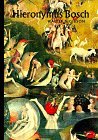
Hieronymus Bosch

Hieronymus BoschHieronymus Bosch by Walter S. Gibson
My rating: 4 of 5 stars

World Fantasy Award-winning author Zoran Zivkovic once described my short fiction as "the contemporary prose equivalent of the wildly imaginative paintings of Heironymus Bosch." For this, I am flattered, grateful, and, before reading this book, woefully ignorant of the artist to whom I am being compared.

Not that I'm unfamiliar with his paintings. I suppose my first exposure to Bosch's work came indirectly by way of a Black Sabbath album cover (remember albums?), that of The Best of Black Sabbath Vol. 1, back in the early '80s. Now, this must have been a bootleg, because I can't, for the life of me, find it now, even though I bought it at the ostensibly-reputable JC Penney store in Westroads Mall in Omaha, NE. At the time I really didn't care whether or not the band received their deserved royalties, as I was thunderstruck by the cover art, "The Triumph of Death" by Pieter Bruegel. I spent long hours listening to "War Pigs," "NIB," and "Sabbath Bloody Sabbath," while studying this painting. I must have been 12 or 13, and my virgin eyes had never beheld such a thing as this before. Ah, sweet innocent blasphemy in the Spring of youth!

Later, as a result of knowing this Bruegel piece, I was introduced to Bosch, since the two are often compared to each other. In fact, Bosch's "The Garden of Earthly Delights" hangs across the aisle from Bruegel's "The Triumph of Death" at the Prado in Madrid. Truth be told, while I appreciate "The Garden of Earthly Delights," I don't think it is Bosch's best painting. That honor, in my feeble eyes, goes to his "Temptation of St. Anthony," wherein Bosch's surreal, nightmare leanings are carefully honed in a technically-precise, symbolically-rich presentation of, well, the temptation of Saint Anthony.

But this is a book review, no? Yes. Let's get to the book.

No, let's not. Before we go further, I need to point something out. When I was an undergraduate, dutifully earning my BA in Humanities (History Emphasis), I developed a sort of snobbery toward Art History majors. I really felt that most of the Art History majors I knew were not-so-well-versed in anything outside of visual art. I was (and still am) pleased that my education encompassed many, many disciplines. I felt that my knowledge of music, theater, literature, dance, cinema, philosophy, and history all informed my appreciation of the static visual arts. Frankly, my conversations with Art History majors usually ended up with them abruptly ending the conversation with an uncomfortable "oh," at which point I knew I had gone too far afield from strictly visual art, in an attempt to contextualize the art itself. Not to slam all Art History majors, as I'm sure there are some that are well-versed in a variety of . . . stuff, but my experience left me with a snob's-eye-view of the "discipline" of Art History in general.

So when I pick up a book that is clearly in the Art History category, I go in with some hesitation. I'm excited about the subject, of course, but am always fearfully anticipating an involuntary intellectual flinch or two or ten along the way. It's purely a visceral reaction conditioned by my snobbery, no doubt. In this case, it's clearly not about the money - I bought this at a garage sale for a buck. Scratch up one point for my tightwadedness frugality!

Thankfully, the Thames & Hudson World of Art series has done something to alleviate my fears over the years. This volume, with commentary by Walter S. Gibson, does much to bolster my faith in the potential of art history as a discipline. Gibson is quick to note that there is much we do not know about Bosch - in essence we have no record of the man's training, though there are hints within his work that point to a couple of possible schools of art (not formal institutions, mind you, but certain perceived movements in certain artistic circles). For the most part, Gibson is careful to note that while certain conclusions about Bosch and his art might be inferred, there is the danger of thinking we understand far more than we actually do understand. Still, that doesn't stop Gibson, in a couple of places, from "projecting" by stating that Bosch "did not view the world as a stage upon which was enacted the struggle between equally powerful forces of good and evil, for this would have denied the omnipotence of God." Well, this may or may not have been true, but Gibson provides little evidence of this other than the fact that Gibson says that Bosch did not view things in this way. Unless Gibson was some sort of necromancer who raised the artist from the dead and personally interviewed him (how do you cite such an interview, anyway?), there is no way to be so sure of Bosch's views, opinions, etc.

Nevertheless, I'm older now, and at least a little bit more mature than in my undergraduate years. So I'm willing to forgive Gibson for falling back on his training a couple of times. Overall, his analysis was brilliant, well-supported, and cohesive. I learned a lot about Bosch and his world from Gibson's analysis. And, of course, the artwork in the book is beautifully dark and surreal - my favorite kind of art, the kind that makes me giddy like a school-child again. So the adult in me can leave his snobbery behind, making way for the 13-year-old, greasy-haired fanboy at the Mall to smile back across all those years.

View all my reviews

________________________

If you like my writing and want to help my creative endeavors, ko-fi me at https://ko-fi.com/forrestaguirre. Every little bit is seen and appreciated! Thank you!