Showing posts sorted by relevance for query melville. Sort by date Show all posts

Friday, April 12, 2013

Moby Dick

Moby-DickMoby-Dick by Herman Melville
My rating: 5 of 5 stars

Wanna know a secret? Lean over here and I’ll tell you: This is the first time I’ve read Moby Dick. No lie. 43 years old, never read it. That assignment in high school? Skipped it. Faked the report. Thank you, Cliff Notes. By that, I mean the guy named Cliff in my English class. He owed me a favor. A whale of a favor . . . And college? Bachelor’s degree in Humanities – I had to have read Moby Dick, right? Wrong. Just snippets. Excerpts. Then, feeling the guilt of being an educated American who had not read the book, I sat down to finally read it. This was, oh, about twenty years ago or so, I don’t rightly remember.
 
I started. But I didn’t finish. Why not? Because the book had a reputation, a monstrous reputation. It was big, boring, and scary, at least that’s what I was told. While I was reading comic books, fantasies, and role-playing game rulebooks in any spare time I had, my friends were reading Moby Dick. Or they had read it already and they were brooding on it. For years. I saw what that book had done to them. It didn't look very pretty from the outside.
 
But I have an addictive personality. Sometimes, I just can’t stop myself from reading. My curiosity – well, it gets me into a lot of trouble. And so it was that I was led, nay, possessed by some evil entity beyond myself (or maybe it was just embarrassment) to finally crack the spine and eat the marrow of, er, I mean, to read, yes, read what is considered by many to be Melville’s masterpiece.
 
Even then, I kept it a secret. I’m a multiple-book-at-a-time-reader (why does admitting that make me feel dirty?), so I’ve conveniently used the cloak of a few other books (even one, ironically, that involved whales) to disguise the fact that I’ve been covertly reading Moby Dick alongside these others. I know. I’m a creep, a literary lurker. Some kind of intellectual pervert. I can hardly help myself.
 
So it’s confession time. Time to repent and face up to reality. And the reality is: I really liked Moby Dick. It’s not nearly the daunting Leviathan that some led me to believe it was. Nor was it as boring as my little dalliances within its excerpts had initially indicated. No, actually, it was good. Really good.

And the book is not as "heavy" as you might think, at least not all the time. Melville’s sense of humor comes through, from time to time, in the book, and is rather endearing. Here, for example, he describes a painting of a whale and a narwhale appearing in the 1807 version of “Goldsmith’s Animated Nature”:
 
I do not wish to seem inelegant, but this unsightly whale
looks much like an amputated sow; and, as for the narwhale,
one glimpse at it is enough to amaze one, that in this nineteenth
century such a hippogriff could be palmed for genuine upon
any intelligent public of schoolboys.

 
There’s a sort of learned snarkiness in the narrator’s voice, though it’s not sharply critical. The kind of thing you’d appreciate around a table drinking tea with close friends, rather than the public humor of a stand-up comedian. This sense of talking with a (very erudite) friend makes the book “warm” in just the right spots, such as the point where Ishmael is getting to know Queequeg a little better than he'd like to. In time the narrator’s accepting attitude help us to accept not only Queequeg, but Ishmael himself, as well. We learn to trust him as our narrator.

Granted, there are moments, like the exhaustive (and exhausting) taxonomy of whales that tried the nerves (the optic nerves, in particular), and, yes, the language is archaic and even a bit esoteric at times. The alliteration can get a little tedious, too, even for a Dr. Seuss fanatic like me, as in this sentence:
 
It was while gliding through these latter waters that one
serene and moonlight night, when all the waves rolled by like
scrolls of silver; and, by their soft, suffusing seethings,
made what seemed a silvery silence, not a solitude; on such a
silent night a silvery jet was seen far in advance of the white
bubbles at the bow.
 

But Melville – first off, the guy has chops. He can write a great sentence.

Secondly, he weaves dimestore philosophy throughout almost seamlessly, and I love works with a bit of the philosophical in them. Even in the descriptions of decapitated whale’s heads, the narrator waxes philosophical:
 
Can you catch the expression of the Sperm Whale's there?
It is the same he died with, only some of the longer wrinkles
in the forehead seem now faded away.  I think his broad brow
to be full of a prairie-like placidity, born of a speculative
indifference as to death.  But mark the other head's expression.
See that amazing lower lip, pressed by accident against the vessel's side, so as firmly to embrace the jaw.  Does not this whole head seem
to speak of an enormous practical resolution in facing death?
This Right Whale I take to have been a Stoic; the Sperm Whale,
a Platonian, who might have taken up Spinoza in his latter years.


Another example comes to mind, as the narrator holds a rope tied around his friend, Queequeg, who is rather busy working on a whale carcass in the water, all the time trying to avoid being bitten by the school of sharks that is feeding on the body atop which the poor laborer is walking. I love the implications of this "monkey rope", how we are, as humans in society, tied together and dependent on one another. There’s a simultaneous fear and warmth in the trust implied thereby. That tightrope between fear and warmth seems to be a comfortable spot for Melville. Not an easy trick!

And third, his characters are incredibly detailed, alive, even. Take, for instance, this masterful description of the genesis of Ahab’s hatred toward Moby Dick:

It is not probable that this monomania in him took its instant
rise at the precise time of his bodily dismemberment.
Then, in darting at the monster, knife in hand, he had but
given loose to a sudden, passionate, corporal animosity;
and when he received the stroke that tore him, he probably
but felt the agonizing bodily laceration, but nothing more.
Yet, when by this collision forced to turn towards home, and for
long months of days and weeks, Ahab and anguish lay stretched
together in one hammock, rounding in mid winter that dreary,
howling Patagonian Cape; then it was, that his torn body and gashed
soul bled into one another; and so interfusing, made him mad.
That it was only then, on the homeward voyage, after the encounter,
that the final monomania seized him, seems all but certain
from the fact that, at intervals during the passage, he was
a raving lunatic; and, though unlimbed of a leg, yet such vital
strength yet lurked in his Egyptian chest, and was moreover
intensified by his delirium, that his mates were forced to lace
him fast, even there, as he sailed, raving in his hammock.
In a strait-jacket, he swung to the mad rockings of the gales.
And, when running into more sufferable latitudes, the ship,
with mild stun'sails spread, floated across the tranquil tropics,
and, to all appearances, the old man's delirium seemed left behind
him with the Cape Horn swells, and he came forth from his dark
den into the blessed light and air; even then, when he bore
that firm, collected front, however pale, and issued his calm
orders once again; and his mates thanked God the direful madness
was now gone; even then, Ahab, in his hidden self, raved on.


I find the crazed prophet Gabriel of the ship Jeroboam to be fascinating, as well. In fact, all the certifiably crazy people in the story (Gabriel, Ahab and, later, Pip) are fascinating in their ability to lift the reader beyond the mundane with their mad, eloquent ravings. I’d love to write Gabriel's full story, or a similar one. Maybe someday . . . is there such a thing as “Moby Dick fanfic?"

Now, Melville’s seemingly erratic jump from 3rd to 1st person, back and forth, as well as his diversions into stage directions and drama would be considered the greatest taboo by many of the big-name book publishers today. Inconsistent narration? Crazy! Metafiction? No one will want to read that!
 
But they did. And they do. The popularity of Moby Dick attests to that. But if Melville were to submit his manuscript today, few agents would take it. “Too experimental,” they’d say, “try the small presses”. And some obscure small press, run from a kitchen table in a suburb on a shoestring budget, would eventually take it and publish it right into nothingness. Eventually, as word spread among a cult of readers, one of the larger presses might note that the book was getting some notoriety and ask for sales trends. “This is a whale of a tale,” they’d say as their pupils assumed the shape of dollar signs, “how did we ever miss it?”
 
If it was a whale, it would have bitten their corporate leg off.

Maybe that's what makes this book so good. It's a tough read. It requires some stamina. You'll probably need to grab a dictionary from time to time. Some parts will read incredibly slow and you'll need to re-read them. Others will be over before you know it and you'll need to re-read them. This is not a book for the casual reader any more than the Pequod's quest was a casual fishing trip off the coast. This book is deep water. But like any challenge that requires great effort, the results are worth it. Some might consider this read a quest in and of itself, even memorializing their participation in the quest. I don't blame them. Moby Dick is a sort of readers' rite of passage. Now I can say, with some sense of pride, that I am one of the initiated, forever baptized in the depths along with Ahab, Queequeg, Starbuck, Stubbs, and all the rest. I know these people, or I knew them. I have smelled the blood of whales, the salt of the sea, tasted the iron of the harpoon, stood atop the mast and taken in the rolling immensity of the sea, seen the white whale rushing up from the watery dark toward my boat. I have served my time on the Pequod. And I say, welcome aboard!

View all my reviews

____________

If you like my writing and want to help out, ko-fi me at https://ko-fi.com/forrestaguirre. Every little bit is seen and appreciated! Thank you!

Saturday, October 24, 2015

My Personal Appendix N

In 1979, Gary Gygax listed a series of books and authors from which he drew inspiration when designing his Dungeons & Dragons game system(s). These were primarily works of fantasy or science fiction. For an excellent overview of how this appendix influenced tabletop role-playing gaming, I'd refer you to the "Appendix N: Inspirational Reading" section of the Dungeon Crawl Classic RPG rulebook on page 442.

Here, I include my sources of inspiration for fantasy role-playing, some of which will match mister Gygax's list, but much of which has been published since 1979. I am including in this list works of fiction and non-fiction, as some of these non-fictional works have been rather influential in my design of campaigns, adventures, etc. Some of these influences, whether fictional or not, may be slight, and I might have taken a very small thread from a work mentioned and woven from it something much larger or even invisible to my players. For example, why in the world would I have Herman Melville's ponderous Moby Dick herein? Not because I like whales or because I've run extensive maritime adventures (I have not), but because of the sheer maniacal drive of what could be the prototypical overzealous cleric, Captain Ahab, and the enigmatic QueeQueg, who I think would be a marvellous gonzo player character in any adventuring scenario and may or may not appear as a non-player character in anything I might right or run. Other books listed here show a pretty straightforward influence on my judging and playing style. For example, anyone playing in my campaigns who has read M. John Harrison's Viriconium stories will immediately see nods to these works.

Note that I have explicitly NOT included other media. At a later date, I will give my "Appendix M" for other media, such as movies, music, comics, graphic novels, works of art, etc. That may end up being a much longer list than this one!

Note also that some of these are works I have read very recently that I may not have mined just yet, but am working on supplements, adventures, and so forth that will, I promise, dip into these sources. The thing about my Appendix N is that it will always, always be growing!

So without further ado, I give you my list of authors and, sometimes, specific works, that have influenced my gaming: My personal Appendix N.

Dante Alighieri: Inferno
M.A.R. Barker, esp. the Tekumel books, Flamesong in particular
William Barrett: Irrational Man: A Study in Existential Philosophy
Jorge Luis Borges
Ray Bradbury, esp. The Martian Chronicles
Robert Burnham: Burnham's Celestial Handbook
Edgar Rice Burroughs, esp. Mars series
Italo Calvino, esp. Invisible Cities
James W.P. Campbell: The Library: A World History
Robert W. Chambers
Michael Cisco: The Divinity Student
Stephen J. Clark: In Delirium's Circle
Richard Cohen: By the Sword
Norman Cohn: Pursuit of the Millenium: Revolutionary Millenarians and Mystical Anarchists of the Middle Ages
Steven Erikson, Malazan series
Brian Evenson, esp. Dark Property, Fugue State, and The Wavering Knife
Jeffrey Ford, esp. the City Imperishable books
Brian Greene: The Hidden Reality
M. John Harrison, esp. the Viriconium stories and novels
Robert E. Howard, esp. the Conan stories
J.K. Huysmans: Against Nature
Franz Kafka
Paul Koudounaris: Heavenly Bodies: Cult Treasures and Spectacular Saints from the Catacombs
Fritz Leiber, Fafhrd and Gray Mouser books
Thomas Ligotti
H.P. Lovecraft
Brian May: Diableries: Stereoscopic Adventures in Hell
Herman Melville: Moby Dick
Gustave Meyrink
China Mieville: Perdido Street Station
Michael Moorcock, esp. the Elric of Melnibone books
Edgar Allen Poe
Mark Samuels, esp. The White Hands and Other Weird Tales
Clark Ashton Smith, esp. the Zothique stories
Arkady Strugatsky: Roadside Picnic
Jack Vance, esp. The Dying Earth
Jeff VanderMeer: City of Saints and Madmen
Gene Wolfe, esp. Book of the Long Sun and Book of the Short Sun novels

________________________

If you like my writing and want to help out, ko-fi me at https://ko-fi.com/forrestaguirre. Every little bit is seen and appreciated! Thank you!


Wednesday, December 12, 2018

Reclaiming Art in the Age of Artifice

Reclaiming Art in the Age of Artifice: A Treatise, Critique, and Call to Action (Manifesto)Reclaiming Art in the Age of Artifice: A Treatise, Critique, and Call to Action by J.F. Martel
My rating: 5 of 5 stars

I sometimes hear critics decry artists as being “indulgent” when they do something they love that isn’t popular with said critics. I recall the one season of American Idol that I watched (the one where Adam Lambert should have won) wherein one of the early contestants was called “Indulgent” for singing what I thought was a not terrible rendition of Pearl Jam’s “Jeremy”. I’ve been similarly accused and, in fact, used said accusation in my writer’s bio from time to time. You see, I don’t care if I’m viewed as indulgent. I write because I like to write. Some publishers happen to have liked what I’ve written and have published some of my work. Pardon my flippancy (or don’t), but . . . get over it.

Those who have spent any time with me in person know that I’m not so bold in person. I’m a pretty nice guy, sometimes a bit too deferential. But when it comes to my writing and my reading tastes, I am my own man. Writing is my drug. MY drug. Your drug may be different, and your experience with writing may be (and should be) different. It should be your own. All art should be your own because it is your interface with art that matters, not the art itself. The object that elicits the feelings within you, the emotional and intellectual connection, the reaction, will never be the same for another person. Nor should it be.

Here we have one of the central points of J.F. Martel’s “treatise, critique, and call to action”: Art is different for every person, while artifice is intended to engender the same reaction from each person who encounters it. Art is about expression, with the viewer taking an active role in interpreting the meaning of the object/picture/performance, while artifice is about communication, with the viewer taking the passive role of receiving the message which the deliverer wishes to inject into his or her heart or mind. One is a complex symbol open to many different interpretations, while the other is a sign pointing to an ideology to which the creator wants to assign one true meaning:

The moment we reduce a work of art to its references to other things, as with statements such as “Kafka’s Trial is a story ‘about’ modern bureaucracy” or “Fargo" is a film ‘about’ the corrupting influence of money,” we risk losing sight of what art alone can do, because we are effectively turning it into something that can be deciphered . . . a work of art is not ‘about’ any one definitive thing. Captain Ahab isn’t “just” a man obsessed with a whale any more than Moby Dick is “just” a story about whaling and obsessive-compulsive disorder. Ahab and his obsession are inseparable from one another. He is formed by his drive to kill the white whale – and cannot exist apart from it. Nor is Ahab’s preoccupation with hunting down Moby Dick a generic characteristic that, in his particular case, happens to be directed at a large sea mammal. Rather, his obsession is itself inseparable from Moby Dick; it is an aspect of the whale as well as an aspect of Ahab. The madness at the heart of Melville’s story becomes an abstract “character trait” only once we have extracted it from its specific context, stripping it of its singularity and generalizing it into a psychological opinion . . . the hunter, the hunt, and the hunted constitute an indissoluble system, each part of which exists by virtue of the force exerted by the others.”

The need to dissect and dissemble art into its constituent parts, while laudable in academic circles, does, to some degree, rob one of the mystery of discovery that one feels when encountering a moving piece of art for the first time. As an undergraduate, I studied Humanities with a history emphasis. I learned how to examine art, music, dance, theater, drama, architecture, and cinema in historical context, but always with a bias toward one school of philosophy or another. The intent was that we students would become exposed to and possibly even facile in criticism of various forms. I spent several good years of my life doing this and, while I am grateful for the intellectual exercise (and actually enjoyed it, to some extent), I felt an overwhelming sense of relief when, one summer, I read The Complete Sherlock Holmes and Tolkien’s The Silmarillion (followed by The Hobbit and the Lord of the Rings series) after a particularly grueling semester of Marxist and Objectivist analysis of several works of art and literature. It took a week or so to deprogram from the academic rigor of that semester, but when I did, and when I read the books without any preconceived analysis, I felt . . . free! And, strangely, when I did have the analytical devil whisper over my shoulder, my thoughts “uncoiled” quite naturally. Maybe I had just been indoctrinated, I don’t know. But I was able to enjoy the fruits of my studies when I let myself relax and enjoy the art itself, first and foremost. My sense of mystery returned to me as I let these works unfold on their own terms, without the need for analysis.

As Martel notes:

Astonishment has an intellectual as well as an emotional component - in it, the brain and the heart come together. Far from distracting us from the strange and the uncanny in life, the astonishment evoked by great artistic works puts them square in our sights . . . the world is not what we thought it was: something hidden, impossible to communicate . . . [is] clearly expressed in the work.

That aesthetic astonishment (which, I will note, is also often felt by the artist while in the act of creation) is the “drug” I seek in either bringing art to life or engaging with the art of another. While I appreciate the careful analysis and dissection of a work (watch me at a museum – I’m the guy the guards keep an eye on because I want to get nose-close to the painting to see the individual strokes), I also realize that the appreciation of art is not a scientific endeavor. Scientific thinking can never explain the magic I felt, for example, when I first heard Kronos Quartet play live, or when I saw my first Redon painting in-person or when I first read A Clockwork Orange. It cannot tell me why I loved these things and why they moved me inside, why they created such a strong emotional and intellectual response.

”Why?” is a problem science can’t lick; in fact, the very nature of science prevents it from even framing the problem. What science does – and does beautifully – is to enrich the mystery by revealing ever deeper layers of the physical universe, which becomes more puzzling with each new discovery. Any adequate response to the mystery of existence must be poetic, for only the poetic can take on the “why.” If poetic answers are always figurative, never literal, it is because no sooner has the question of being been raised than we leave the world of determinate things to travel in a far stranger country.

This strange country is where the artist lives and thrives. It is of little use to ask me why I love the aforementioned pieces. And, in fact, it’s more than a little distracting from my enjoyment of the piece. What matters is that startling moment of revelation, that twist of the brain and heart that sends a thrill of excitement or dread or any other unanticipated feeling response that the art invokes in me.

Not to wax overly meta-, I present the following quote from Martel’s own work as an example of something that struck me on a deep level. Now, keep in mind that Poe’s poem, “The Raven” is an old favorite. It is also the first poem that my daughter memorized (the entire thing – as a nine year old, no less!) and that she recites, even as an adult, around Halloween. Now, with that in mind, read this seemingly innocuous quote:

At the literal level, Edgar Allan Poe’s “The Raven” (1845) features a bleak November night, a black bird, and a dead woman – only this and nothing more.

SWOON! Do you see what he did there? If not, go back and read the poem. Then read that quote again. It’s an esoteric twist that I had not at all expected. I almost shed a tear at this. Why? That’s my secret, my experience, involving my relationship to reading, writing, and my daughter. I can’t explain it. Either you feel it or you don’t.

And if you don’t feel it, that’s fine. But I do. So, indulge me and call me indulgent. This sentence was written for me. At least I choose to take it that way. Martel encourages the profound idea that one should engage a work of art as if it was created and meant specifically for you. Or, in the case of those who create art:

. . . this means taking the job seriously enough to pursue the visions that come from within rather than those that are foisted upon us by social pressures, popular taste, and the whims of the market. It means making it our principal task to let the symbol speak through the work rather than trying to speak through the symbol. We need to revive the ancient idea of art as a holy madness in which one is guided by external forces. Only thus can we bring forth what we have never seen, yet desperately need to see.

This is what I seek when I write. Call it indulgent. I call it art. No apologies.

********
For those interested in more of J.F. Martel’s musings, I cannot recommend his podcast (along with Phil Ford) Weird Studies strongly enough. It has quickly climbed to the top of my list of favorite podcasts and never fails to satisfy, no matter what the specific subject matter. Please give it a listen!


View all my reviews

________________________

If you like my writing and want to help my creative endeavors, ko-fi me at https://ko-fi.com/forrestaguirre. Every little bit is seen and appreciated! Thank you!
Saturday, March 28, 2015

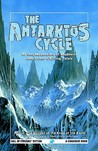
The Antarktos Cycle

The Antarktos CycleThe Antarktos Cycle by Robert M. Price
My rating: 3 of 5 stars

Embellishments are, at times, welcome, as in the addition of Chipotle chili to dark chocolate (try a dash of Chipotle in your next hot chocolate). At other times, additions to existing works can be kitsch, even gauche. Such is the case here.

I love my Lovecraft, and At The Mountains of Madness is one of my favorite guilty pleasures. So when I saw that Chaosium was re-releasing The Antarktos Cycle (which was way out of my budget as a used paperback), I, for the first time ever, paid more than $10 for an E-book. I gladly paid, hoping to recapture and even elaborate on the magic I felt reading ATMOM the first several times through.

The book starts off promising, with Robert M. Price's excellent introduction: "Lovecraft's Cosmic History," which lays out in great detail the timelines of the cosmos, as envisioned by Lovecraft and influenced by the shared world-building he participated in with others, including Clark Ashton Smith, Robert E. Howard, et al. If you have any question as to where Lovecraft's stories, creatures, or the events he outlined fall, this is the essay to consult. Granted, it is rife with contradiction, as Lovecraft only had a tenuous grasp on the vastness of the Mythos he spawned, but Price does a good job of explaining the different possibility spaces that Lovecraft explored, without making excuses for the contradictions. This is an excellent essay for the Lovecraft scholar.

"Antarktos," an early poem by Lovecraft, starts the fiction ball rolling. It is a short piece, almost trite, but does set up an atmosphere that can't be called anything else but "Lovecraftian".

Edgar Allen Poe's The Narrative of Arthur Gordon Pym of Nantucket is the first piece of prose fiction in the volume. To be honest, this is Poe at his most tedious. This novel is sometimes cited as an inspiration for Melville's utterly amazing Moby Dick, and it is apparent that this is true. Pym is to cargo shipping what Moby Dick is to whaling - everything you didn't want to know about how to pack a cargo hold and then some. Still, Poe presents a fairly solid piece of fiction here, with every deprivation and horror one would expect from a long journey at sea. And, as is always the case, Poe proves himself the master of making the reader feel claustrophobic. I may never stay under the waterline of a ship again.

John Taine's "The Greatest Adventure" is anything but. It is trite and hackneyed in all the worst ways. Take the low-points of pulp, all the warts and scars, compile them into one body, including failed attempts at forced humor and the worst mansplaining I've seen outside of Triplanetary and you've got this story. It was about a quarter of the way through this story that I began to question the wisdom of reading the rest of the volume, but this story is an obvious influence on ATMOM, so I suffered (and I mean SUFFERED) through it.

At the Mountains of Madness was next. You already know my feelings about this novella. Yes, it has its many weaknesses, but I love it.

"The Tomb of the Old Ones" was the absolute nadir of this volume. I have nothing good to say about it, so, for once, I'm going to take my mother's advice and say nothing more about it.

. . . No, I just can't help myself. This story sucked so badly it makes a black hole's pull seem weak in comparison. I kept waiting for the part when it was revealed that the narrator was insane or that the superhero-psychic crap was all a lark. Unfortunately, that moment never came. Thankfully, the ending of the story, after a looooong, painful slog, did.

At least Arthur C. Clarke's "At the Mountains of Murkiness" was supposed to be a joke. It made me chuckle a bit, but it wasn't laugh out loud funny. If you want Lovecraft pastiche, try Selections from H.P. Lovecraft's Brief Tenure as a Whitman's Sampler Copywriter. Now *that* is funny!

"The Thing From Another World" might have worked as a great Twilight Zone episode *if* the Thing had actually been a macguffin. But, no, it was a real . . . thing. Further hurting the story was the fact that John W. Campbell, Jr. is enamored of adverbs and poor sentence structure. Reading this sometimes felt like listening to a toothless Welshman with a speech impediment (apologies to my toothless Welshmen with speech impediment friends out there. I know there's at least one of you. Well, at least the Welshman part).

John Glasby's "The Brooding City" was pretty much a photocopy job of every trope and adjective that Lovecraft ever used. It was uninspiring and unoriginal. Glasby tried to evoke Lovecraft, but failed to summon him.

"The Dreaming City," by Roger Johnson was really what I was hoping for from this anthology - a "Lovecraftian" story that was not lifted directly from the pages of Lovecraft and his kin, something with some originality of subject matter, but with the same feel of dread and foreboding that Lovecraft was so good at bringing out from the shadows.

Alas, it was too little, too late. I might purchase another of the Chaosium books, I might not. We'll see what happens when the mood strikes me. Then again, if the mood really strikes me, I'm most likely to just crack open a Lovecraft story and read it. Or, possibly, something by Mark Samuels or Thomas Ligotti, who also seem to "scratch that itch" when I need it.

Then again, there's nothing quite like the original, is there?

View all my reviews

__________

If you like my writing and want to lend your support, ko-fi me at https://ko-fi.com/forrestaguirre. Every little bit is seen and appreciated! Thank you!


Wednesday, October 25, 2023

Swann's Way


Swann's Way (In Search of Lost Time, #1)Swann's Way by Marcel Proust
My rating: 5 of 5 stars

It is impossible to capture all the splendor of this book in a review. That's not an excuse, it's the simple truth. Swann's Way is one of the most beautiful, most human novels I've read, and it's only the first in the epic In Search of Lost Time. Will I read the rest? Unlikely. Ironically, there's just not enough time.

However, this was anything but a difficult read. It's nothing like Joyce or Beckett or Melville, for example. Yes, the sentences notoriously go on and on (in once case, I seem to remember one sentence going on for three pages straight, maybe more), but once the reader gives themself up to the rhythm of the novel, one becomes enfolded in it. It is an easy read, easy on the brain, easy on the soul.

The only way I can describe Proust's prose is to use the analogy of natural pearls on a string. Each is different from one another, each shines with the same lustre, and all together they compound delicately accrete into something even more beautiful as a whole. One has to read the whole work, studying each sentence on its own merits. I could provide inumerable quotes that illustrate the beauty of the prose, but then I would be quoting nearly the entire book. Suffice it to say that Proust out-Huysman's Huysman by turning the seemingly banal into a celestial scene without succumbing to the temptation to bejewel the prose with gaudy embellishments. Take, for example, part of the account of Odette sprucing up the room into which she had invited Swann:

But when her footman came into the room bringing, one after another, the innumberable lamps which (contained, mostly, in porcelain vases) burned singly or in pairs upon the different pieces of furniture as upon so many altars, rekindling in the twilight, already almost nocturnal, of this winter afternoon the glow of a sunset more lasting, more roseate, more human - filling, perhaps, with romantic wonder the thoughts of some solitary lover wandering in the street below and brought to a standstill before the mystery of the human presence which those lighted windows at once revealed and screened from sight - she had kept a sharp eye on the servant, to see that he set them down in their appointed places. She felt that if he were to put even one of them where it ought not to be the general effect of her drawing-room would be destroyed, and her portrait, which rested upon a sloping easel draped with plush, inadequately lit. And so she followed the man's clumsy movements with feverish impatience, scolding him severely when he passed too close to a pair of jardinieres, which she made a point of always cleaning herself for fear that they might be damaged, and went across to examine now to make sure he had not chipped them. She found something "quaint" in the shape of each of her Chinese ornaments, and also in her orchids, the cattleyas especially - these being, with chrysathemums, her favourite flowers, because they had the supreme merit of not looking like flowers, but of being made, apparently, of silk or satin. "This one looks just as though it had been cut out of the lining of my cloak," she said to Swann, pointing to an orchid, with a shade of respect in her voice for so "chic" a flower, for this elegant, unexpected sister whom nature had bestowed upon her, so far removed from her in the scale of existence, and yet so delicate, so refined, so much more worthy than many real women of admission to her drawing-room. As she drew his attention, now to the fiery-tongued dragons painted on a bowl or stitched on a screen, now to a fleshy cluster of orchids, now to a dromedary of inlaid silverwork with ruby eyes which kept company, upon her mantelpiece, with a toad carved in jade, she would pretend now to be shrinking from the ferocity of the monsters or laughing at their absurdity, now blushing at the indecency of the flowers, now carried away by an irresistible desire to run across and kiss the toad and dromedary, calling hem "darlings". And these affectations were in sharp contrast to the sincerity of some of her attitudes, notably her devotion to Our Lady of Laghet, who had once, when Odette was living at Nice, cured her of a mortal illness, and whose medal, in gold, she always carried on her person, attributing to it unlimited powers.

Analysis of this passage seems to me a petty blasphemy. This book is to be read. It is, more than any other book I can think of, a reader's book. I have absolutely no desire to dissect this book (I'll leave that to the professionals, such as Roger Shattuck). I enjoyed it, and I just want to leave it that way. And that might be just about the best compliment I can give a simply beautiful work of fiction. Maybe the simply beautiful work of fiction.


View all my reviews
____________

If you like my writing and want to help out, ko-fi me at https://ko-fi.com/forrestaguirre. Every little bit is seen and appreciated! Thank you!

Tuesday, December 31, 2013

5-Star Books 2013

Here is a listing of the books that I read in 2013 that received a 5-star rating from me. I have not put them in any particular order. Most of them were not released in 2013; in fact, only one of them was, so far as I can recall (and it's New Year's Eve day - I'm too lazy to look it up). There's a preponderance of graphic novels which probably means: 1) I like graphic novels, 2) I am so busy with other projects that I don't have enough time to read too many full-length novels, or 3) I write, but am not a great artist, and am in awe of what artists can do. Probably "all of the above". In any case, these were my favorite reads this past year. I've provided links to each review so you can get more details on each one. Of course, you can probably guess what my favorite novel of 2014 will be . . .

  1. Codex Seraphinianus, Luigi Serafini.
  2. A Clockwork Orange, Anthony Burgess.
  3. Fatale, Vol. 2: The Devil's Business, Ed Brubaker.
  4. Mars Attacks, Len Brown.
  5. The Great Gatsby, F. Scott Fitzgerald.
  6. The Manhattan Projects, Vol. 1: Science, Bad, Jonathan Hickman.
  7. Cinema Panopticum, Thomas Ott.
  8. A Stranger in Olondria, Sofia Samatar.
  9. The Manhattan Projects, Vol. 2: They Rule, Jonathan Hickman.
  10. Moby Dick, Herman Melville.
  11. Prophet Volume 1: Remission, Brandon S. Graham.
  12. Roadside Picnic, Arkady and Boris Strugatsky.
And there you have it. Here's to a  great 2014 spent discovering new authors, new characters, and new adventures! Happy New Year!

________________________

If you like my writing and want to help out, ko-fi me at https://ko-fi.com/forrestaguirre. Every little bit is seen and appreciated! Thank you!