Sunday, May 21, 2017

Call of Cthulhu Keeper Rulebook: Horror Roleplaying in the Worlds of H.P. Lovecraft

Call of Cthulhu Keeper Rulebook: Horror Roleplaying in the Worlds of H.P. Lovecraft (Call of Cthulhu RPG)Call of Cthulhu Keeper Rulebook: Horror Roleplaying in the Worlds of H.P. Lovecraft by Sandy Petersen
My rating: 5 of 5 stars

Call of Cthulhu has made my list of #7RPGs (which is in need of updating to include Dungeon Crawl Classics, but I digress). This 7th edition takes the previous editions and ratchets the game up a notch, not by any hugely different mechanics (you'll still find the Basic Roleplaying system at its core), but by presenting a carefully-crafted approach not only to the Call of Cthulhu game, but to roleplaying in general. In fact, I recommend any game master of any roleplaying game to read Chapter 10: "Playing the Game". This chapter is one of the best guides to how to run a game, especially a game involving mystery or horror, that I've ever read. I will be applying many of those lessons for years to come, and I am a game master with nearly 40 years of experience on the table.

The book's presentation is exceptional. It is sturdy (unlike a certain 2nd edition of another very popular roleplaying game, which are known to crumble into sheafs of paper) and exquisitely crafted. Each chapter is host to a full double-page full-color painting and there are full-color paintings and sepia tone illustrations of extremely high quality throughout. It is as much a coffee table art book as a roleplaying book. The sewn-in red silk bookmark is a nice touch, as well. Even if you never play the game, you might just want the book for the artwork.

On another level, you might just want the book for its treatment of the Lovecraftian mythos, tomes and grimoires, alien technology, and magic. You need not have a great grasp on the mechanics to appreciate Call of Cthulhu 7th edition Keeper Rulebook as a sourcebook. All creatures, books, artifacts, and spells presented here are well-researched and fleshed out just enough to let your imagination run wild if you are, for example, a writer wishing to explore the Lovecraftian universe.

This is not to say that the book is without flaws. There are some niggling editorial misses, little things, but enough to be distracting. And while the chapter on chases is, I'm sure, brilliant, I just don't get it. After listening to two separate podcasts (The Miskatonic University Podcast and The Good Friends of Jackson Elias, for which I am a patron of both), I still just don't get it. It's probably the sort of thing I need to watch in action a few times to really grasp. After all, I'm a kinesthetic and visual learner. Someday, I hope to really understand this one.

That said, the book is absolutely five star worthy, despite its flaws. Of course, the real test is "how does the book/how do the rules work at the table". I can attest from numerous Call of Cthulhu 7e sessions at Gameholecon and Garycon that the rules do, indeed, work very well (except for the chase rules, which I still need to play myself to understand). So if you've ever been curious, you could do worse than to splurge on a copy of the Call of Cthulhu Keeper Rulebook for yourself, then dive in and play. Or, if you want it for the art, or just as a sourcebook, that's fine too. There's no wrong way to use this book, except to not use it at all.


View all my reviews

________________________

If you like my writing, ko-fi me at https://ko-fi.com/forrestaguirre. Every little bit is seen and appreciated! Thank you!

Thursday, May 4, 2017

The Secret of Ventriloquism

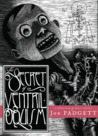
The Secret of VentriloquismThe Secret of Ventriloquism by Jon Padgett
My rating: 5 of 5 stars

I almost bought this in the limited-edition numbered hardcover. Alas, I waited too long and only got the signed softcover. I regret that decision now. Really regret it, deep down in my bones. Had I known that this collection, this book was going to be so strong, I would have dropped the cash in a heartbeat. I've been reading a lot of short fiction collections lately, and this is among the best I've read in recent memory, which is saying something, as I've read some great ones. So, without further ado, let's go through the stories:

"The Mindfulness of Horror Practice" carries a lot of power in very few words. An examination of the story would take longer than the story itself, which is a sort of self-help guide to feeling horror. Thankfully, the visceral nature of the content explains itself in so few words. 5 stars, and an ideal start to this collection of horror stories. In my original notes, I wrote "I get the feeling that this will set the stage for much to come. One foot in the doorway of nihilism . . .". Oh, if I only knew!

"Murmurs of a Voice Foreknown" is terrifying for what it does not say, defining the motives for vengeance without revealing the act, and creating fear not through a sudden shock, but through a more subtle, more methodical revelation. 5 stars for this near-perfectly crafted story.

"The Indoor Swamp" speaks to our (or maybe just my) fascination with the macabre, the grotesque, and the terrifying. It's a labyrinth of the mind, fueled by morbid curiosity. 5 stars for this short, but very effective piece."

"Origami Dreams" is the type of reality-slipping unfolding I love in cosmic horror. Padgett takes the old cheap-thrill of "it was just a dream" type schlock and crafts it into something genuinely sinister, an alienation so thorough that even the narrator himself falls and breaks through layers and layers of reality. This is where the collection really takes off into the highest reaches of darkness. It is with this tale that the collection itself assumes a life of its own, where the collection begins to become more than the sum of its parts, which is what all the best collections do. It is not merely an accumulation of stories, it is an accretion of stories with themes, characters, and phrases that allude to each other, at the very least, sometimes directly, sometimes in an obtuse way that deepens the sense of "depth" even more. The perfect soundtrack to this story would be Nick Cave's "Red Right Hand". 5 stars.

"20 Simple Steps to Ventriloquism" was obviously influenced by Ligotti (exact repetition of words and phrases, focused emphasis on specific words that create a sense of hopelessness, and so forth). This is probably intended. What I'm not sure is whether or not the voice was meant to sound like Steven Millhauser. But it does. And that's a good thing. 5 stars to this story, as well.

"The Infusorium" is a fantastic crawl through a polluted noir horror that is the kind of grey, burdensome, yet titillating story I always wish for when opening a volume of dark fiction, but rarely find. The procedural ends in a surprising way that, in hindsight, is the only way it could have ended. But as it's unfolding, there is a twist that throws things in an unexpected direction, only to spin right around to the ending that you might have guessed, except the twist threw you off the scent. It's an exhilarating sensation that adds to the feeling of terror. The accretion I mentioned earlier continues, like a spider web being slowly built around the reader's mind. In fact, this story would be in the thick of the web. Cross-references with other stories that might normally be obtrusive or jarring feel natural and yet continue to surprise. This is becoming a complete, complex BOOK. 5 stars.

Unfortunately, "Organ Void" was a bit of a void for me, with only a very tenuous connection with the rest of the collection. The weakest of the bunch, but still a decent enough story. 3 stars.

"The Secret of Ventriloquism" is written as stage directions and dialogue for a play. Padgett leverages the medium by using metatextual stage directions as a way to expose another layer of meaning and terror "behind" the story. This layering effect give a richness to the story that would have been compromised had these subtle elements been presented in too-straightforward of a manner. It's a lot like . . . ventriloquism. 5 stars.

"Escape to Thin Mountain," frankly, reminds me of some of my own early writing. So, yes, I do like this frenetic, manic voice that is so sing-songy and pleasant as to be absolutely horrific. I was a tiny bit disappointed that there is only a tenuous connection to the rest of the collection, which seemed to be forming such a strong book. Still, a solid 4 star story.

I won't say that the collection would have been better without "Escape to Thin Mountain" and "Organ Void," but they were both distractions from the rest of the collection, which is near perfect. And I don't use the word "perfect" to describe books very often. But this is pretty darned close.

I can't recommend this book strongly enough. I will be on the lookout for even more of Padgett's work and for whatever Dunhams Manor Press produces. Kudos all the way around!


View all my reviews

Wednesday, April 19, 2017

Daybreak 2250 A.D.

Daybreak 2250 A.D.Daybreak 2250 A.D. by Andre Norton
My rating: 3 of 5 stars

Let's get one thing right out of the way - this is not high literature. It is a pulpy story, well-written. "Solid" is the word that comes to mind, but not mind-bending by any means. If you're looking for a golden age scifi post-apocalyptic book that fills your need for post-atomic mutants and radiation porn, it's adequate to the task.

That said, this is one of the earliest examples of post-nuclear holocaust fiction. One can see how other books, movies, and even games dipped deeply into this work. It is seminal.

It is also an interesting example of an early attempt at addressing race-relation issues in science fiction. When I caught these undertones, then, later, overt criticisms of the cultural climate, which was contemporary with the work, I was surprised to see that the book was published in 1952. Norton was ahead of her time in this regard. Only the year before did the nascent civil rights movement make news of any appreciable kind. Remember: Brown v. Board of Education didn't get decided until 1954. It's clear from Daybreak 2250 A.D. that Norton was aware of the underground sentiment, the warm coals of dissent that hadn't yet fanned into full flames. I'm not sure how many people would have read the book at that time, but it had to have come as a revelation to some readers back then. A case of fiction as political tool for action.

View all my reviews

Saturday, April 15, 2017

The Man Who Collected Machen and Other Weird Tales

The Man Who Collected Machen and Other Weird TalesThe Man Who Collected Machen and Other Weird Tales by Mark Samuels
My rating: 5 of 5 stars

I am becoming convinced that Mark Samuels is incapable of writing a bad story. No writer is perfect, and there are a couple of "misses" in this collection, but none of the stories are bad. And while I didn't find The Man Who Collected Machen and Other Weird Tales to be as strong as The White Hands and Other Weird Tales, it is still essential reading for lovers of "weird" fiction (whatever that means).

Unfortunately, this collection got off on the wrong foot for me. Thankfully, it recovered gracefully and continued on in a remarkable manner. The opening story, "Losenof Express" is a predictable, pedestrian effort for a writer of Samuels' caliber. I expected much better. I can only give this story 3 stars. I'll be honest, this was an inauspicious start that caused me to put my guard up with repeated chantings of "please don't suck, please don't suck, please don't suck".

The title story soon resolved my concerns, and in a very powerful way. I thought that Samuels had stumbled again when I read the rather abrupt, and particularly jarring phrase: I had the bizarre notion of having entered into occult territory, a phrase that seemed to artificially "push" the story in a self-aware way that smacked of railroading the reader. But while this sentence seems to tear the narrative structure asunder, it also serves as a segue into a very different voice that ultimately resolves in a most satisfactory way. It's the closest thing I've ever seen to a literary Hegelian dialectic. I am not certain if Samuels did this with intent or not, but either way, it is extremely effective in pulling the reader down the rabbit hole, shedding disbelief the whole way down and transforming the mindscape in such a way that one feels fully immersed in strangeness. I had wondered why this story was used as the title for the collection, but after feeling the sheer muscle of this story, I now know why this 5 star tale should lend its name to the whole collection.

Of course, stories after the titular tale are always disappointments, right? Wrong. In fact, "Thyxxolqu" is a perfectly-paced story about language and its corruption. It is a dark revelation, a creepy peek into forbidden enlightenment. You speak into the abyss until the abyss speaks back and you come to a full understanding of its words. This reminds me of the game mechanic in the Call of Cthulhu roleplaying game, in which a character sees dreadful things or is given unholy revelations that drive her sanity over the edge. If she sees too much at once, the game dictates that she must do what is called an "idea" roll. Usually, you want to pass your idea roll, as it gives you insights into things you might not otherwise realize. Unfortunately, when faced with cosmic horrors, you want to fail your idea roll so that you do not come to the full realization of how awful the universe and its shadowy denizens are, in reality. You want to fail that roll so that you do not come to that full realization, saving you from potentially permanent insanity. To put it in these terms, the protagonist of "Thyxxolqu" . . . well, you'll see. 5 dreadful stars.

"The Black Mould" is the most "Lovecraftian" story I've read by Mark Samuels. Or, maybe that's "Ligottian". In any case, it's a baroque non-story of existential, even nihilistic dread. Beautifully written, yet it tries so hard to be significant that it becomes insignificant. I'm still giving it 4 stars for the writing, though. The writing is amazing, and if there were a bit of plot, it would have received 5 stars.

It seems like every horror short-fiction author just has to write a scary story about Mexico and strange old cults. They can't help it. Simon Strantzas' collection Burnt Black Sons has a couple, I believe the collection The Gods of HP Lovecraft has one, and I could probably point to a few more with little effort. "Xapalpa" is Samuels', and it's very, very good. 5 stars.

Once in a while, an author seems to be trying to mimic another author's style (note I said "seems" - this is not to say that this is intentional) when the other author has already done something so perfectly as to ward off all pretenders. I got this feeling while reading "Glickman the Bibliophile". While it is a good piece of conspiracy literature with a philosophical bent, it isn't up to snuff with Brian Evenson's works (whom it seems Samuels might be imitating, though I don't really think he was intentionally doing so) in the same vein. Here, Samuels' work is a shadow of Evenson's, I am sorry to admit. Still, a good story, well written, if a little rushed and somewhat hollow. 3 stars.

"A Question of Obeying Orders" finishes with a nice O'Henry ending. And while that twist can get old, if overused, it hit all the right spots for me here. Prussian soldiers and seances, a sense of twisted cosmic justice, and abominable things-that-should-not-be. Vampyres? Fah!!! 5 stars.

"Nor Unto Death Utterly by Edmund Bertrand," despite it's somewhat overwrought prose, is an existential tale worth the read. It pulls primarily from the 19th-century decadent tradition interwoven with threads of very modern cosmic horror. If you can stomach the first few treacle-smothered instances of narrative extravagance, the read is extremely rewarding in the end. 4 stars.

"A Contaminated Text" is a simultaneous ode to and metatextual subversion of Lovecraft, Borges, and Bierce. It is a story that invades the reader's brain, but only once one is finished reading it. I think this one bears a few re-readings. It is, structurally and thematically, a labyrinth. One doesn't realize where he is in the trap until it is far too late. 5 stars and my favorite story of this collection.

"The Age of Decayed Futurity" is a pop-culture conspiracy-cum-contagious-paranoid-fantasy that provides a peek "behind the curtain," a'la The Matrix, but with an even more sinister antagonist: the spirits of the dead from the future who work through Hollywood celebrity to create a world of TV-entranced zombies. Now, I'm not a big TV watcher to begin with, as I'd much rather be reading and writing and playing games than watching TV most of the time. And I'm a bit of a snob when it comes to knowing everything about celebrity lives, who was in what movie, blah, blah, blah. Honestly, I couldn't care less, for the most part (there are exceptions). But I don't know that I've ever felt that the Illuminati have infiltrated Hollywood. But now I wonder. Suddenly, late night TV static has a much more sinister connotation. 5 stars.

While I typically love stories with strong philosophical underpinnings, particularly those of existentialism, I felt that "The Tower" might work better if stripped altogether of any pretense of "plot" or "story", rather than being a mass of philosophical muscle hung on an etiolated skeleton of prose fiction. Still, it is a solid piece with great eerie moments that warrants 4 stars.

While the average star rating of the stories, collectively, is 4.45, I have to round up based on the strength of a couple of the stories. The title story and "A Contaminated Text" alone give reason to push this one up into 5 star territory. If you haven't read Samuel's work before, I'd recommend going with the stronger collection The White Hands and Other Weird Tales first, then take in The Man Who Collected Machen and Other Weird Tales.


View all my reviews

Monday, April 3, 2017

Umerican Survival Guide KS, Part Deuce

I’m a child of the Cold War. I was born on an Air Force base in Germany in the late ‘60s. My entire childhood was spent on or very near bases that housed, delivered, or directed weapons of mass destruction. I can tell you the difference between a yellow, red, and black alert siren by merely hearing one. Those “duck and cover” drills you see in the old black and white reels? Yeah. We did that. In elementary school. All the time. Tuck your legs up under yourself, put your hands over your head, and whatever you do, make sure your genitalia are away from the blast so you can preserve the human race. I’m dead serious. That’s what we were taught. I lived in Omaha, NE, Ground Zero (the first place in the US that would have been struck by enemy nuclear missiles, if it came to that) for several years. In fact, while I was there, a made-for-TV movie entitled “Ground Zero” was released. It was a pseudo-documentary about what would happen if a 5-megaton bomb were to fall on Offutt AFB, about 5 miles from the military housing where I lived. Part of it was filmed at Peter Sarpy Elementary, a block from where I lived. Since CGI wasn’t a thing yet, they filmed kids playing on the monkey bars. As the nuclear bomb exploded on my television, I saw these kids, some of them only a couple years younger than me, melt on the playground as the thermal pulse passed through. A few weeks later, my family took our vacation to Kansas City to a large theme park there. We were in the hotel room one night, and what should come on the TV but another made-for-TV movie entitled “The Day After” which showed – you guessed it – a nuclear attack on Kansas City!

I was 13 at the time.

And people wonder why I am the way I am. :)

But this was my reality. AND it was my fantasy. It might surprise you that post-apocalyptic roleplaying was a very positive thing for me. But I loved it. Ironically, it gave me some hope! I was introduced to Gamma World in 1980, the same year that Thundarr the Barbarian crashed through my TV screen (and a year after Mad Max and a year before Heavy Metal and a year before The Road Warrior and . . .). Though I had started seriously roleplaying in 1979, the leap from the then-present ‘80s world was not as much of a stretch as that really famous fantasy game that I had picked up the year before. In my mind, fantasy and reality became conflated. Post-apocalyptic roleplaying was my window to the future.

Post-apocalyptic roleplaying was (and still is) for me, in a word, therapeutic. It gives me some measure of control over the future, even if only imagined. Of course, humor and horror are bedfellows, so having a good laugh (which I *always* do at the gaming table) was not out of place at all.

The prospect of nuclear war faded in the late ‘90s, but it seems to be back again. The time is ripe for more post-apocalyptic roleplaying, and Crawling Under a Broken Moon is among the best settings I know to indulge in it. I am extremely excited about the possibility, the timely possibility, of completing work on Killer of Giants and getting it in your hands; my ode to the threat of nuclear destruction that saturated my childhood and seems to be coming back just in time for a mid-life crisis filled with visions of mushroom clouds dancing in my head. I'm laughing death in the face!

What you'll find in Killer of Giants is a delve into some of the iconic structures of the Cold War, the underground missile silo complex. But these are replete with all the weirdness and fun you already associate with Crawling Under a Broken Moon! You see, nuclear destruction can be fun!!!

Did I mention therapy? Well, as I’ve said to many who have asked, writing is my drug. And I need a fix. Bad. This time, you get to be the beneficiary. Welcome to my post-apocalyptic nightmare. Let's laugh it in the face!

Support the Kickstarter! Only 9 days to go!

https://www.kickstarter.com/projects/276689953/the-umerican-survival-guide/description


Saturday, March 11, 2017

The Umerican Survival Guide Kickstarter

Reid San Filippo, creator of Crawling Under a Broken Moon and all around great guy, has announced the kickstarter for his "Umerican Survival Guide," a sourcebook for post-apocalyptic gaming based on the Dungeon Crawl Classics rules set. I am SUPER pumped about this kickstarter. Reid has been creating some amazing material for quite some time now - material that can be used far beyond the bounds of DCCRPG. If you're a fan of Thundarr the Barbarian at all, you'll find a lot to love here, as Umerica is steeped in the tradition of your favorite sun-sword wielding, fur-clad wizard killer.
Here are Reid's own words:


Greetings!I am pleased to announce that the Umerican Survival Guide Kickstarter is now live and ready to accept your pledge! What is the Umerican Survival Guide? Umerica is a super science & sorcery post apocalyptic setting for the Dungeon Crawl Classics role playing game from Goodman Games set in a weird, twisted version of North and Central America. It originated in the Crawling Under a Broken Moon fanzine but the Umerican Survival Guide is a fully revised and fleshed out version of the setting.


Please go to https://www.kickstarter.com/projects/276689953/the-umerican-survival-guide to read more about the project and see all of our amazing pledge options.


Thank you for all of your support,


Reid San Filippo


There are two covers available, my favorite is the Delve cover:


This is the sort of iconic art that is going to be referred to for years to come! In fact, I bought the original painting, which hangs in my writing area.

The Chase cover isn't too shabby, either:


I mean: Velociraptors on motorcycles chasing mutants and robots - HOW COOL IS THAT?!?

So get on over to the kickstarter. If it hits the $14,000 mark, I will be adding my adventure Killer of Giants to the mix. Here's the summary:

"In the days before Disaster, the Ancients hid stars inside great pillars buried deep beneath the ground, unleashing their unholy powers. Some still lie slumbering, entombed under the crust of Umerica. Great treasures are rumored to sleep with them. Do you dare try to wake The Killer of Giants? This mini-sandbox adventure takes explorers directly to the heart of the destructive devices that heralded the dawn of the age of mutants. Dangers contemporary and ancient abound, on the land, under the ground, and in the sky. Explorers will need to use every ounce of their wits and brawn to master what even the Ancients could not. Will these discoveries bring enlightenment or usher in an even more intense localized dark age? Only the explorers themselves can decide!"

So, please, back this kickstarter and tell ALL of your gaming friends on Twitter, Google+, Facebook, and anywhere else you can be heard. Let's make this one a resounding success!

Umerican Survival Guide Kickstarter part Deuce
__________

If you like my writing and want to help out, ko-fi me at https://ko-fi.com/forrestaguirre. Every little bit is seen and appreciated! Thank you!

Friday, February 24, 2017

The Complete Symphonies of Adolf Hitler and Other Stories

The Complete Symphonies of Adolf Hitler and Other StoriesThe Complete Symphonies of Adolf Hitler and Other Stories by Reggie Oliver
My rating: 5 of 5 stars

You know, I've always been more of a short story reader than a novel reader. Yeah, I'm that oddball. I'm also much more of a short story writer than I am a novel writer. Maybe it has something to do with attention spans. But I think I just like the brain-juicing rush I get from a really great short story, whether reading or writing. Cheap thrills? Maybe. But they're my cheap thrills!

Problem is, short story collections are really difficult to review. Say too much about each story and it's really easy to spoil things. Say too little about each story and your review becomes pithy. And only after reading the entire collection can one really assess the author's overall oeuvre (well, for that collection, at least) and it's sometimes difficult to go back and piece together what it is you think about the author's work without re-reading every story.

So I guess all I have to offer here are my notes on The Complete Symphonies of Adolf Hitler and Other Stories, modified and elaborated on a tiny bit from my original notes, with a little summation at the end.

Before I dive in, though, please let me state for the record that Reggie Oliver is a magnificent stylist. Reading his work is easy. Not that the language is banal, not by any means. It just simply flows incredibly well. In both style and subject matter, M.R. James and an easier-to-understand Lord Dunsany come to mind as the best comparisons for Oliver's voice. But that is boiling things down too much. Olivers voices are rich and more widely varying than James and/or Dunsany. But the sheer ease-of-use to the reader make these stories smooth as silk. A dark, corrupted, sometimes terrifying silk, like a silk noose, but smooth, nonetheless.

Anyway, on to the stories:

The title story (and who could resist such an incredible title?) is a weird sort of weird. It's very moody, but not edgy, The narrator is a bit paranoid, but justifiably so. Still, his fears are a little unjustified, but this makes his flaws all the more critical to the story. I like this story a lot, but I don't know if I can place my finger on exactly why. And I like that lack of definition. It works to the point of 5 stars for me.

"Lapland Nights" is a very well-written story, but it has too many loose ends. I don't mind loose ends at all, but I came away from this story feeling like I was missing something fundamental that I should have found in the story. Re-scanning it, I found that it wasn't me, it was the story. I love the premise, plot, and characters, but feel like there is an impetus behind the plot turns that is too-well hidden. 4 stars.

"The Garden of Strangers" is a quiet tale about Oscar Wilde and suicide (a theme that recurs in Oliver's work). I can look past the pedantic (in a morally-corrupt way) nature of the story because it is so well written. 4 stars.

I made the mistake of reading "Among the Tombs" by firelight and a small, dim lamp, with the firelight by which I read flickering over my shoulder. Don't do this. Too creepy. Way too creepy. This story about possession and charity gone wrong got under my skin. I've still got the jibblies! 5-stars!

I found "The Skins" eerie enough but it lacked a needed touch of coherence. It sometimes felt like the plot elements were reaching for each other, but not quite touching. Unlike two of the main characters . . . 4 stars.

"The Sermons of Dr Hodnet" - now *this* is what I've been expecting. A twisted interpretation of Genesis 11:7 and a weird story that satisfies on all fronts. 5 stars for this one. More like this, please!

"Magus Zoroaster" puts a supernatural spin on what is, at it's heart, a tale of deep noir about doppelgangers and murder-mystery. 5 stars!

"The Time of Blood" was, well, bloody good. I was surprised by the ending, but it made all the sense in the world, in hindsight. I'm usually not as big on stories that begin with a pseudo-mythic framework, but this one worked well by the end. 5 stars.

A weird tale disguised as romance? Romance disguised as a weird tale? It doesn't matter. I loved it, and I am most explicitly not a fan of romances. "Parma Violets" drew me in and wrapped me up. 5 stars to this excellent story!

"Difficult People" provides a modern and slightly distanced riff on the themes of one of my favorite stories, "The Picture of Dorian Gray", but adds a murky layer of mystery to the whole thing while twists it into new vistas of horror. 5 stars.

"The Constant Rake" is a dark story about an obscure play manuscript and its discovery by the narrator. The original author of the play had suffered losses at the hands of a rival and vowed to exact revenge. But revenge may be a long time in coming! This tale brilliantly weaves destinies and motives together in a satisfyingly gruesome way with a dash of the supernatural. I have been wowed by this 5 star story!

While I enjoyed the self-aware humor of "The Blue Room" (I laughed aloud twice), it seems out of character for this collection. I enjoyed it, but it lacked the gravitas that the rest of the collection has had so far. I get it: people want variety, and humor often serves as an adjunct to horror. Still, it seemed a little "twee" to me. 3 stars

"A Nightmare Sang" is one of the longer stories in this collection. A strange, esoteric tale of ecstasy, initiation, and entrapment. I was caught up in it, much as the protagonist was caught up in the acting troupe/cult that simultaneously served as his compliment and foil. The characterization is what stood out in this mystical, yet banal story. 5 stars!

"The Babe of the Abyss" has so . . . much . . . potential! It could have been twice as long to allow more character development, but as it stands, it felt cut short, with one of the character's info-dump explanations making it feel even more rushed and artificial. Dang it, that could have been a five-star story, but I have to give it 4 stars. I even considered 3, but the ending was a "good save".

"Bloody Bill" is a memorable piece, if for nothing but the imagery. The mood is cohesive and rather gray and the story held together thematically. Still, there was something missing - maybe another connection or two between the narrator, his friend, and the antagonist, expressed more clearly by events, objects, etc. This "looseness" kind of lost me. Still a 4 star story, though.

I thought "A Christmas Card" might be a pithy retelling, or a horrific twist on "A Christmas Carol," but I was completely and utterly wrong. And I've never been so glad to be so wrong in my initial impressions. It is a surprising tale of hope in the face of suicidal depression. Somber, but very much full of hope. A poignant ending story that I was not at all expecting, and which took my breath away, especially as the end piece in this collection. 5 very bright stars.

That's a solid 4.6 on average. Throw in the wonderful production values, even on my paperback edition (what, you didn't know you could buy some of Tartarus Press's titles in affordable paperback?), and you've got a solid five star book here. If you want some creepy, but without the gross, and some excellent writing featuring some memorable characters and even more memorable plot lines, go get yourself a copy!

View all my reviews

____________________

If you like my writing and want to help my creative endeavors, ko-fi me at https://ko-fi.com/forrestaguirre. Every little bit is seen and appreciated! Thank you!